


by Julian Wood
Worth: $17.00
FilmInk rates movies out of $20 — the score indicates the amount we believe a ticket to the movie to be worth
Cast:
Blanca Soroa, Patricia López Arnaiz, Miguel Garcés, Juan Minujín, Mabel Rivera, Nagore Aranburu
Intro:
… a quiet surprise …
A psychiatrist once quipped along the lines, “if a person talks to God, they are praying, if God talks to a person, they have gone mad”. This contemplative Spanish film about a girl who wants to join a nunnery definitely plays on the mystery/problem of religion. To non-believers, religion seems a relic, or something worse. Believers say that you have to find faith first and then the rest will make sense.
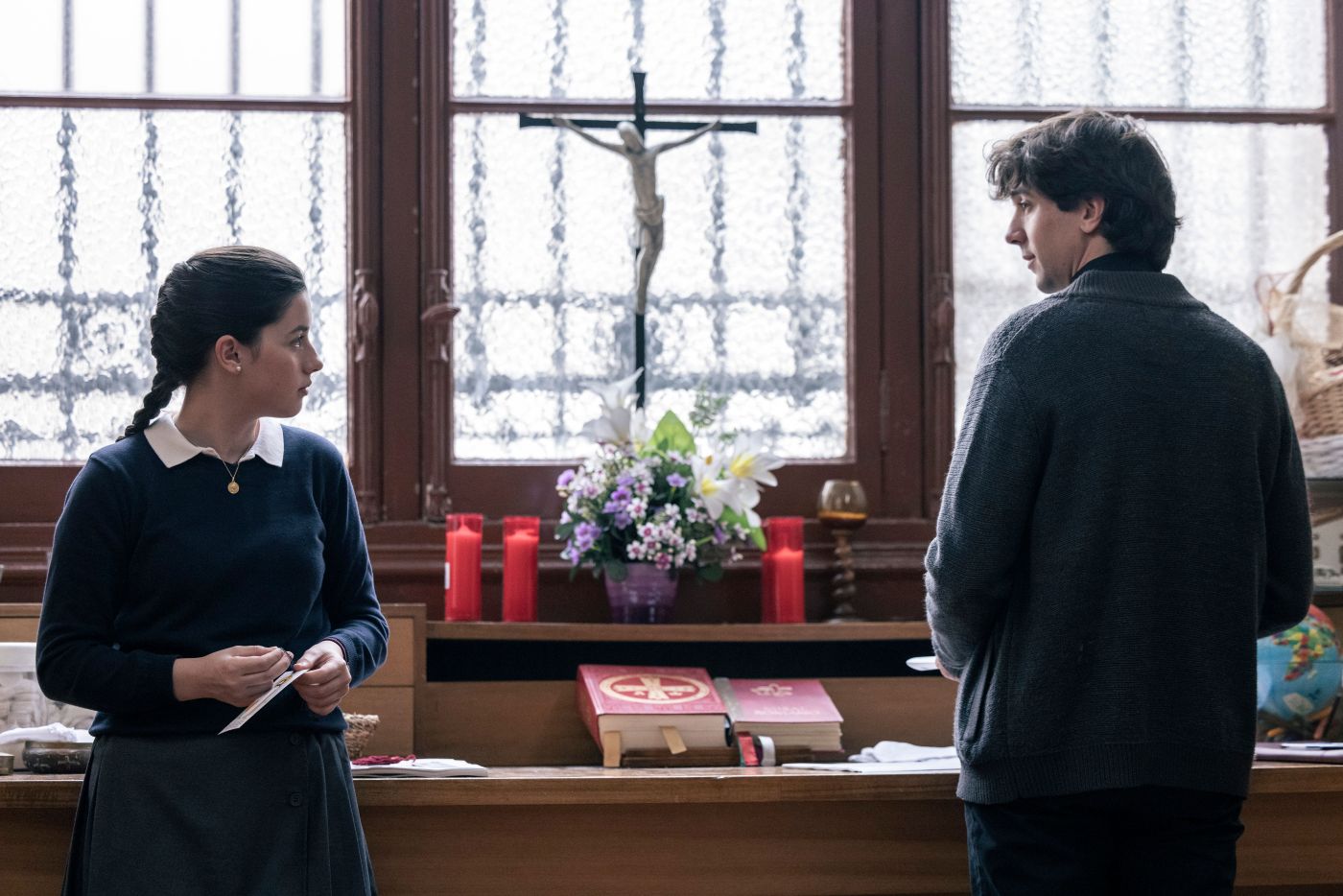
We start with a family living in the Basque region in Northern Spain. The father, Inaki (Miguel Garcés) was widowed but has re-partnered with Estibaliz. They are raising his seventeen year old daughter Ainara (Blanca Soroa). Ainara’s aunt Maite (Patricia López Arnaiz) is also close and is strongly protective of the shy and easily-ostracised Ainara. As the film unfolds, we see Ainara growing up in a Catholic school and being slowly drawn towards the idea of taking religious orders. The family wonder if she is really aware of how life-changing that decision would be. They think she is too young and hasn’t really ‘lived’ yet. The order she is drifting towards is cloistered and deliberately ascetic. Maite becomes increasingly strident in her opposition to the idea and regards everyone else as being too passive about her niece throwing her life away. On the other side of the equation is the mother superior who, like a patient angler, simply lets the fish swim towards the net.
This might sound like an unengaging topic, but the film is a quiet surprise. The playing and the script are top notch. Director Alauda Ruiz de Azúa manages a nice balance between the suspense (as to whether she will escape the logic that has been set in train) and the more philosophically-challenging ideas that the film circles around. Religion has always been important to mankind, and its claims are not that easily dismissed even for secular audiences in a largely post-religious age. Soroa gives a fine and touching performance as the vulnerable Ainara going willingly towards what those inside the system refer to as a calling. The film leaves us to decide whether this is a sort of madness or a journey towards grace.
