



by FilmInk Staff
TBS ACT streamlines post production for broadcast and Netflix deliverables.
Blackmagic Design announce that DaVinci Resolve Studio was used for the online editing of the TBS drama series Tagusari Brothers. TBS ACT, which handled post production for the series, currently uses DaVinci Resolve Studio for online editing on most of the drama productions it handles.
Tagusari Brothers is a crime thriller drama series that aired in TBS’s Friday drama timeslot. Brothers Makoto and Minoru Tagusari lost their parents to a murder that reached the statute of limitations. In order to bring the perpetrators to justice themselves, they each became a detective and forensic examiner. While confronting heinous crimes on a daily basis, they continue to pursue the true culprit who murdered their parents. The series stars Masaki Okada and Shota Sometani.
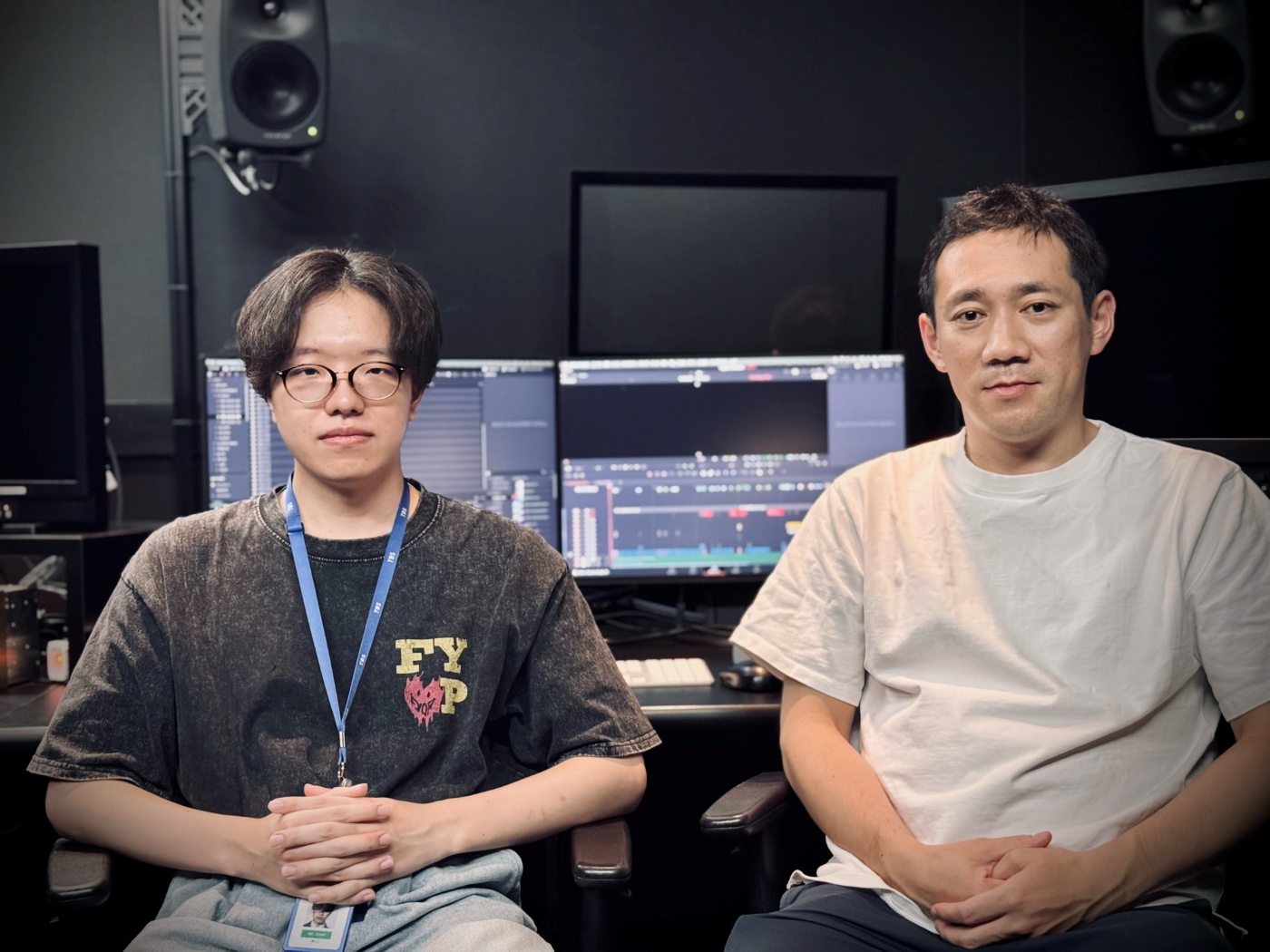
DaVinci Resolve Studio was used as the editing tool in the post production workflow supporting the visual world of the drama, with TBS ACT Editors Tatsuro Kai and Umi Tsuchiya handling the online editing.
“We currently have three editing rooms dedicated to drama productions, and all of them are equipped to use DaVinci Resolve. We used to use it alongside other NLE systems, but since the beginning of this year, we have been working almost entirely with DaVinci Resolve. Rather than consciously deciding, ‘Let’s use DaVinci this time,’ we had naturally reached the point where we would choose DaVinci,” said Kai.
Kai explained the workflow for the production: “After backing up the camera footage to a NAS, we created proxy media in DaVinci Resolve for the offline editor, followed by offline editing, conforming in DaVinci Resolve, color grading and online editing. An external colorist performed the grading at our studio using a DaVinci Resolve Mini Panel.”
“This time, the colorist had created a LUT in advance, which was used on set during filming. The DIT made fine adjustments to the color on set using DaVinci Resolve, and we then created the offline proxies based on that timeline,” added Tsuchiya.
For Tagusari Brothers, the Fusion page was used for a wide range of compositing work, including compositing license plates and smartphone screens.
“There are flashback scenes set in 1995, so we used Fusion to remove objects that did not exist during that period and to adjust the time displayed on smartphone screens to match the timeline of the story. It was really helpful that using DaVinci Resolve eliminated the stress of having to transfer media between different applications. When using another application, we would also have to work on a PC with lower specifications than the machine used for online editing, so being able to perform the compositing directly on the main machine improved efficiency. For simpler tasks, we can often complete the work on the Color page, and I also like having the flexibility to choose which page to use for each task,” said Tsuchiya.
“Being able to complete the work in a single application meant that we didn’t have to worry about the colour shifts that can occur when working through other applications,” added Kai.
The production was delivered both for terrestrial television broadcast and for distribution on Netflix, with each version delivered in its respective required format. Compound Clips in DaVinci Resolve helped streamline this process.
Kai explained: “For the Netflix version, we started with the broadcast version timeline, removed the commercial breaks, and when there was a ‘refrain,’ or a recap of the scene immediately preceding the commercial break, we adjusted it so that the transition would feel natural. For this process, we converted the broadcast version timeline into a Compound Clip, placed it into a new timeline, and edited from there.”
“Using Compound Clips meant that any changes made to the broadcast version timeline were automatically reflected in the Netflix version. This not only saved us time, but also helped prevent mistakes where changes made to the broadcast version might otherwise have been missed in the Netflix version. I think Compound Clips will continue to be useful when creating deliverables in various versions in the future,” concluded Kai.
About Blackmagic Design
Blackmagic Design creates the world’s highest quality video editing products, digital film cameras, color correctors, video converters, video monitoring, routers, live production switchers, disk recorders, waveform monitors and real time film scanners for the feature film, post production and television broadcast industries. Blackmagic Design’s DeckLink capture cards launched a revolution in quality and affordability in post production, while the company’s Emmy™ award winning DaVinci color correction products have dominated the television and film industry since 1984. Blackmagic Design continues ground breaking innovations including 6G-SDI and 12G-SDI products and stereoscopic 3D and Ultra HD workflows. Founded by world leading post production editors and engineers, Blackmagic Design has offices in the USA, UK, Japan, Singapore and Australia. For more information, please go to www.blackmagicdesign.com/au.
