


by FilmInk Staff
As the response to the Nepal Flood continues, international disaster management expert Dr Ian Norton is calling for a complete systems reset in how the world reacts in crisis.
“The Nepalese were well prepared. They have an excellent disaster management system. It’s world’s best practice, but once again the international response has been haphazard and chaotic, whilst competing directly with the local response”, says Dr Ian Norton.
As he prepares to address the Southeast Queensland Disaster Alliance Symposium in Brisbane this week, Dr Norton was critical of the NGO community for its focus on publicity in times of crisis. And he singled out the international aid community and the United Nations system for directly competing with the Nepal Government.
“International aid groups relish the photo and social media opportunities that come with a major international response. Branding becomes an absolute priority, showing themselves to be in the thick of the response as quickly as possible. And donations tend to swell as a result, not all of which goes directly to the response of the specific disaster.
“And the UN system time and time again flies in and directly competes with the local resources on the ground, when they should in fact be quietly supporting the requirements of the local ministry of health”, says Dr Norton.
Dr Ian Norton is the former head of the World Health Organization Emergency Medical Teams Initiative and led the global response to several major international humanitarian emergencies, including the West Africa and DRC Ebola outbreaks and the 2015 Nepal earthquake response. He was a key architect of the WHO “Blue Book”.
Published following the chaotic response to the 2010 Haiti earthquake, the Blue Book is a set of minimum standards that all international teams must meet when responding to disasters. Localization is a key recommendation in the guidelines but continues to be undermined.
“The international humanitarian community continues to operate in a kind of bubble, based in European capitals or New York, with a heavy focus on funding, on optics. And that competition ramps up in times of crisis, such as we are seeing currently in Nepal.
“The Nepalese authorities know how to respond because they are training constantly for these types of events. But the task of managing responses is often undermined by NGOs and other aid organisations who prefer to run their own race, with their own objectives and priorities.
“A reset in how the international community responds has been needed for years, as localized as possible”, says Dr Norton.
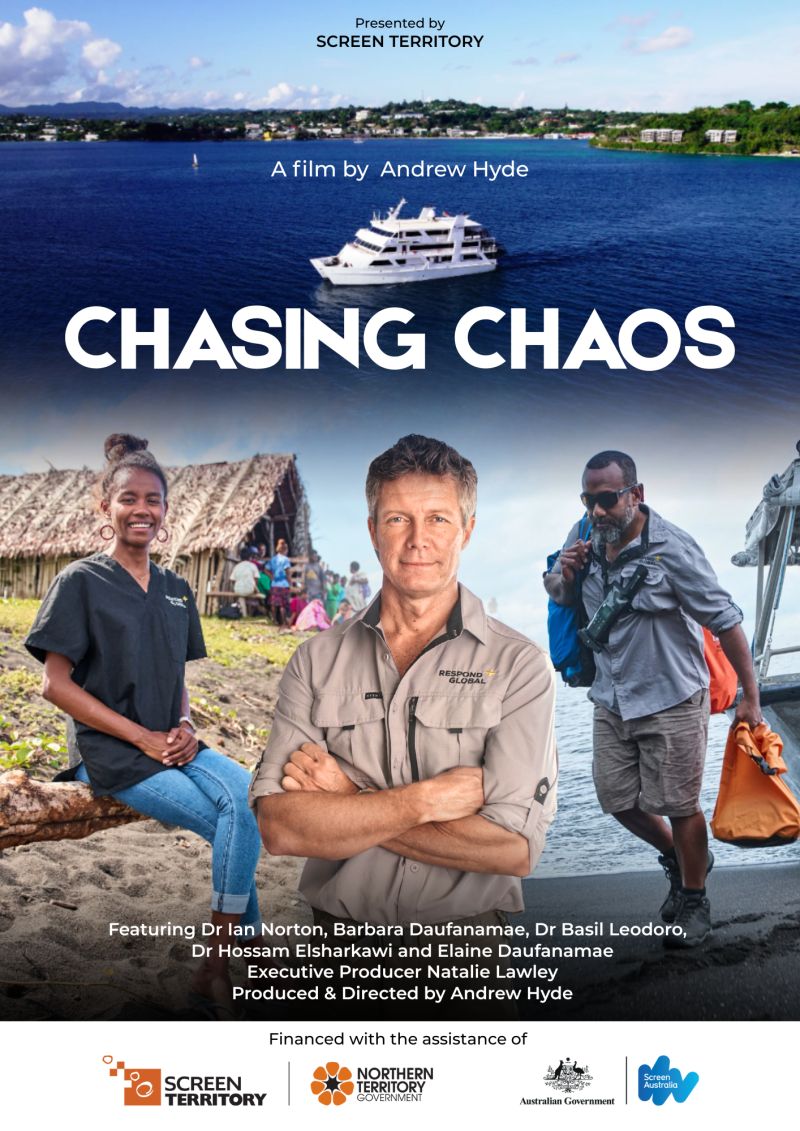
Dr Norton features in a new documentary Chasing Chaos which examines the collapse of traditional aid systems whilst highlighting an innovative program operating in the South Pacific called HELPR–1, which might represent the new wave of disaster preparedness in the region.
“Local responders, local doctors, nurses and ministries of health know their own backyard. In times of crisis no one is going to be able to fly in and take over with a better understanding of the situation than the locals themselves. The international community must focus on preparedness, with a willingness to support rather than lead.
“If Southeast Queensland suffers a major disaster in the future, it will be our minimum expectation that the locals will oversee the response. Why should it be any different in Nepal or Vanuatu or anywhere else?”
CHASING CHAOS screens at Dendy Coorparoo on Thursday 24th September at 7pm and Dendy Canberra on Sunday 27th of September at 7pm.
