



By Rhiana Davies-Cotter
Funny Cow tells the origin story of a fictional female comedian who rose to prominence working men’s clubs in the 1970s and ‘80s. Set in Northern England, the non-linear told story spans four decades and explores how the central character breaks free from her past of abuse, neglect and subjugation and makes a career out of being an outsider. As a stand-up comedian in an all-male world, Funny Cow (we never learn her actual name) draws on her dismal life experiences to captivate audiences with a unique and outrageous style of comedy that fits right in with the ‘70/’80s political landscape.
Funny Cow stars Maxine Peake in the titular role, along with Tony Pitts (who also wrote the film) as her tragic soulmate, Paddy Considine as her middle-class lover and Stephen Graham in two roles as her abusive father and then as her older brother. We should inform you that Funny Cow’s success as a comedian isn’t really the focus of the film… So, if you are hoping for a lighthearted comedy, this might not be it (you can read more about this in our review here).
Maxine Peake is an accomplished film, television and stage actress. Peake made her name as Twinkle in Victoria Wood’s sitcom Dinnerladies, and has since had roles in various TV shows (including Shameless, Silk, The Village and Black Mirror), films (including The Theory of Everything) and stage productions. It was the TV movie Red Riding: The Year of Our Lord 1980 where she first met Tony Pitt, who wrote this role specifically for her.
“I worked with Tony about 10 or 11 years ago. We got chatting about things that interested us, and Tony said that he’d been approached by somebody who said ‘you should write something for Maxine’. So, he asked me if I had any ideas. I told him I’d always been fascinated by women working in working men’s clubs in the ‘70s in England, because it was such a brutal world in some respects. Tony said he used to run comedy clubs and that he knew all about that, and then he went away and wrote it! That’s how it all came about.”
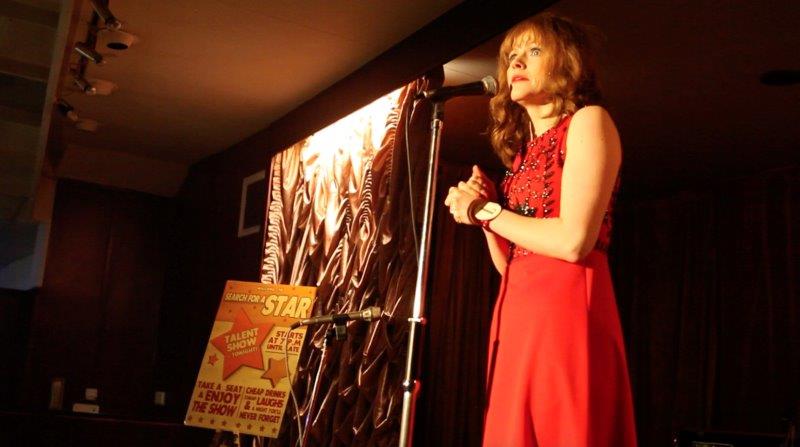
Like Tony, Maxine grew up in Northern England and has had her fair share of experience with working men’s clubs. “Me and my dad used to go to a men’s club when I was younger,” she muses. “I used to romanticise them in a way. Especially when I was away in London for drama school. I’d come back and go with my dad to the club on Saturday nights. I’d take a deep breath and be like ‘ahh, I’m home now’. The jokes and material were still quite sexist at the time, in a way that was common for that generation. It did feel uncomfortable at times, but there was something about the culture of the clubs that I loved. It was always a good night out. The clubs would be packed out – people would come after working hard all week and have some drinks. It was cheap. They were community centres for people, and we’ve sort of lost them now. I have a bit of a love-hate relationship with the men’s clubs I guess.”
Although it was working clubs that inspired Maxine, she first realised she wanted to be a performer after seeing plays at her local Unitarian church. “When I was about 8 or 9, we used to go to a Unitarian church, which occasionally put plays on. I remember going ‘oh that sounds like fun’. So, I asked mum if I could go, but she said she couldn’t take me – she didn’t have time, she was a single parent and trying to bring up two girls and work, as well as doing jobs around the house. She let me go off by myself though – she would always let me be independent and do my own thing. She trusted me. So off I went and started doing little plays, and I think that’s when I got the bug. It was more about making people laugh at the time, so I thought ‘ooh, what about being a comedian?’ I just liked showing off really [laughs]. I was a bit of a class clown, and it’s quite addictive [laughs].”
The thought of being a ‘proper’ actress didn’t really occur to Maxine – mainly because she didn’t relate to the actresses she saw on TV. “I didn’t really look like anybody on the telly,” she states. “I was quite a big child [laughs]. But then I saw people like Victoria Wood on the screen, and I realised that you could be Northern and funny and be successful. I think Victoria was beautiful, but she showed me that you don’t have to be typical to make it. Having the opportunity to work with her on Dinnerladies was such an incredible experience.”
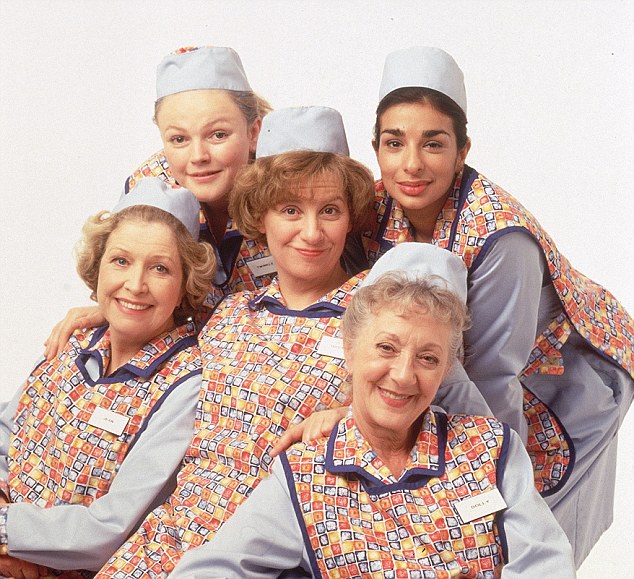
Victoria Wood is just one of Maxine’s many female icons. “Julie Walters was also a big influence on me,” she states. “And also, Tracey Ullman and Marti Caine, who actually inspired my character in this film. I was amazed by all these women that I saw being clever and funny. And before that, I was inspired by amazing character actresses like Joyce Grenfell and Margaret Rutherford. These actresses were always more my thing than ‘straight’ actresses. I always loved the idea of creating a character that’s different from me, and dressing up and looking a bit odd. It took a while for me to get there myself, I had to be pretty stubborn [laughs].”
Breaking into the acting industry is a difficult feat for anyone, but Maxine had to be even more stubborn than most. She spent three years trying to get into drama school, before finally being accepted into RADA (Royal Academy of Dramatic Art) when she was 21. “I just knew I had to keep going. I didn’t have a backup plan. In Britain, we like to give people labels,” Maxine muses. “People heard my Northern accent and immediately assumed I was poor and working class. Which I was, so that’s fair enough [laughs], but not everyone with a Northern accent is poor. I was a bit disadvantaged in terms of what I’d get cast for and what people thought my limitations were. And that’s where the idea for this film came from actually. Tony and I would have discussions about not fitting in, and whether we even wanted to fit in. We can both be a bit contrarian about things. It’s a difficult industry anyway, but especially being a woman – and a Northern woman at that – people can judge you.”
Although women have struggled for centuries to be seen as equal contenders in professional environments, Maxine thinks the playing field is actually improving – for the moment at least. “I think it goes in waves, like anything. At the moment, it feels like women are being taken more seriously. It feels like in this country especially, it’s the women who are getting up and doing it for themselves – writing, producing, directing. People like Phoebe Waller-Bridge, Sharon Horgan, Diane Morgan – who have decided to take matters into their own hands and make their own things. I think there is a bit of a ‘fashion’ at the moment to get women on board, especially with everything that’s been going on with the industry and the ‘me too’ movement. I think it’s now just up to us women to not hand back the cup. We’ve got the opportunities now, and we need to make the most of them. I think the age-old problems still exist – I’m not sure if they’ll ever go away, but we just need to keep fighting them.”
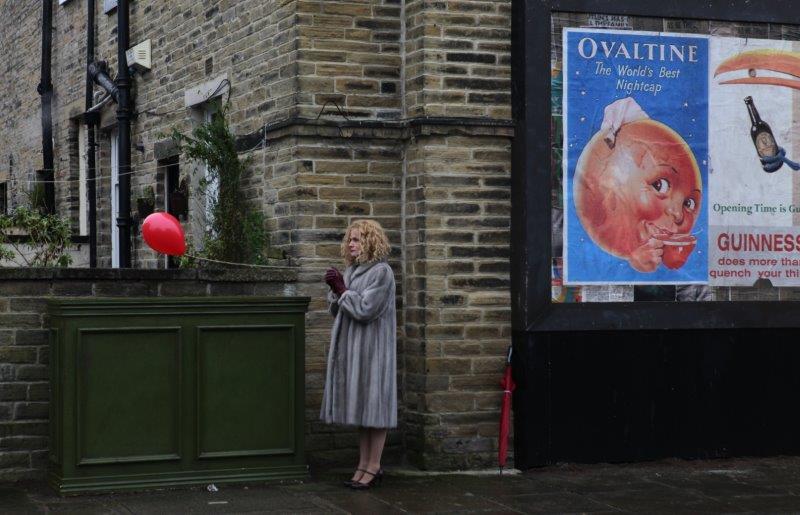
Maxine’s willingness to soldier on has certainly paid off – she currently has a number of projects in the works, including a stage production that she has written and roles in a number of upcoming films and TV shows. So far, though, Maxine sees this role as the highlight in her career. “For an actor, getting a part that is actually written for you is incredible. I love the character – she’s a woman but she’s not sentimental, and she’s quite unforgiving at times. She’s a bit difficult. She goes for what she wants, and it’s not easy. She’s very complex and I just love that. There’s no tears, there’s no wailing or going on about how horrible her life has been. It’s her story and she’s a bit of a warrior in it. She stands up in front of that audience, which is sort of like a pack of wolves, and she conquers them. I just loved her braveness.”
The protagonist may face her circumstances unflinchingly, but the film can be quite harrowing to watch at times. Thankfully, Maxine assures us that the atmosphere on set was very lighthearted. “Tony is a great friend, so we’d be laughing before takes. We kept it all very light and funny. There’s one scene where Tony throws me up against a wall, and I didn’t realise that our producer Kevin [Proctor] had bought a cream cake to throw in his face afterwards. We’re all friends, so it wasn’t really gruelling at all. It also depends on what sort of actor you are – I’m not a method actor – I like to goof around and then go into it. I think you can damage yourself a bit if you take it too seriously. Acting is playing, even when it’s something dark and disturbing, it’s about being able to come out of that. I have my own approach, but the whole method thing just doesn’t work for me.”
The abuse and violence that Funny Cow’s protagonist suffers have caused some critics (ahem, including us) to call this film bleak… But Maxine disagrees. “For me, the conclusion of the film – which people have referred to as bleak – is about the power of the human spirit. It’s about this woman who realises that at the end of the day, she’s enough. I think sometimes as women, we look for mentors in other people, and I think often it’s about learning that your strength can come from yourself. For this character, it’s not about her becoming successful, I don’t think that’s the happy ending. It’s about her realising that she has strength. It’s about her coming to terms with the fact that she can live with herself and survive by herself. And that’s alright, that’s not a failure. She listens to herself and gets herself out of a really difficult situation. So, I just hope that people take hope from it, really. It’s a happy ending – it’s not, you know, big fireworks or finding the man of her dreams, but she’s going to be alright. I think, as women, even when we’re the victims, we feel like we’ve got to apologise… And something I love about this character is that by the end, she’s not apologetic and she’s not forgiving. She doesn’t forgive her abusive husband. I think in a lesser film, there would have been some sort of teary conclusion. But no, why should she forgive? She gets her life back.”
Funny Cow will be released in Australian cinemas on the July 26, 2018.
