



By Deborah McCormick
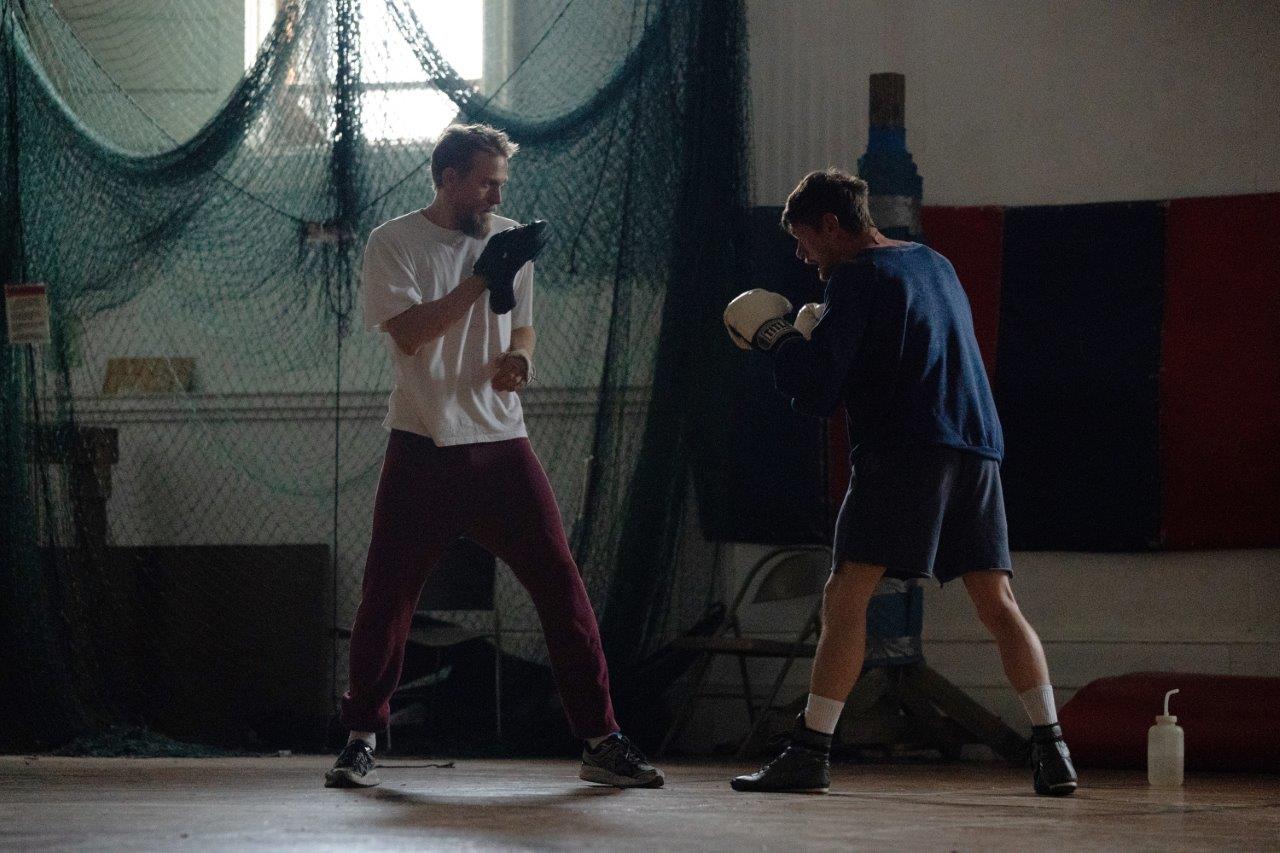
This isn’t a boxing movie. That’s the first thing you should know about Jungleland, co-written by Max Winkler, Theodore B. Bressman and David Branson Smith, and directed by Winkler. It’s a compelling character journey involving three people grappling with their own individual life choices. Brothers Stanley and Lion (Charlie Hunnam and Jack O’Connell) are made to pay back bad debt by shuttling a girl (Sky played by Jessica Barden) cross-country to one last fight, and potentially fame and fortune.
This can’t possibly end well.
Winkler set the record straight on a few things about the film when we spoke with him recently from Los Angeles.
Why was this film ten years in the making?
“The idea for the script came up when I was editing my first film Ceremony. I thought this would end up being my second movie, but my second movie was Flower and then I started a television company and got distracted.
“Making movies is such an insane act of luck and God and the right timing, I mean it’s just completely unnatural to get a movie made. The amount of things that have to go right just for the movie to get made and then to get made with the right cast in the right place with the right crew and producers. For this film, it took ten years for everything to fall into place.”
Did you have any creative ideas going into this film that weren’t working, but were hard to let go of?
“Because I’ve been writing versions of the script onwards of ten years, the stuff that felt inauthentic, the stuff that felt too reverential to other stuff or lacking of truth ended up by the wayside, and the script naturally went the direction it was supposed to go.”
Did you learn anything with Flower that made you smarter this time around?
“Yeah, I had such limited resources on Flower financially and a short amount of time. We had this rule on set that our only job is to serve the actors. And if we can get shots that are pretty and working in tow great, but anything else is frosting. The most important thing is to tell the story with the camera as authentically as possible.
“When I was 25-years old and making my first movie, I would set up dolly scenes that didn’t necessarily need to have a dolly in it just because I loved Boogie Nights. As you get older and you can learn from stuff, you try to just learn how to tell the truth more with every aspect of filmmaking; with wardrobe, makeup, hair and lighting and with set design. Flower was at such a stripped down level that our only job was to serve the performance. Everything else was secondary.”
At the end of the day, how do you gauge the success of a film as director? Do reviews matter?
“If I take a good review as a sign of accomplishment then I have to equally take the bad review. All I can do is to tell the story to the best of my ability and then let it go. At the end of the mix, the last time I see a movie, if I look at the work and actors and the choices we made and say that we did what our intention was, that’s success. Everything else is insanity to measure your work by.”
What inspired the ‘70s feel of the film?
“We weren’t intentionally trying to make a ‘70s movie. I love movies from the ‘70s. A movie that we watched a lot was Steve McQueen’s Hunger. We loved the lighting and the feel of that movie. We just tried to light the rooms and locations as naturally as possible. And not get in the way of the actors. When you have actors that are as good as we had, their faces will do most of the job. Casting is the majority of my job and the rest sort of falls into place if you put great actors in spaces that feel real and authentic; you help their performance. And all of these actors prepared in such an incredible way.”
What’s next for you?
“I’m going to make another movie with Charlie, based on this guy Ben Moon’s life. He wrote a memoir that caught Charlie and I both by the throat. It’s about a guy that decides to leave his job and marriage and move into his car — just him and his dog traveling through the Pacific Northwest. It’s a movie that deals with anxiety and depression and mental health in a really beautiful way, or the book did at least, and we’re going to try and do that in the movie and make it next spring.”
Jungleland is available on Digital from December 2, 2020
