


By Dov Kornits
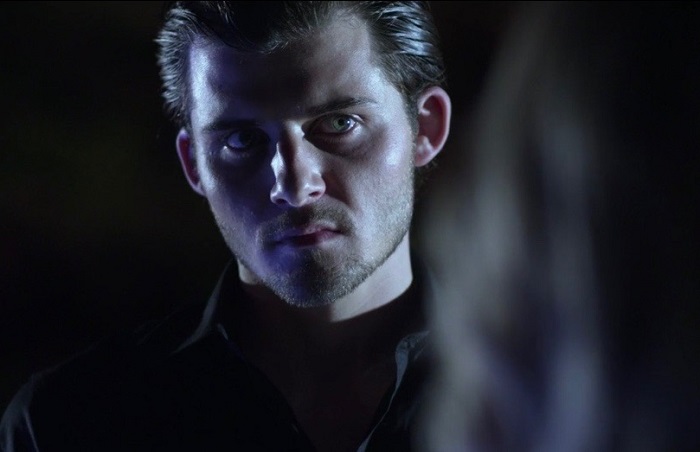
“It’s a sexy, dangerous summer noir with hints of classic cinema,” says actor Liam Graham of his first major big screen role in Burning Kiss. It’s a perfect description for writer/director Robbie Studsor’s eye-popping visual extravaganza, in which Graham takes on the challenging central role of Max, a moody drifter. Chasing redemption, Max re-enters the emotionally chaotic world of ex-cop-fallen-from-grace Edmond Bloom (Richard Mellick), who has been left crippled by the car crash that killed his wife. With the killer never caught, Edmond has burned through his days looking for clues to solve the mystery, all under the watchful eye of his damaged 20-year-old daughter, Charlotte (Alyson Walker) whom he indirectly blames for the tragedy. Max claims to be the driver of the car that put Edmond in a wheelchair and ended his wife’s life, and he’s begging for either forgiveness or punishment. But after six years of painful searching and detective work, Edmond has other ideas.
How did you get the role in Burning Kiss?
“I was very lucky with this film. I was offered the role without having to audition, which although isn’t unheard of, is something quite rare in the industry. Robbie co-wrote a film I was in a couple of years before Burning Kiss went into production and liked my work in it. As an actor, it’s a massive compliment to have something like that happen. Over my whole career, it has only ever happened once before.”
Did Robbie give you any ideas about how to portray the character, or did you bring all of that yourself?
“Robbie had such a great way of conveying the tone and atmosphere that he wanted to create for the world of the film. Several weeks before we started primary shooting, he gave Alyson, Richard and myself a number of different mood reels to watch which consisted of clips from old movies, music, retro artwork, and sound clips. We got to view them in a big empty cinema to really give us the best and clearest chance of being able to absorb all the intricate details. He’s a great collaborator, so I felt a lot of freedom to bounce ideas back and forth about how I had envisioned Max. He gave me a pile of movies to watch with instructions on specific things to study within each film – mannerisms in one, tone in another, narrative, nuances etc. For a film that was incredibly specific in what we needed to achieve, he somehow made me feel comfortable to explore a fair amount of creative freedom which still baffles me! The man is a genius.”
How did you relate to the character, personally?
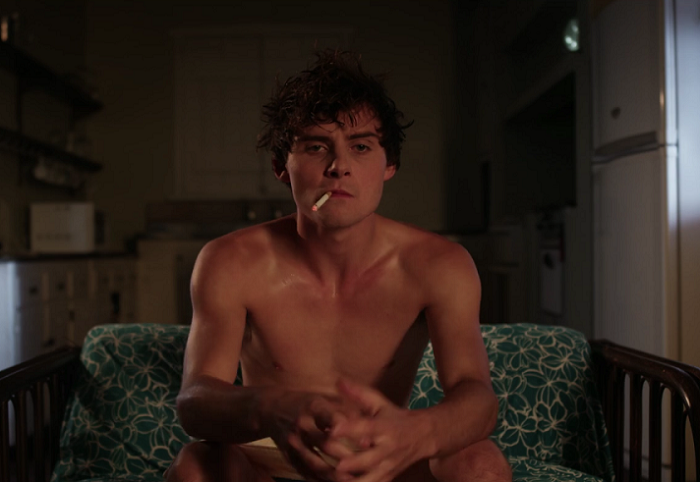
“Max is an outsider. Someone who lives on the fringe of society and lives a tortured existence. Growing up, I certainly felt quite isolated and misunderstood, probably up until my early 20s. I didn’t know where I fit into the world and got quite good at putting on a ‘mask’ to give the impression of confidence, where in reality I was very lost inside. Although personally I’m not exactly like Max, there were many past experiences that I could draw upon to get into his mindset. I often get lost in thought and tend to drift towards the darker side of thinking, which although in real life can be pretty unproductive, for this character it really helped.”
Did Robbie give you any cues as to the look and feel of the film, or could you tell that he was doing things differently whilst on set?
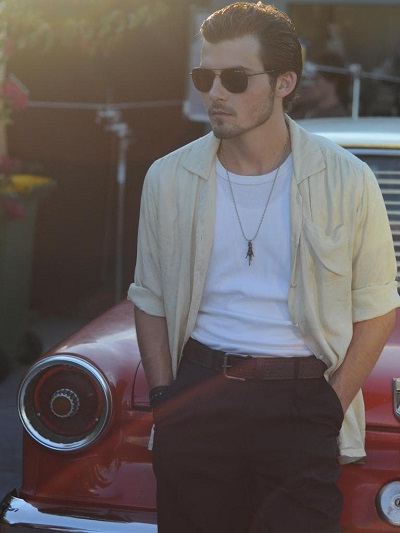
“Once we watched the mood reels and had many conversations in the weeks leading up to shooting, on set he gave me a lot of free reign with the character. By that point, I had a well-developed idea of who Max was. Set designer Louise Brady and costume designer India Mehta had done such an incredible job at creating this timeless, bizarre, almost Lynch-esque world, that it really made my job getting into character so much easier because the world almost became my reality for five weeks. Robbie doesn’t have a one size fits all approach to how he directs his actors. He is an incredible observer and he learnt very quickly what each actor needed for him to get the results he was after, which for each of us was totally different.”
Did you and Alyson and/or Richard work on your dynamics off camera? If so, how?
“I worked on the character dynamics with Alyson off camera but not so much with Richard, which was a deliberate move. With Alyson, we had intimate scenes as well as volatile, vulnerable and nuanced ones. I wanted us to be super comfortable with each other so when it came time to do those scenes, we could fully commit to keeping the focus.”
Any anecdotes from the shoot?
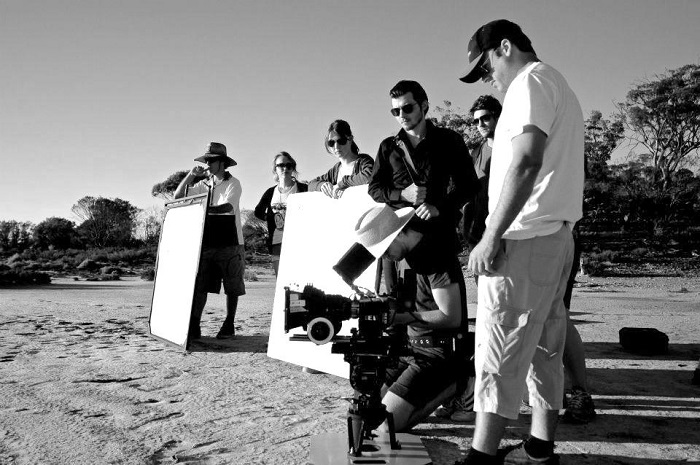
“Where do I begin!??! The engine of the red car in the film caught fire during a take, we were kicked out of locations due to miscommunication, we were dealing with 30cm centipedes out in Marvel Locke and a whole lot more! It was a very exciting shoot to say the least.”
How do you find being a working actor based in WA?
“It’s quite difficult. I go back and forth between Australia and Los Angeles. The Perth industry isn’t big, so I’ve found having a base in Hollywood is what I needed to do as an actor so I could cast my net further in terms of opportunities. I’m very lucky to have a fantastic US and Aussie team who all work together extremely well. When I’m in Perth, I still audition for roles in America via self-tapes. In saying that, it’s better to be on the ground in the states meeting face to face with casting directors and building your foundation.”
Did you train in acting, if so, where/how was the experience?
“I didn’t formally train, though I did do weekend acting classes as a kid starting from the age of seven, and night classes as a teenager with a local acting school called The Actor’s Workshop run by Nichola Renton. I learnt most of my skills on the job. I started acting classes young, so being exposed to a magnitude of different people and different styles of the craft over many years have been my school. There is no one way to work in theatre and film. You can design your own way.”

The film was shot so long ago, is it gratifying to finally see it see the light of day?
“It’s a relief that it’s out there and people can finally see it, so I do get a sense of gratification. Our theatrical run was cancelled due to COVID-19, so the film went straight to digital platforms which was a bummer, but obviously this pandemic has disrupted the entire world across all industries. It’s been interesting seeing how people respond to Burning Kiss. It’s such a bold and unique film, so it definitely gets interesting perceptions.”
What have you been in lately, and what’s in the pipeline?
“I did pilot season in Los Angeles last year and worked on some projects. I got to work for Blumhouse Productions and for Nintendo, which were both just incredible experiences. Learning the differences between the Australian and the American film and television industries has been invaluable. I got to meet so many incredible people and got to see some old friends I haven’t seen in such a long time. There are some projects I can’t talk about at this point, but I have an animation coming out later this year and a film adaptation of a web series I shot several years ago called Greenfield. I’m planning on heading back to the states once all the madness that we all find ourselves in has settled down.”
Burning Kiss is available now digitally. Click here for our interview with director Robbie Studsor. Click here for our review of the film.

worst trailer ever!
I love it