



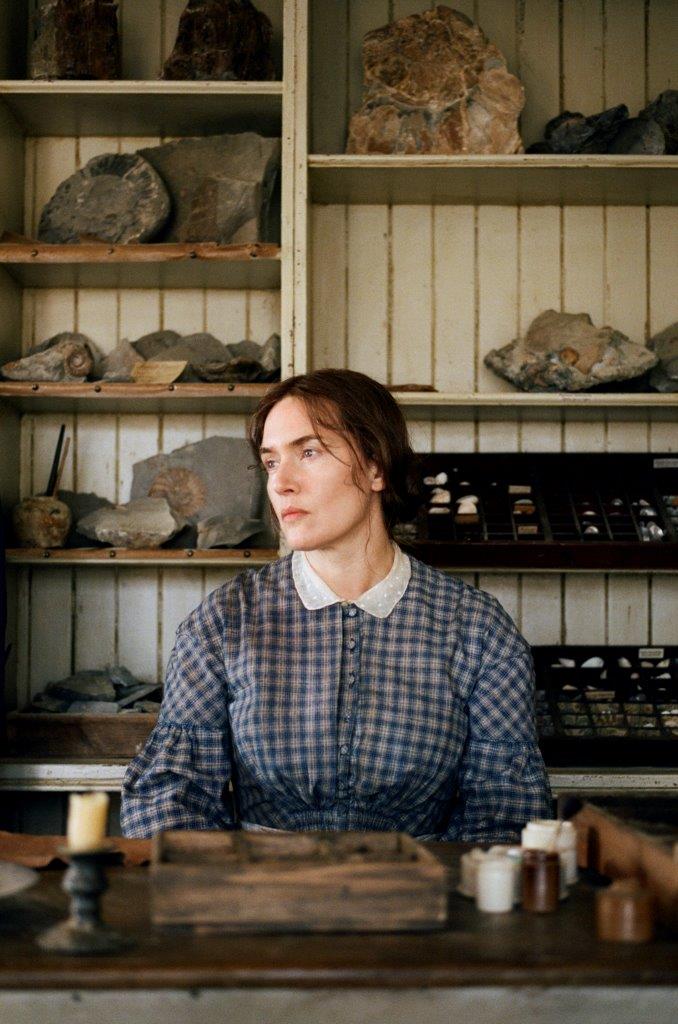
by Gill Pringle
What has been the feedback on Ammonite that you’ve heard from other women so far? Do they tell you that they feel empowered by your role?
“To be honest, all I have to go on is what you guys are saying. I’ve been working and we’ve been on lockdown, so it is a very strange time to be talking about a film because there aren’t the usual audience screenings where you feel the energy. But I do have a very good handful of friends who have been able to see the film and the response has been very positive. Admittedly, a lot of these people are my friends, so they’re probably just being very nice, and they possibly don’t like the film at all but so far it seems to be a positive response which is terrific and very lovely that people are learning about Mary Anning, in some cases, for the first time ever. She is such a wonderful, important, formidable, historical figure in the world of science and geology, so to tell a little bit of her story is really lovely.”
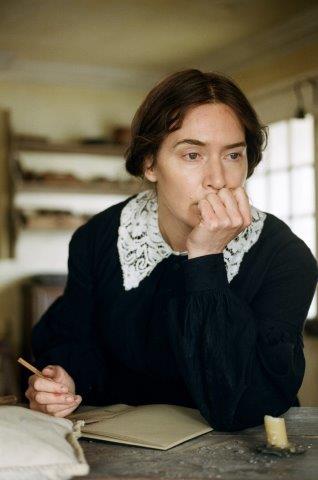
You signed on very quickly to this project. What were your thoughts when you read his script, a partly fictionalised vision of Mary Anning?
“Well, I’d never actually read a script which uses a historical character who really existed and created some imagined part of that individual’s life, so I was fascinated by that. And, given that there’s nothing really known about Mary Anning’s personal circumstances; there’s no documentation about a relationship with a man or a woman. I felt that it was not only brave of Francis Lee to interpret Mary’s story in such a wonderful and perhaps unexpected way, but it created space to bring an LBTQ story into the mainstream. I feel that we need more LBTQ stories for audiences to view LBTQ people and their relationships in a normalised and much more natural way. I hope that for my own children, and to see a same-sex connection portrayed in this way without hesitation or fear or secrecy… I found that very, very beautiful and appreciated the request to be a part of it. It was such a privilege to play this role and to take part in this story and to enter into this female relationship with Saoirse Ronan in playing these two parts.”
How did you prepare for the role?
“I knew who Mary Anning was and I knew what she had done in terms of her profession, but I didn’t know about her pioneering discoveries and I did not know anything about her scientific brilliance and the significance of her finds. She really is the unsung hero of fossil discovery and paleontology. I did not know those things and I had to get really educated in order to be able to play her. And also get educated about that period and the working classes of that time and the vast number of people who lived in poverty in the way that Mary did. She lived such a harsh life filled with struggle. These were things that I did not expect and did not know about. Ultimately, I developed such an enormous admiration for Mary because she was remarkably accepting of this patriarchal society in which she existed, in spite of how maligned she was and how her finds were questioned and even doubted by her male counterparts; she still continued to do her important work and knew that it was important and believed in herself and was passionate about what she did. I connected with that on a very deep level and really adored her because of it.
“Mary’s nothing like me and I was really nervous. I thought ‘Oh my God, how on earth am I going to do this?’ I certainly had the same sense about playing Mary Anning as I think I probably did about playing Hanna Schmitz (The Reader). How do you create a character who seems automatically very unlikeable and yet somehow craft a way to hopefully create an opening for an audience to at least empathise with that person? I felt that was important with Mary and I just had to try and be as ‘Method’ as I could with playing her. I lived alone from Monday to Friday when we were making the film and I didn’t live with the crew or any of the other actors in the warm comfortable hotel. I was able to live in isolation in a small cottage, which was very separate and sat right on the beach and exposed to the elements in Lyme Regis. It was exposed on two sides and really would be hit with the wind and the rain. When there were storms the whole house would really rattle and the power would go out and I would lie there in my bed terrified, thinking ‘Ok, something bad is going to happen to me. Why don’t you just go and stay in the nice comfortable crew hotel, Kate, with the hot water and the lights that work?’ But I don’t know, I just knew that I had to somehow put myself in Mary’s rhythm as much as I could and we were very blessed to be actually filming in Lyme Regis, where of course the story takes place. I learned how to find fossils on the beaches that Mary would have walked on every day….”
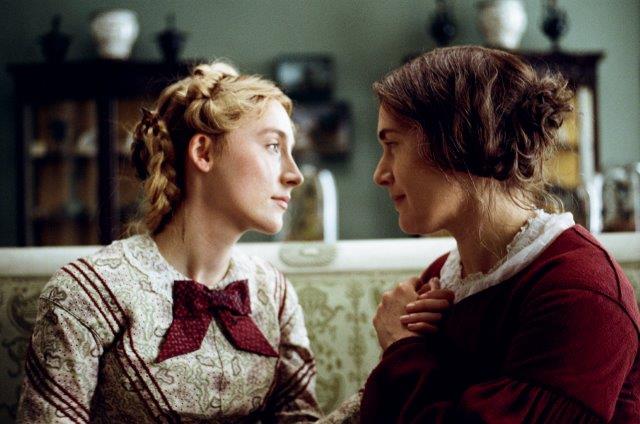
Same-sex dramas always seem to get a lot of attention, but you’ve said about this one that it makes you more proud than other love or sex scenes you’ve done in the past. Why was this so different?
“There are ways in which same-sex intimacy in film is described sometimes that actually really annoys me, so I feel tremendously proud to be able to contribute to this evolving, very important conversation. So often, a love scene between two women is described in a very sensational way and very rarely are the same words used to describe a heterosexual love scene of a similar nature. In fact, often heterosexual love scenes are never actually mentioned within the overall arc of a story and yet with same-sex love scenes we’re so used to hearing words like “steamy” or “lusty” or ‘erotic” and even “controversial”. And actually, it’s the use of those words that makes the scene controversial in and of itself, and I hope that with this film we can allow for those scenes to just be passionate and loving because I would hate for those more controversial words to be used as a more generalised description of the entire film.
“I think we tread the line quite carefully with Ammonite, or certainly we tried to because the important thing, of course, about this story is that these two people who fall in love and what Francis Lee does so cleverly is the fact that they are two women specifically, which is never addressed as a part of the narrative – it just IS, pure and simple. And I really appreciate that because in this story we hopefully normalise this same-sex connection without hesitation or fear. And my hope is that it is a helpful contribution to the progression of how audiences view LBTQ people and their relationships. By bringing LBTQ films into the mainstream, I’m hoping that we’ll be comparing the few that do exist less and less. It was very important to Saoirse and I to really honour the connection and the equality between these two women in our choreography of those love scenes and also to highlight the fact that this was a time when it was perceived that women didn’t even have sexual pleasure organs and to show very clearly that they absolutely did was really important to us. And, the big intimacy in the story takes place at a pivotal point in our film, when you know that those characters are going to be apart and so it’s quite emotional as well, and that sense of wanting to hang on to each other and stay connected to one other was something that we also tried to honour and make sure that we were bringing into those scenes as well.”
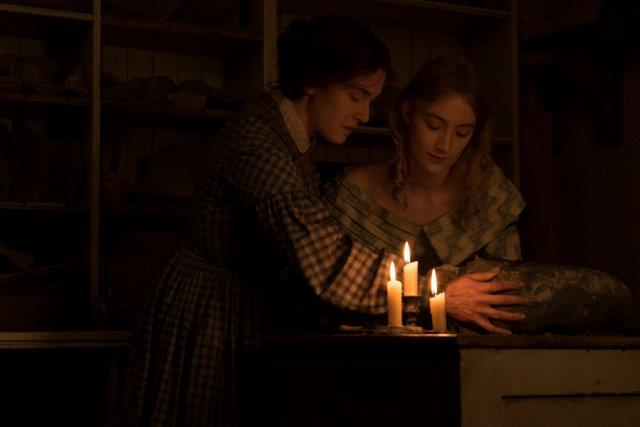
Can you talk about your relationship with Saoirse and how was it to film these intimate scenes?
“Saoirse and I were very lucky in that we had met each other before, even though we had never worked together. We had met each other on press junkets and flying past each other in hotel room corridors or even during photo shoots, and we interviewed each other for the Actor on Actor series a few years ago when she was nominated for Brooklyn. It was clear that we had a similar sense of humour which I think is really important – and we actually knew a lot of the same people. Guy Pearce we had both worked with as well as Peter Jackson. We had those connections as well as some other crew members and so I think we knew that we would get along. I think one thing that I hadn’t anticipated feeling was quite so protective of Saoirse. I wanted to look after her and make sure that she felt secure and safe, particularly shooting those more intimate scenes, because I have more experience of shooting scenes of that nature than she has. And I just wanted her to feel happy and relaxed – and actually, we filmed that scene on her 25th birthday – and I actually asked them to reschedule the scene and they pulled it four days forward so that it would fall on her 25th birthday because I thought, ‘Hey! It’s a memory!’ And also, I knew there would be a sense of fun and celebration around that day for her.
“But in terms of crafting these characters, we did rehearse, and we absolutely ironed out the overall emotional arc of the story. I actually identified, and wrote down the moments in which these characters would physically smile at each other and touch, whether that was their hands or faces, how close they might be physically at times. We had to be quite sparse in the expression of that affection because of course we needed it to remain as electric as possible in those very few moments where their hands do touch or Charlotte puts her hand on Mary’s back; it’s almost as if Mary is ‘Hang on, did she just put her hand on my back? Did she just leave it there for three seconds or was it one second?’ It’s a very important feeling when we’re falling in love, even though nowadays it’s more ‘Why haven’t they texted me back?’ [laughs] But then, of course, it was very very different, so trying to do our best to be mindful of when we use those smiles, those looks and really just working together and being on the same page and having the same approach to the work was a real blessing and definitely helped us in terms of just being in each other’s corner and wanting to look out for one another. And we were really, really fortunate – we just got along absolutely great, we really did. I love her. She’s wonderful.”
Ammonite is in cinemas now.
