


by Wayne Forrest
Cinema has had plenty of competition over the years. Television changed how families spent their evenings. Home video gave people control over what they watched and when. Then came streaming, smartphones, social media, games, and an almost endless supply of short videos. Yet movies never disappeared from everyday entertainment. They simply became part of a much larger mix.
That mix can change several times in a single evening. Someone might watch half a film, check a few messages, look up an actor, switch to a game, or spend a few minutes on a digital entertainment platform such as spinsahara. Later, they may return to the movie. This kind of switching now feels normal. Cinema no longer commands the screen by itself, but it still affects what appears on that screen and how creators tell stories through it.
Film Still Defines Visual Storytelling
Watch a well-made scene with the sound turned down and you can often understand much of what happens. The camera points your attention toward a face, an object, or a movement. A cut takes you somewhere else. Lighting tells you whether the scene takes place at noon, late at night, or inside a dim room.
Filmmakers have worked with these tools for generations. Today, people can find the same techniques far outside movie theaters.
A game may introduce a character through a carefully framed sequence. An online documentary may use close-ups and wide shots to establish context. A short video creator can use editing to turn several ordinary clips into a clear sequence of events.
Some basic filmmaking tools appear across modern screen entertainment:
- Camera position tells viewers where to look.
- Editing determines what viewers see next and how quickly they see it.
- Lighting changes the appearance and atmosphere of a scene.
- Sound adds information that the image cannot communicate alone.
- Actors use voice, movement, and expression to establish character.
- Sets, costumes, and objects help viewers understand where and when events take place.
None of these ideas belongs only to the cinema anymore. That fact actually shows how far film language has travelled.
Cinema and Home Entertainment Now Share the Audience
Not long ago, watching a new movie usually required a trip to a theater. Watching something at home meant accepting a television schedule, buying physical media, or choosing from a relatively limited selection.
That routine has changed.
People now expect much more control. They start a movie when they want. They pause it to make coffee. They stop halfway through and finish it the next evening. One family member may watch on the television while another uses a laptop in the next room.
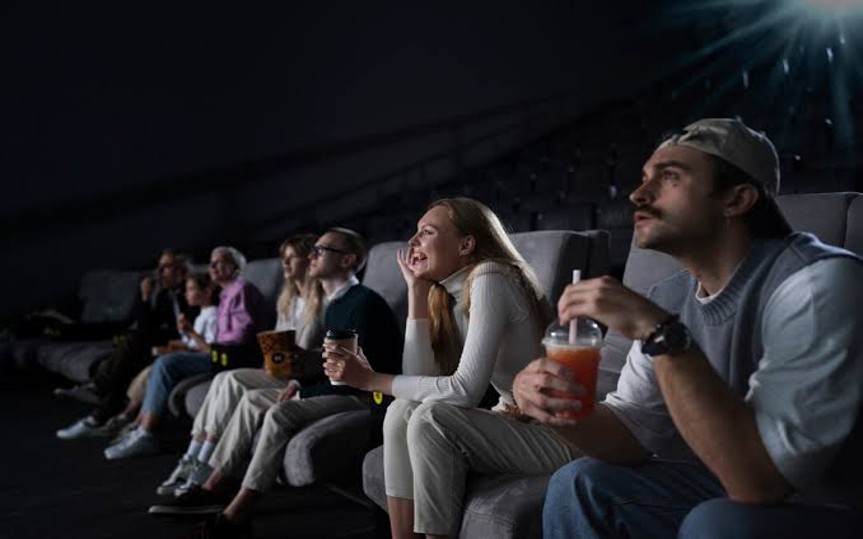
That does not make the theater irrelevant. Going to the cinema asks for a different kind of attention. The room goes dark, the phone usually stays in a pocket, and the film occupies a large part of the viewer’s field of vision. There is also something very ordinary but important about leaving home to watch a movie with other people.
The same film can therefore support several viewing habits.
| Where people watch | What the setting changes |
| Movie theater | Creates a scheduled, shared viewing session |
| Living-room TV | Makes films part of household leisure |
| Computer | Supports personal viewing at a desk or in a bedroom |
| Tablet | Lets viewers move between rooms |
| Smartphone | Works mainly for brief viewing, trailers, and clips |
People do not always choose one setting permanently. They move between them depending on time, place, company, and what they want to watch.
Acting Connects Film With Other Media
Cinema also changed what audiences expect from screen acting.
A movie camera can sit close to an actor’s face. A small movement of the eyes can matter. So can a pause before a sentence or a slight change in tone. Performers need to think about details that might disappear during a large stage production.
Viewers now encounter this style of performance everywhere. Television dramas, online series, story-focused games, and other screen productions often ask actors to work with cameras in similar ways.
Technology has changed the job too.
An actor may perform in front of a physical set one day and a mostly empty studio the next. Motion capture can record body movements for a digital character. Computer-generated environments can appear long after filming ends. Virtual sets can place performers inside locations that the crew never constructed physically.
Still, technology cannot do the actor’s main job. The performer has to make a character’s actions understandable. If a scene involves fear, anger, confusion, or affection, the audience needs to recognise it without reading an explanation.
That basic requirement has hardly changed.
Film Influences Games and Interactive Entertainment
The connection between movies and games becomes especially clear in story-focused titles.
Many games use scenes that could easily resemble sequences from a film. Characters talk while the camera changes position. Music enters at a specific moment. An establishing shot introduces a new location. The story builds tension before an important event.
Then the player takes control, and the similarity ends.
A movie decides what happens next. The viewer watches that sequence. Games can hand some control over timing, movement, exploration, or story choices to the player.
That difference matters. Film directors control every second of a finished scene. Game creators have to account for what a player might do.
Even so, the two forms share plenty of creative tools. Writers think about characters and dialogue. Artists design spaces. Actors perform roles. Sound teams create environments that audiences can hear as well as see.
Cinema supplied many of the visual rules that audiences now understand without thinking about them.

Short-Form Media Still Uses Film Techniques
At first glance, a two-hour movie and a 30-second online video have little in common. Look at how creators build them, though, and the connection becomes easier to spot.
A person making a short clip still has to decide where to put the camera. They choose which parts to cut. They think about light, sound, timing, and the order of shots.
The big constraint comes from time.
A feature film can spend several minutes establishing a character or location. A short clip may have only a few seconds to make its point. Creators therefore use familiar filmmaking tools at a much faster pace.
The result does not turn every online video into a miniature movie. It simply shows how deeply cinema has affected the grammar of screen content.
The Movie Theater Remains a Social Space
There is another side of cinema that a phone or laptop cannot fully copy: the act of going somewhere specifically to watch a film.
For many people, the movie itself forms only part of the evening. Friends meet before the screening. Families go out together. People grab food, watch the film, then talk about it afterward.
Theater programming can also turn older movies into current events again. A film that people have watched many times at home can feel different on a large screen with a room full of viewers. Festivals, anniversary screenings, seasonal programs, and independent productions add other reasons to attend.
Audience reactions matter as well. Comedy feels different when dozens of people laugh at once. A tense scene can make an entire room quiet.
Those reactions remind viewers that cinema can still work as a shared activity rather than purely personal screen time.
Technology Changes Production Without Replacing Story
Film production looks very different from the way it did several decades ago.
Crews now use digital cameras, computer-generated environments, sophisticated sound systems, virtual sets, and powerful editing software. They can review footage immediately instead of waiting for film processing. Editors can alter images with a level of control that earlier production teams did not have.
Yet viewers rarely sit through a movie simply because its production team used advanced equipment.
They care about what happens.
Who is this person? What do they want? Why did they make that choice? What happens because of it?
These simple questions still drive most stories. Expensive effects cannot make an unclear character suddenly interesting. A technically impressive scene can lose attention if viewers have no reason to care about its outcome.
Technology changes how filmmakers construct a movie. Story gives audiences a reason to keep watching it.
Cinema Continues to Influence Entertainment Habits
People now have more ways to fill an hour than cinema audiences of earlier decades could have imagined. A phone alone can hold movies, music, games, books, news, social conversations, podcasts, and short videos.
Cinema has to exist inside that crowded schedule.
It does not dominate every evening, and it does not need to. Its effect appears elsewhere. We see it when a game introduces a character with a dramatic close-up. We see it when an online creator cuts between several camera angles. We see it when a television production treats each episode with the visual care once associated mainly with feature films.
Most viewers probably do not stop to think about any of this. They simply recognise the language. A close-up means something deserves attention. A wide shot tells us where we are. A sudden cut changes our focus. Music can signal a change before a character says anything.
Cinema helped teach audiences to read those signals.
Screens have changed. Viewing habits have changed even more. People pause films, watch them on different devices, discuss scenes online, and jump between entertainment formats throughout the day. But the basic methods that cinema developed continue to appear wherever people tell stories with moving images.
That may explain why film remains such a persistent part of modern entertainment. Cinema no longer stands apart from the rest of screen culture. Much of screen culture now speaks a language that cinema spent decades developing.
