



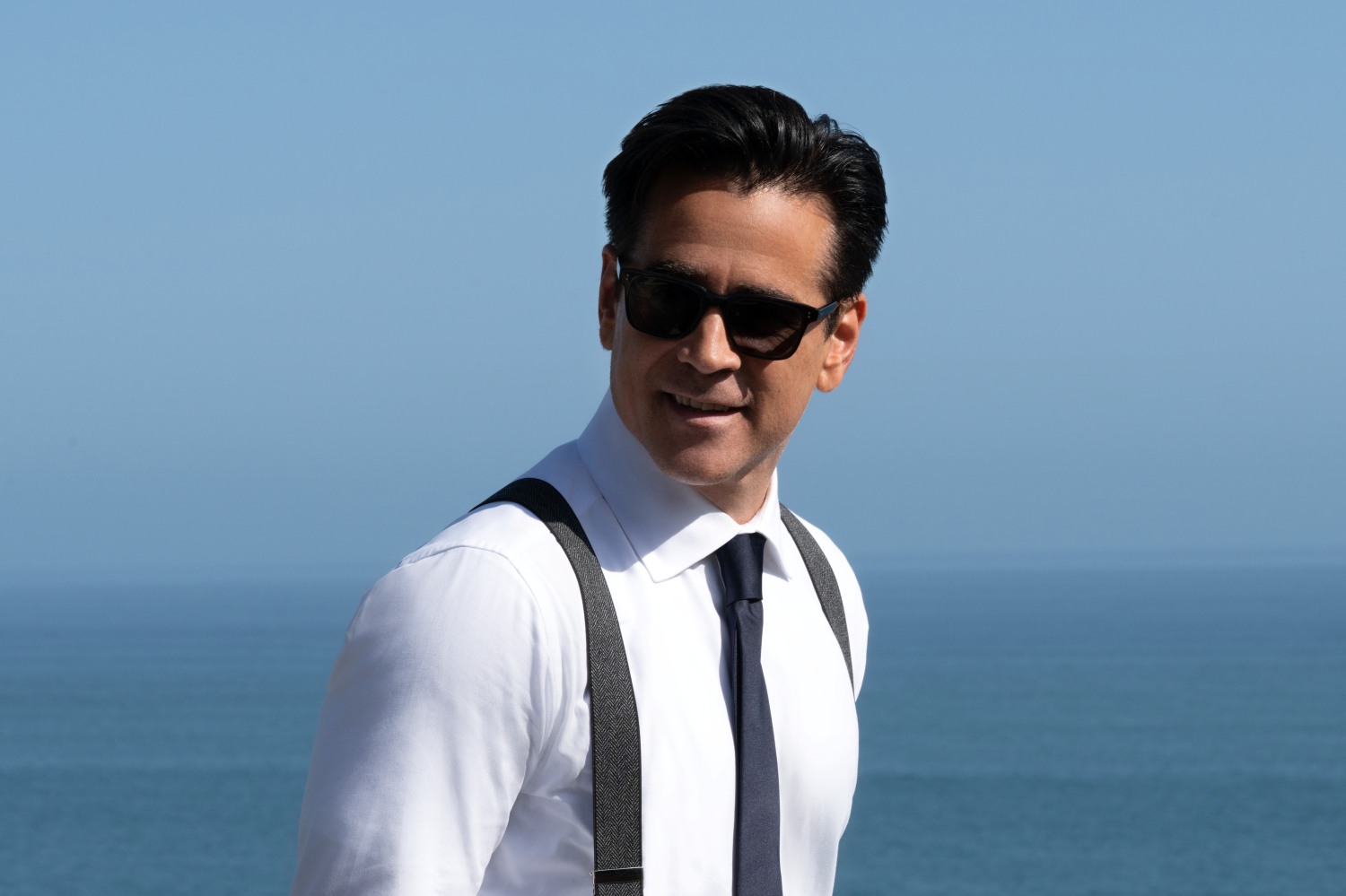
by Gill Pringle in LA
If Colin Farrell’s meteoric rise from Irish working actor to Hollywood superstar seems like the stuff of dreams, then he begs to differ. “When I came here first in 2000, I found it terribly lonely. I didn’t find New York lonely ever. I feel New York just took me up in the wave of its kinesis and volume, but here I found it was very what we call at home cliquey, like there were cliques of people and groups, and you couldn’t really penetrate,” says the actor with his trademark candour.
“Everyone else seemed to be doing fine in their little groups and I was kind of the outside looking in – but not so much anymore. I still feel loneliness as a human being from time to time, but not born of Los Angeles or any energy that I discern or feel from this place,” he says.
While he has since made Hollywood his home, he believes that loneliness is prevalent no matter where you live. “Loneliness is everywhere, not just in LA. Human beings are afflicted with loneliness and the desire to connect, and there’s a lack of connection at times. It’s just fundamental to the human experience, by virtue of just being singular, but also having a suspicion that we’re part of a greater whole, and not being able to always access that,” he muses.
Ironically, his favourite to place to film today is Los Angeles. “Because it’s where I live, and I get to sleep in my own bed,” he quips as we discuss his sci-fi/Hollywood noir Apple TV series, Sugar.
“I also get to hang out with my family and see my mates. No, I mean, because particularly that character’s romantic leaning toward the world of cinema, and particularly through the lens of film noir, which is a very mid-20th century American film concept, it made sense.
“In the first year, we explored more affluent parts of Los Angeles like Bel Air and Brentwood and also the studio system. But then this year got us in a very different direction,” he says of Sugar Season 2, which has more scenes in LA’s gritty downtown areas and homeless camps.
“I think that if we get to do two or three more years, it’ll always be here in LA,” he says crossing his fingers in the hope that Apple TV green light a third season.
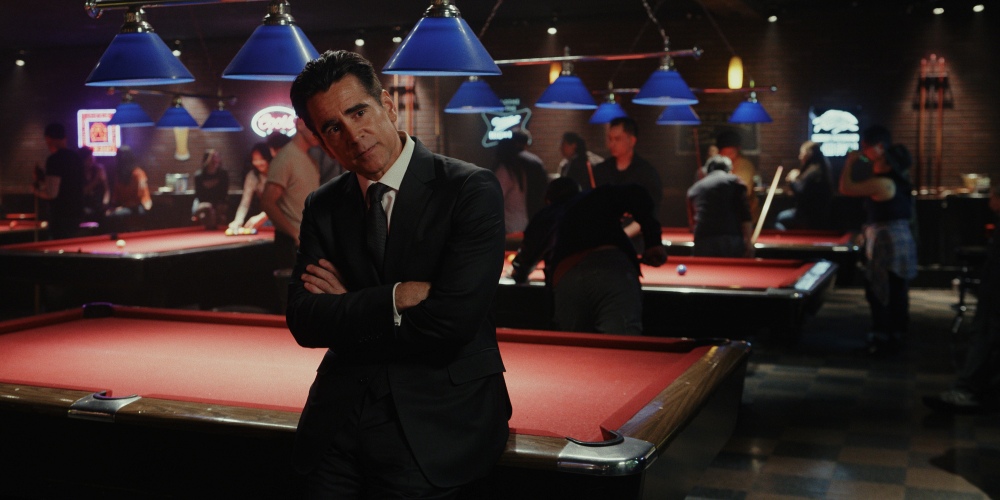
As the eponymous John Sugar, he plays a private investigator specialising in finding missing people. On the surface, he’s a classic noir-style detective: impeccably dressed, polite and fast-thinking.
But what makes Sugar unusual is his strong moral compass. Unlike many hard-boiled detectives, he genuinely dislikes violence and repeatedly tries to avoid hurting people, even though he is highly capable of it. Unusual in this genre, he’s often more interested in protecting people than in making money.
He also happens to hail from another planet and has some very specific skills which leaves the audience longing to see more – not least how he learns to play excellent pool within minutes by memorising Paul Newman’s technique in The Hustler.
Ask Farrell which skills he would likewise enjoy accumulating at rapid speed, he doesn’t hesitate. “Something I would rapidly like to learn is to stop being afraid of fucking flying,” says the actor who admits to having tried various prescriptions although nothing particularly works.
“It’s about putting one foot in front of the other. I just have a very rapid, nervous, anxious response when we hit turbulence, especially if we’re over water. My head is a disaster sometimes … runs away from me from time to time, and that’s one of the cases when it does. I’ve got such calm envy,” he laughs.
Other than that, he does admit that he’d like to be able to snowboard. “I can ski, but I wouldn’t mind being able to snowboard. That looks like a load of fun, but I’m too lazy, and my hips are too sore at this stage.”
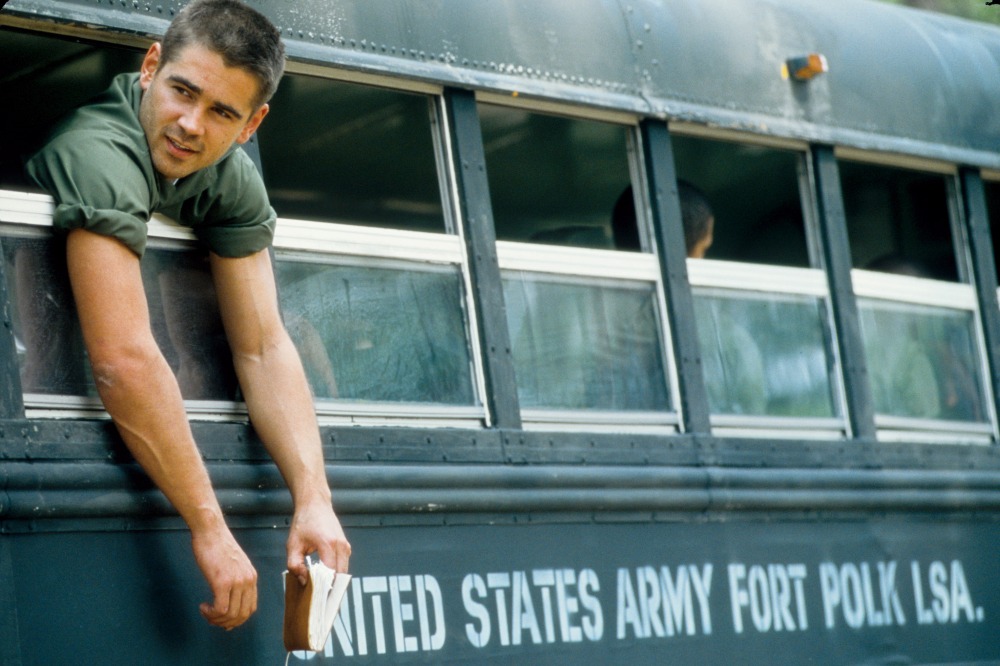
If it seems like Farrell – born to a lively sports-loving family in Dublin – has been on our screens forever, then his breakthrough was only in the early 2000s after gaining attention in Joel Schumacher’s war drama Tigerland (below), quickly becoming one of Hollywood’s most sought-after young actors.
Leading roles in films such as Phone Booth, The Recruit, and S.W.A.T. turned him into an international star, developing a reputation as a charismatic leading man with a rebellious image that frequently made headlines.
As his fame grew, he faced significant personal challenges, speaking openly about his struggles with alcohol and substance abuse during the height of his early success, eventually seeking treatment, transforming both his personal life and his career.
“I’ve been asked how I must feel very proud for being sober,” he reflects. “And I’m not joking when I say I have no pride for being sober for 20 years. I just have gratitude. Because I have no idea why I – as hard as I may have worked in the first six months or year of my sobriety – I know people who have worked way harder; who have bit down; who have done four meetings a day in AA; who have had 10 hours of therapy a week; who’ve been to 17 rehabs, and they were never able to get more than a month sobriety.
“And so why me? I’m supposed to be proud that I can? Fuck no. I have no idea why they couldn’t when they worked harder. I’m just grateful that I’ve had the 25 years that I’ve had, and that I’ve been able to meet the people I’ve been able to meet and travel to the parts of the world that I’ve been able to travel.
“Honest to God, swear on my life, I’m just grateful. And who knows what tomorrow holds … but yeah, 20, 25 years, it’s been a while.”
The second phase of Farrell’s career would prove even more satisfying than the first. Instead of focusing solely on blockbuster roles, he began choosing more unusual and character-driven projects.
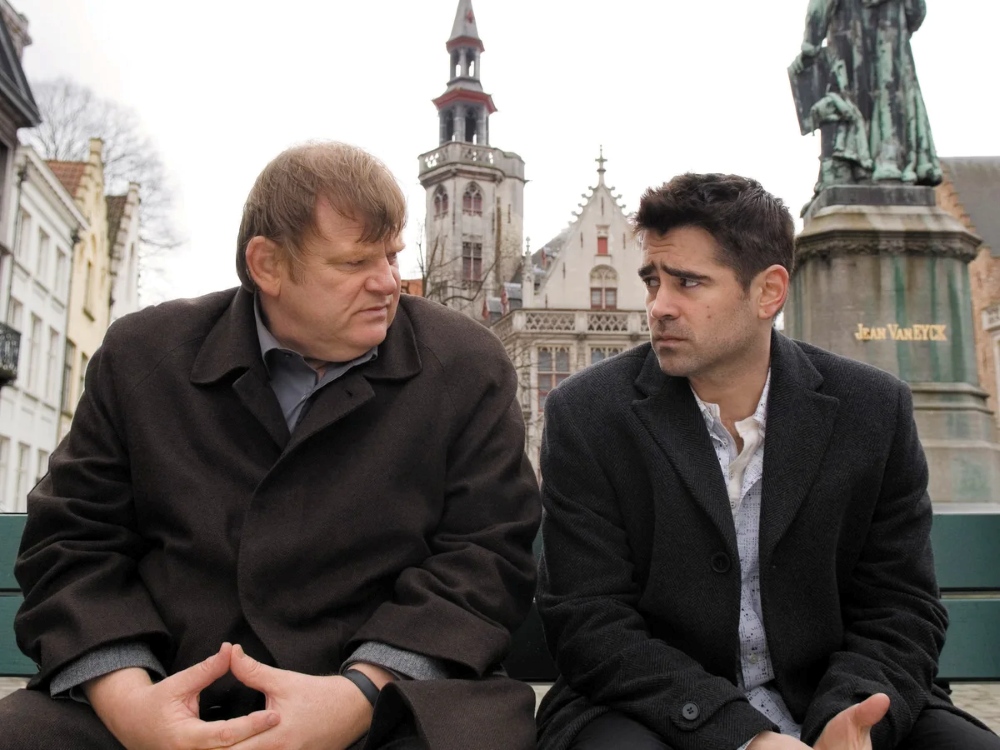
Starring opposite fellow Irishman Brendan Gleeson in Martin McDonagh’s dark crime caper In Bruges (above) would earn him widespread critical acclaim, reminding audiences of his remarkable range as an actor.
Over the following years, he continued to surprise viewers with performances in films such as The Lobster, The Killing of a Sacred Deer, and The Gentlemen. Rather than chasing conventional movie-star roles, he embraced eccentric characters and challenging material.
His career reached another high point when he reunited with Gleeson in McDonagh’s The Banshees of Inisherin in 2022, his performance earning some of the best reviews of his career and brought him major award recognition, including an Oscar nomination.
Around the same time, audiences saw a completely different side of his talent when he disappeared beneath heavy makeup to portray the villain Oz Cobb, better known as the Penguin, in The Batman and later the TV series The Penguin.
He doesn’t take any of it too seriously, although he admits to genuinely preferring to inhabit the good guys rather than the villain.
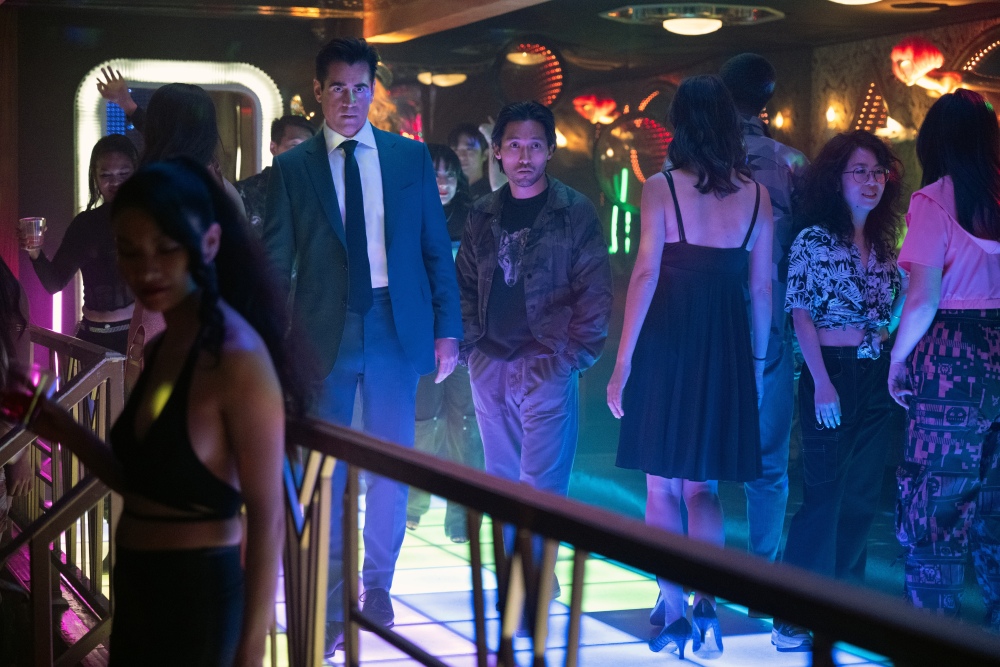
“When I first read Sugar, it was apparent to me very quickly that there was a really lovely character at the center of it. I loved the genre tropes and the neo-noir of it, and the mood of it, and he was described as wearing all these suits and staying in this beautiful hotel, and he had this beautiful car, and all that stuff was fun.
“But there was a decency to the character, and he was somebody that moved through worlds at times of violence and discord and chaos and treachery, and he worked in the shadows as a private investigator, but he had this fundamental core decency to him.
“I don’t think we can expect any of us to be decent all the time, and the world doesn’t really allow you to be that. It kind of walks all over you. We talk about boundaries and all this other shit, you know? You have to learn somehow to protect yourself.
“So, to play a character that is constantly arcing towards decency is just really beautiful and life affirming,” he says.
Which must making playing The Penguin particularly tough. “I’m not gonna bitch about playing The Penguin. It’s not like I went home at night thinking I was Oz, but it’s so dark, so dark, and the character was so toxic. There was such a venom to his own internal trauma, and the relationship he had with that, that it gets you a little bit … it’s all part of the job, and again, it’s not a complaint, I’m still overpaid, and shit … to play Sugar, to go to work every day in the service of this particular character is just an absolute joy.”
Sugar Seasons 1 and 2 are streaming now.
