

by FilmInk Staff
With Oscar winning director Chloe Zhao headed to Australia for a one-night-only in-conversation Vivid Sydney event at The State Theatre, we pay tribute to the quiet powerhouse behind Nomadland, The Rider, Eternals and Hamnet.
A true cinematic artist, Chloe Zhao makes films unlike anyone else. Graceful, lyrical, keenly intelligent but resolute in their humanist themes, Zhao’s five feature films – 2015’s Songs My Brothers Taught Me, 2017’s The Rider, 2020’s Nomadland, 2021’s Eternals, 2025’s Hamnet – are wildly diverse in terms of setting, subject matter and their style of storytelling, but all united by Zhao’s deliberate, deeply studied brand of filmmaking. It’s a striking, affecting cinematic canon, and Chloe Zhao is headed to Australia for a one-night-only event where she will talk all about it at The State Theatre as part of Vivid Sydney’s Creative Trailblazers series.
Born in Beijing to a wealthy steel company executive father and popular actress mother, Zhao went to an exclusive private school in England before later moving to the US, eventually joining The Kanbar Institute of Film and Television Graduate Film Program at New York University’s Tisch School of the Arts, where she studied under no less a figure than the great Spike Lee. “He doesn’t sugarcoat anything,” Zhao told USA Today. “He will just tell you as it is.”
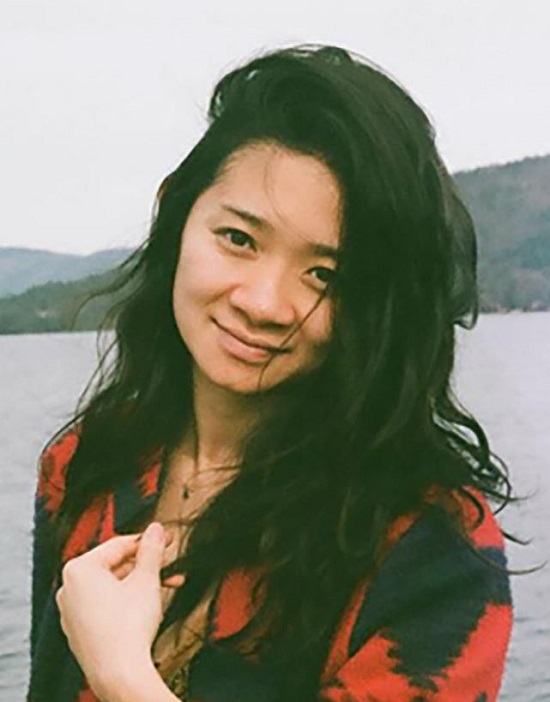
During her time at New York University, Zhao was already making shorts. Her first short The Atlas Mountains (2009) focused on a woman who develops a passionate, flashpoint relationship with an immigrant worker who she engages to fix her computer, while her second work Daughters (2010) tracked a free spirited 14-year-old girl in rural China forced into an arranged marriage. “Short films are extremely hard,” Zhao once said. “It’s actually really easy to tell a story in two and a half hours and very difficult to tell a story in ten minutes. I had trouble with those; I always tried to make a feature in the short.”
Zhao’s first feature came in 2015 with the richly authentic Songs My Brothers Taught Me. Shot on location at The Pine Ridge Indian Reservation in South Dakota, the film depicts the relationship between a Lakota Sioux man and his younger sister. Partially improvised by non-actor residents on the reservation, Zhao shaped the film around the details of their lives. “I want this film to feel like it comes from inside,” Zhao said just before she started shooting Songs My Brothers Taught Me. “I’m very interested in having this be very experiential. I want to find new ways to place the camera to evoke more of a feeling. My goal is to put the camera inside of the characters.”
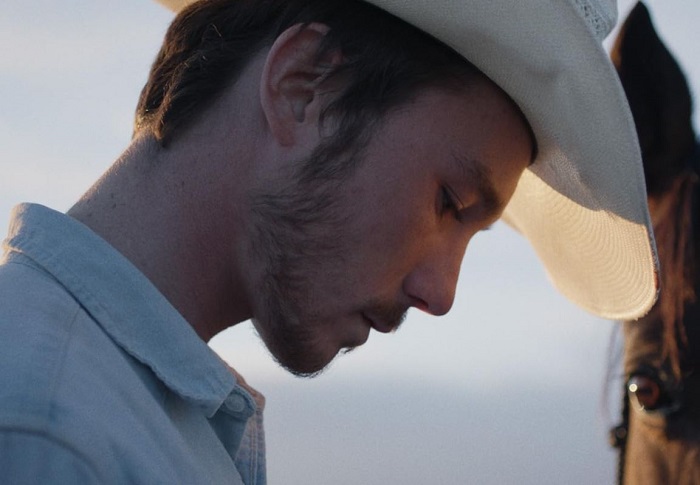
Garnering quiet acclaim for her first film, Zhao moved upward with 2017’s more ambitious The Rider. Winner of the top prize at The Cannes Film Festival’s Directors’ Fortnight, this lyrical drama follows young cowboy Brady Blackburn (Brady Jandreau), who is pushed to reexamine his entire life when a rodeo accident dashes his dreams and leaves him unable to ride again. Hypnotic, sensitive but inherently tough, The Rider sees Zhao really coming into her own as a filmmaker. “I want to tell our boys that it’s okay to be vulnerable, that they don’t have to be like the tough winners on our screens,” Zhao told Seventh Row. “I want to tell our sons that they can have broken dreams, but a real hero is someone who keeps on dreaming anyway. They should know that a real hero can be vulnerable, cry, and still be loved.”
With The Rider, Chloe Zhao proved that she could take the subject of a rodeo performer and then expand outward to talk about the vagaries of life and humanity in general. She then did it again with her stunning 2020 breakout Nomadland, for which she became the first Asian woman to be nominated for and win the Academy Award for Best Director, as well as the first woman of colour to ever be nominated and win in that category. It’s an extraordinary achievement, and an extraordinary film.
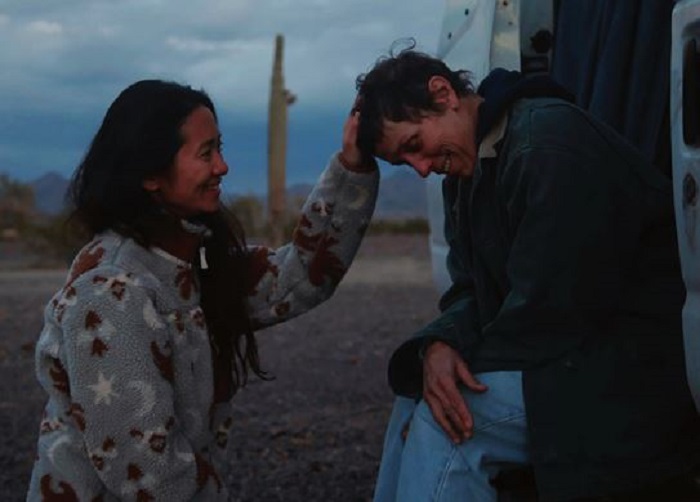
Based on Jessica Bruder’s non-fiction book, which focuses on older nomadic women, Nomadland features a tour de force, Oscar winning performance from Frances McDormand, who plays Fern, who loses her husband, her job and even her (mining) town when the plant that has been her life closes. Fern takes to the road and explores the lifestyle of a modern nomad, and discovers a sense of freedom she is reluctant to give up for a more settled life with her family or even a romance. Similar to her approach on Songs My Brothers Taught Me, Zhao cast many of the real-life van dwellers from Bruder’s book. “Fran treated them like they were the biggest movie stars,” Zhao told FilmInk.
Nomadland also picked up the Best Film Oscar, which saw Zhao instantly elevated up to the echelon of important American-based filmmakers. That also led her to Marvel Studios, where Zhao was handed the reins on 2021’s Eternals, which came packed with a big cast and enormous scope, but a tone far different to the other superhero films produced by the company. “After my first three films, I collected a lot of discoveries, questions, understanding of cultures, and ways of life and Eternals was like a volcanic eruption of everything that I wanted to understand about humanity,” Zhao told Substack. “That’s why it’s a story about a group of gods discussing the nature of humanity. It took four years for me to excavate that lava and sort it.”

Zhao’s next film couldn’t have been more different, yet it once again forefronted the director’s fascination with the pain of the human condition. Millions of readers were enchanted by the book Hamnet, Maggie O’Farrell’s 2020 bestseller about William Shakespeare and his wife Agnes, and their son Hamnet, who died at the age of eleven from the bubonic plague. The fictionalised story explores the profound grief experienced by his parents, and the impact of this loss on their family and on Shakespeare’s choice to write Hamlet.
Pretty much everyone in Hollywood realised the story’s potential, with powerhouses Steven Spielberg and Sam Mendes signing on to co-produce the film. They decided that Chloe Zhao would be the perfect choice to bring this story to life. And, as they had hoped, once Zhao was presented with the novel, she immediately connected to it on a spiritual level. “I felt her book was very immersive,” Zhao told FilmInk. “It was a very visceral and poetic experience. It read almost like poetry to me, which is the type of cinematic language I love. As a filmmaker, when I was reading it, I was seeing images added together in a rhythm. I felt that there is a heartbeat in this book that matches the rhythm of the heartbeat of me as a filmmaker, and I also loved the story. I’m always looking for stories that are both very, very specific and universal at the same time, and this book really is that. I was also very excited because the story touches on death and impermanence and grief and how the act of creativity and imagination could give meaning to the inevitable suffering that we go through in life. When you have source material like that, it’s gold.”

Though still in the relative early stages of her career, Chloe Zhao has already developed a stunning body of work, likely with many, many more fascinating films to come.
In a very rare opportunity for film fans, Zhao will be coming to Australia to engage in an in-depth discussion about her life and career as part of Vivid Sydney’s Creative Trailblazers series. After being interviewed on stage at Sydney’s historic State Theatre by award-winning journalist Kumi Taguchi, Zhao will take questions from the audience. A full ninety-minute programme, this will be far different and far more in-depth than most post-screening Q&A sessions. For those who have engaged so deeply with Chloe Zhao’s films, this is a not-to-be-missed experience.
Chloe Zhao: In Conversation happens on May 28 at The State Theatre as part of Vivid Sydney’s Creative Trailblazers series. For all ticketing and venue details, click here.
