


By Christine Westwood
Documentary filmmaker, Morgan Neville, has a gift for listening to and nurturing his subjects’ stories, especially those of remarkable musicians like Keith Richards, Johnny Cash, and the ensemble of backing singers in his 2013 Oscar winner, 20 Feet From Stardom. Music Of Strangers marks Neville’s sixth Sydney Film Festival selection, but this year is his first visit. “Some people make documentaries because they want to deal with a political issue or because they want to change people’s minds,” he tells FilmInk. “That might be politically savvy, but in terms of film, it’s not so great. The last thing that I want to do is tell people what to think. I’m all about asking questions. The way that you ask questions gets people to think about things in different ways, so they’re much more inclined to open up and reconsider than if you tell them that they should think this or that.”
For Neville, the interview process is a simple one. “Interviews are just conversations,” he says. “Often I’ll start a project talking to somebody, just with a tape recorder, to get the rapport. I never want someone to feel like it’s an interrogation. What’s changed for me over the 25 years that I’ve been making documentaries is that I made a number of music films that documented something important musically. There was Hank Williams, Sun Records and Sam Phillips, Muddy Waters, The Brill Building. I had the sense with all of them that I was the last filmmaker that was going to get this story down before these people died. I felt this great responsibility to be the historian. Now I think that even though that’s important, it doesn’t always serve the film the best. I’m proud of those films, but now I think that it’s less about my responsibility to history and more about my responsibility to the film.”
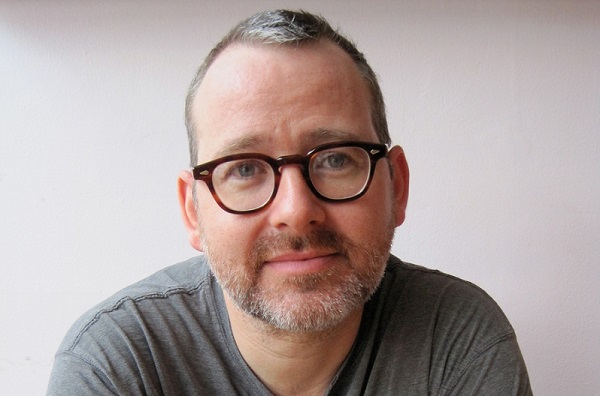
Neville describes how Music Of Strangers began, and his collaboration with his documentary subject: the world’s greatest cellist, Yo-Yo Ma. “I got a call from Yo-Yo’s office saying that he wanted to meet to discuss shooting a live concert, but they wanted it to be more than a concert,” the filmmaker explains. “He had been doing the Silk Road project for a long time [the project being an ensemble of virtuoso musicians from around the world], but from the concerts, you only understand a tiny bit of what’s going on. It’s the tip of the iceberg about what this group of musicians represents, globally and culturally. At the end of that first meeting, we decided to make a documentary. Yo-Yo is one of the most charming individuals I’ve ever met, and my documentary filmmaker’s instinct sparked with all these ideas that he was talking about. How useful is culture as a tool for social change? How do we use our art in culture to understand the world, and to change the world? And what value does it have? Yo-Yo has spent so much time trying to put arts and culture out there to get a seat at the table along with everything else, like science and technology. There are skills in the arts that we tend to discount in the west: the human experience, collaboration, improvisation. Yo-Yo has been a cultural warrior for a long time, and as someone who makes films about culture, I responded to it instantly…it’s my battle too.”
The Silk Road Ensemble began in 2000 when Yo-Yo Ma brought together musicians from over 20 countries. Since then, they have made six albums and performed in 33 countries to millions of people. Their manifesto is to commission new music in an ongoing cross-cultural and artistic exchange. The music is both contemporary and ancient, drawing on traditions from around the world with the intention of creating not just a fusion, but a new musical language for 21st-century global society. The film opens with a pop-up concert in Istanbul on the banks of Bosphorus. The raw energy and virtuosity of the musicians is astounding as the camera weaves and dips between them, and the music and vocals soar. “It looks like it was choreographed, but it wasn’t,” says Neville. “I wanted a sense of motion to it, and a sense of showing how beautiful the world is, in all these amazing locations. It’s an interesting tension with trying to be cinematic but also trying to be in the moment. I feel like a lot of documentary cinematography does one or the other; it’s either very fly on the wall, or it can be a little stagey. We would basically set up, and let the story develop naturally, but make it look as good as possible.”
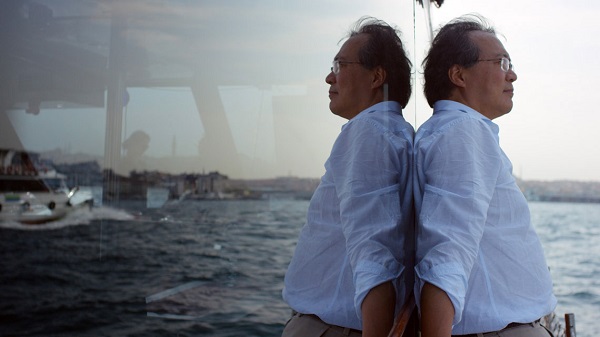
Yo-Yo Ma was a musical child prodigy, discovered at the age of seven. Though of Chinese parents, he grew up in Paris, embracing cultural fusion from the start. In the film, Ma says, “My problem is that I never made a choice. I never committed to music. A teacher commented once to me that I hadn’t found my voice. I was always trying to figure out who I was and where I fit in the world, which is something that I think I share with 7 billion people. Before touring, I always had this huge anxiety, and that made me think that I’d better know why I am doing this.”
Ma’s journey is reflected in the other half dozen musicians who become main characters in the film. They are all virtuosos pushing the outer limits of their craft, and all left their traditional culture to explore their art in a wider global context, sometimes because of repressive political regimes. “They have this experience out in the world, with Yo-Yo and other collaborations, and then turn back to that tradition with this new worldliness,” offers Neville. “It’s the classic hero’s journey. Part of what attracted me to the project was that it was outside my comfort zone, but it concerns something that I’m fascinated with. In the west, we think of culture as nice but not essential, but its foundational. When you look at the cultural revolutions in Spain and Syria, for example, they’re not called cultural revolutions for nothing. The easiest way to attack and control people is to erase their sense of identity in cultural aspects like language and music. Culture is all about building bridges even when a lot of politics is about building walls. It’s essential to do something as a filmmaker, in this case to humanise refugees, or Iranian culture, and those things that are being demonised. It reminds us that not only are these people human, but they are a reflection of us.”
And though well-established in the world of documentary, Morgan Neville is ready to wander outside his comfort zone again with his next project. “I’m working on my first script for a feature film,” he smiles. “I go from being totally petrified to thinking, ‘I’ve been making movies for 25 years! I know a lot that maybe other people don’t!’ I know that whether it’s a feature or documentary, the same things go into making a good film: story and character.”
Music Of Strangers screens at The Sydney Film Festival on June 18 (9:30am, The State Theatre) and June 19 (3:45pm, The Hayden Orpheum, Cremorne). To buy tickets to Music Of Strangers, click here.
