


by Anthony Frajman
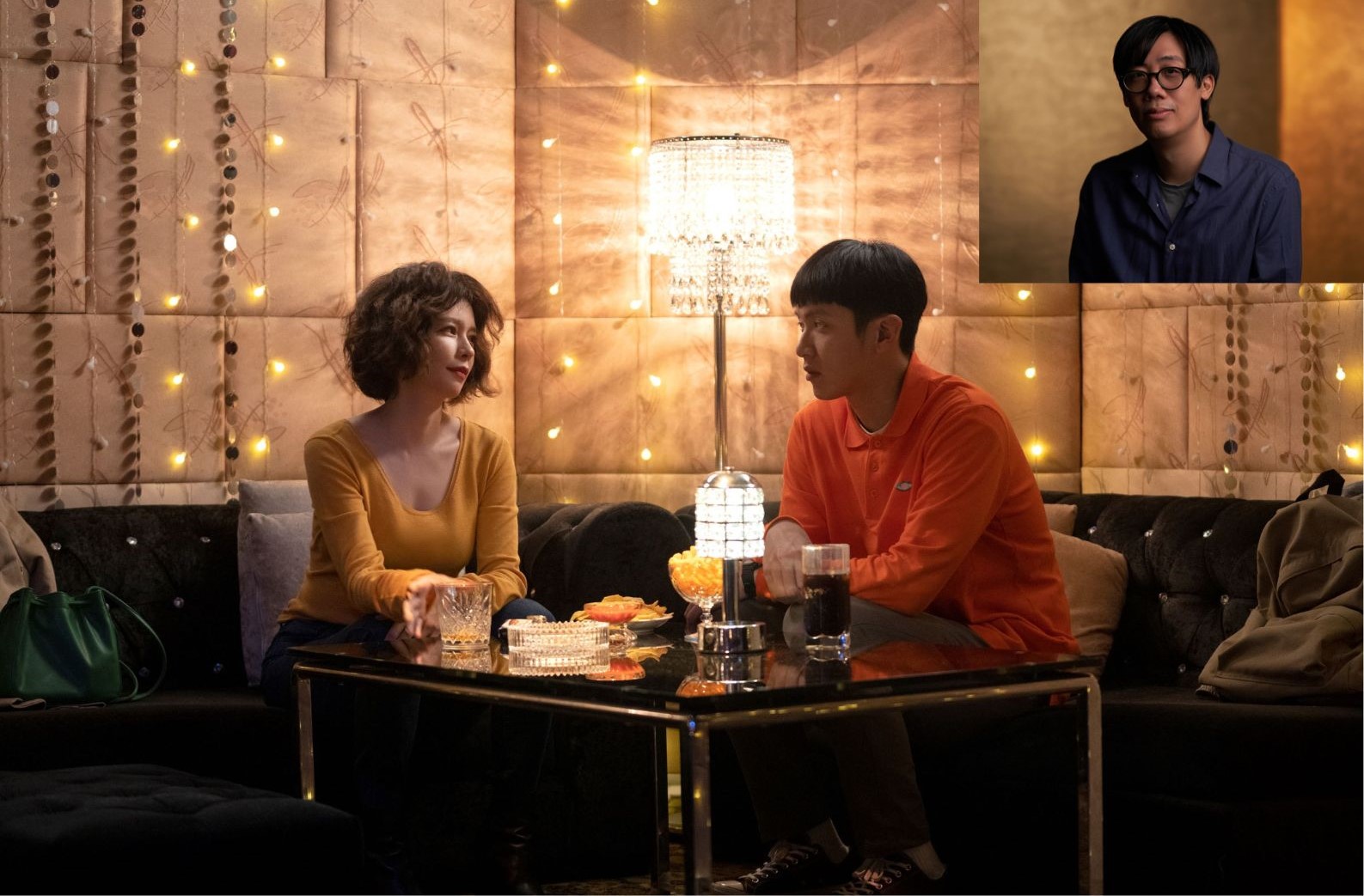
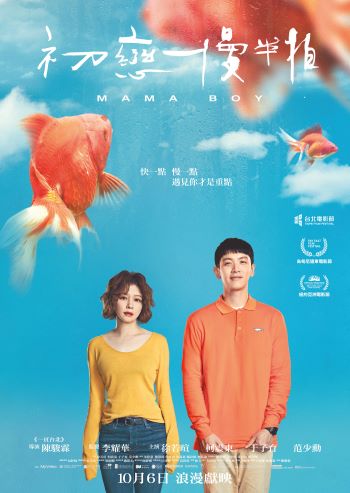
One of the most anticipated films of the 6th edition of the Taiwan Film Festival in Australia, Taiwanese-American director Arvin Chen’s Mama Boy.
Chen’s first feature in 9 years, Mama Boy stars major Taiwanese performer Kai Ko as a shy young man who lives with his overbearing mother, and whose world is turned upside down when he is dragged to a sex hotel by his cousin, and falls for its owner, who is the same age as his mother.
Chen studied with Edward Yang, and received acclaim internationally for films including Au Revoir Taipei (2010), executive produced by Wim Wenders.
He has just completed the feature Love in Taipei, and recently helmed episodes of the acclaimed Apple TV+ series Pachinko.
Ahead of Mama Boy’s screenings across Australia, FilmInk caught up with Chen.
Mama Boy came out of a collaboration with your wife [Sunny Yu], the first time you’ve worked together. Can you tell us about this?
“We came up with a story together. I wrote it first in English. We can be very blunt and honest with each other, so it makes it very efficient in some ways because it’s a much more straightforward collaboration.”
One of the key components of the film is the relationship between your protagonist and his domineering mother, and the challenges of mother-son dynamics. How important was it for you to focus on this?
“The idea was always to talk about a stunted adolescent, because it’s pretty common in Asia to have overbearing mothers and not just overbearing mothers, but I think I’ve noticed a lot of people around me, like younger people, there’s a lot of instances of sheltered young men. This is an extreme example maybe, but it was always just an idea, that if you had someone with an overbearing mother, maybe the only kind of woman that he could find comfort with would be like another mother, like another old woman, so that was the idea of it. And then, a romance between a younger man and an older woman.”
This type of relationship between mother and son is common globally, but how big is this issue of overbearing mothers in Taiwan?
“I think there are some overbearing mothers with toxic issues with their sons. And that definitely is a problem [laughs]. I didn’t grow up in Asia, but I heard many stories of people around me who did lose their virginities in sex hotels or these kinds of places. So, there’s something maternal about that too. So, coming of age, losing virginity, and then the mother’s relationship, the mother’s role and all that.
“To me, the idea is that he can’t lose his virginity at a sex hotel, and he falls in love with an older woman. I think that’s much more interesting than a story about someone losing their virginity at a sex hotel.”
How conscious were you of subverting those coming-of-age conventions?
“I was thinking about when he does try to lose his virginity, it’s like the most unromantic and most unsexy, most awkward thing possible. So, the idea is to take all the sex out of it and take out what you would assume, and then, the opposite happens. So, you fall for the person arranging sex and not the people who are supposed to be providing the sex.”
You took a nine-year break before making this film. How did this break impact you and the way you went about this film?
“It’s weird because, it wasn’t like nine years of writing Mama Boy. I had probably three or four different movies in various stages of pre-production or development, even one was almost going to shoot, but all the projects at some point fell apart. So, it was rough. I had bigger projects, smaller projects, but none of them got off the ground. It was a pretty frustrating seven or eight years. So, it was nice to just shoot Mama Boy finally, because it had been so long. As soon as I started shooting, it didn’t feel like it had been nine years, but nine years is a pretty long time.
“I think it’s unfortunately just how it goes. you never know what’s going to happen. I didn’t shoot a movie in nine years, then the year of Mama Boy, I shot two movies in the same year. It’s the thing about film, which sucks, you just never know. It could be nine years, it could be that you do three movies in a row.”
 You said that Mama Boy was a personal film for you. Could you expand on that?
“I also have a dominating mother, not as extreme as in the movie, but I think a lot of Asian men have a later coming of age. I did too. I think just that idea of later development or overbearing mothers, I think that kind of thing is something I can identify with, and a lot of people can identify with around me. So, in that respect, I think definitely that perspective is personal.”
You studied under renowned Taiwanese director Edward Yang early in your career. How did his process inspire you?
“It’s one of those weird things, where at the time, I was really, really young. I was in my early twenties when I was working for him. I didn’t really take in much at the time. It’s only as I started making movies that I think about all these things he used to tell me, like the discipline of creativity and the way he would organise stories. He’d draw these diagrams. And now I see I do the same thing, 20 years later, I realised what he was doing. But his creative discipline, I think is this thing, he was pretty hard to work with, but he was very, very rigorous.”
What’s your thoughts on the film industry in Taiwan at the moment and how it is competing with Hollywood?
“Taiwan’s a very small film world. It’s nice because it’s definitely its own community. Everyone knows each other and everyone who works in film is very passionate about working in film. It’s a lot of young people. If you go on a film set, everyone’s in their thirties, some people even in their twenties. It’s something that people do not just for work, but for the love of working in film. I think what’s changing and it’s good and bad, but what’s good is that there are more commercial films, like Marry My Dead Body; blockbuster movies in Taiwan now, which is great. But then I think arthouse Taiwanese movies are more or less gone.
“There are very, very few arthouse directors left. It’s tough to make a living as a pure arthouse director. There’s more and more commercial work, the kind of international arthouse, but what was around in the eighties and nineties is tougher. And there’s probably less directors that are pure arthouse now. I think that’s the biggest change in the industry. I work in a very small world, making these kinds of movies. But the good part is I think it is veering towards more and more commercial, which means hopefully bigger and bigger local audiences.”
Mama Boy is screening as part of the 2023 Taiwan Film Festival, which runs in cinemas across Australia until August 20, and will feature select Q&A screenings with director Arvin Chen.
