


By Erin Free
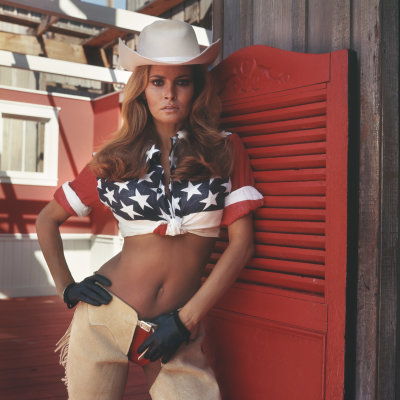
“Americans have always had sex symbols,” Raquel Welch once said. “It’s a time-honoured tradition and I’m flattered to have been one. But it’s hard to have a long, fruitful career once you’ve been stereotyped that way. That’s why I’m proud to say I’ve endured. Being a sex symbol was rather like being a convict.”
It’s difficult for mere mortals to work up much sympathy for movie stars who complain about being placed in a gilded cage on the basis of their extraordinary looks. But if you scratch away a little, and dig past the obvious absurdity of being unhappy about being beautiful, you can sense the pain and frustration that it could evoke. To be constantly touted as one very simple thing – even more so when it doesn’t hinge on any actual ability or skill – must be a galling and near-debilitating thing. When any attempt to do anything meaningful is met with mockery and derision, it must be difficult to forge forward creatively. All of which makes Raquel Welch so truly extraordinary a figure.
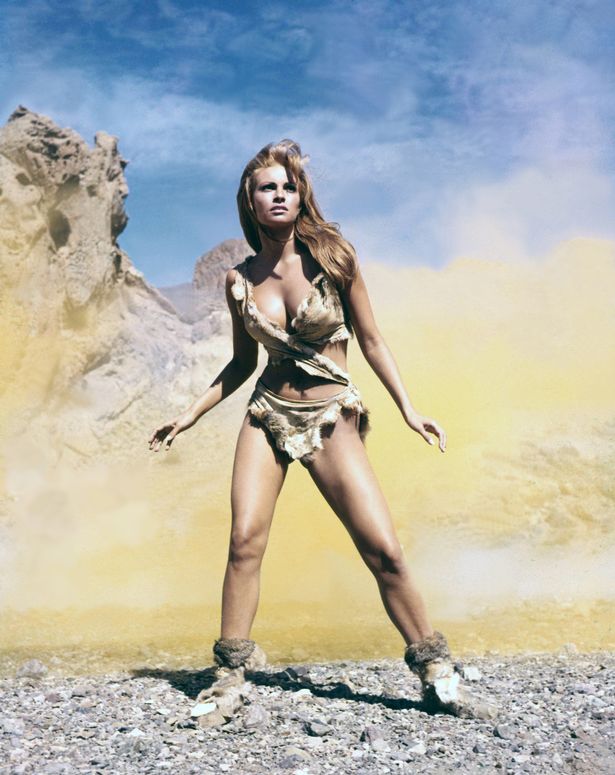
The moment Raquel Welch appeared in a fur bikini in the kooky, hilariously historically inaccurate 1966 cult flick One Million Years B.C., the extraordinary beauty’s fate was well and truly sealed. From that moment on, Welch – whose exotic beauty was partially derived from her Bolivian heritage – was celebrated for her buxom figure and show-stopping good looks. As Welch often alluded to, she was indeed a prisoner to her status as a sex symbol. And while the likes of the aforementioned One Million Years B.C., along with body-first flicks like Fathom, Flareup and Bedazzled, required the actress to do little more than just look good, Welch’s filmography is a lot more strange and compelling than her image may suggest, and on top of that, the supremely underrated actress has given many excellent performances.
Though rarely lauded for it, Welch actually gave a staggeringly brave and uninhibited performance in 1970’s Myra Breckinridge, one of the most unhinged films ever made by a major Hollywood studio. Adapted from the novel by iconic author Gore Vidal and directed by cult weirdo Michael Sarne (Joanna), the film kicks off with the simpering Myron (Rex Reed, one of America’s most high profile film critics!) getting a sex change and emerging as…Raquel Welch! Now a true beauty (of course!) renamed Myra, she becomes a one-woman army for women’s liberation. Setting her sights on Hollywood, Myra battles to turn the whole world on its head, and targets a macho young wannabe actor as a symbol of everything she’s fighting against. Throw in a hideously aged and disgustingly amorous Mae West, a decrepit and perverted John Huston, and a very wild scene involving Raquel and a strap-on, and you have an honest-to-god seventies freak fest. “I still can’t believe I took this role,” Raquel sighs on the film’s audio commentary, but it’s an incredibly full-bodied performance in a film that has no rivals, and is in desperate, desperate need of re-examination.
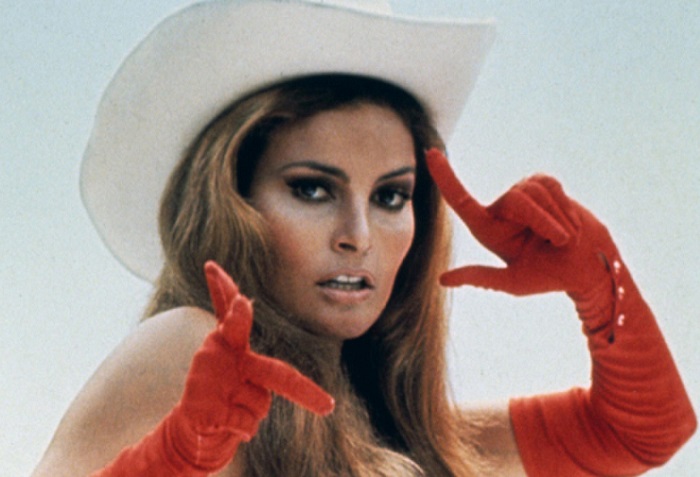
Welch also did fine work in a host of quirky wonders throughout the seventies, with the winning likes of the superb 1973 murder mystery The Last Of Sheila (a film obviously seen many times by Rian Johnson), 1975’s The Wild Party (James Ivory’s take on the Fatty Arbuckle was a clear influence on Babylon), and 1976’s truly excellent Mother, Jugs & Speed (Welch is terrific in Peter Yates’ underrated comedy-drama with Harvey Keitel and, ahem, Bill Cosby). Welch was also comely and wonderfully charming in the cop comedy Fuzz (1972), the bizarre hothouse Greek Islands-set curio Sin (1971), the swashbuckling epic The Three Musketeers (1973), and Edward Dmytryk’s grim drama Bluebeard (1972).
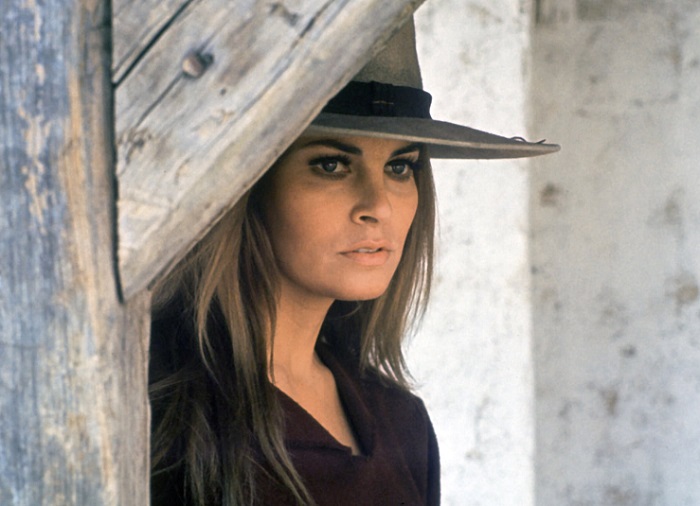
Throughout the 1960s and 1970s, Welch was also popular with directors of westerns, with the actress appearing in solid entries like 100 Rifles (1969) and Bandolero! (1968). Welch’s best western by a country mile, however, is the cracking 1971 “revenge-o-matic” (as Quentin Tarantino would say) Hannie Caulder, which came courtesy of stolid journeyman Burt Kennedy (Support Your Local Sheriff). This very strange western gave Welch the chance to break out as an action heroine, and she took it with both hands. After watching her husband being killed and then getting raped by the three grubby, borderline-moronic culprits (played with rambunctious bad taste by western stalwarts Jack Elam, Strother Martin and Ernest Borgnine), Hannie Caulder (Welch) swears vengeance.
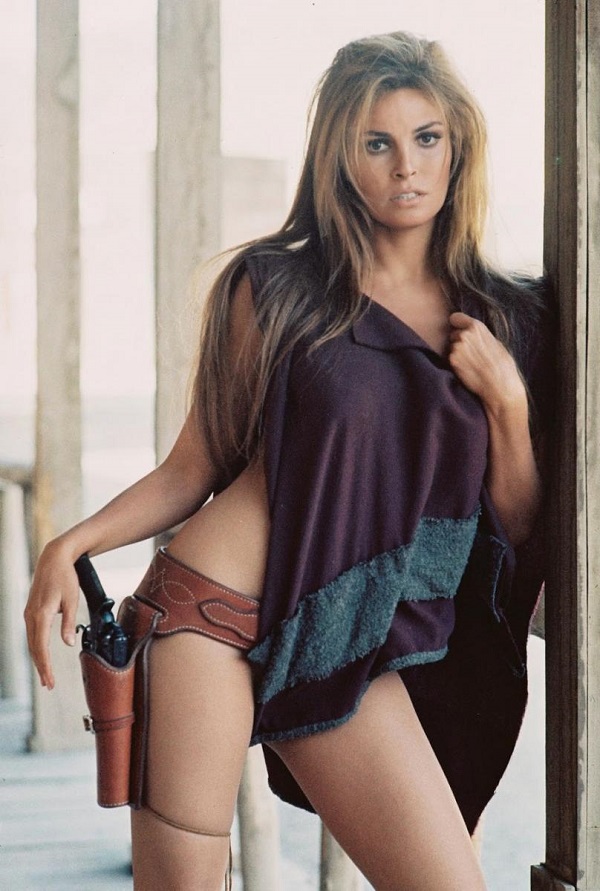
Teaming up with a laidback bounty hunter (the brilliant Robert Culp), Hannie learns how to shoot and fight and is soon an avenging angel with a mile-wide mean streak. Though the film’s moments of crass humour often jar with its nasty rape-and-revenge plot, and the late appearance of a mysterious-unnamed-man-in-black (Stephen Boyd) smacks of a spaghetti western rip-off, the rollicking, highly entertaining Hannie Caulder is a lot more than just the titillating poster (Raquel naked except for a poncho and gun belt) that it’s most famous for…though it’s a pretty good poster just the same. Deserving of a far bigger cult, Hannie Caulder is one of Welch’s best efforts.
And while Welch did some fine work in the telemovie field in the 1980s (1980’s The Legend Of Walks Far Woman, 1987’s Right To Die, 1988’s Scandal In A Small Town), by far her most affecting performance ever can be found in 1972’s Kansas City Bomber, which on the surface just looks like a cheap cash-in on the flash-in-the-pan craze of roller derbies (almost like rock’n’roll wrestling on roller skates), but which underneath is a much darker, more serious affair. This is the real jewel of Welch’s filmography, a tough, hard-knuckle little flick that really gave the actress to park the glamour and dig deep with some great character work and highly physical performance pieces.
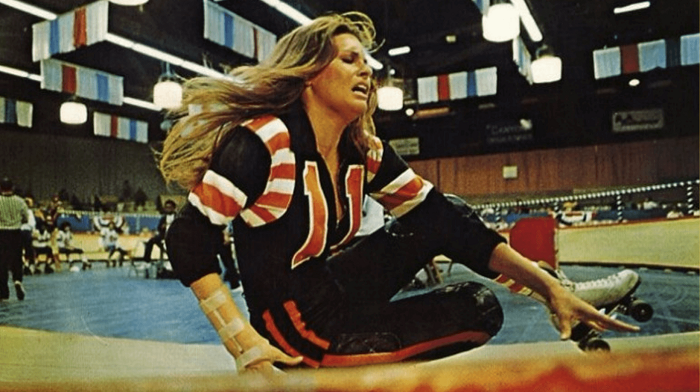
Directed with no-frills terseness by journeyman Jerrold Freeman, this surprisingly bleak seventies curio stars Welch as K.C Carr, a single mother (nine-year-old Jodie Foster plays her daughter) and roller derby star who gets traded from Kansas to Portland, where she is immediately hit with a clenched fist of problems: her teammates take an instant dislike to her; the team owner (Kevin McCarthy) is an ambitious creep who wants to get into her pants; and she’s struggling to make ends meet. The film is a grim take on the world of professional sport, with athletes treated like cattle, and then thrown away when they’re of no more use; this is most horribly shown in the debasement of Horrible Hank Hopkins (Norman Alden), an aging “bad guy” player and one of K.C’s only friends on the team, who is thrown on the scrap heap with particular heartlessness.
The role of K.C Carr is perfect for Welch: she still gets to look sexy while toning down her sex symbol image, and is able to pour her always intense physicality into the role. Welch is earthy, believable and highly moving (especially in a scene when her young son refuses to speak to her because of what she does for a living), and delivers without doubt her finest performance in her very best film. Like so many of Raquel Welch’s films, Kansas City Bomber is another flick truly worthy of rediscovery and discussion, and was many, many years ahead of its time.
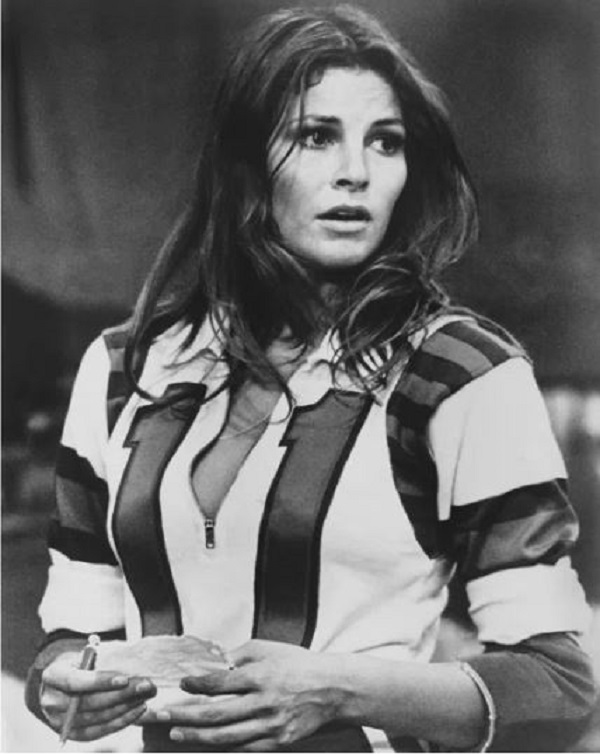
Adept at sending up her own image (check out her appearances on The Muppet Show and Seinfeld), and a far wittier and way more intelligent woman than she’s ever been given credit for (have a flick through her autobiography Raquel: Beyond The Cleavage…the title says it all!), Raquel Welch made her own way in an era when women in Hollywood were commonly and frequently low-balled, mistreated, and maligned. She did it with humour and skill, and she was a much, much better actress – with a fine eye for highly unusual material – than anyone has ever given her credit for. With the sad passing of Raquel Welch, the movie world has lost not just one of its true American beauties, but a cruelly underrated, groundbreaking original.