



By Nadine Whitney
Refused Classification is a brilliant short which brings up the age-old question, why is violence on the screen okay, and not sex? It’s especially relevant for people who don’t conform to heteronormative expectations of what sex should be. Can you tell us a little about what you want people to understand from your film?
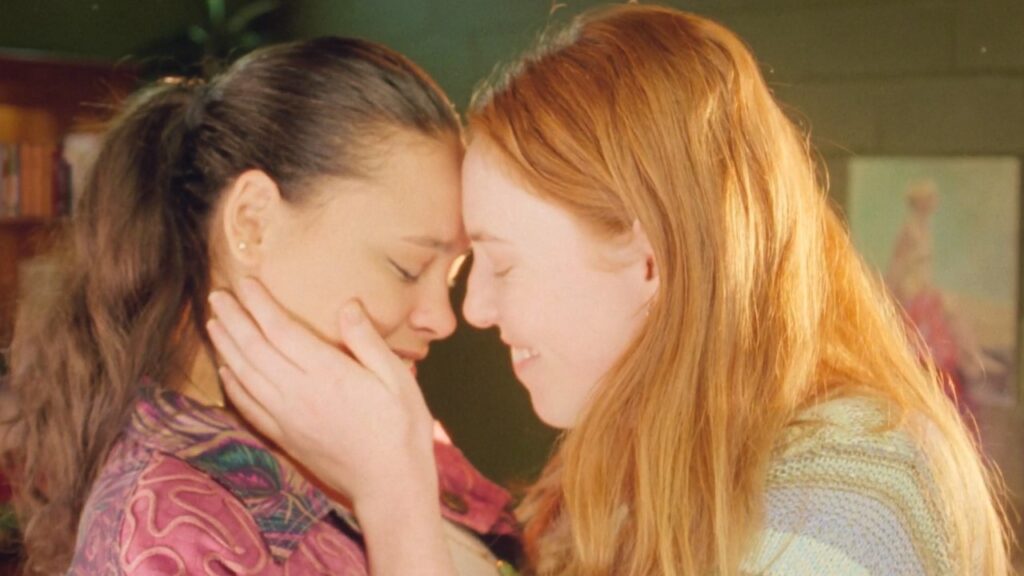
“Well firstly, thank you for saying the film is brilliant, that really means a lot and I’m so glad you liked it! I wanted the audience to take away a few things from the film: 1. What censorship has taken away from us and desensitised us to (i.e. violence is natural and sex, especially queer sex is taboo) 2. Who are they censoring and why is it adults? 3. What certain aspects of film censorship have sold us on conservative moral and ethical ideals throughout the years and how we differentiate that from our day to day lives compared to the media we consume and above all else… 4. Whose lives and stories have we been deprived of seeing? In the case of the film, a bisexual and polyamorous throuple – three things not shown in most mainstream films involving relationships.”
Refused Classification has made its way across the country and overseas. Tell us about its journey from inception to completion, and especially some of the laurels you get to rest on now.
“So, the idea of a censor walking into a scene and telling characters to repeat the same scene again without curse words or sexual references has been in my head and in various scripts I’d written for almost eleven years. It really began when I sent a draft of the script in its current form to another writer and collaborated with him on it (improving the dialogue, more character etc.), then developing it as a Short + Sweet play to see what worked and what didn’t, to then eventually turn it into a film – then COVID and lockdowns happened, and I wanted another film to make, so I spoke to that team and said why don’t we just work on getting the film made?
“In June 2020, we made up a crowdfund and thanks to wonderful family and friends, a big majority of the budget was collected and then we shot in January 2021. Throughout the second lockdown, I was able to have time editing the film with cinematographer and editor Kym Vaitiekus. From there, an almost finished work-in-progress cut was shown at Made In The West in December 2021 and finally last year the film was selected to screen at Cannes Short Film Festival, Sydney Underground and Perth Revelation Film Festival amongst others. Three dream festivals.”
Do you think there’s enough queer representation on screen?
“I think it’s gotten a lot better than what it was and we’re a lot closer to queer relationships on screen being normalised. However, I still don’t think there’s enough bisexual and polyamorous relationships in films. Often the ones we did see in films pre 2010 that were easily accessible or mainstream releases, they’d be utilised for the sake of a laugh in queer panic jokes. Even when I was trying to define my sexuality and understand it, seeing films like Shortbus, Threesome, But I’m a Cheerleader, Weekend, Pink Flamingos and so on at a young age all meant a lot. Had they been bigger, more mainstream releases at those times, I think it would’ve really made a lot of audiences feel seen, helped younger filmgoers still discovering their sexuality and made audiences question the things film censorship have banned us from seeing.”
What are the challenges of getting a film off the ground?
“Besides the obvious, which is having the budget or any money to get the film made, it’s both doing the work of a producer and finding a producer who will help you get it made and support you – which is not easy to find. Once you have that and work towards getting that budget – whether it be through crowdfunding, sponsorship or government funding, it’s finding a good team to develop the film with (actors, camera crew, first and second A.D.s cinematographer) and working on a feasible but efficient shoot plan. Oh, and another major challenge is access to locations – there are so many variables to consider.”
Lots of films have been refused classification in Australia and then had that decision reversed, then reinstated. Can you think of any “banned” films that you have seen despite that?
“Admittedly I haven’t seen a lot of the more known and notorious films that have been banned in Australia (Baise-Moi and A Serbian Film), however, three films I do love that have had a major influence on me that were banned in Australia upon release then eventually reversed (sometimes not uncut): Pink Flamingos and both Texas Chainsaw Massacre films (1 & 2). Seeing all three at a relatively young age makes me so grateful for Refused Classification reversals and exemptions.”
Every filmmaker has their influences. Who are some of your revered directors?
“A few major ones are Claire Denis, Paul Thomas Anderson, Jane Campion, Spike Lee, Rainer Werner Fassbinder, Euzhan Palcy, John Waters, Richard Kelly, Gregg Araki, John Cameron Mitchell, Luca Guadagnino, Shirley Clarke, Cameron Crowe, Derek Jarman, Apichatpong Weerasethakul – I could go on for another three months! In particular, Shortbus by John Cameron Mitchell was a HUGE influence on my film.”
Short films are often overlooked by the critical establishment. How does that make you feel?
“I’ve always found it ironic that each year they declare that the general attention span of audiences has gotten shorter and shorter thanks to social media and streaming but not short enough for short films to be at the forefront with features. On the other side of that, I do think social media, YouTube, and even online film festivals thanks to the pandemic have greatly helped short films and their exposure and attention. Of course, I’d love for there to be more, but I think there’s more of a love and appreciation growing for them.”
What does it mean to you to be included in the Mardi Gras Film Festival program?
“Honestly, it’s one of my all-time dream festivals. Both as a filmmaker and a festival goer. It’s one of the first film festivals I ever attended and growing up on so much queer cinema, it was such a surprise and an honour for them to like the film, let alone include it in their line-up this year. I’m still pinching myself to be quite honest.”
Your previous short Audio Guide, written with Lee Zachariah, has a huge number of views on ALTER. Have you got any plans to see that and Refused Classification getting a physical release?
“I… never even thought of that. I would love to. I mean, I still buy DVDs and Blu-rays, so it would be nice to do something. I’d include an audio commentary – I miss them the most and learnt so much about filmmaking from them. I did, however, plan to one day make 16mm or 35mm film prints of both Audio Guide and Refused Classification. Hoping to make that a reality eventually.”
Refused Classification is screening as part of the Bi+ Shorts at the 2023 Mardi Gras Film Festival. More information here.
