


By Gill Pringle in Jeddah, Saudi Arabia
Wickedly funny and subversive, few could have predicted Iraqi director Ahmed Yassin Al Daradji’s Baghdad-set feature Hanging Gardens taking home the best film award at the 2022 Red Sea International Film Festival.
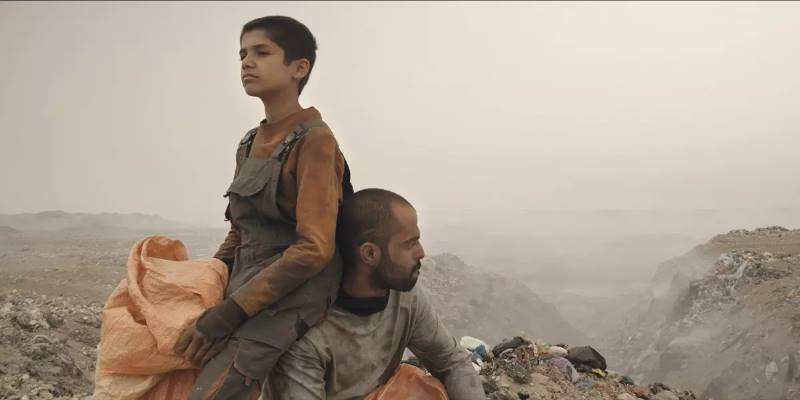
Even Al Daradji himself didn’t fancy his odds when we met with him days before the surprise win for his film about a young boy living as a rubbish picker in the dumps of Baghdad, nicknamed the ‘hanging gardens’, who hits the jackpot when he finds a discarded American sex doll.
Who would have thought that a film about devout Muslim Iraqi men queuing up to have sex with a sex doll, would have a chance at taking out the top prize at a film festival in the Middle East?
Or, more likely, that the director himself might go to hell for his audacity.
But Al Daradji was fearless when we spoke. “I lived through maybe four wars. I lived through the 1991 wars; the Iraqi Iranian wars, the American invasion sectarian war and recently ISIS invaded half of Iraq.
“As an Iraqi, I believe we paid a very heavy price for our freedom. The country is in a mess, so I’ll keep fighting to tell my story and to screen the film in Iraq,” says the filmmaker who, despite receiving a special mention at this year’s Venice Film festival, has still not been able to screen the film in his home country.
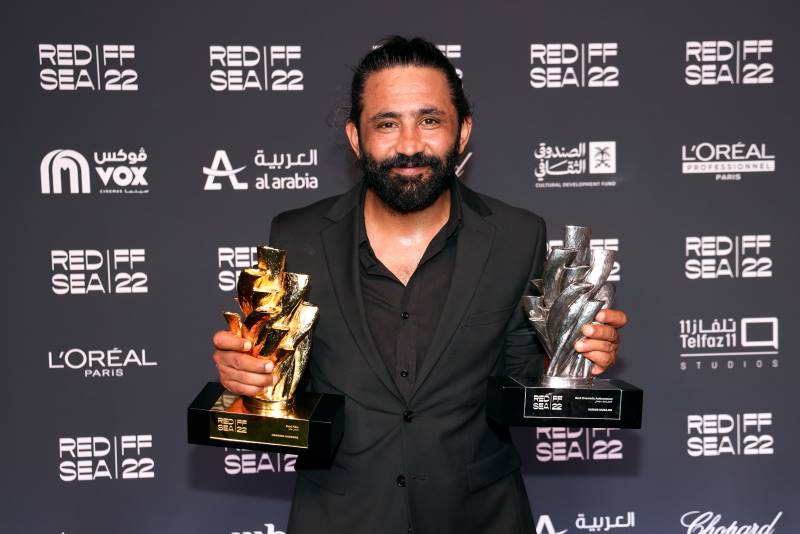
But he’s not giving up, and the win in Saudi Arabia might strengthen his case. “My aim is to bring my mum to the cinema to watch the film. My mum is a very traditional Iraqi lady and a farmer. This is very experimental in a way, bringing all the people that I know, left and right with ideologies, to come and see the film,” he says.
Al Daradji says the perceived pushback against showing Hanging Gardens in Iraq is less about religion and more about social norms. “Tribal systems and social norms in Iraq are the red lines that you cannot cross. And this is what I faced with the lead character, As’ad,” he says referencing his difficulty in casting the lead character of the enterprising boy who finds the sex doll, capitalising on the lust of local men.
“I met so many kids and their families. They liked the film, and they wanted their kids to act in the film. Many families would say, ‘Ahmed, we believe in you; we believe in the story, but we can’t do this’. It was social norms, and not religion, that was the barrier,” says the director who, after three months of searching, was finally introduced to 12-year-old Hussain Muhammad Jalil, by a friend.
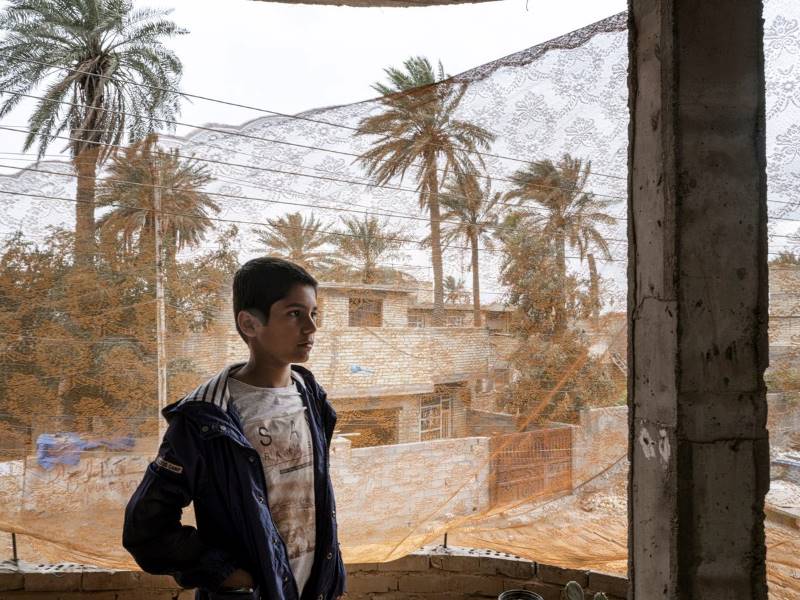
“That was only because he’s from a middle class family whose family lived in Turkey for a while so they were educated and quite open, and gave me the full freedom to make this film with their son,” he says of his young Turkish star in the making.
Ask Al Daradji if he’s worried about a potential fatwa, and he lets out a long belly laugh. “Well, trust me, I’m a person who was kidnapped twice in Iraq; was arrested in an American prison for 10 days. I have a bullet in my leg. Do I really care? I gained my freedom. I’m not going to give it back at all. I’m fighting for it,” he says fiercely.
Ironically, it was Bradley Cooper who inspired Al Daradji to make Hanging Gardens, after watching American Sniper. “That film really upset me. What always disgusts me is how the Americans sexualise war, showing the sniper killing Iraqis in the middle of the street. Whatever they are, they are Iraqis and they are human beings. Yet, they promote this to the audience as him being a sexy man. That film really hurt me so much,” he argues.
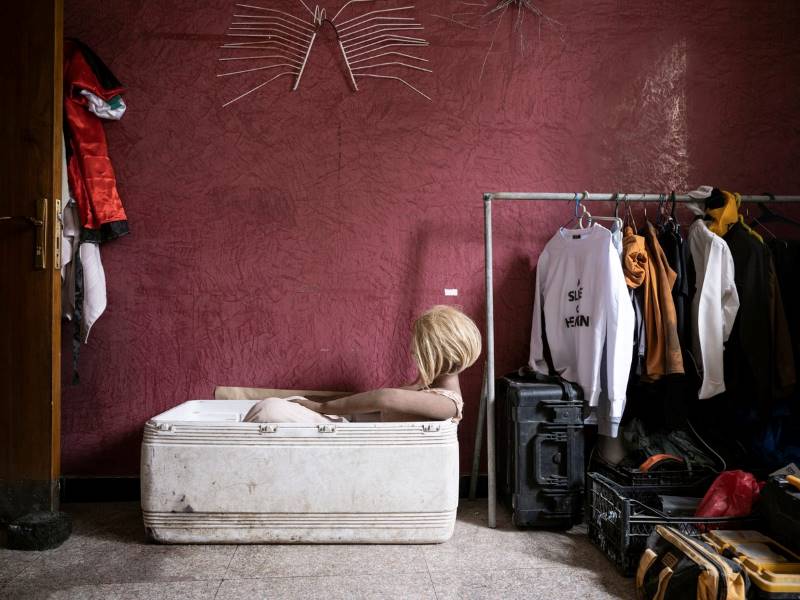
More surprisingly, the story of Hanging Gardens is based on the director’s own experience back in 2006, fleshing out the story to make a film about As’ad’s discovery of the American sex doll, bringing the taboo item home to his older brother Taha, and presenting it as a thing of beauty.
Taha assaults his little brother for ruining their reputation, forcing As’ad to retreat to the Hanging Gardens where he makes a new home for himself and his miraculous find.
When As’ad and his friend Amir discover that the doll can speak, they teach her the language of seduction in Arabic and set her to work. Business booms, raising their profile lucratively with local teens and dangerously with the local patriarchal enforcers.
“I was at Baghdad University at the time,” recalls Al Daradji. “The American military heavily existed in Baghdad and there were militia; it was chaos in Baghdad back in the day.
“I was waiting for a friend, and he appeared with a plastic bag in his hand. And he says, ‘Ahmed, Let’s go to the toilet’. We went to the toilet, and he revealed the sex toy.
“It was first time I’ve seen something like this in my life. Iraq was under sanctions, and we were in a big prison during Saddam’s time. I didn’t know what was going on outside Iraq, so this doll was a surprise. It had, like a car steering wheel, and a very rubbery vagina in the middle of it. All the boys start using; it was the only way of ‘being happy’ at that time,” he laughs.
“One day, this guy basically hired the toy and he says, ‘Guys, can you come please?’ And we were worried that somebody might find out about it, because we were just smuggling the toy here and there. This guy had used the toy and – in order to wash it afterwards – he poured hot water on it for a very long time to clean it out, so the toy was completely shrank and now looked like a Smeagol figure.
“That’s where the story started, although what really triggered me to write Hanging Gardens was American Sniper, because that was so offensive,” he says.
Struggling for many years to finance the film, producer Huda al Kadhimi would ultimately re-mortgage her home to get Hanging Gardens made.
“We tried everything, but nobody wanted to support the film. We also borrowed money from the bank, but Huda gave her house to make this movie.”
Al Daradji’s unexpected win at RSFF was surely a triumphant moment, “I have twin goals: to question the status quo and to entertain. I want to pose questions not by being provocative or causing distress, simply by telling an emotionally engaging story in which characters consider ‘What if?’ and audiences wonder ‘What would I do in their shoes?’
“I cast my young actors and gathered the supporting crew from the neighborhood where I grew up. They are the experts in the film’s themes and dilemmas and my creative partners. We’ve walked a fine line to convey the truth of As’ad’s story in its most intimate and poignant details. The result bears witness to what it takes not just to survive but to live with meaning and integrity in present day Iraq,” he says.
