


By Gill Pringle
Despite his preoccupation with humankind’s dark side, as evidenced in his films The Witch and The Lighthouse, director Robert Eggers had little interest in Vikings. But that was before he was introduced to Alexander Skarsgard, who had spent ten years looking for the perfect collaborator to bring his own passion for Vikings to life in what would become The Northman, co-starring Nicole Kidman, Anya Taylor-Joy, Ethan Hawke, Claes Bang, Willem Dafoe and Björk.
An epic Viking revenge saga starring Alexander Skarsgard as Prince Amleth, a 10th century Norseman who flees his homeland after witnessing a horrific act, only to return years later as a hardened berserker with hatred in his heart. Recalling familiar stories ranging from Hamlet and Beowulf to The Lion King, The Northman takes its cues from other classic and timeless stories of young men scorned and adrift who plot revenge as they try to make sense of their place in the universe without any role models or family.
In order to fully reimagine the Norse myths, Icelandic sagas and Viking legends from a distant era, Eggers teamed with Icelandic poet, novelist and screenwriter Sjon (Lamb, Dancer In The Dark), to craft a screenplay which elevates the Viking epic to bold new heights.
38-year-old Robert Eggers talks Vikings, vengeance and how he finally made a popcorn movie…
Can you talk about this collaboration with Alexander Skarsgard?
“Alex was with me from the beginning. He came to me wanting to do a Viking movie. I never really cared for Vikings. I was put off by the macho stereotype and many other things, but Alex has been into Vikings since he was a kid, so he had a burning passion for this.”
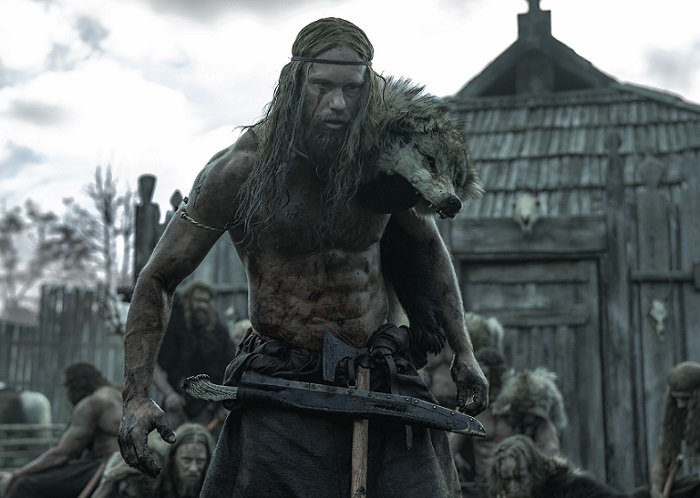
Alexander is the very embodiment of a Viking warrior in The Northman. What did you require of him in preparation?
“I drew a picture of what I had in mind for the character and he said, ‘Alright, I’ve got some work to do.’ And so he got huge and he came in, fully committed. And let me say that Alex is just the nicest, sweetest goofball, and that character – where he is fully transformed and immersed – is just not him, which makes it all the more impressive. The note that I gave everybody starting out was, ‘Don’t move your face. Don’t move your eyebrows, don’t blink, and say your lines.’ Then we would go from there.
In terms of budget, this is much bigger than your previous films. How different was it for you to direct The Northman because of that, and how much more creative freedom did you have since you are now established?
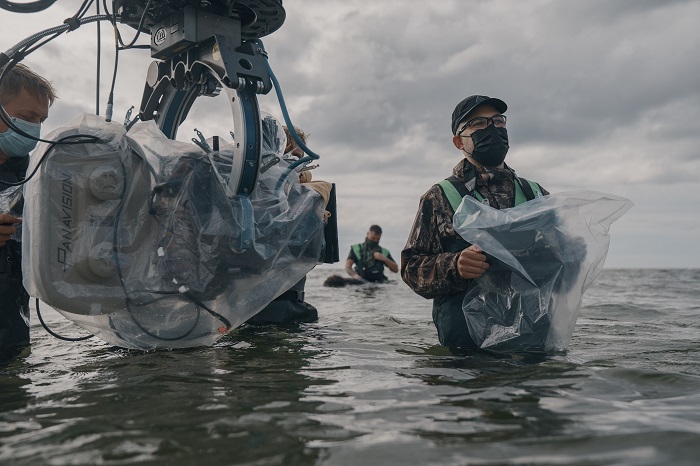
“Well, I had less creative freedom because of the budget. I knew that going into this, I was not going to have final cut, and that was a risk that I was going to have to take. It was also the first time that I was trying to make an entertaining movie, which was also a challenge. But, I am privileged that the first two films were so small that I was able to create the entire world and build it from scratch. With this one, because of the budget size, I was able to do the same thing. If I ever have a budget in the middle, where I’m gonna have to use locations, I’m going to feel frustrated by how spoiled I have been. But it was a massive challenge taking on a film this size, and also a challenge that me and my collaborators were excited to sink our teeth into.”
Did you have a clear vision of how you wanted to direct the movie? And, from when you started, what was the most positive surprise that arose once you started filming?
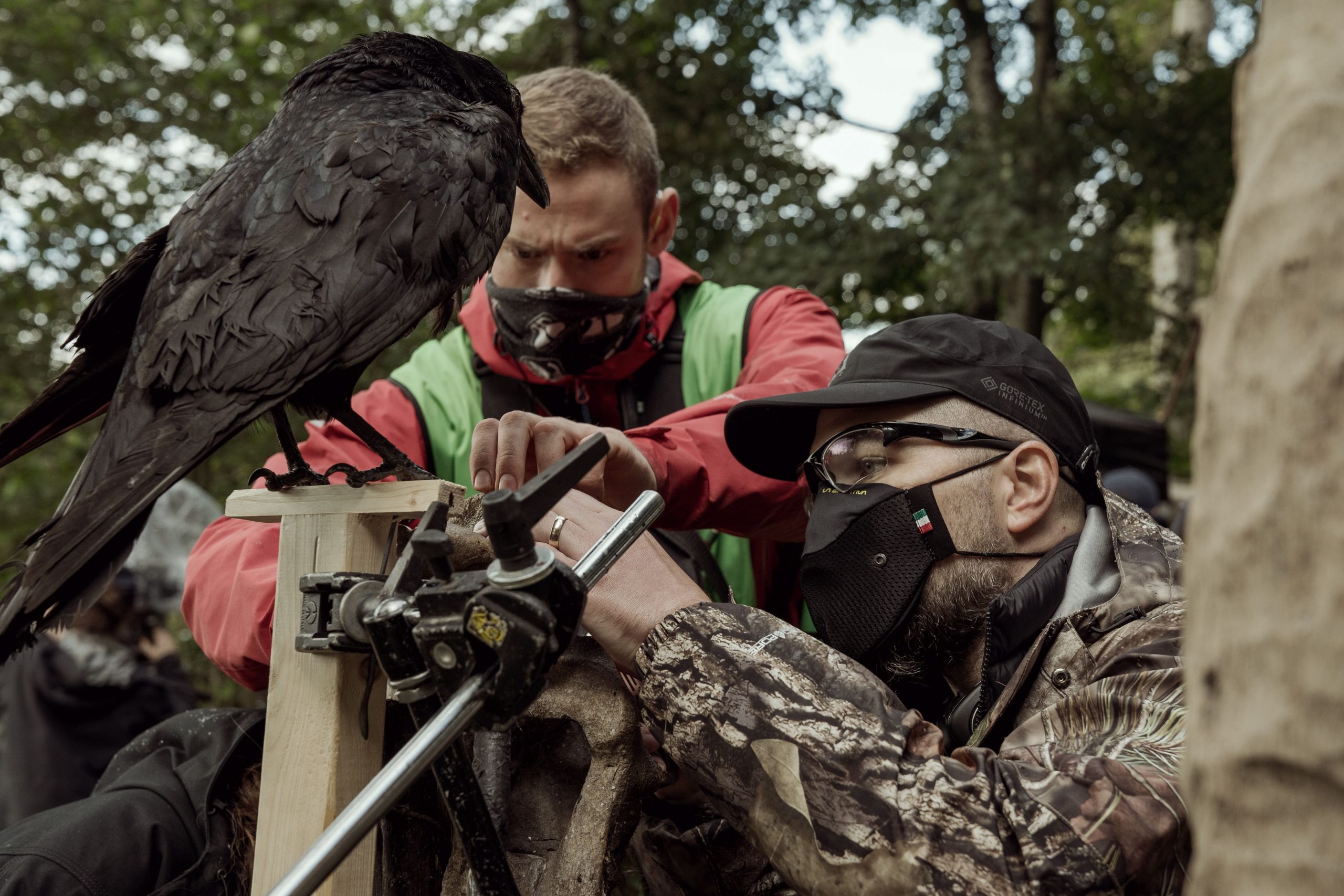
“With my DP Jarin Blaschke, we like to shoot single camera, in these long unbroken takes, and we wanted that again from the beginning. My earlier films have a lot of static camera, while here the cameras are always moving, and trying to drive this story forward. This movie was so huge that we needed to plan everything. With my first two films and in my short films, there was this idea that you show up so prepared that you can be allowed to change something or have something unexpected happen because you’re so prepared. But on The Northman, where we had hundreds of extras and horses and chickens and stunt guys and all this stuff, we needed to prepare and just execute it, so the only time that things changed is when we realised that what we had planned was a mistake. The surprises came during the research period and during the prep period, but not on-set. If anything, we were surprised by some of the simpler shots that we didn’t spend as much time on preparing, and then suddenly found that they were more complicated than we anticipated.”
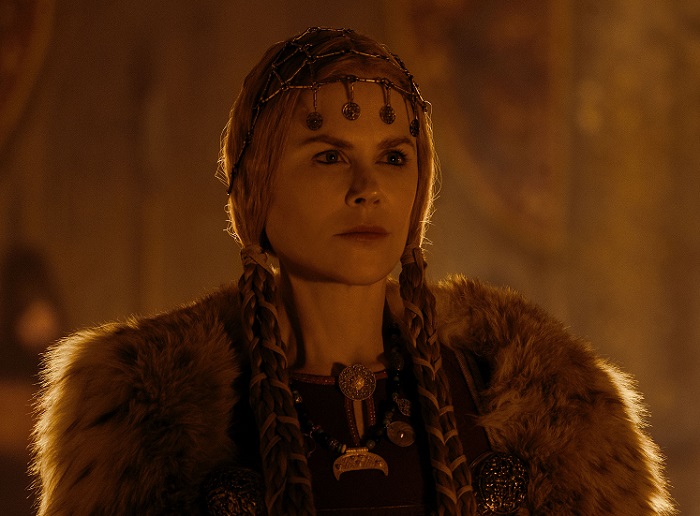
Nicole Kidman must have known that a Robert Eggers movie is not going to result in soft focus flattering lighting. Can you talk about working with Nicole?
“Working with Nicole’s fantastic. She’s so inspiring and so knowledgeable and so intelligent, but I was nervous that she wasn’t going to do it, even though she was a big fan of The Lighthouse. But we met and after 90 seconds, she probably sensed that I was a little nervous and she said, ‘Don’t worry, I’m doing the movie.’ She said that the script has teeth. As far as unflattering lighting goes, there is a big scene with her and Alex, and I’m really proud of the lighting. It’s a night scene, and it starts out with just a fire in the middle of the room. That’s just what Viking life is, so she starts out front-lit and looking sort of fragile when exposed, and then, as she crosses the fire, she’s under-lit and demonic and then back-lit and stunning and it works very well for the scene. But she’s proud of the demonic part too!”
In The Northman, as well as in The Lighthouse, there’s a lot of sexual innuendos and a lot of psychology too. Can you talk about these elements, and why they’re so present in your work? How does it help you tell the stories you need to tell?
“That technically low-brow bodily stuff is part of life and certainly Shakespeare wasn’t afraid of it. Cervantes wasn’t afraid of it. Bosch and Bruegel weren’t afraid of it, and they utilised it. I don’t know why that stuff needs to be disparaged in good storytelling. Not that I’m saying that I’m at that level, but I’m saying if that level can do that, then I can certainly do that too.”
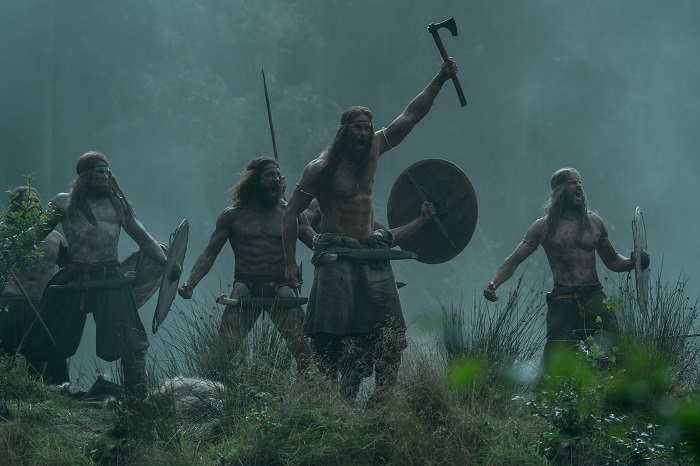
What were your philosophical inspirations here, and how did you find the balance to make this conceptual story but also an entertaining and more high budget movie?
“It’s my intention to try to articulate the Viking worldview in the film and not try to put modern morals on to it. I wanted to present it without judgment, and that’s tricky. The whole time I’m trying to ask myself the kind of questions of how do you make something with violence, where the action sequences truly need to be thrilling and entertaining? That’s how they were seen in Viking culture. That’s how they’re written in the Sagas. And also, yeah, it needs to be a popcorn movie, but also I don’t personally condone violence, and nor do I want people to interpret me as glorifying and condoning it. So I don’t have a straightforward answer, but me and my collaborators are always asking ourselves those questions while we were making our choices on how to shoot and choreograph the film.”

I was wondering after watching The Witch and The Lighthouse and now The Northman, what ignited your fascination for the dark, the occult and the mythical? Is it something that sparked when you were little?
“I don’t know the answer. I suppose you’d have to ask my psychiatrist. I don’t know where this comes from, but it’s something that is innate, and I’m from New England, which has all these crumbling farmhouses and graveyards and it has a kind of atmosphere that spoke to me but there’s a lot of people from New England that drink their Dunkin Donuts coffee and don’t think about this stuff. So I really have no idea…but I always preferred Darth Vader to Luke Skywalker, you know?”
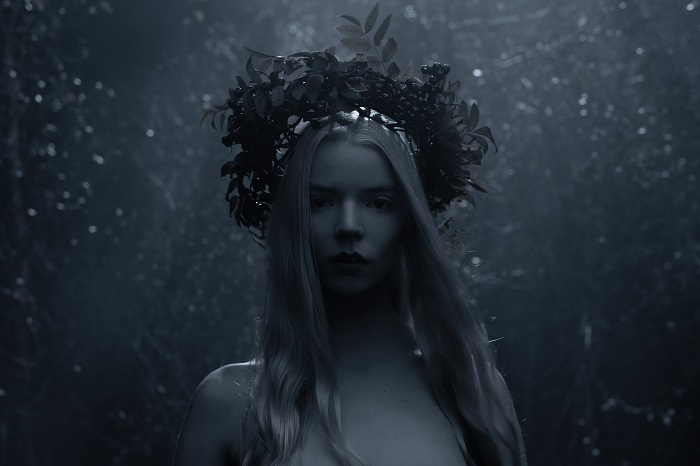
All your movies are set in the past. Why this fascination with looking back? Is it maybe because human beings never learn, and are always condemned to repeat history?
“Yeah, you answered the question you asked for me perfectly. We don’t change. Viking culture, to my surprise, was incredibly sophisticated. They’re beautiful poets and visual artists and musicians. They were a cultural fusion and a religious fusion, to my surprise. But they were also this patriarchal society of vengeance and extreme violence and brutality. It’s completely heartbreaking and devastating to see that humankind can’t change. It’s hard not to be pessimistic, but we have to try to choose to be optimistic instead. But, hopefully, The Maiden King comes next, if you know what I’m saying.”
The language in the movie is fascinating. Can you talk about your collaboration with Icelandic poet Sjon?
“We wrote very collaboratively. Sjon certainly broke the first draft, but there was some dialogue in the treatment that I wrote that sustained its way through the whole movie to some degree. But, in the beginning, I said to write the dialogue and I bluntly translated from Icelandic, so that it would be a little more interesting. And then I would shape it a bit. I was very personally inspired by Seamus Heaney’s translation of Beowulf which is Old English, not Norse, but they’re similar idioms. It struck a good tone of understandable and Ye Olde without turning into like early modern English poetry. Sjon had to tell me to calm down because I’m so influenced by Shakespeare and Spencer. He kept saying, ‘Don’t go that far!’ The Norse poets were more stark.”
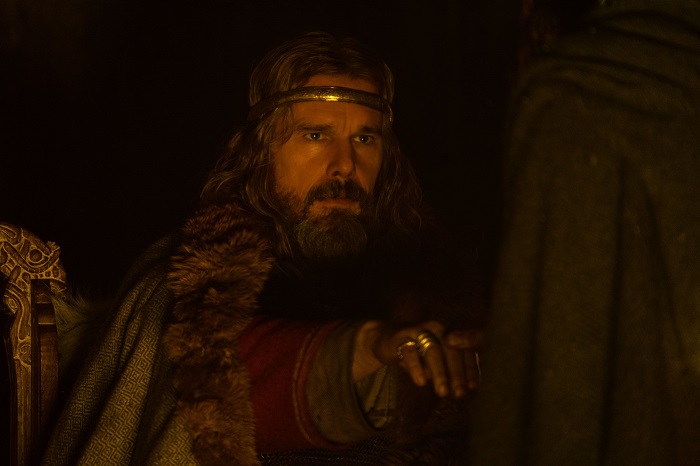
In The Northman but also in The Witch, the mother is always controversial and dark. Is this coincidence?
“It’s coincidence, but maybe … look, this is a family drama. Like with Hamlet, King Lear and Oedipus, these are the stories that work. They are the most archetypal because we all have these complex family issues, and when you see it brought to a mythic scale, it can be really quite explosive. So to just use some shorthand, making Amleth’s mother like Lady Macbeth heightens everything quite a bit.”
Given the challenges of COVID-19, did you at any point have doubts that it wouldn’t eventuate? What was the pressure like on you to make it all come together?
“There was a lot of pressure. There was a lot of pressure anyway because of the scale and because the stakes were so high. But everyone was desperately afraid that the movie was going to get shut down again or go even more over budget because of another hiatus or something. So it was intense. And if I had to come face to face with all the pressure and responsibility, I would have instantly burst into flames. It was hard, but we had to get through it. There’s no reason to be anything but a pessimist. Life tells you this every day, all day long. But you have to choose to be an optimist.”
The Northman is released in cinemas on April 21, 2022

