



by David Michael Brown
Once in a blood-red moon, a horror movie breaks free of the nightmarish niches and terror-filled tropes, defies all expectations, and becomes a cultural phenomenon. A blood-filled water cooler movie that gets everybody talking, becoming a mainstream sensation in the process. One such film is the terrifying found-footage chiller Paranormal Activity.
At its best, found footage films can be raw, intense and unnerving. While Ruggero Deodato’s notorious gut-muncher Cannibal Holocaust (1980) and the low-fi Sci-fi of The McPherson Tape (1989) are often cited as the first examples of the genre, Daniel Myrick and Eduardo Sánchez’s The Blair Witch Project (1999) first captured the mainstream cinema-going public’s imagination for taped terrors.
In its truest form, everything that the audience witnesses must have been filmed by a camera that is part of the narrative. This makes found footage films deceptively problematic to shoot as producer Jason Blum describes in the documentary Unknown Dimension: The Story of Paranormal Activity. “It’s very hard to keep the mythology working with found footage. A found footage movie is a lot harder to do than a non-found footage movie,” the Blumhouse head honcho explains. “You have to always justify where the camera is, you have to justify why the camera is on, why it’s recording. And mostly what you want to see on horror movies is situations in jeopardy. Most of the time when you’re in jeopardy, no one is holding a fucking camera! It’s an endless problem.”
Made by a largely inexperienced crew for next to no budget, the original Paranormal Activity was the brainchild of Israeli computer programmer Oren Peli. His inspiration came when he moved into his first suburban house in the United States. Used to the hustle and bustle of city life in an apartment, Peli heard creaks in every shadow. And that got him thinking. Imagine if a spooked family decided to try and capture the evil lurking in the shadows with a video camera? Paranormal Activity was born. Suddenly he found himself writing and directing a zeitgeist changing spook fest.
Peli and his two leads Katie Featherston and Micah Sloat shot the chiller in the very house where those nocturnal noises first woke up the fledgling director. The story is simple but remarkably effective. Soon after moving into a suburban home, Katie (Featherston) and Micah (Sloat) become increasingly disturbed by what appears to be a supernatural presence. Hoping to capture evidence of it on tape, they set up video cameras in the house overnight and are soon capturing the images that made the film such a terrifying experience. As the couple sleep, we see sheets ominously move, taking the shape of someone, or something, underneath. And then the malevolent spirits get physical.
With a revolutionary trailer campaign that showed terrified cinema audiences reacting to the handy cam horror, the word-of-mouth just kept on talking. Paranormal Activity, shot on camcorders for US$15,000, went on to earn just under US$200million at the worldwide box office and spawned seven sequels if you include the 2010 Japanese spin-off Paranormal Activity 2: Tokyo Night and the latest Paranormal Activity: Next of Kin.
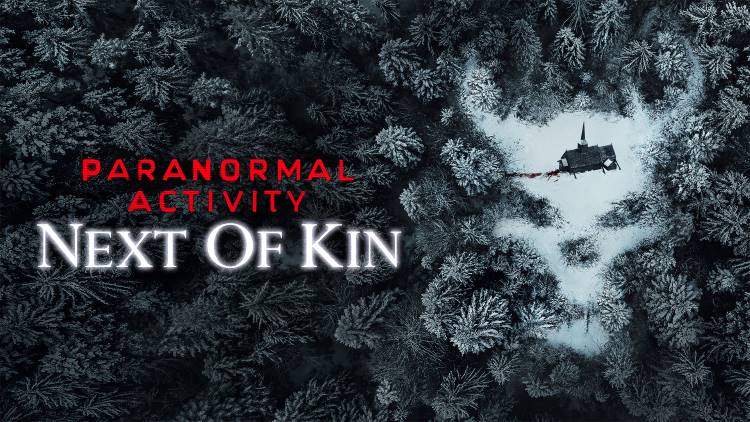
Since the highly regarded original, the franchise has earned US$890.50million at the worldwide box office making Paranormal Activity one of the highest-grossing horror series of all time, behind The Conjuring, Alien, IT and Saw franchises.
But the best review the film ever received was from Steven Spielberg. The legendary director had to stop watching the film halfway through on a home screener as he was genuinely unnerved by the experience. He completed it in daylight hours the next day and loved it.
Paranormal Activity: Next of Kin and documentary Unknown Dimension: The Story of Paranormal Activity – are NEW TO BUY OR RENT ON DIGITAL
