



Worth: $10.00
FilmInk rates movies out of $20 — the score indicates the amount we believe a ticket to the movie to be worth
Cast:
Karra Elejalde, Nathalie Poza, Eduard Fernández, Santi Prego
Intro:
…too restrained and staid.
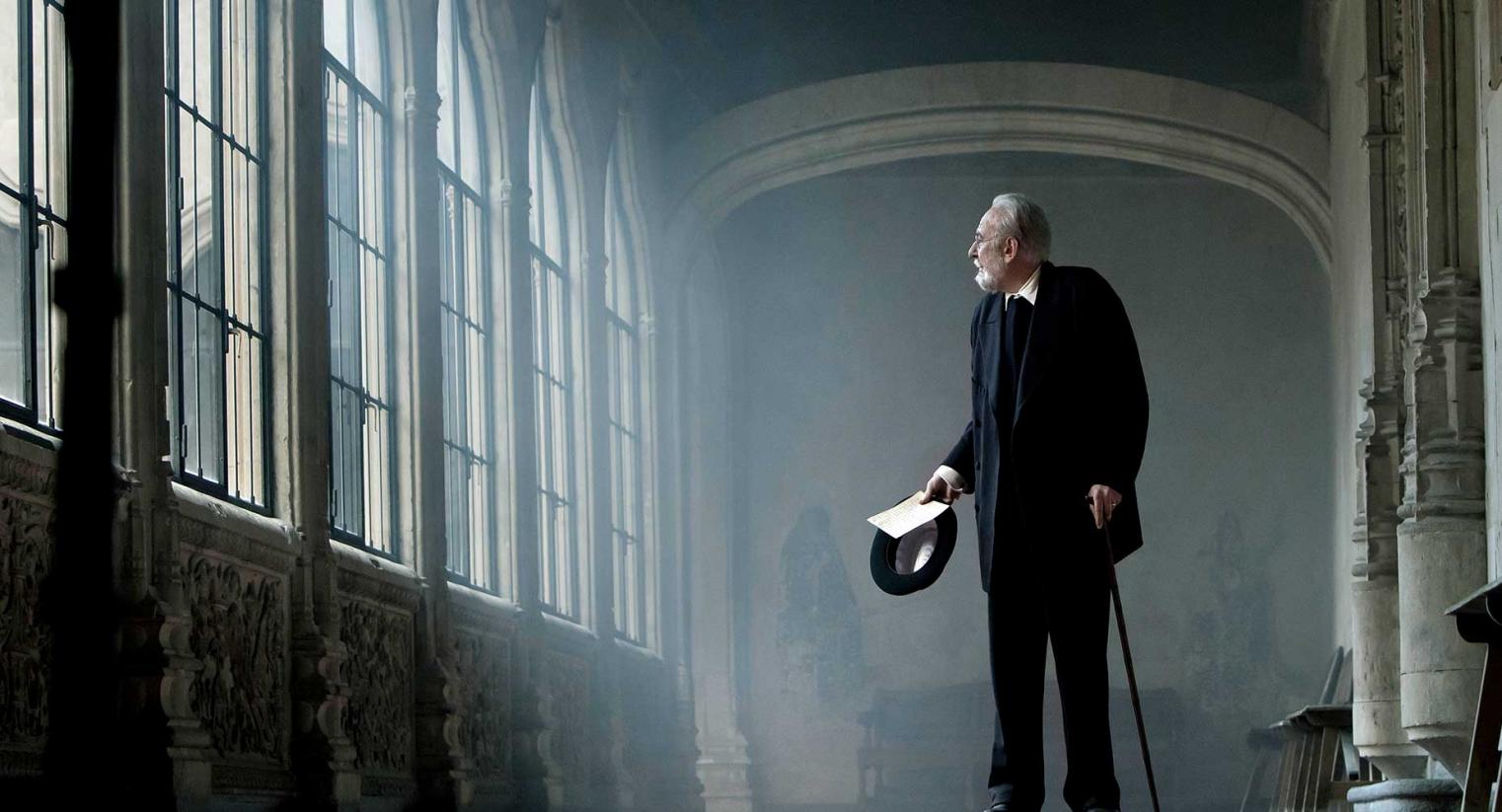
Returning to his native Spanish language, director Alejandro Amenábar (The Others, Agora) has crafted a film that explores the beginnings of the Spanish Civil War through the lens of a famous academic and writer, Miguel de Unamuno (Karra Elejalde) whilst charting the rise to power of the dictator Franco (Santi Pedro).
It is 1936 and a coup d’état is ousting the democratically elected Second Spanish Republic. Nationalist soldiers are appearing on the streets and declaring a new regime. Unamuno, who is a well-respected author and Dean of the University of Salamanca, watches with a curious passivity as the changes occur. For him, such political unrest is a part of the Spanish experience. He had been in vocal opposition of the Monarchy and when the Republic was established, he found himself disillusioned that the promises to unite the Spanish people have failed. The country is split between the left leaning Republicans and the fascist adjacent Nationalists.
Unamuno is foremost an intellectual. Although political ideals have been a part of his writing, he seems more concerned with the quality of how something is expressed rather than what is expressed within the work. He lives a routine life with his daughters and grandson, and spends his free time with his friends, a Protestant priest and a young Marxist professor of Literature, discussing ideas. Whilst his friends sense the coming storm (and indeed are both fatally caught up in it), Unamuno vacillates.
A secondary narrative strand concentrates on Franco’s gradual rise to power, in which he is assisted by the odious war hero Millán Astray (Eduard Fernández). Next to Astray, Franco seems almost an anodyne presence, yet as history will attest, he becomes one of the bloodiest dictators to hold power in Europe. The machinations of Franco’s rise to leader of the Nationalists are given significant screen time, yet they are essentially superfluous scenes.
While at War is a sumptuously mounted period piece, yet it suffers from a lack of palpable tension. Unamuno’s inaction for most of the film seems cowardly, and by the time he fully comprehends his duty to speak out against the increasing violence, the audience may feel frustrated that it has taken so much obvious suffering from those around him to sway him.
The script by Amenábar and co-scribe Alejandro Hernández does require the audience to have some understanding of the political situation within Spain. References to the Basque and Catalans will be mostly lost on an audience who isn’t familiar with the fractured nature of the country at the time. Furthermore, although the stakes are life and death, the film often meanders. What tension there is, exists through suggestion more often than showing the immediate horrors of the war. The audience is given snatches of what is happening, but the drama occurs too often in wood panelled rooms and not often enough on the streets.
For a depiction of such a volatile time in Spain’s history, the film is too restrained and staid. Whilst the cast is routinely excellent, especially the full-bodied performance by Eduard Fernández, they cannot breathe life into the work to make it feel immediate and visceral.
Amenábar has created a character driven drama and on that level the film is a success. However, for those seeking to get a sense of the horrors of the Spanish Civil War and its long aftermath, there is little to hold on to.
