


by Helen Barlow
Palestinian-Dutch director and writer Hany Abu-Assad has the human touch. Somehow, he is able to address political issues and inject humour into his engaging personal stories. He was Oscar-nominated for best foreign film in 2006 for Paradise Now and in 2014 for Omar, after which he made The Idol, about a Gaza musician who competes on Arab Idol. He also made the 2012 US action misfire The Courier starring Jeffrey Dean Morgan and the Hollywood romance The Mountain Between Us, an action-adventure set in the aftermath of a plane crash starring Kate Winslet and Idris Elba.
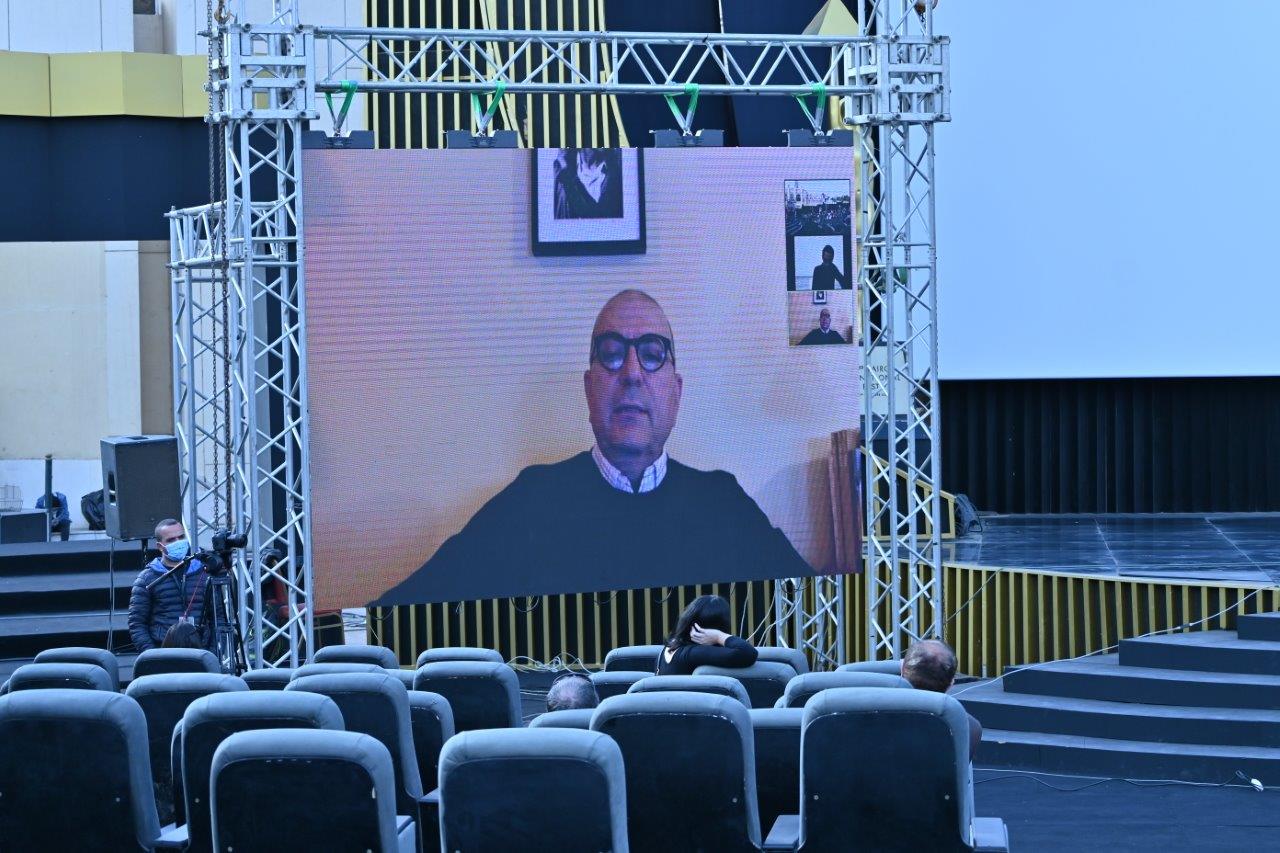
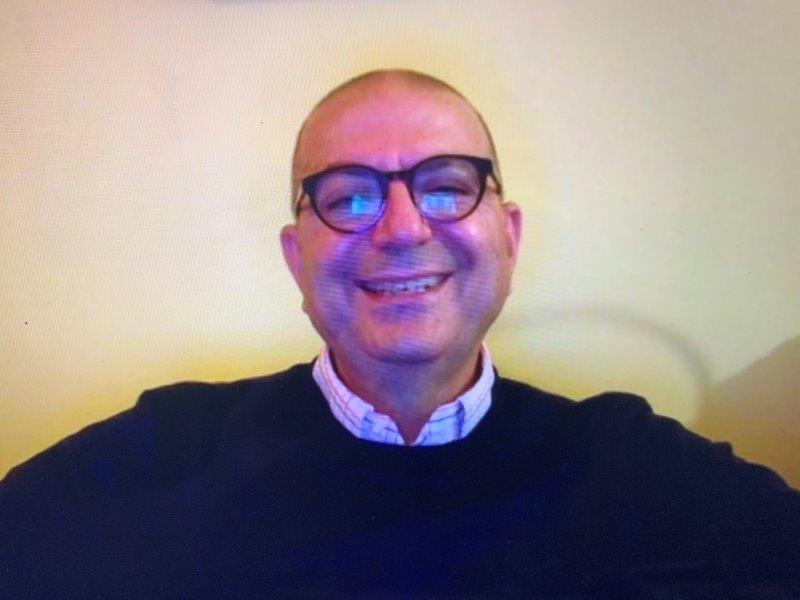
The 59-year-old gave a Masterclass at The Cairo Film Festival via Zoom from Nazareth, where he is finishing off his latest feature Huda’s Salon. Afterwards, we spoke over Zoom.
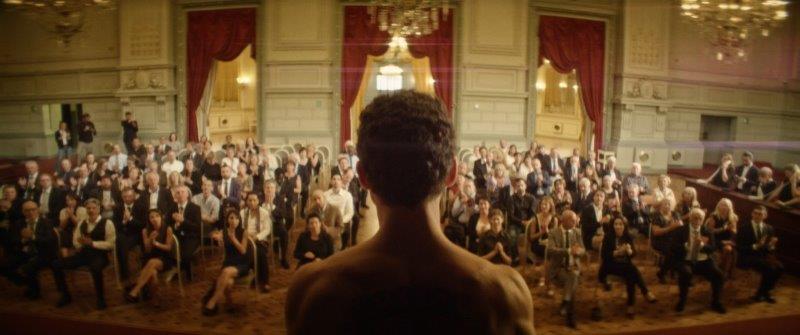
I point out how Arabic-language films are having a strong impact at the moment: Gaza Mon Amour directed by the Palestinian twins Arab and Tarzan Nasser; Kaouther Ben Hania’s The Man Who Sold His Skin from Tunisia; and Zanka Contact from Morocco. All generated strong reviews after premiering at The Venice Film Festival, where Yahya Mahayni deservedly took out the best actor prize in the Horizons section for The Man Who Sold His Skin.
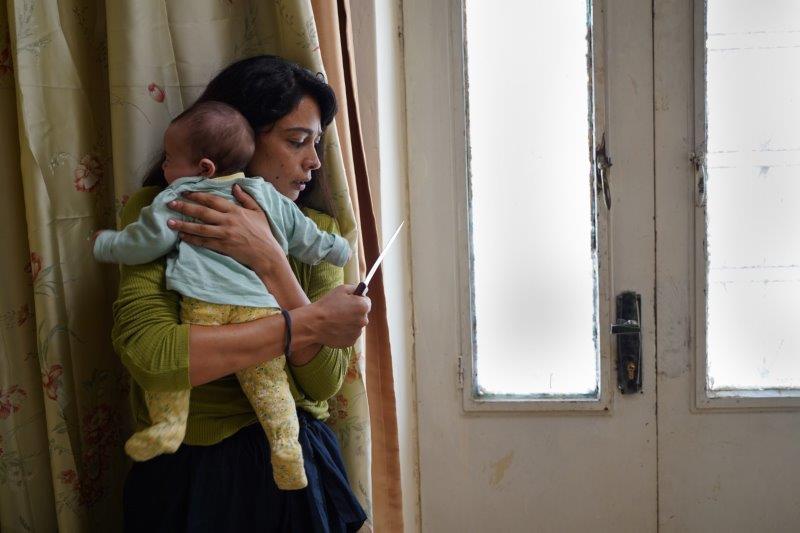
Huda’s Salon, filmed on location in Nazareth and Bethlehem, was also meant to screen in Venice but was unfinished due to Covid. The Egypt-Netherlands co-production, produced by Abu-Assad and his wife Amira Diab alongside Cairo Film Festival President, Mohamed Hefzy (at 45, one of the Middle East’s and Africa’s leading film producers) is now aiming for a Cannes debut. His early feature Rana’s Wedding screened in Critics Week in 2002 and Omar in Un Certain Regard in 2013.
Abu-Assad admits the filmmaking situation in Palestine is tough.
“Our situation is like the political situation. The living situation, the social situation, is going backwards. We have very, very tough years coming, and the last ten years were like a disaster. So, you always see that when society is in trouble, artists are flourishing. I’d prefer to have a better, stable society and a quiet arts scene rather the opposite.”
Covid has made things more difficult.
“Yes. If there was no Covid we would have premiered Huda’s Salon in Venice. Now, we can hopefully finish by March. So, we are almost nine months in delay. It’s frustrating. But I have to tell you, the film becomes better because you have more time to think about the scenes, the characters and to develop the script.”
It’s set in a beauty salon and is based on real-life events, telling the story of a woman whose visit to a hair salon turns into a nightmare when its owner blackmails her.
“Yes, it’s a very, very dark movie. It explores the contrast between loyalty and betrayal. It’s a feminist spy thriller.”
I see you re-unite with Ali Suliman from Paradise Now. Who is the female protagonist?
“Maisa Adb Elhadi. She also has a small role as the daughter in Gaza Mon Amour.”
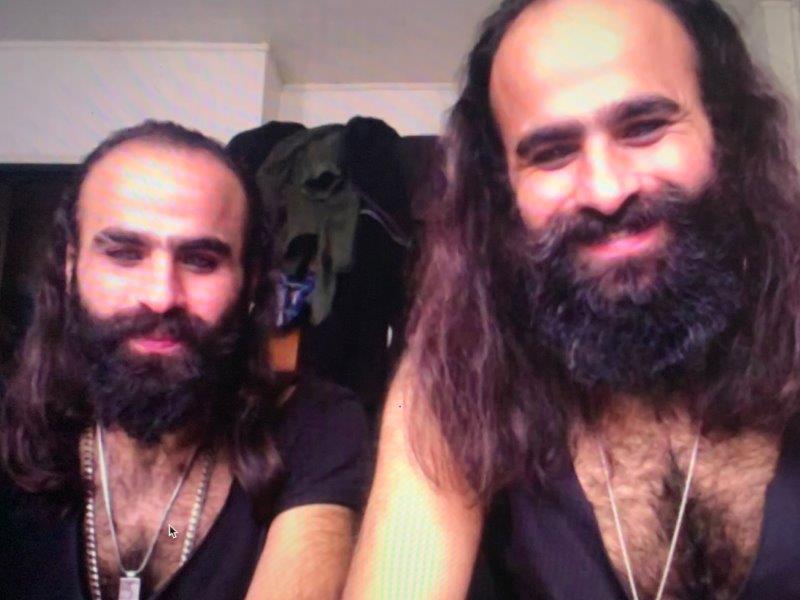
Gaza Mon Amour screened in Cairo and is Palestine’s Oscar nominee for best foreign film. Are you friends with the Nasser twins? They look like Gene Simmons or Alice Cooper.
“Beavis and Butthead! I love these guys. Their first feature film (Dégradé) was very good. But now with Gaza Mon Amour they’ve made huge progress. I was impressed by their film language. There’s almost zero narrative, but still, you sympathise with the main characters. They let you live that boring life without being bored. It’s a great achievement.”
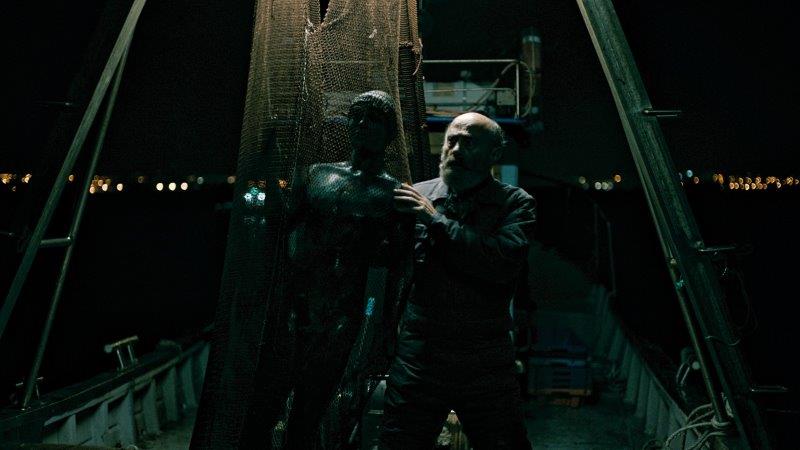
Salim Dau plays a 60 year old in Gaza Mon Amour, whose desire is unearthed when he finds an erotic statue of the God Apollo in the sea (and Hamas take it away from him). Is he a famous Palestinian actor?
“Yes, I’ve known him all my life. Actually, I’m not a big fan of his because I feel that he’s overreacting all the time. But in that movie, he is so subtle, he is emotionally naked, and it was amazing how they did it.”
And of course, Hiam Abbass from Paradise Now is the woman he falls for.
“Hiam’s in Succession, she’s always good. She won’t surprise you.”
You’re now editing in Nazareth. What will you do after that?
“Early next year probably in March, when I am finished, I will go back to Amsterdam.”
That’s where you live?
“No, no, I live out of my suitcase. It’s so frustrating. Some years I live in LA, some years I live in Nazareth, some years I live in Amsterdam. I miss Amsterdam, because it’s the city where I grew up. I was 18 when I went to live there, and I left when I was 42. All my best years were in Amsterdam.”
How do you now feel about Hollywood? You made a big studio romance, which received tepid reviews, while your critical successes have been out of Palestine.
“I mean, you have to define success. Actually, The Mountain Between Us did very well at the box office. When you go to Hollywood you know you are entering a disco and you have to do that dance. It’s a studio movie, they want to make a commercial movie and I did a commercial movie. I wasn’t responsible for the end product, because the studio has the last say. They make a test and they see the audience reaction. We even reshot the final scene, because the audience did not connect with the first ending that we did. Still, it’s a big success for me and I really like it a lot. The studio really respected me enormously and gave me everything I wanted during the production. The end product is their responsibility, but the directing, I was very happy with it.”
You’re unusual because you come from this country with so many political problems, yet you’re able to make very commercial upbeat films like The Idol.
“I’m not interested in making a personal statement in cinema. A lot of directors want to have their stamp, their brand as a director, but I always aim for variety. I want to make movies that are different than the one before. I want to challenge myself. I am curious. I was curious about making a feelgood movie like The Idol and to see how it works. It’s my favourite movie. It’s very uplifting. And it’s giving hope, which we need at this time.
“In a similar way, after doing The Mountain Between Us, which cost almost US$40 million, now with Huda’s Salon I’m making a US$1 million movie. I was curious to see how I could make a good movie on such a small budget. I’d only sometimes used a handheld camera in my cinema, because I always hated handheld shots. But I shot Huda’s Salon with a handheld camera entirely.”
Omar won the Asia Pacific Award in our region for best film. How did that feel?
“I was very honoured. Our cinema is Asian cinema. It’s not like European cinema or Western cinema. The Asia Pacific award is an Asian award.”
Have you been to Australia?
“No, not yet. But I shot The Mountain Between Us with Mandy Walker. She’s a brilliant DP. I love her.”
Gaza Mon Amour, The Man Who Sold His Skin and Zanka Contact are all French co-productions and the Nasser brothers and Kaouther Ben Hania live in Paris. The French are hugely supporting Arabic-language cinema.
“Yes, I believe France is almost the only country now that is holding its own against the United States in cinema. Almost all other countries are doing what Hollywood does, a commercial, entertaining cinema. European cinema is trying to do something, like Denmark and Germany, but I think the only country that truly is keeping independent cinema alive in Europe and outside of Europe, like in the third world countries, is French cinema. The French are the biggest supporters of independent cinema at this moment. I hope they keep on doing it.”

The following awards were presented at the 2020 Cairo Film Festival:
The Golden Pyramid Award for Best Film, presented to the Producer Irune Gurtubai: Limbo by Ben Sharrock (UK)
The Silver Pyramid – Special Jury Award for Best Director: Ivan I. Tverdovsky – Conference (Russia, Estonia, UK, Italy)
The Bronze Pyramid Award for Best First or Second work of a Director: Mayye Zayed – Lift Like a Girl (Egypt, Germany, Denmark)
Best Actress Award: Elham Shahin – Curfew by Amir Ramses (Egypt) and Natalya Pavlenkova – Conference by Ivan I. Tverdovsky (Russia, Estonia, UK, Italy)
Best Actor Award: Julian Vergov – German Lessons by Pavel G. Vesnakov (Bulgaria, Germany)
Naguib Mahfouz Award for Best Screenplay: 50 or Two Whales Meet on the Beach by Jorge Cuchi (Mexico)
Henry Barakat Award for Best Artistic Contribution: Limbo by Ben Sharrock (UK)
Jury Special Mention: Gaza Mon Amour by Arab Nasser & Tarzan Nasser (Palestine, France)
Cinema of Tomorrow
The Mention of the Jury: Life on the Horn by Mo Harawe (Somalia, Austria, Germany) and The Girls Who Burned the Night by Sara Mesfer (Saudi Arabia)
The Special Jury Award: The Game by Roman Hodel (Switzerland)
Youssef Chahine Award for Best Short Film: Isabel by Sarah Al Shazly (Cuba)
Best Arab Film selected in any of the three competitions (each $5000): Gaza Mon Amour by Arab Nasser & Tarzan Nasser (Palestine, France) and We Are From There by Wissam Tanios (Lebanon, France)
The International Federation of Film Critics (FIPRESCI) Award: Limbo by Ben Sharrock (UK)
International Critics’ Week Competition
Shadi Abdel Salam Award for Best Film, awarded to the Director: Jing Wang – The Best is Yet to Come (China)
Fathy Farag Award – The Special Jury Award: Gold by Rogier Hesp (The Netherlands)
The Horizons of New Arab Cinema Competition
Saad Eldin Wahba Award for Best Arabic Film, awarded to the Director: Roy Arida – Under the Concrete (France, Lebanon)
Salah Abu Seif Award – The Special Jury Award: The Tambour of Retribution by Abdulaziz Alshlahei (Saudi Arabia)
Best Non-Fiction Film Award: We Are From There by Wissam Tanios (Lebanon, France)
Best Acting Performance Award: Faisal Al Dokhy – The Tambour of Retribution (Saudi Arabia)
Jury Special Mention: The Fall of Apple Trees by Mohamed Mouftakir (Morocco)
Youssef Cherif Rizkallah Award – Audience Award ($15000): Lift Like a Girl by Mayye Zayed (Egypt, Germany, Denmark)
