


By Filmink Staff
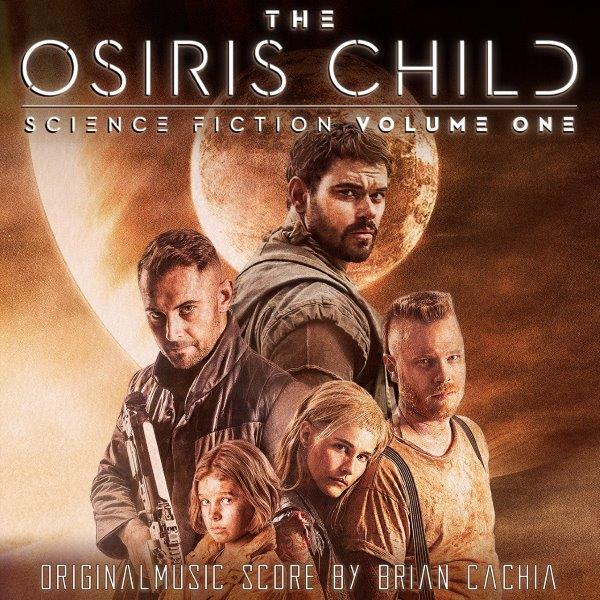
The collaboration between Brian Cachia and director Shane Abbess goes back many years, and with Infini, it evolved to co-writing the feature film along with scoring it. They have continued this method of working together with The Osiris Child: Science Fiction Volume One.
Here, Brian Cachia shares with us two of the fine epic tracks from the soundtrack to the film, and gives us an insight into their creation.
DON’T LEAVE ME HANGIN
Listen to ‘Don’t Leave Me Hangin’
The Story Behind the Track
Who doesn’t love a good prison fight in a sci-fi movie!?
I’ll never forget coming up with this one, my wife suggested we move to the Blue Mountains in NSW while I did the scores for both The Osiris Child and Safe Neighbourhood. She wanted a place where I could escape the noise and just focus, only I bought the noise to the mountains instead!
I was playing the big brass parts during a particularly loud section when I heard a banging on my studio door. I opened it to find an elderly gentleman, red faced and furious, wearing a back brace and he proceeded to tell me he couldn’t cope with my bombastic-ness any longer and it had to stop. I think I was in the mental state of the prison at that stage so I really had to work hard to see the merit of his protest.
Since it had been three days of this cue playing at full volume we managed to reach an arrangement with times and volumes and we both got out alive. Check out the results.
Musically Speaking
I don’t think there was much I didn’t use on this cue.
The first act of the cue uses a combination of live percussion and synths to drive it forward, along with the orchestra hitting key moments and helping the drive. This included tricks like orchestral cymbals resting on a tympani drum while I played in and out of filtering synth pulses, almost calling and responding.
The second act is just balls out on the accents, everyone at full dynamics. We used double orchestra on this cue which was an amazing thing to witness.
Orchestrator Mark Buys is a genius, he has an amazing sense of predication for achieving the best result and he really helped to achieve the big sweeping chords to outline the movement of the Warden’s (Temuera Morrison) march into the mess hall. We needed to be sensitive of the harmony in the chords in that it had to be perfectly balanced through the chaos of sound and vision so the audience still gets the right message that this is the man in charge and this is the tone of his pride.
The second time the theme comes back, I accompany it with an onslaught of heavy guitars, just to seal the deal, while the horns gliss (bend to note) on every phrase. This adds a great sense of instability to the experience.
The third act is the sprint to the finish, a complex fast riff on the high strings as we speed up to a climactic ending.
Final Thoughts
Apart from annoying the neighbour, this cue was a bold and raucous approach to film scoring which I feel isn’t done that much in Australian films. When I look back across my body of work to date, a key driving force is risk. I don’t mind if I fail since it means I get a chance to really succeed at something unique and I think this movie and this score achieves that.
DO IT WHILE YOU CAN
Listen to ‘Do It While You Can’
The Story Behind the Track
I have a bad habit of scoring films chronologically. I’m not sure if it’s because I witness the films getting shot out of sequence so I yearn to experience them in correct order or if it’s the immersive approach I use to inhabit and live the movie as if it were really happening. It’s probably a bit of both.
Traditionally, when I get to a heavy scene toward the end, it usually informs the revisions that will need to take place on the second pass, but in this case the film takes a massive shift in the last act and goes right back to the start of the tale, so the palette had licence to change musically and be a ‘one off’ moment.
The vocals were last to be added and the soprano vocalist I wanted wasn’t available. I was running out of time fast and already supplying the score to the mixing stage so I was nearing the point of giving up hope.
My wife, Leah, does a lot of vocal colouring in film and video games but leans more on the rock and roll side of things. She drank half a bottle of red wine, walked into the studio, watched the scene once and whilst crying her eyes out put down a vocal part that absolutely blew me away. It was an intense and proud moment for both of us.
Musically Speaking
This was a nice cue to listen to live although there was a couple of elements that needed to be layered in different sessions.
We opted not to record the solo violin ostinato that plays in the beginning of the cue with the orchestra (again great instincts on Mark Buys’ behalf) as the orchestra would overpower a single player.
It’s worth mentioning the first chair violinist. It was challenging for me to hear it played on its own and I’m sure I pissed him off many times when asking for less ‘classical rubato’ and more ‘sci-fi robotic’ since these are not musical terms he was used to hearing, but we got something in the middle which is absolutely gorgeous.
The solo horn that plays over the most emotional moment of the scene wasn’t able to be played by a french horn because of one note that pushed the range too far, but surprisingly to me, it could be played by the first instrument I ever played, a cornet, and ended up sounding really warm and emotive.
Final Thoughts
It’s always really satisfying when you hear the sobs of the test audience in a scene intended to make them cry, knowing you’ve contributed to their trip.
The ‘Do It While You Can’ scene was a huge challenge in that it was a complete contrast in look and feel to everything else and I needed to try and tie it in with the rest of a musical score which had its own challenges of thematic telegraphing (due to the nature of its non-linear structure). This meant that the traditional recurring, big themes didn’t really work and the score needed a balance of complexity and smaller recurring ideas peppered throughout the overall landscape.
The soundtrack for The Osiris Child: Science Fiction Volume One will be available on iTunes from April 21, 2017.
The film opens Australia-wide from May 18, 2017.
