

By Justine Hamilton
It’s a tempestuously windy evening that finds me racing to the doorstep of LA based screenwriter, Luke Davies’s home, not only for an interview, but to duly take cover. It’s the night before Thanksgiving and LA traffic is worse than usual, so I’m late and windswept. But before I even knock, the front door swings open. “Come in, quick!” Davies says.
Amid the promotional whirlwind for his latest film, Lion, Luke Davies is coming down with a cold but nonetheless is in high spirits. He delights in telling me of a local doctor’s handy hints to boil water, weigh in on the steam, and take deep breaths to feel better. “I’m a little bit sleep-deprived and I’ve been jumping on planes way more than I ever do in my normal quiet life, but I’m actually enjoying the ‘promotional whirlwind’ – as you put it – because I just want to be really present and enjoy it, basically because I know it won’t last for long,” Davies admits.
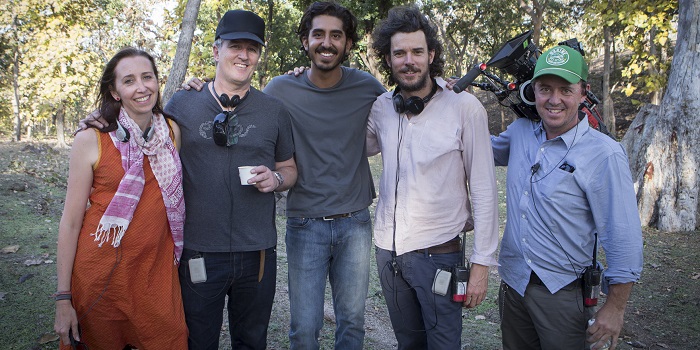
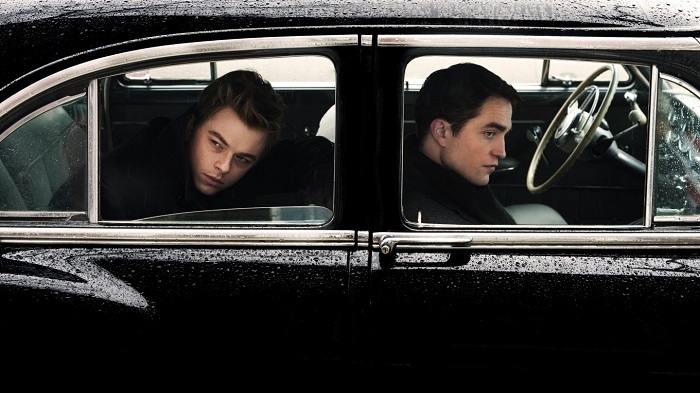
The acclaimed poet, novelist, and co-screenwriter of the Australian film classic, Candy (which was based on his own novel), is comfortably riding a Hollywood screenwriting wave after the success of the James Dean tale, Life (directed by Anton Corbijn), and his latest film, Lion. Since packing up his life and rented flat in his beloved Bondi almost ten years ago, Davies has endured financial struggle, ongoing health problems, and a mortality crisis to find success in the tight fold of Hollywood. In the early days of renewing his US tourist visa, getting work in Los Angeles was a drawn-out process of waiting and watching. “Literally, nothing happened for five years,” he reveals. “I was still just earning money writing my film reviews for The Monthly back in Australia. My pay-the-rent money. It was five years of struggle.”
I wonder how an Australian outsider endures living long-term in what can be a tough-as-nails, glitz-glamour town like LA. “Seeking out good loving friends makes a difference here,” Davies replies. “There’s a way of living in this town which will make you really neurotic – to plug into the ambition and the hype, the endless meetings, and the hustle. I would hate to not have friends in this town. It would be brutal, and it would crush you. That sense of loneliness is real. And you have to be super determined, if for whatever reasons you want to come here, to do whatever it is that you want to do. You have to be really patient as well. Patience is one of the biggest things here,” he adds. “For some reason, I’ve been patient for nine years. The first five were tough. And then there was a transitional period of a couple of years that were semi-tough. Finally, in the last two or three years, I’ve been busier.”
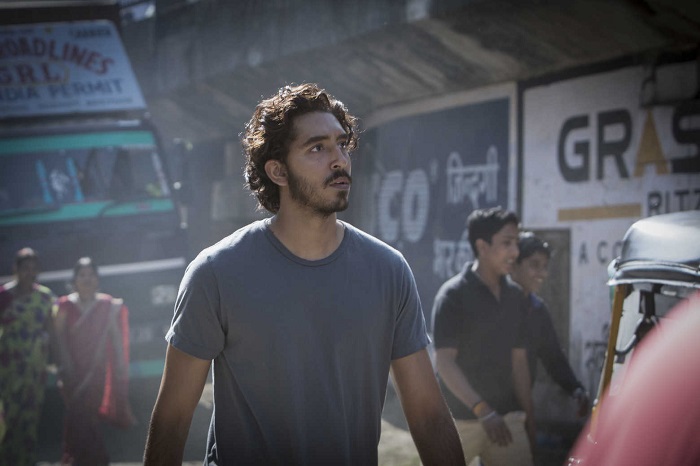
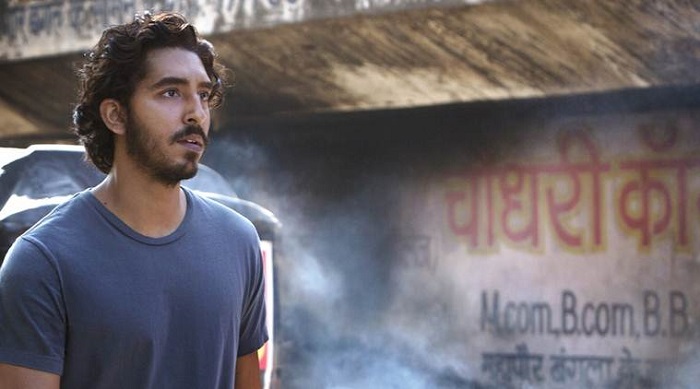
This extends to See-Saw Films (The King’s Speech, Tracks) and its producers offering Davies the opportunity to adapt Saroo Brierley’s dramatic memoir, A Long Way Home – a story of enduring love, dislocation, lost boyhood, and the rediscovery of it twenty-five years later using Google Earth. The result is Lion, directed by Garth Davis (Top Of The Lake) and starring Dev Patel (Slumdog Millionaire) as a young man born and lost in India, and ultimately raised by adoptive parents (Nicole Kidman, David Wenham) in Tasmania. “They [See-Saw] came to me with the book,” Davies says. “They’d just optioned it and said, ‘Read this, and tell us what your approach to writing the screenplay from it would be.’ It wasn’t a job offer – it was like, ‘Would you like to audition?’ So, I just dug down into the book, read it in a day, and wrote a five or six-page outline; that turned into a conference call which turned into feedback, and then that turned into another week where I wrote it more formally with a fifteen-page outline to put all the elements together. Then I got the job. I went to India, I met Saroo, and I went to all the places – the train station, the orphanage – in the story. I met his biological mother. It was a really intense trip. But it’s a film that I love, that we love – the filmmakers, the actors, the producers – and we know that we are experiencing day in, day out that audiences really love it. It seems as if the film opens up people emotionally.”

Davies’s heartfelt script is written with his signature sensitivity, and has built momentum in Hollywood where awards season has been running hot, namely with The Critics’ Choice Awards nominating him for Best Adapted Screenplay and winning a Breakthrough Screenwriting Award at The Hamilton Behind The Camera Awards. “Dev Patel and Saroo gave me my award, and it was really sweet. And fun. We all wore suits,” he adds. “It was also a thrill to win this award for the screenplay. So that was cool, and unexpected. It was like, ‘Okay, that’s excellent. Fuck!’”
My eyes dart about the room. “So, where is it?” I ask. On cue, Davies gets up, and without a hint of pretension, walks casually across the floor, picks it up from a top shelf (“It’s a weird looking award”) and hands it to me. It’s almost a mistake because, of course, I nearly drop it. We nervously laugh before agreeing that the symbol on it looks curiously like a boomerang. I contemplate the award in my hands and realise that Davies is not only a long way from his CinemaScope dreams growing up in the northern suburbs of Sydney, but he’s bridged a gap between poetry and filmmaking. I tell him that it’s inspiring stuff and exclaim, “Pymble’s premier poet becomes a bona fide Hollywood player!”
He pleasantly smiles. “Pymble’s-premier-poet…geez.” But the crossover strikes him as odd. “That’s a weird thought, being a ‘bona fide Hollywood player.’” Then muses, “Doesn’t feel like it.”
Despite the long haul in trying to eke out a place in Hollywood, Davies has proved an exception to those who wind up disheartened and leaving. “I just, for some reason, kept being patient, kept being focused, and kept being persistent with my beliefs that I could go somewhere. I tried my best to side-step the hyper-manic stuff and to keep my eye ahead on the fact that this is a town where things get made more rapidly and more often than in Australia. Things become real very quickly here, so I wanted to try it and aspire to that highest level of creative engagement in the concrete world of getting jobs and writing films as opposed to the slower world that happens in Australia, which is really just a mathematical result of the size of the economy, the size of the film industry, and the size of the population. It’s a smaller industry and less films get made.”
Again, on reflection, it’s obvious what got him through difficult times. “I wanted to go to the place where more things happen faster,” Davies says. “It wasn’t easy, but I’m still here, and I don’t think that I’ve been crushed by it. My secret ingredient is the love of friends. Surround yourself with the sane loving people, not the insane hyper people, and you can be okay in this town. You can be safe and nurtured and protected from the bullshit.”
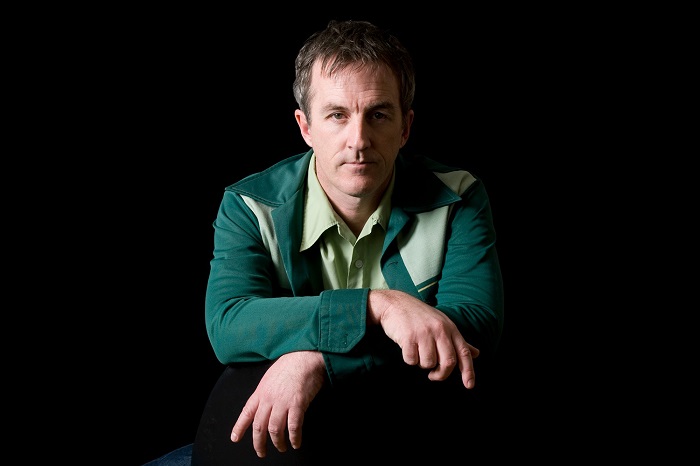
In his youth, Davies spent much of his time devouring books and films that got him as close to teenage suburban transcendence as a fully-fledged “little bohemian kid” could get. More single-minded than his peers, he cemented his outsider status by reading Steinbeck’s Cannery Row at thirteen after he pulled it randomly off a school library shelf. Elemental in what seems a trilogy of cathartic moments, he says that “it was an incredibly specific moment in time where my life changed. I felt that I became an adult member of the human race as opposed to, ‘I’m just a kid, I don’t know what’s going on.’ And the change was really conscious like, ‘This is the greatest thing that’s ever happened to me. I now feel separate from childhood, and separate from my parents. I feel excited, and I feel like an adult. There’s this world ahead of me.’”
Davies’ second occurred after hitchhiking at sixteen with a girlfriend to The Academy Twin Cinema in Paddington. He saw Werner Hertzog’s cult curio, Aguirre The Wrath Of God. “Again, my mind expanded and I walked out of there going, ‘Oh, my life just changed! I’m now officially obsessed with film, and I want to make them, and write them.’ I just didn’t know how it was going to happen…and then I became a fucking drug addict.”
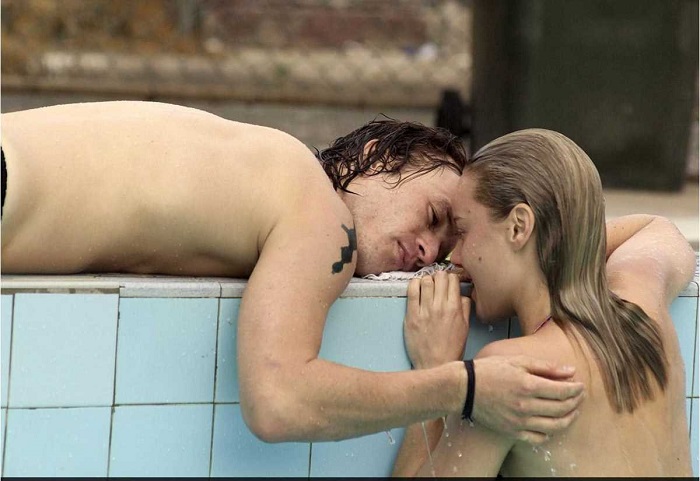
Since the 1997 publication of his bestselling debut novel, Candy, Davies has made peace with the fact that his ten-year heroin dependency is public knowledge, and is aware how extraordinarily lucky he was to escape. “I came out of those years and I feel incredible gratitude – literally on a daily basis. All these years later of, ‘Wow, that was real and that was terrible what happened.’ What I inflicted upon myself…”
I don’t wish to press him further, but know that in the last vestiges of drug use, Davies encountered the third, if not his most vital, spiritual awakening. Barry Lopez’ novel, the environmental masterpiece, Arctic Dreams, is a jubilant, unearthly paean to wildlife and glacial frontiers amid snowy landscapes in a polar wilderness, and found its way like a shooting star straight into Davies’ heart, prompting him to reclaim a life that was lost. “It was just so beautiful that it cut through all of the horror,” he says. Davies emerged from his own wilderness on January 2, 1990 by walking into a Sydney detox treatment centre.
But regardless of where or how he found himself, he always knew what was at his core. “I wrote absolutely non-stop before I was using, and I wrote absolutely non-stop during all the years of using. And the stuff before I was using was just youthful crap, and the stuff while I was using was just junkie crap. But I always considered myself a writer, literally from thirteen-years-old – this is what I do.”
Yet his first year clean from heroin saw him write nothing. “I literally couldn’t pick up a pen. I was coming down to earth from a trauma, effectively. An extended trauma.” It would be five years until slivers of Candy emerged. “Suddenly it was like, ‘I’m going to try and write this novel.’ In the sixth year, I wrote it, and in the seventh year, it got published.”
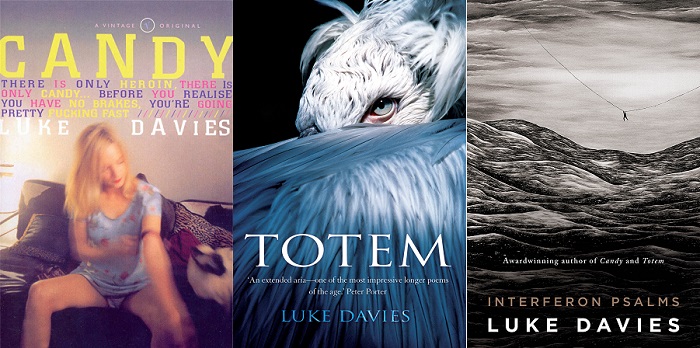
If a good chunk of his life has been spent as a writer, then poetry has been its life-force. Picking up the 1999 Judith Wright Poetry Prize for Running With Light; the 2004 Age Book Of The Year for Totem; and the 2012 Prime Minister’s Literary Award For Poetry for Interferon Psalms, Davies knows what he loves most doesn’t necessarily fly on everyone’s radar. “One of the nice things [about] writing films is that the reach is far greater,” he asserts. “You’re still using your heart and soul, but you’re getting to more people. That is a satisfying feeling. But it’s always been a frustrating paradox of my life as a writer that the thing that matters most to me – my poetry – is the thing that gets read by the least amount of people. Nobody reads poetry. It’s a tiny, obscure sub-set of people who are actually into poetry. You can basically measure it in the hundreds or the low thousands in Australia. That’s just the way it is. It doesn’t change my love of poetry, but I’m aware of the paradox.”
“I BEGAN TO DRIFT DOWN TO MY DEATH, like a ship heading ocean floorwards” – Interferon Psalms
“It took me years to write that book [Interferon Psalms]. The initial impetus of it tied in with this wrestling with mortality – ‘I’m sick, my body is doing this stuff, and I’m maybe going to die. I’m taking this really nasty drug that’s fucking me up.’ It blended the actual experience of being on this nasty interferon treatment which was a springboard for the book with some relationship breakup stuff. On a broader level, it was like Totem, which was an expression of the boundless love and joy of existence in the face of our hurtling towards our deaths. And then, Interferon Psalms was like a companion piece which was like an expression of the boundless pain and confusion of existence and how to find fragments of joy in the face of hurtling towards our deaths.”
The clarity here is that Interferon Psalms is short on jokes, but Davies recounts a slow-death odyssey with such eloquence that it’s easy to conjure up the spirit of Franz Liszt in a dream sequence newly composing a swirling suite of sonatas around it to no less lose your mind to. As prose, it’s hypnosis and levitation in book form that focuses on the question of death.
Recovering from my own mortality crisis, I came across Interferon Psalms in a Newtown bookshop. For over two thousand years, poetry as art has expressed powerful emotions to enchant, bring meaning to, or interpret the universal of the everyday, but in all my years of reading it, I tell Davies that I’d never come across such exalted prose on death and illness.
Having undergone “sixteen months of hell” with interferon treatment ten years ago – that ultimately failed – Davies shaped extreme torment into something profound by writing the living daylights out of the experience. He talks about the weird twist in being creative in the face of death, which has been at the forefront for me since David Bowie passed away in January. “Did you find this?” Davies asks. “At times, as my health was worsening, I had a dodging-and-weaving thing going on. Not very consciously, but I found ways of keeping certain feelings and emotions and depressions at bay by being distracted and busy and numb, and that period of writing Interferon Psalms coincided with my body getting worse. Getting into writing it was an attempt to break through the numbness to wrestle with something really essential to make something good of this terrible sickness – it was hard, but the result is Interferon Psalms.”
I stare at him, vacantly. “No,” I say point-blank. Languishing in an emotional gulag of existential terror with advanced cancer trying to kill me every day while listening to a nightly melange of clocks ticking in my head as I tried to sleep was all I could handle. My body taking me hostage wasn’t a creative chapter. Davies reveals that the past five years saw a further decline in health. “I’ve been living with all this anxiety. I was told, ‘Your liver’s going into failure, and you’re going to be dead within three or four years.’ It was horrible. It was like this background white noise of panic and anxiety, of ‘Fuck, I don’t want this to happen. I love my life.’”
Thankfully, Davies has seen a full recovery from long-term illness that he says has given him a resurgence of vitality that he hasn’t felt in years. As he talks, I recognise all too well the tell-tale signs of rebirth and can’t help but smile. “I’m getting healthy again,” he says. “I’ve got all this energy. I can’t even put into words how different I feel. I feel like I’ve been given a second stretch of years. Suddenly from March, it’s been, ‘Oh my God, I’m jumping out of my skin. I didn’t know how sick I was.’”
I ask him what’s next on a new horizon. “My next book of poetry…when and if I get around to finally working out which poems are the good ones and the bad ones! I’ve been writing it over the years – it’s overdue, but I don’t fret like, ‘Oh, you’re wasting time. You’ve got to get that book together.’ I just believe that at exactly the right moment, I will work out what other poems make up this book. At the moment, not all of them feel like they’re properly honed and finished. I’m also busy going with the flow of the film. It’s fun: I wrote a movie that I’m proud of. It’s exciting.”
As we step outside, the winds have eased, and the air is calm again. I see about twenty quintessential LA palms out the front in the opposite street and all of them tilt remarkably to the right in a way that couldn’t be scripted. “They lean like that because of the Santa Ana winds,” Davies explains. “They come in that direction, from the mountains.” I stare up at the palms in wonder. Despite their fragility, there’s a resilience and a grandeur in how strong they still stand after the turbulence…
Lion is released in cinemas on January 19. Click through for our review of the film.

A fantastic and touching article.
What a splendously insighful piece! Love to see more from you.
Congratulations to a well-earned win Luke.
This is just beautiful. It’s one of the most intimate interviews I have ever read.
Such a brilliant and personal insight.
Beautifully written I look forward to reading more from you.