


By Andrew Blackie
China is now the world’s second largest movie market, and is expected to overtake Hollywood within a few years. Yet despite a reliable stream of local productions, a tradition of quality filmmaking is yet to take root in the country.
A case in point: the Oscars. China’s submission for Best Foreign Language Film last year was a quirky dramedy about cancer called Go Away Mr. Tumor. It was based on a web comic. This year’s official selection is Xuanzang, a bloated historical epic about a Tang dynasty monk that nobody in China seems to actually like, or even remember.
Could veteran auteur Feng Xiaogang be a corrective to this? He has gained clout as a director through having two of his films, 2010’s Aftershock and 2012’s Back to 1942, enjoy commercial success and be selected as Best Foreign Language Film contenders. He directed the Chinese New Year Gala several years back, a broadcast that draws hundreds of millions of viewers every year. And his stature has grown considerably since his starring role in last year’s Mr. Six, a dark saga of crime, corruption and justice in Beijing that was one of Chinese cinema’s 2015 standouts.
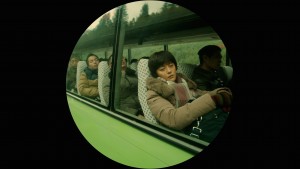
Feng has earned the clout to make a prestige film, in other words, and I Am Not Madame Bovary finds him pursuing that urge. It’s the sort of movie that a director lacking Feng’s standing would probably not have been able to make; certainly it wouldn’t have secured wide release in China’s current political environment. His story, adorned with a folkishness that recalls the 80s work of Zhang Yimou or Chen Kaige, focuses on Li Xuelian, a small-town woman whose obscure marital dispute drives her to a multi-year, tireless quest for justice from the courts, the provincial government, and then the Party cadres in Beijing. This process, known as petitioning in China, is sensitive, and often carries considerable risk for the person involved. Feng even manages to include in the film a moment when his protagonist is forced into the back of a van by security forces and taken away, referred to by the euphemism of ‘an invitation to drink tea.’
In a cinematic landscape in which realism is comparatively rare, it’s welcome to see a big-name filmmaker with a social conscience, and the case can be made that I Am Not Madame Bovary is praise-worthy purely on this ground. The film has an obvious spiritual predecessor: Zhang Yimou’s The Story of Qiu Ju, from all the way back in 1992. Madame Bovary is almost identical to that earlier work, from its structure, to the style – realism with folktale trappings – to the conceit of having an internationally renowned Chinese actress disguised as an aggrieved peasant; Qiu Ju had Gong Li; Madame Bovary has Fan Bingbing. Unfortunately, The Story of Qiu Ju remains the far superior film, potentially because it was actually made low-budget and underground, rather than as a fairly mannered artistic statement by a director at his commercial peak.
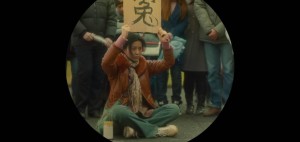
Having Fan Bingbing, one of China’s most glamorous and beautiful movie stars, play a simple peasant is an ostentatious move that works reasonably well. Buried under heavy makeup, ill-fitting overcoat and thick provincial dialect, she is convincing, and gets laughs: in a wry meta moment, she tells a butcher that she’ll ‘do that thing’ with him if he helps her in her scheme to murder her husband. But her performance is ultimately more studied imitation than true embodiment. And, although the film hinges on her struggle with the bottomless depths of Chinese bureaucracy, Feng is also very much interested in the rituals and corridors of power. I Am Not Madame Bovary depicts the pomp of Chinese politics in a level of detail that may exceed the tolerance threshold of many viewers: opulent, high-ceilinged venues; armies of tea-serving attendants; and a parade of long speeches. At one point, a senior official chides the assembled comrades that their problem is not showing sufficient care for ordinary people, a segment that seems like it could only have been inserted by the censors. Compromises such as these sap the movie’s potency as satire.
Madame Bovary has been described as Kafka-esque, but that is flattering the film. At 140 minutes (the version released to US cinemas was trimmed by 12 minutes), it is overlong and lacks rigour. The middle section meanders aimlessly and, although there is a sting in the tale at the end, it doesn’t redefine what has gone before.
Nonetheless, Luo Pan’s cinematography is indisputably lovely, limiting the screen to a circular frame for most of the movie, widening slightly for scenes set in Beijing, and only opening out fully at the very end. Wei Du’s soundtrack throws in unexpected cues that punctuate each chapter of the story and keep the viewer off balance. I Am Madame Bovary is disappointingly not a triumph, but it’s a distinctive and anti-mainstream effort from one of China’s major filmmakers, and that’s something of an achievement in itself.
