

By Erin Free
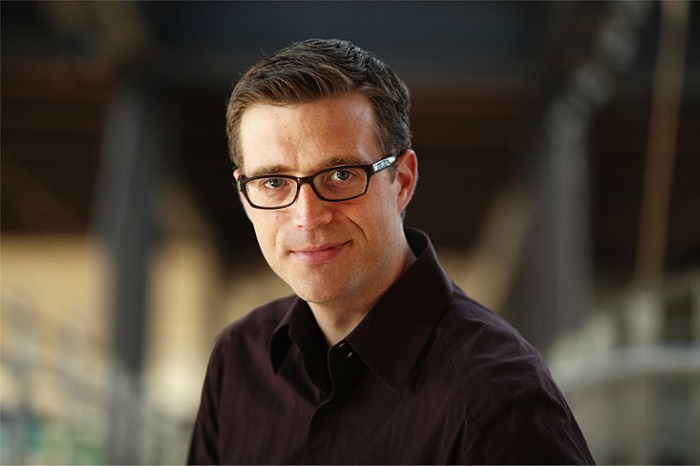
“It’s hard to actually see it as a movie,” says Finding Dory co-director, Angus McLane. “I’m enjoying hearing people’s responses to it, but I can’t see it as a movie yet…maybe in a couple of years!” Though still too close to the project to see anything more than the parts that make up the whole, MacLane has certainly been pleased by the response to the film, with Finding Dory triumphing both with fans and at the box office. “It was really humbling to see the response to the film,” MacLane continues. “It was actually quite overwhelming to see how it had touched people, and to talk with people about it who weren’t involved in the process. To have them reiterate what we’d set out to achieve with the film was wonderful…there’s no feeling quite like that. When you’re trying for years to say simple things about the human condition, and people pick that up, and are enthusiastic about it, that’s tremendous.”
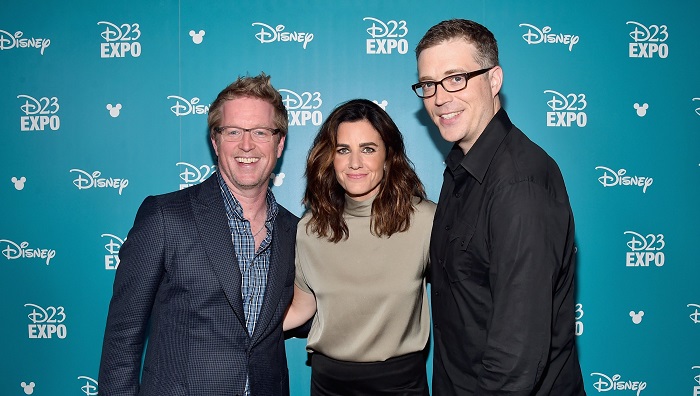
Having to deal with enormous audience expectations, combined with the challenge of reconfiguring a supporting character into a leading one, meant that MacLane was really put on the rack with Finding Dory. Describing the story as “very, very difficult” to crack, MacLane and his seasoned co-director, Andrew Stanton (Finding Nemo, Wall.E), eventually got there by shifting focus from the original’s Marlin and Nemo and onto their comic relief back-up, Dory, voiced by Ellen DeGeneres.
A winning mix of pathos, adventure, and broad humour, the film represents a stellar first-time-out for debut feature director, Angus MacLane, a longtime fixture at Pixar. Typically atypical of the animation giant, their recruitment strategies are decidedly different to those of other traditional animation houses, and MacLane’s introduction to the company was characteristically from left field. With a history of bringing in people without the usual backgrounding in animation, MacLane was invited into the company via art school. “I was not a very polished student, compared to people who had come from other schools,” he admits with a laugh.
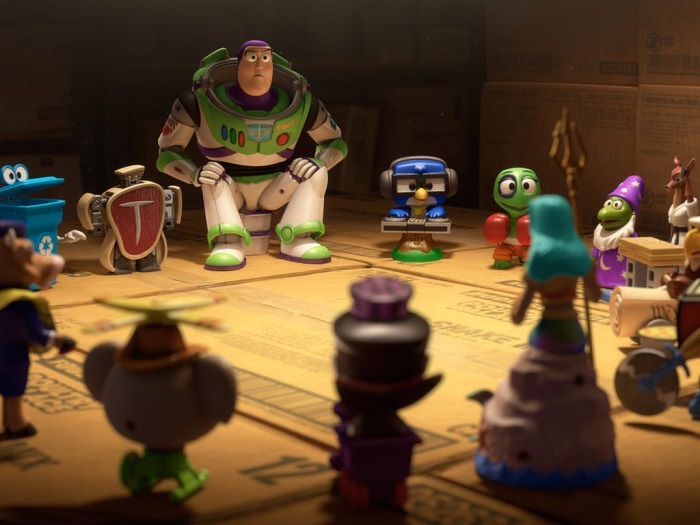
MacLane was employed initially to work in the animation departments of A Bug’s Life (1998) and Toy Story 2 (1999), before moving on to story and storyboarding work on Monsters Inc. (2001). MacLane used the new skills that he learned there to storyboard and make his own small animations on the side, the strong quality of which in turn led to him being handed the reins on Burn-E (2008), a short film featured on the DVD of Pixar’s daring and against-the-grain hit, Wall.E. On that impressive short film, MacLane solidified his relationship with Pixar producer, Galyn Susman (and started to build a reputation as a strong screenwriter and storyteller) which led to directing gigs on two more shorts in the form of the Toy Story tie-ins, Small Fry (2011) and Toy Story Of Terror (2013).
“It was about luck and opportunity,” explains MacLane of moving from the animation department and into the director’s chair. “It was a decades-long process of being able to capitalise on what was being offered to me. I was learning at the right pace. Everything was building on top of everything else. It was such a luxury to have that experience in the order that I had it. Making a feature film is a wholly different animal, but my history in production meant that I knew what I was asking of various departments, and that we could always have an honest conversation about things. That kind of teamwork is essential when you’re making a feature film.”
Though a success, Finding Dory is one of the last sequels on the slate for Pixar, with production on follow-ups set to cease after Toy Story 4, Cars 3, and The Incredibles 2. “It’s really about determining what movies the filmmakers want to make,” MacLane says, denying that there’s an active “no sequels” policy at the studio. “Making sequels is hard, and so is making new movies. You have to stay with these stories for so long that you really need to make sure that it’s a story that you can tell and that you can get behind. If someone at Pixar really wanted to do a sequel, I’m sure that would be fine, but right now, there are a lot of new projects that people are excited about. Ultimately, the audience decides what sequels get made, but I’m really excited about the films that we’re working on now.”
When asked for his take on how Pixar has remained so consistently successful for such a long time, MacLane puts it down to the vast number of talented and creative people who have remained with the studio since its inception. “That’s a luxury,” he says. MacLane also notes the studio’s constant pursuit of quality, with Pixar often making late changes and shifting the release dates of their films in order to ensure that they’re right and ready to go. “But mainly,” he continues, “it’s just the passion of the people that are here to make the best film possible, and the studio supports them in that. They understand that to make a great film takes a lot of trial and error, and they allow that to happen.”
When FilmInk wraps up by asking MacLane which movies formed the basis for him getting into animation, the director surprisingly veers way more towards live action. “I liked cartoons, but Star Wars was an obvious influence for me,” MacLane states. “When that film came out, there was a lot of talk around about how it was made, and that’s when I first realised that you could actually work on movies as a job.” An obvious child of the late seventies and eighties, MacLane name-checks a list of the era’s best films – Raiders Of The Lost Ark, Back To The Future, Aliens, Ghostbusters, Predator, and Ferris Bueller’s Day Off – as being formative experiences. “Seeing those movies made me want to make movies,” he offers. “I was really fortunate to come of age at a time when the movies were just really cool. I just loved those movies so much that it made me want to make movies. Now, I’m just so fortunate that I get to do that as a job.”
Finding Dory is available now on DVD, Blu-ray, and Digital.
