


By Dov Kornits
Writer/director, Michael Rowe, is a true internationalist. Born in Victoria, he now lives in Mexico, and made his first big splash with the shot-in-Mexico, Spanish-language 2010 drama, Leap Year, which won the coveted Golden Camera Award (Camera d’Or, given out to debut films) at The Cannes Film Festival. Now moving far afield once again, Rowe’s latest film is the even more impressive Early Winter, an Australian/Canadian co-production (which picked up the Venice Days Award at last year’s Venice Film Festival) about a seemingly typical marriage in Quebec that is actually fraught with tension, sadness, struggle, and pain. “I had an interview yesterday with a Canadian journalist, who said that somehow I’ve managed – being a foreigner – to create a film that fitted very precisely and deeply into Quebecois film history,” Rowe smiles. “I thought, ‘That’s cool! I wonder how I did that?’”
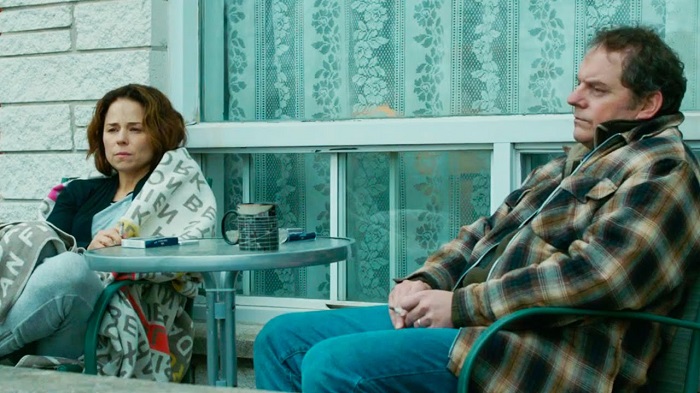
As Rowe tells FilmInk, a film’s setting doesn’t have to limit its audience, and nor does a filmmaker have to be constricted by where they’re from, or indeed, by who they are. “At the end of the day, people are universal,” the director says emphatically. “When I did Leap Year, some of the jury members at Cannes were shocked because they thought that I was a woman. The lead character in this very small and intense film was a woman, and they were impressed by my depth of understanding of the female universe. But I just think that really the character was me, and that people aren’t as different as we think they are. If you put a different hairdo on a male character, and you’re really honest about what they feel, then it’s practically a female character. And if you put a different language on a character and a different environment, then it’s a Quebecois character. This is one of the important lessons that you learn: that beyond language, we are all very much the same. Cultural differences are momentary and circumstantial, and are relatively superficial. If you take into account a few circumstantial and not particularly deep differences, you’ll find the same conflicts, internal and external, repeated all over the world and across all genders. If you tell the truth about yourself, really deeply and honestly, those conflicts are the conflicts that will be there in every single human being across the world, or they will at least understand them because they’ve been close to them.”
As the director of films that cut deep and hard, Rowe appears to be finely in tune with what’s needed to make a movie work. “Truth and honesty on screen cannot be hidden,” he says. “This is where so much World Cinema, and to be honest, and I’m sorry, so much Australian film, goes wrong. They try to tell stories and make shit up. And you can tell straight away that they’re making shit up because it seemed like a great idea to get funding. It’s an unfortunate reflection on the industry and the funding bodies, and it’s something that I intend to change so far as I can. I can’t really talk about upcoming projects yet, but I have a very significant upcoming project on which I am not the director that will play into this.”
FilmInk Presents will be hosting a series of Q&A screenings of Early Winter with Michael Rowe, taking in Cinema Nova in Melbourne (October 4), Dendy in Canberra (October 5), New Farm Cinemas in Brisbane (October 7), Dendy Newtown in Sydney (October 9), and The Regent Cinema in Ballarat (October 10). For further information on screenings, head to FilmInk Presents. Click through for the first and third parts of our interview with Michael Rowe.
