



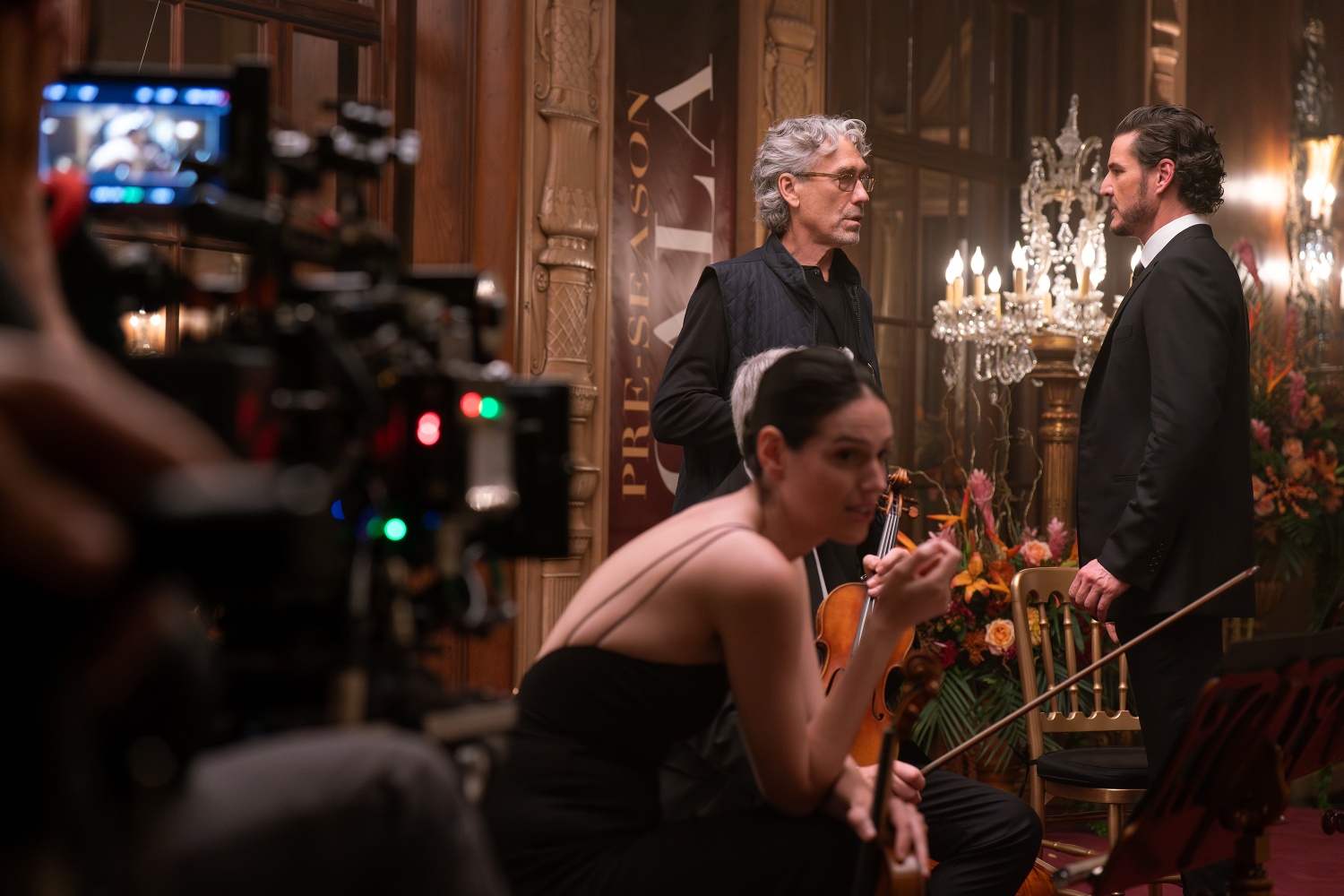
by Gill Pringle in LA
If countless rock’n’roll inspired films have been made over the years – everything from Almost Famous to School of Rock or Spinal Tap – then Tony Gilroy sprinkles rock star glitter upon the seductive lifestyle of a touring classical musician in Behemoth!
It doesn’t hurt that the cellist in question is portrayed by Pedro Pascal who completely embodies this nimble-fingered lothario whom women find irresistible.
Not least is Olivia Wilde’s wealthy patron and casual lover who is Terminator-like in her relentless pursuit of the one that got away.
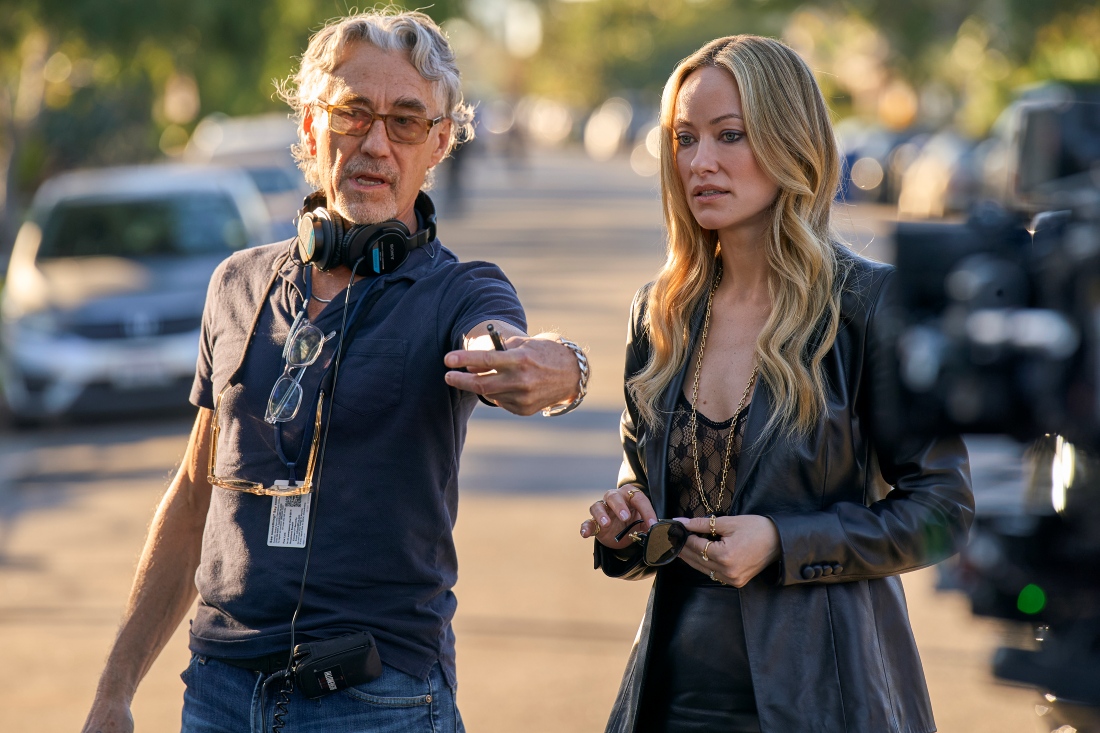
She’s not alone, as there are several broken hearts abandoned by this charismatic yet commitment-phobic musician.
For Gilroy, Behemoth! is the fruition of as 20-year passion project.
In many ways, it’s a homage to his own youthful dreams: “I definitely wanted to be a musician since I was 12 until I finally quit when I was in my late 20s. I had a [musical] vocabulary of years spent making tapes and trying to make records and stuff,” he says.
“But when we finished Rogue,” says Gilroy in reference to his screenplay for Rogue One: A Star Wars Story for which he also completed uncredited re-shoots [2016] “I started a journalism kind of research thing, which is the screenwriter version, which is much cooler because people can lie to you and they’ll really gossip.
“So, for six months, I talked to a lot of musicians and composers and arrangers, and I had a lot of research, but I didn’t have a hook for the movie. I had nothing but information. I understood the life completely, but I didn’t have a hook.”
But by the time he had finished writing and shooting two seasons of award-winning series Andor, he finally found his way into Behemoth!
The story would centre upon a musician named Alex Serian who, after 20 years on the road, returns to Los Angeles to work on Hollywood film scores, experiencing an existential crisis as the music draws him back into his family history and past.
A third-generation musician – Alex’s family were long-established members of the Hollywood studio scene. His grandfather, a fabled trumpeter, died mid-session hitting a High C on the MGM stage in 1959.
Alex’s father, Peter (Hank Azaria), was a French horn player who, in the wake of his father’s death, abandoned his classical aspirations to become a successful, albeit bitter, composer.
Ginnie Serian (JoBeth Williams), Alex’s mother, was a legendary harpist with thousands of credits while his older brother, Andrew, (Will Arnett) played viola before starting a band that made several gold records but peaked fifteen years ago.
In other words, the Serians were gifted, driven, and vividly dysfunctional.
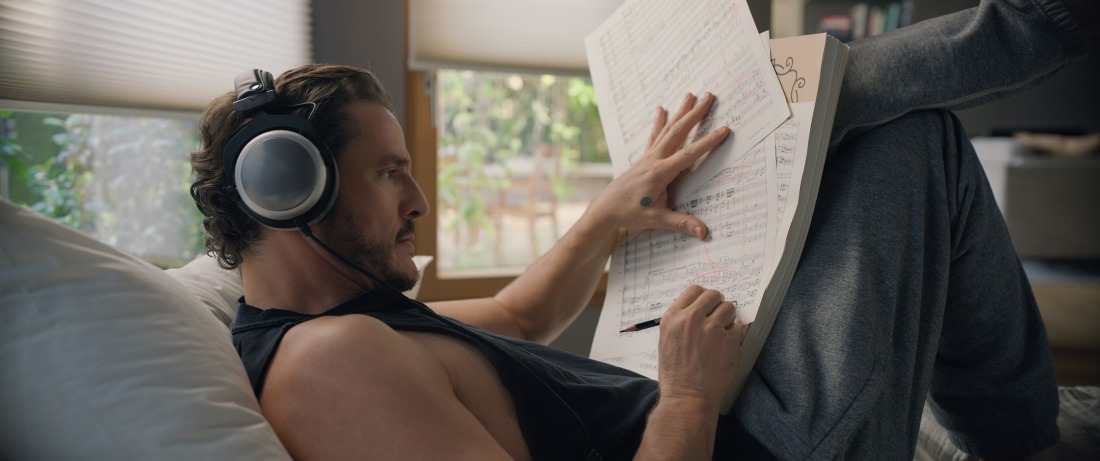
Alex was a prodigy and the focus of his parents’ toxic ambitions. By age six, they had him performing on Johnny Carson’s The Tonight Show. As his brother rebelled and peeled off into rock & roll, Alex was pushed onto the conservatory track that was meant to arrive at an exalted career as a principal soloist.
It didn’t turn out that way.
We meet Alex returning to Los Angeles after 20 years of elite symphonic playing. His love of music has never diminished, and his virtuosity has never been in doubt, but he’s clearly shunned the spotlight; his nomadic resume and string of incomplete relationships the by-products of his complicated upbringing.
Very early on, Gilroy knew that Pascal was the right man for the job. “His character of Alex is in every scene of the movie. I’ve never done a first-person movie. I mean, everything lives or dies on what happens there. So, it’s not even like a traditional casting decision that you’re making with all of the fear and anxiety that goes into that. And is this the right person? It’s way more than that that has to be satisfied, and then there has to be a marriage really between us,” says the director best known for The Bourne Legacy and Michael Clayton.
“I mean, really, we’re going to jump out of a plane together. We are only going to survive or fail together. So, everybody’s been watching what a great actor Pedro is, so his chops and ability are not the issue. The issue is: Can you inhabit this person? And does it speak to you in some sort of way that’s going to sustain you through the whole shoot and everything that we’re going to do? And the answer to that kept being yes – over and over again – and we really bonded up,” he says of Pascal.
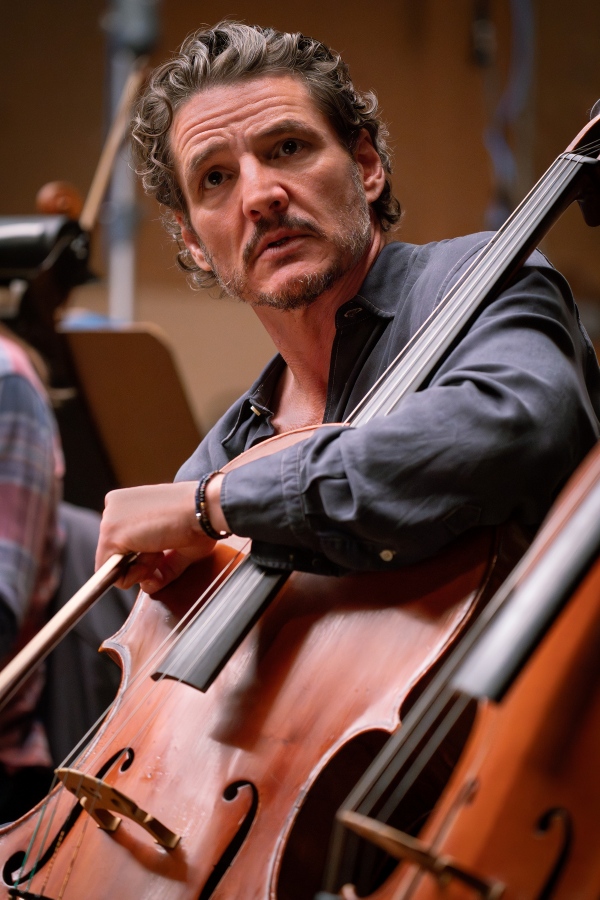 Ask Gilroy why he settled on a cellist as his protagonist, he says that there was never any question that it had to be cello: “The cello is – as many people know – in the range of the human voice. It’s foundational at the same time, and it can be a diva, right? It can swing or it can tighten up the bottom,” he says passionately.
“You put it between your legs, and it has an intimacy? And weirdly, but maybe most importantly, we’ve all seen cellists our whole lives. You’ve got this thing on your back. It’s like a papoose. It’s like another body. It’s this thing you carry around with you everywhere, and something about the bond of that relationship with a character who’s really incomplete and seems really socially connected but really isn’t in a way – that connection just seemed really cool,” he says.
The real star of Behemoth! is the music. To this end, Gilroy enlisted not one but nine composers, together known as The Behemoth Collective. “In the film, Pedro’s character Alex comes back to L.A. and starts doing all these sessions, and we see and hear the sessions and projects throughout the movie. Those are the things that take him through time.
“I had to invent four fake movies and several things that his father had written so that I ended up in the script with nine fictitious projects that the music comes from. With nine sources of music, there really wasn’t much alternative. I mean, it seems sort of binary. You’re either going to get one composer to be like Peter Sellers and change outfits every cue, which is distracting and has a lot of unpleasant things about it. Or you get nine composers … and so it was kind of daffy and unusual, and people were a little unnerved about the idea in the beginning. But once we started to put it together and you start casting them like actors, it went from being something that seemed like it was going to be very difficult to something that was just ecstatic all the way through. It was just a gas, and I got to work with the best people,” says Gilroy who put together some of the finest musical talent in the business: Michael Abels (Us, Get Out), Emily Bear (Moana 2), Lukas Frank (East of Wall), Michael Giacchino (Up, The Incredibles), James Newton Howard (Michael Clayton, Defiance), Henry Jackman (Captain Phillips), Nami Melumad (Thor: Love and Thunder), Brandon Roberts (Andor, Free Solo), and Alan Silvestri (Forrest Gump, The Polar Express.
When we meet Gilroy on the backlot of Sony Studios on the original MGM sound stage where classics like Wizard of Oz and Singin’ in the Rain were scored, he can’t help but show his pride in assembling so much musical talent. “Like many people in Hollywood – like writers only know each other from strikes – so all my friends are from 40 years of strikes. But directors never go on strike, so they don’t know each other that well. And composers, they’re all so busy, yet they’re incredibly curious about one another. But they never hang. There’s no forum for them to ever be together,” he says.
Until now.
“They were so happy to be with others of their cohort. It was very sweet to see them all together. They all came in for very little money and all had their lanes, but it was just an absolute thrill to put the Behemoth Collective together,” says Gilroy, delighted that the film’s main song, ‘Your God is Sleeping’ by Lukas Frank, is in the Best Song award mix.
Behemoth! is in cinemas 3 December 2026
