


by James Mottram
If most film festivals and distributors tend to court the mainstream, the same cannot be said for Doha. Now in its 2nd edition, the Qatar-based Doha Film Festival presented a rich strain of global cinema, one that met with the approval of this year’s jury. “Cinema is becoming very flat, conventional,” remarked the Italian director Gianfranco Rosi (Fire at Sea) during the opening press conference. “Without experimentation, cinema dies… American cinema invaded us with an idea of narration that has colonised the world. It’s important in this kind of festival to find narration through experimenting.”
It was a telling statement, and one that gives props to the selection committee behind this MENA-region festival, playing out in the final week in November and dovetailing with the city’s other ongoing cultural events. On November 20, press were invited to the Museum of Islamic Art Park to celebrate Rubaiya Qatar, the country’s first contemporary art quadrennial. More than 120 artists from over 45 countries, presented across three exhibitions, were featured; that the Doha Film Festival was happening in tandem made the entire city feel alive.
Showcasing 105 films from 60 countries, the festival itself opened with The Station, the compassionate debut feature from Yemeni-Scottish filmmaker Sara Ishaq, who previously received an Oscar nomination for her documentary short Karama Has No Walls. Centring on a women-only gas station in war-torn Yemen, the story follows Layal (Manal Al-Mulaiki), a resourceful woman who manages the station. With so many men gone, it’s here where women can trade gasoline and gossip in space safe from male interference.
If The Station set out to highlight a part of the world rarely seen on film, that almost felt like a perfect mission statement for the DFF. Certainly, the diversity of movies from the MENA region was impressive, proof that cinema in the Middle East (thanks, in no small part, to the Doha Film Institute) is thriving right now. Unsurprisingly, there was a strong political slant to some of the films on show, including Revolutionaries Never Die, a beguiling archive-driven film from Palestinian filmmaker Mohanad Yaqubi.
A tribute to the work of Jocelyn Saab, a war reporter who spent 15 years documenting the Lebanese Civil War, it began when Yaqubi received an email from her in 2018, asking if he’d collaborate with her. He never replied and three months later, she’d passed away. It was then that Yaqubi began combing through 115 reels of film, as she documented life in the Middle East between 1973 and 1983, embedding herself with the people of Lebanon, Egypt and Iran.
The evocative, grainy footage may feel like it comes from another era, but it makes very clear how little changed. Yaquibi lost his family home in Gaza, just as Saab did in Beirut. With text accompanying the images, written by Yaquibi, by way of a reply to the late Saab, it shows just how meaningful archive material can be. In Yaquibi’s eyes, it’s not just a bunch of film cans gathering dust. As he says in the final moments: “Archive is not about preservation, it’s about activation.”
The destruction of Gaza was also centre stage in fellow Palestinian director Hasan Abu Dan’s feature, Thirteen in Gaza. Receiving its MENA premiere here, as it plays in the 15-strong International Feature Film Competition, it’s the first film to be shot in the Gaza Strip since the Israeli-Hamas war began in 2023. Filmed under wartime conditions, the disconcerting drone of planes, bombs and sirens can be heard constantly.
Understandably, it’s a harrowing watch, as it traces the fate of Raghad (Mary Ziyara), a 13-year-old girl living in a tattered refugee camp with her father (Feras Al Masri), who becomes embroiled with a black market trader to help them survive. With Raghad’s mother and siblings all dead (“their homes become their graves”, says one, solemnly), the camera tells of Gaza’s devastation, with shots of concrete buildings reduced to piles of rubble and twisted metal.
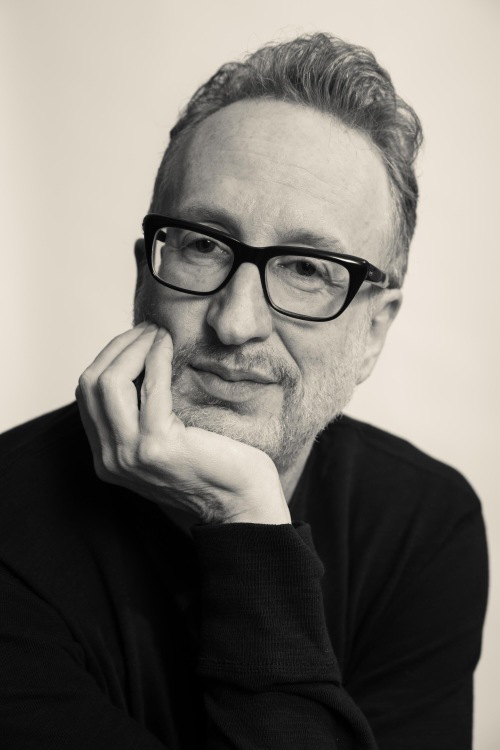
While American cinema was largely non-existent at the DFF, it felt typical that the one major director to make an appearance was James Gray [left]. The American auteur behind Ad Astra, The Yards and We Own the Night has always been an outlier, and here brought his new movie Paper Tiger, a tense 1980s-set crime-adjacent drama with Adam Driver, Miles Teller and Scarlett Johansson. A story inspired partly by his own family history, Gray explained that The Film Committee at Media City Qatar helped with funding the project at a crucial moment.
“They didn’t make the picture, but we had a requirement for all these pop songs that put us over budget, and at the last minute, a wonderful man named [H.E.] Hassan [Al Thwadi, Chairman of the Film Committee at Media City Qatar] stepped in and said, ‘I’ll help.’” It’s why Gray felt compelled to come and present the film at the gala screening, in between promotional trips to Paris, London, Berlin, Rome, Madrid and Marrakech. “I felt a commitment that was necessary… to be a mensch. I felt like it was the right thing to do.”
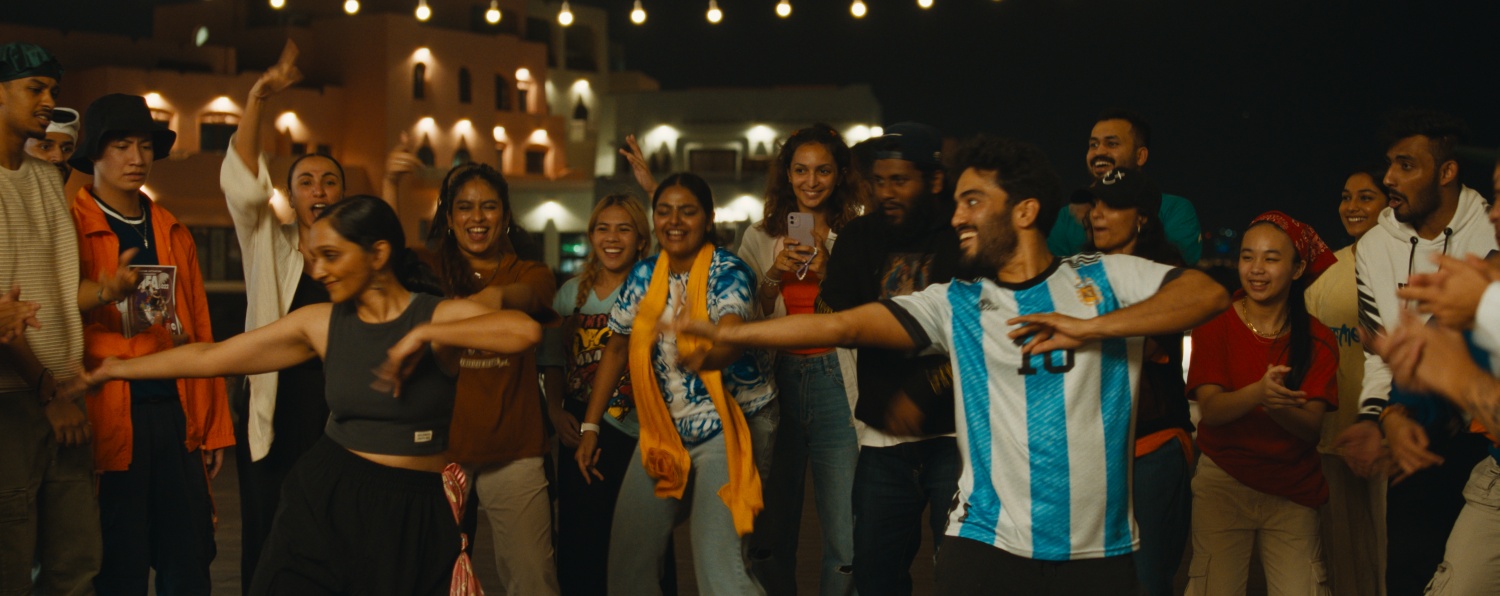
Also receiving its MENA premiere was 52 Blue, a charming Qatar-set film that’s been four years in the making. Directed by Egyptian filmmaker Ali El Arabi, it tells the story of a young man from Kerala, India, who is obsessed with the Argentinian footballer Lionel Messi – so much so that he ventures to the 2022 World Cup in Qatar under the belief that he will meet his hero. Fooled by a scammer into believing he’ll be filming a commercial, instead he ends up working in the stadiums, helping clean and prepare for the matches ahead.
Remarkably, El Arabi got permission from FIFA to shoot scenes in and around the 2022 World Cup – the tournament that Argentina ended up winning – lending the film an immediacy. He even filmed lead actor Yadav Shashidhar among real stadium workers, who believed he was shooting a documentary. And, yes, Messi has seen the film. After contacting his management team, El Arabi was able to meet the legendary footballer in Miami. “He said the movie is really important for families,” the director told me. “It’s not about football.”
There was also real sadness at the DFF, with the presentation of Filipiñana. Directed by the talented Filipino director Rafael Manuel, the film was inspired by his own short and explores post-colonial Manila through the eyes of the 17-year-old Isabel, a so-called ‘tee girl’ who works in an elite golf club. Already the film has been making waves at festivals, since it premiered at Sundance in January and won the Special Jury Award for Creative Vision.
Sadly, just a few days before its MENA premiere in Doha, lead actress Jorrybell Agoto, who plays Isabel, died after being diagnosed with lymphoma. She was just 32 years-old. “She was a very, very talented actress,” Manuel told us. “I feel like this performance in Filipiñana is a tribute to her in that it was a very collaborative relationship we built over the past seven, eight years.” Naturally, it cast a sombre shadow over the festival, showing – like many of the movies here – just how fragile and fleeting life is.
