


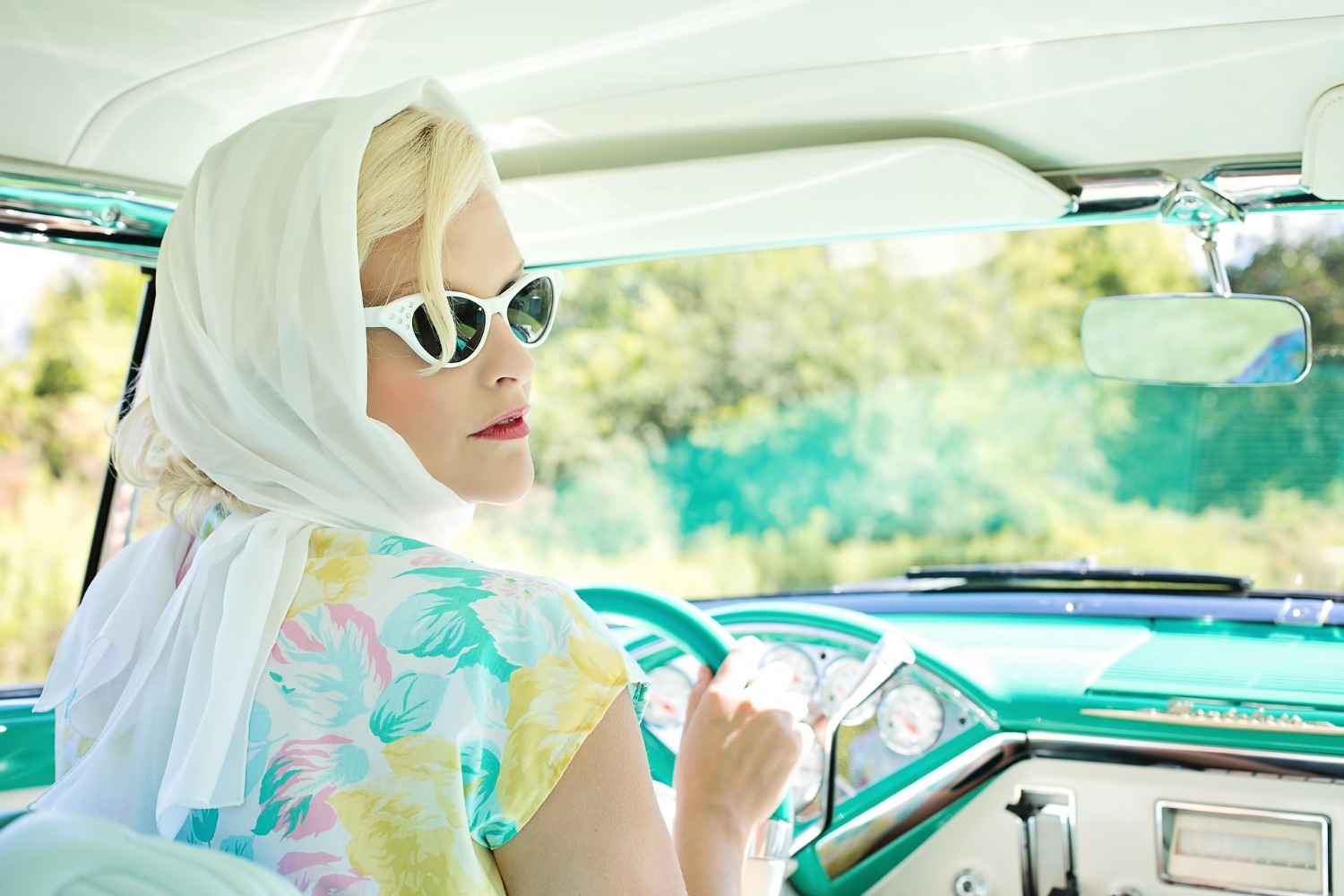
by Sam Addams
Almost all of them, as long as the lenses are up to the job. A frame that looked brilliant on the big screen will look just as good at the beach, but under an Australian sun it also needs to meet the Australian Standard for sunglasses and block the UV. Get both right and you can bring a bit of screen swagger to every trip outside.
Why film loves a good pair of sunnies
Sunglasses do a lot of heavy lifting on screen. Hiding a character’s eyes instantly makes them harder to read, and the right frame signals attitude before anyone says a word. For costume designers, one pair can say “rebel”, “spy”, “jet-setter” or “cop on the edge” in a single shot.
That’s why the same handful of shapes keeps turning up decade after decade.
The aviator: born for the cockpit
The aviator started out as working gear. According to the V&A, the American optical firm Bausch & Lomb was asked in the early 1930s to develop a high-performance lens for fighter pilots, and in 1937 it introduced its first sunglasses: the Aviator.
Film has never let it go. Think of the hotshot pilot squinting into a desert sunset, or the detective stepping out of an unmarked car. Teardrop lenses and a thin metal frame suit most face shapes, especially square and oval faces, and they work as well with a linen shirt as with a leather jacket.
The Wayfarer: shorthand for cool
The V&A dates the Wayfarer to 1952, and it quickly became the frame of choice for young people who wanted to look like they didn’t care what anyone thought. On screen, it’s the go-to for the teenage rebel, the late-night road trip and the band that’s about to make it big.
Its chunky, slightly upswept shape adds structure to round and oval faces. Both the aviator and the Wayfarer are still part of the Ray-Ban sunglasses line-up today, so if you want the original rather than a lookalike, it’s easy to find.
The cat-eye and the oversized frame: pure glamour
If the aviator is action and the Wayfarer is attitude, the cat-eye is old Hollywood. It belongs in a convertible on a coastal road, paired with a silk headscarf, its lenses flicking up at the outer corners. It lifts the face and suits heart-shaped and round faces particularly well.
Oversized frames belong to the same family. They’re the jet-set look: arriving at the airport, stepping onto a yacht, avoiding the photographers. They also make practical sense in an Aussie summer, since bigger lenses cover more of the eye area.
The round frame and the wraparound: two very different moods
Round lenses have a softer, more bookish feel. On screen they tend to belong to the musician, the poet or the slightly mysterious stranger at the edge of the party. They balance angular, square jawlines nicely.
The wraparound is the opposite. It’s sleek, sporty and usually worn by whoever is about to dodge something at speed. It’s also one of the most practical styles here. Cancer Council notes that wraparound, close-fitting styles with large lenses help reduce reflected UV and glare, because they block light reaching the eye from the sides.
Movie style, real-world protection
Before you commit to a frame, check the swing tag for:
- AS/NZS 1067.1:2016. Cancer Council recommends choosing sunglasses that meet this Australian Standard. Sunglasses that comply block about 95% of UV.
- Lens category 2, 3 or 4. Categories 0 and 1 are fashion spectacles that offer little UV protection, no matter how good they look.
- An Eye Protection Factor (EPF) of 9 or 10. Cancer Council says this blocks almost all UV radiation.
Pair your sunnies with a sun-safe hat and you can do even better. Cancer Council says sunglasses worn together with a sun-safe hat can reduce the UV reaching your eyes by up to 98%.
Fit matters as much as the label. A pair that slides down your nose or sits well away from your face lets light in around the edges, so try a few sizes and pick the one that sits close without pinching.
If you wear prescription glasses, most of these shapes are available with prescription lenses too, so you don’t have to choose between seeing clearly and looking the part. Your optometrist can advise on the best lens options for your eyes.
Pick your character
The beauty of movie sunglasses is that they come with a ready-made persona. Fancy a bit of fighter-pilot swagger? Go aviator. Feeling rebellious? Wayfarer. Planning a long lunch somewhere with a view? Cat-eye, no question. Heading out on the water or the bike? The wraparound earns its place.
Whichever character you pick, flip the swing tag over before you buy. If it says AS/NZS 1067.1:2016 and category 2 or higher, you’ve got the look and the protection.
Image by JillWellington from Pixabay
