


by Tony Sanders
Australians now spend a significant share of their leisure time online. Streaming video, digital games, podcasts, social platforms, live broadcasts and other web-based activities compete for attention throughout the day. Faster connections and widespread smartphone use have made access easier, but technology alone does not explain the shift. Changes in work patterns, household routines, payment habits and expectations around convenience also shape how people use entertainment services.
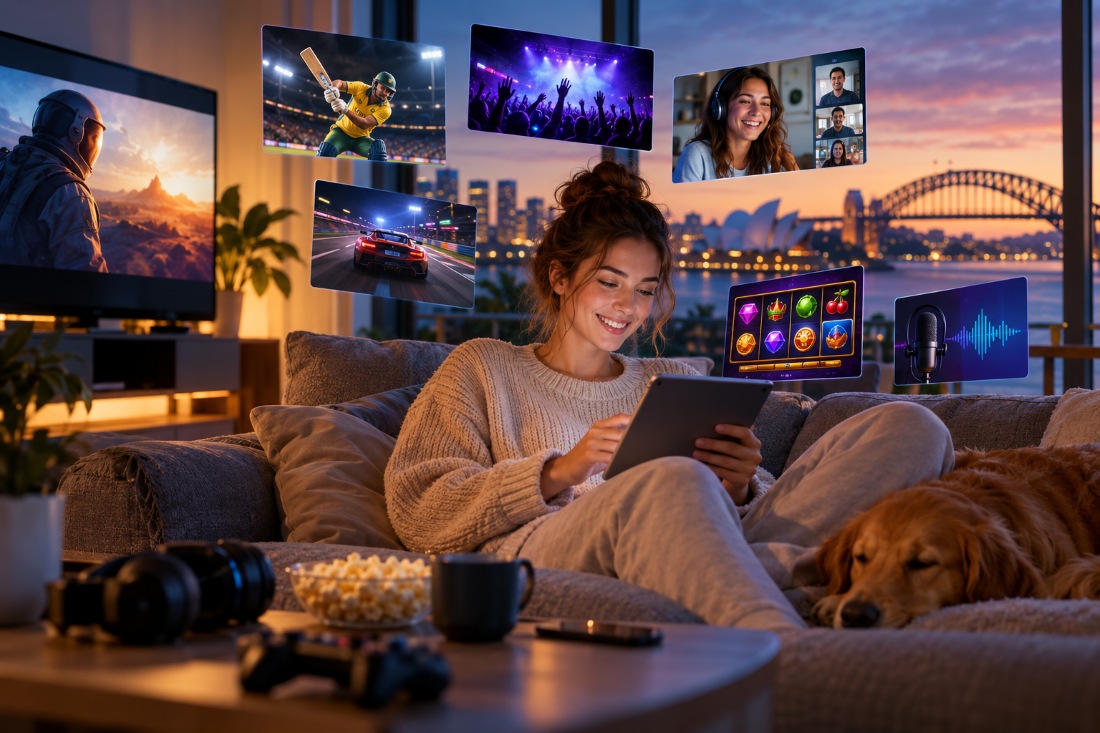
The range of activities available online has expanded at the same time. Someone can watch a documentary, follow a sports event, play a multiplayer game or use goldspinia casino from the same phone or computer. This concentration of activities on connected devices has changed the way Australians divide their free time. People no longer need a separate device or physical venue for every form of recreation, and that practical change has helped digital entertainment become part of everyday routines.
Mobile Devices Have Changed Access
Smartphones play a central role in the growth of online entertainment. They give people access to content almost anywhere they have an internet connection. Australians can use short periods of spare time during a commute, lunch break or quiet evening rather than setting aside a specific period for entertainment.
Mobile access has also changed session length. A person might spend ten minutes reading, twenty minutes watching a video and another short period playing a game. Digital leisure therefore fits into smaller gaps in the day.
Several characteristics make mobile devices particularly important:
- people usually keep their phones close throughout the day;
- mobile applications reduce the steps needed to reach content;
- wireless connections allow entertainment outside the home;
- larger screens make video and gaming practical on modern phones;
- digital wallets make online payments quicker;
- notifications bring users back to content they already follow.
Tablets and laptops still matter, especially for longer sessions. However, smartphones have made digital entertainment much easier to access throughout the day.
Faster Internet Supports Heavier Digital Use
Internet quality directly affects what people can comfortably do online. Video, live broadcasts and multiplayer games need stable connections, while high-resolution content can consume substantial amounts of data.
As household and mobile connections have improved, Australians have gained practical access to services that once demanded more patience or technical preparation. Users can start a video quickly, download large files in less time and join live online activities with fewer interruptions.
Connection improvements also encourage households to use several devices at once. One person might watch television through an internet connection while another plays a game and someone else streams music. That type of simultaneous activity places greater demands on networks, but it also shows how deeply internet-based leisure has entered domestic life.
People now expect many digital services to respond quickly. Long loading times can discourage users because alternatives often sit only a few taps away. As a result, technical performance has become a basic part of the entertainment experience rather than an issue that only highly technical users notice.
Entertainment Has Become More On-Demand
Traditional media often followed fixed schedules. Digital services give users much more control over timing.
People can start a film when they want, pause it and continue later. They can listen to a podcast during a walk rather than at a scheduled broadcast time. Gamers can start a short session whenever their schedule allows. Sports audiences can follow live coverage or check clips, statistics and commentary later.
This control suits modern routines because free time does not always arrive in large blocks. Hybrid work, changing household schedules and different commuting patterns can create irregular periods for leisure.
On-demand access lets people fit entertainment around those periods rather than arranging their day around a program schedule.
That change also affects expectations. Once users become accustomed to choosing when they consume one type of content, they often expect similar control elsewhere. Digital platforms have responded by giving users more control over timing, device choice and session length.
Australians Have More Forms of Digital Entertainment
Growth does not come from one category. The online entertainment sector includes several activities that often overlap.
Video remains important, but it now sits alongside gaming, audio, social content, digital publishing, live events and interactive services. Many people move between several formats during a single day.
A typical evening could include reading news on a phone, listening to audio while preparing dinner, watching a program on a television and playing a game later. Each activity uses digital distribution, yet each serves a different purpose.
Interactive formats have expanded particularly quickly because they ask users to participate rather than simply watch or listen. Games allow players to make choices, compete or cooperate. Live streams can include chat and audience reactions. Some entertainment services add voting, quizzes or other interactive functions.
These formats can hold attention differently from traditional one-way media because users influence what happens on their screens.
Digital Payments Reduce Practical Barriers
Payment technology has also contributed to the expansion of online entertainment.
People once had to enter card details repeatedly or use slower purchasing processes. Current payment systems can store approved payment information, support digital wallets and handle small transactions quickly.
This matters because online entertainment uses several payment models. Some services charge monthly subscriptions. Others sell individual pieces of content, event access, virtual items or additional features.
The growth of digital payments does not mean Australians spend without considering cost. In fact, the number of subscriptions and paid services can make household budgeting more important. Users may cancel one subscription, start another or rotate services according to what they currently want to watch or use.
Price therefore remains an important factor. Easy payment removes friction from a transaction, but consumers still decide whether a service deserves a place in their budget.
Personal Choice Shapes the Experience
Digital services can present users with very large content libraries. That creates a practical problem: people need ways to find material that interests them without searching through everything manually.
Recommendation systems help address this issue. They can use viewing history, previous selections and other activity to suggest relevant content.
Search functions also matter. Users increasingly expect fast filters, clear categories and accurate results. Poor organisation can make a large catalogue frustrating rather than useful.
People still make the final choice. Automated suggestions simply narrow the available options.
This combination of large libraries and personalised discovery has helped digital services support many different interests within the same platform. Two people can use the same type of service but see very different selections based on their previous activity.
Social Features Keep Entertainment Connected
Online entertainment often includes a social element.
Gaming communities communicate during matches. Sports fans discuss events while watching them. Viewers comment on videos, and friends exchange recommendations through messaging services. These interactions can extend an entertainment session beyond the original content.
Social features also help people discover new material. A recommendation from a friend may prompt someone to watch a series, try a game or listen to a podcast that they would not have found through search.
At the same time, users increasingly control how much interaction they want. Some enjoy public discussions and group activities, while others prefer private viewing or solo gaming.
Digital services can support both patterns. This ability to move between individual and shared entertainment gives users more control over how they spend their leisure time.
Home Entertainment Has Become More Connected
The living room still matters, but its technology has changed.
Internet-connected televisions, wireless speakers, gaming devices and mobile screens now work together within many households. People can start content on one device and continue on another. A phone can also act as a controller, payment device or secondary screen.
This connected setup has reduced the distinction between traditional television and internet entertainment. For many users, the screen matters less than the content they want to access.
The same change affects gaming. Digital distribution allows players to obtain games without visiting a physical store, while online connectivity supports updates, multiplayer sessions and additional content.
As households use more connected equipment, digital entertainment becomes easier to integrate into established routines.
Short-Form Content Fits Busy Schedules
Not every entertainment session lasts an hour or more. Short videos, brief audio programs, casual games and compact articles fit easily into small periods of free time.
This format works well on phones because users can start and stop quickly. A person does not need to commit an entire evening to enjoy a few minutes of content.
Short-form entertainment also reflects the fragmented nature of modern media use. People often switch between communication, work, news and recreation on the same device.
However, longer formats have not disappeared. Films, extended gaming sessions, live sport and long-form audio continue to attract audiences. The main difference lies in choice: users can select a format that matches the time they have available.
More Competition Means More Choice
The growth of digital entertainment has created a crowded market for attention. Video services compete not only with other video services but also with games, social content, podcasts, digital reading and offline activities.
This competition affects product design. Services need clear interfaces, stable technical performance and straightforward pricing if they want people to keep using them.
Consumers also switch between entertainment types more easily than they once did. A user who loses interest in a program can move to a game within seconds. Someone who finishes a podcast can open a video without changing devices.
That ease of switching makes attention valuable. It also encourages entertainment services to focus closely on usability.

Cost Pressures Influence Consumer Decisions
Household expenses affect entertainment choices. Australians have to balance discretionary spending against housing, food, transport, energy and other regular costs.
Digital entertainment can offer relatively low entry costs in some cases, particularly when households already own connected devices. Free content also plays a large role online.
Paid services still face limits. Consumers can only maintain a certain number of subscriptions before the combined cost becomes noticeable.
This has encouraged more selective behaviour. People may keep services they use frequently and cancel those they rarely open. Others may alternate between subscriptions during the year.
The result creates a market in which access continues to grow even while consumers watch their spending carefully.
Security and Privacy Matter More
As people spend more time and money online, they pay greater attention to account security and personal information.
Entertainment accounts can contain email addresses, payment details, viewing histories and other data. Users therefore benefit from strong passwords, account controls and clear privacy settings.
Consumers can also take simple steps themselves. They can use different passwords across important accounts, enable additional login verification where available and review recurring payments regularly.
Awareness has increased because digital entertainment now connects with broader parts of everyday life. The same device may handle communication, banking, shopping and recreation.
That makes basic digital security relevant to almost everyone, not just technology specialists.
What Comes Next?
Australia’s online entertainment sector will continue to change as devices, networks and consumer habits develop.
Several factors will shape the next stage. Faster mobile connections can support richer video and interactive content. Connected televisions will continue to link traditional viewing with internet services. Game streaming may reduce dependence on local hardware for some types of play. Digital payment tools will keep changing how people pay for subscriptions and individual purchases.
Artificial intelligence may also affect content discovery, moderation and accessibility. Services can use automated systems to organise large libraries, generate captions or help users locate specific material.
Still, technology does not determine consumer behaviour on its own. Price, available time, ease of use and personal interests will continue to influence what Australians choose.
A Broader Change in Leisure Habits
The growth of online entertainment in Australia comes from several developments working at the same time. Smartphones have made access constant. Faster connections support demanding content. Digital payments make purchases easier, while on-demand services give people greater control over when and where they spend their leisure time.
The biggest change concerns choice. Australians can move between video, audio, games, reading, live content and interactive activities without leaving the same connected environment.
That does not mean offline entertainment will disappear. People will continue to attend events, meet friends, play sport, visit venues and take part in other activities away from screens. Digital options simply occupy a larger share of the available mix.
Online entertainment has grown because it fits easily into everyday routines. As long as Australians value convenient access, control over timing and a broad selection of content, connected leisure will remain a significant part of how they spend their free time.
