


by Samson Faulkner
Australian cinema has always had an unusually productive relationship with fear. The country’s horror films may occupy a relatively small corner of its domestic screen industry, yet again and again they travel further than expected. Wolf Creek became an international calling card. The Babadook turned a modest Adelaide production into a global cult phenomenon. Talk to Me transformed two YouTube filmmakers from Adelaide into one of the most closely watched directing teams in genre cinema.
This is not simply a run of lucky hits. Australian horror possesses several qualities that make it unusually exportable: instantly legible genre concepts, distinctive landscapes, modest production economics, strong festival pathways and, most importantly, a willingness to remain culturally specific rather than imitate Hollywood.
The paradox is that these films often become international successes precisely because they do not try to look international.
Horror Is One of Australia’s Most Exportable Screen Languages
Horror has a commercial advantage that many forms of locally produced drama do not: fear requires relatively little cultural translation.
A romantic comedy may depend heavily on social codes, celebrity casting or dialogue. A historical drama can require an overseas audience to understand national events. Horror starts with simpler human vulnerabilities — isolation, grief, bodily danger, family breakdown, death and the suspicion that something is standing just outside the light.
Australia has been adapting those anxieties to its own environment for decades.
The National Film and Sound Archive traces the modern Australian horror tradition through films including Patrick, Razorback, Dead Calm and Wolf Creek, while noting that Australian genre films have frequently enjoyed stronger recognition abroad than at home. Wolf Creek became a particularly important turning point: after appearing at Sundance and Cannes in 2005, Greg McLean’s Outback nightmare earned around US$16 million at the US box office as well as a substantial Australian theatrical result.
The lesson was difficult to miss. A recognisably Australian film could be culturally local and commercially international at the same time.
Local Specificity Becomes a Competitive Advantage
The strongest Australian horror rarely disguises where it comes from. Instead, it turns Australianness into part of the threat.
The Landscape Is More Than Scenery
The Australian landscape offers filmmakers something production design cannot easily manufacture: scale.
In Wolf Creek, vast open space creates a particularly cruel form of claustrophobia. There are kilometres of land in every direction, yet nowhere meaningful to go. Wake in Fright used the Outback differently, transforming heat, alcohol, masculine aggression and geographical isolation into a psychological trap decades before contemporary Australian horror found its international audience.
The same principle works beyond the desert. The Babadook makes suburban domestic space oppressive. Relic converts an ageing family home into an expression of memory and deterioration. Lake Mungo finds dread in ordinary regional landscapes and the apparent banality of documentary images.
That geographical specificity matters commercially as much as aesthetically. Screen Australia CEO Deirdre Brennan has argued that regional stories “travel incredibly well when they capture local experiences truthfully.” Screen Australia’s own analysis found that regional and remote settings appeared in a striking proportion of the most successful Australian feature stories of the preceding decade.
Australian horror understands this intuitively. The more convincingly a film inhabits its place, the less interchangeable it becomes.
The Monster Usually Means Something
Australian horror also tends to perform best internationally when the supernatural or violent premise is attached to an emotional idea.
Jennifer Kent’s The Babadook is the clearest example. The creature works as a frightening physical presence, but the story is fundamentally organised around grief, exhaustion, motherhood and emotions that cannot simply be expelled. Screen Australia has described the film’s treatment of motherhood and grief as central to the critical response it received internationally.
That depth expanded the film beyond the conventional horror audience. Essie Davis later described it as something “deeper and more wonderful than a horror movie” — an observation that helps explain why the film travelled through festivals, arthouse cinemas and horror communities simultaneously.
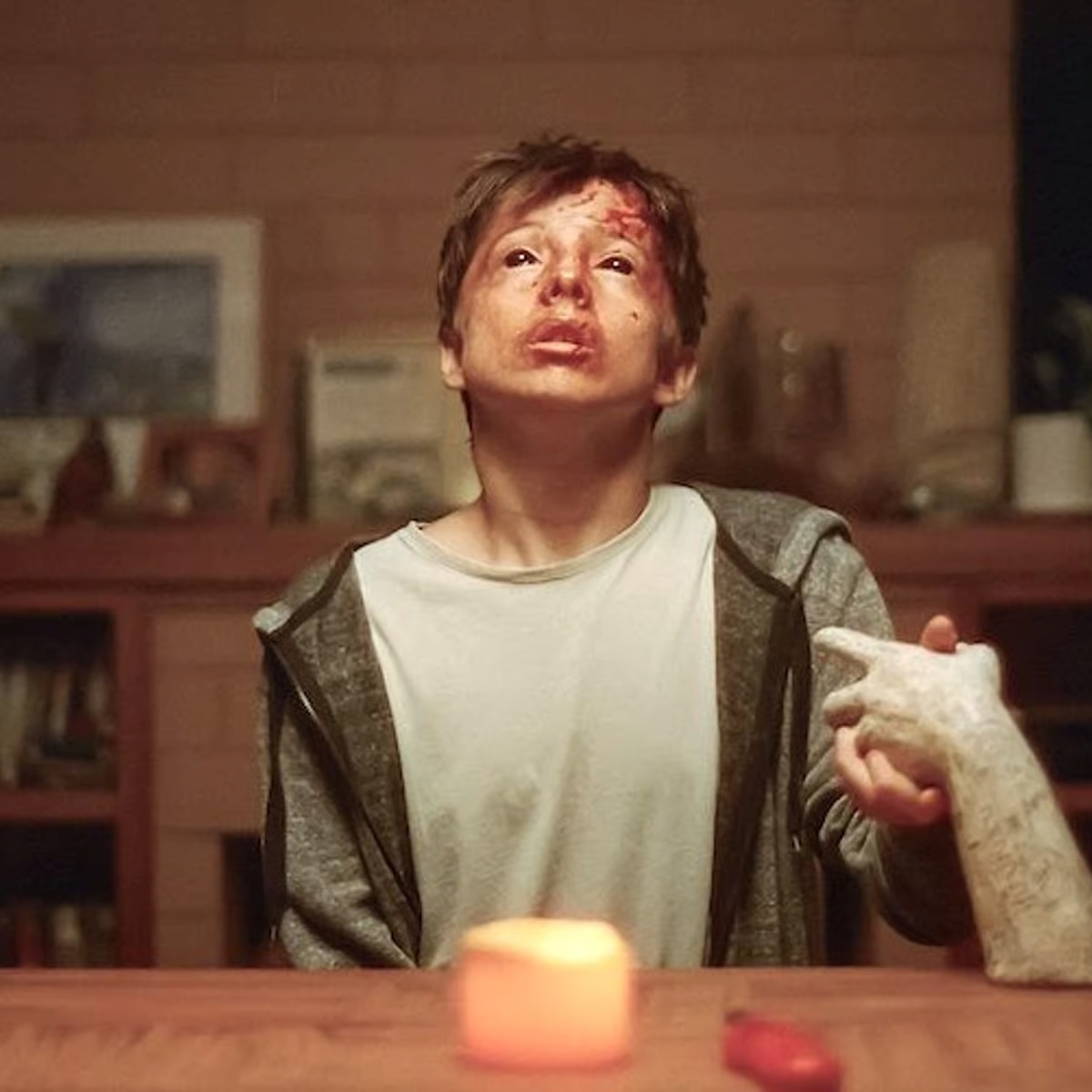
The same mechanism appears in Talk to Me. Possession provides the spectacle, but bereavement, peer pressure and compulsive behaviour provide the engine.
The Economics of Horror Favour Distinctive Ideas
There is also a practical reason Australian producers keep finding opportunities in horror: genre can create disproportionate value without requiring blockbuster-scale expenditure.
The Babadook was produced for roughly A$2.5 million with support from Screen Australia and the South Australian Film Corporation. Its original Australian release was extremely limited, reaching only 13 screens at its widest point according to Screen Australia, yet it developed a much larger international life after Sundance. The agency reported particularly strong theatrical business in markets including the UK, Spain and France.
That is an important distinction. Exportable cinema does not necessarily mean expensive cinema. It means cinema with a proposition that can be understood quickly.
A distributor can summarise Wolf Creek in a sentence. The same is true of The Babadook and Talk to Me. Their concepts are marketable, but the films themselves contain considerably more than their loglines.
Talk to Me Updated the Formula for the Online Generation
The Philippou brothers pushed that model into digital culture.
Danny and Michael Philippou came to feature filmmaking after building the RackaRacka YouTube channel, which had more than six million subscribers when Screen Australia announced production funding for Talk to Me. Their background mattered because they understood escalation, audience attention, physical performance and the strange social pleasure of watching somebody else take a dangerous idea too far.
The possession ritual in Talk to Me behaves almost like a viral challenge. Teenagers film each other, establish rules, compete over risk and convert something terrifying into entertainment. The supernatural object may be an embalmed hand, but the behaviour surrounding it belongs unmistakably to the smartphone era.
That appetite for immediacy extends far beyond cinema. Digital audiences move through an environment of instant streaming, live reactions, one-click transactions and search language as bluntly transactional as bitcoin casino instant payout. The underlying expectation is the same: minimise friction, deliver the experience now and make the reward immediately comprehensible. Talk to Me takes that behavioural rhythm and turns it against its characters. What begins as instant gratification becomes an inability to stop.
Commercially, the result was extraordinary. Box Office Mojo records a worldwide theatrical gross of about US92.2 million. That does not mean theatrical gross equals profit, but the ratio demonstrates the enormous commercial leverage a strong horror concept can achieve.
Festivals Give Australian Horror a Global Launchpad
Australian genre films also benefit from an unusually productive relationship with international festivals.
Wolf Creek screened at Sundance and Cannes. The Babadook broke internationally after its 2014 Sundance premiere and later collected recognition at Sitges. Talk to Me moved from its Adelaide Film Festival debut into Sundance, SXSW and Berlin.
For independent horror, festivals perform several jobs at once. They generate reviews, establish credibility, introduce filmmakers to sales agents and distributors, and create the perception of an event before a large marketing campaign exists.
This is particularly useful for Australian productions because distance from the major US and European markets can otherwise be a disadvantage. A strong midnight screening at Sundance effectively collapses that distance. Buyers, critics, programmers and genre audiences encounter the film in the same concentrated moment.
Screen Australia’s international market reporting has previously identified demand for “elevated genre” — horror, thriller, crime and science fiction that delivers familiar genre pleasures while offering an original voice. Australian horror’s strongest exports fit that description remarkably well.
Australian Horror Exports Filmmakers as Well as Films
The industry’s success should not be measured only in ticket sales. Horror has repeatedly functioned as a talent accelerator.
James Wan’s Australian filmmaking career moved from the micro-budget ingenuity of Saw into major Hollywood franchises. Peter and Michael Spierig progressed from the independently made Undead to films including Daybreakers and Predestination. Jennifer Kent’s international reputation after The Babadook helped establish her as a significant filmmaker well beyond genre circles. The Philippou brothers followed Talk to Me into major international opportunities almost immediately.
There is also accumulated production expertise behind these breakthroughs. Producer Kristina Ceyton and Causeway Films, for example, connect The Babadook and Talk to Me, two of the defining Australian horror exports of their respective decades. Causeway has continued working in the genre, including on Adrian Chiarella’s Leviticus, which appeared at Sundance and SXSW in 2026.
Success therefore compounds. One internationally visible film creates relationships, financing knowledge, festival experience and credibility that can support the next.
What Australian Horror Gets Right
The temptation after an international hit is to copy its visible ingredients. That would be the wrong lesson.
Australia does not need ten new Wolf Creeks, another Babadook or a procession of possessed teenagers holding increasingly marketable supernatural objects. What travels is not repetition but specificity.
The most successful Australian horror films combine three things: a universal fear, a distinctly local perspective and a concept audiences can communicate to one another. They are inexpensive enough to take creative risks, familiar enough for distributors to position, and unusual enough not to disappear into the enormous global supply of genre content.
That may ultimately explain why Australian horror travels so well. At its best, it does not ask what an international audience expects Australia to look like. It takes Australian places, voices, tensions and filmmaking instincts seriously — then finds the nightmare hidden inside them.
The world, apparently, is more than willing to follow.
