



by Harry Varvaressos
Worth: $18.00
FilmInk rates movies out of $20 — the score indicates the amount we believe a ticket to the movie to be worth
Cast:
Saga Garðarsdóttir, Sverrir Gudnason, Ída Mekkín Hlynsdóttir, Þorgils Hlynsson, Grímur Hlynsson
Intro:
Pálmason’s film holds us ever so tenderly. But its grasp can’t be gentle without also being tenuous.
When we think of romance on screen, visions of Old Hollywood may well spring to mind. Radiant lighting, rapturous strings, glittering locales – all working overtime to summon the ineffable stir of the heart.
But we don’t just feel love in this figurative sense. We feel it with our fingers, our mouths, our entire bodies. And for Hlynur Pálmason (Godland, A White, White Day), cinema offers a bridge between the tactile experience of love and the emotions it invokes. Perhaps we cannot be touched by love until we first touch it.
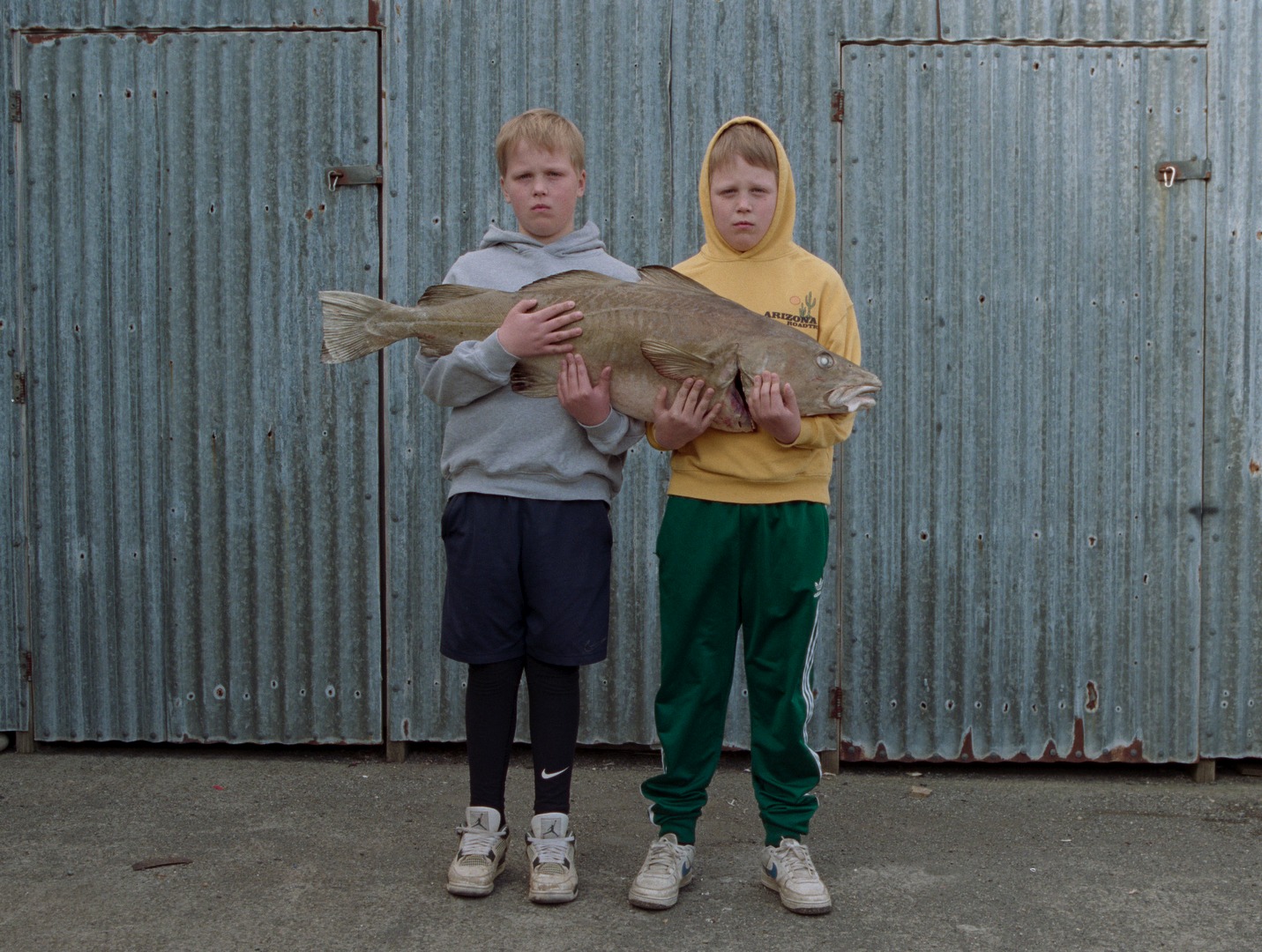
In his majestic new feature The Love That Remains, the romance of tactile sensation isn’t just experienced interpersonally. It’s found in all manner of stimuli: the softer-than-soft down which lines a chick’s head, the coarse rust that peppers a wind-beaten sheet of metal, the squish of a native berry and the tautness of an arrow. Suffice to say, in the paradise of rural Iceland, opportunities abound.
The family at the film’s centre – who are readjusting after the separation of parents Anna (Saga Garðarsdóttir) and Magnús (Sverrir Guðnason) – evince a quiet generosity of spirit which naturally blooms from these intimate sensations. And, somewhat radically, the film appears less concerned with the difficulties of this adjustment than its surprising ease. They are so closely bound by streams, oceans, hills and shrubs that their capacity for love follows in almost primeval fashion. That’s not to say that there isn’t conceit or disregard threatening this harmony; disturbance merely passes inconsequentially, an ecological rupture that corrects itself just as snow melts and clouds clear. It’s a symbiosis at odds with modern civilisation, which occasionally intrudes upon their world and exposes its smug superficiality.
Fittingly, Pálmason’s film holds us ever so tenderly. But its grasp can’t be gentle without also being tenuous.
We’re coaxed into confidence by the familiarity of his approach. The languorous pace, laconic dialogue and subdued family drama all fit squarely within the contemporary “slice-of-life” mould of Kore-eda or the Dardennes. His visual sensibility of textured 35mm in a boxy aspect ratio has a nostalgic, home-movie quality: the kind of look prized by Kelly Reichardt, or David Lowery in his A Ghost Story. Even the film’s opening credits, introducing each family member in close-up alongside their actors’ names, feel earnestly traditional, ushering us into a mollifyingly conservative idyll not unlike intros to American sitcoms like Friends or The Brady Bunch. Perhaps the human condition really could be so simple.
But just as we’ve ensconced ourselves in the folds of his lopapeysa, Pálmason shows us his mischievous side. It’s rare for a film so endeared to the beaten path to relish in yanking us along bizarre detours. In many cases, we don’t even notice that the path has swerved until we’re irrevocably lost. And even in his wildest swings, Pálmason’s craftiness is careful to not overwhelm his humanism. In fact, his fondness for confounding us brings us ever closer.
As we steadily catch on to Pálmason’s surreal flourishes, so too does our grasp of how this machinery emotionally coheres. A figurehead eventually emerges from the shadows, one that was there all along. Was this ever a warm and cosy ensemble piece charting a year in the life of an uncommonly resilient Icelandic family? Or a vision of unbearable pain where bucolic idealism functions as a self-lacerating illustration of individual redundancy? There is a surfeit of love that still remains, yet to be dispensed, yet to be utilised, perhaps more now than there ever was before… yet there is nothing which requires it. Can the fullness of our hearts buoy us back to stability with the grace and providence of seasonal change? Can the winds of change blow us back to where we started?
Pálmason remains elusive, and thereby ensorcels us. Like the ultimately intangible emotion it seeks to reify, his film skirts along the faultlines of reality – precarious, yet otherworldly.
