



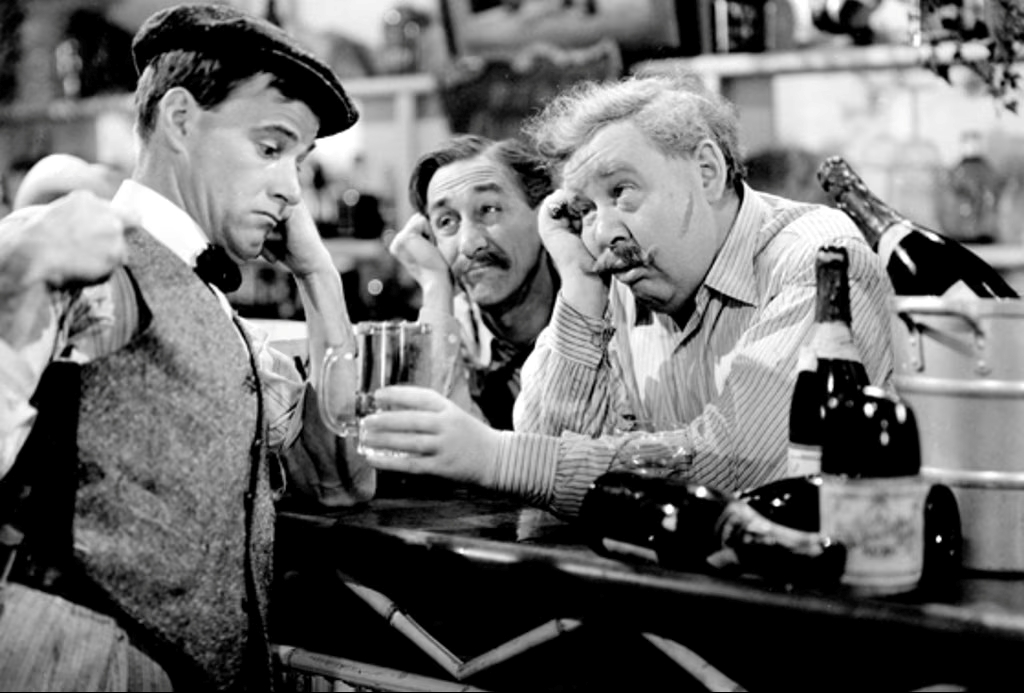
by Stephen Vagg
To understand why this film was made, you need to know that once upon a time, a man called Wallace Beery was a film star. Beery was a beefy, big actor who specialised in playing lovable lunks that got up to comic antics with character actors and cute kids; often, there was a woman who wanted to marry him, and a young couple in love that he helped unite. Such stars pop up from time to time: Robert Newton was one in the 1950s; later on, there was John Goodman, and James Gandolfini. Anyway, for a long time (almost two decades), Wallace Beery’s act was very popular and he was regularly ranked in the top ten box office stars in the US. He was under contract to MGM for whom he appeared in big hits such as Min and Bill (1930), The Champ (1931), Grand Hotel (1932) and Treasure Island (1934). By the early 1940s, the budgets on his movies had declined but he was a reliable money maker.
MGM developed The Man from Down Under as a vehicle for Beery in 1942. He would be playing, as the title indicated, an Aussie; Australia had been in the news that year due to the war, with thousands of American troops getting on the booze and shagging local girls in Australia, and various high profile battles involving the Anzacs.
The film was based on an original story by Americans Bogart Rogers (a WW1 air ace) and Mark Kelly (a former sports reporter) about Jocko Wilson, an Aussie digger who at the end of World War One decides to smuggle two Belgian orphans back to Australia and raise them as his own. The film leaps forward to 1939 when the kids are grown up – the girl (Mary) is sent to finishing school, while the boy (Nipper) becomes a boxer. Nipper participates in a big fight and wins but is injured; his winnings enable Jocko to buy a pub in Australia’s north. Mary and Nipper have the hots for each other but can’t do anything about it because they’re siblings; an American journalist sniffs around Mary but Nipper jealously punches him out. There are some Catholic priests near the pub, and Aggie, a barmaid abandoned by Jocko in France, turns up to torment him. Then World War Two starts and Jocko tries to enlist but is considered too old and unhealthy, so joins the Land Army. Then the Pacific War starts and the pub is turned into an orphanage (we think), which is bombed by the Japanese and the Japanese crash and some pilots attack the orphanage but luckily Jocko and Nipper turn up and help fight off the Japanese (along with their friend Ginger, who machine guns a Japanese to death!). Nipper and Mary discover that they’re not blood relatives and hook up. Jocko gets a commission in the army thanks to the intervention of Aggie. The end.
Phew.
Although technically an original, the story might have been inspired by the tale of Digger Tovell, a French orphan adopted by diggers during WW1 who was smuggled to Australia and grew up to be a young man (tragically dying in a car accident). Technical adviser Lon Jones said the characters of Jocko and his mate Ginger were very much like CJ Dennis’s The Sentimental Bloke and Ginger Mick.
Dramatically, The Man from Down Under is a complete mess, with the film never settling on what it wants to be about. The real focus should have been on Jocko smuggling the kids back into Australia but here it’s just a prologue. Instead, we get – A boxing match! A bombing! A wacky barmaid! And a romance plot that’s yuck because it’s about two siblings who want to hump each other who then find out they’re not siblings. The plot’s haphazard, all-over-the-shop nature is reminiscent of more than a few MGM star vehicles from the 1930s and 1940s (Jean Harlow’s later movies come to mind) with the feel of a producer going “oh, we should add this… and that… and I saw this movie last night and it was great and we should put that in as well…. Priests were big in Going My Way, let’s put some in… There was an attack of enemy parachutists in Mrs Miniver, let’s put that in…”
Still, the part of Jocko was the perfect role for Wallace Beery – ex-boxer, brave, rowdy, tough, prone to brawling, irreverent, running away from a woman who wants to marry him (the Marie Dressler/Marjorie Main part), doing lots of schtick with kids and dodgy mates, gambling, running pubs, mugging.
The only problem is that Beery doesn’t appear in The Man from Down Under. Charles Laughton does. You can see the trailer here.
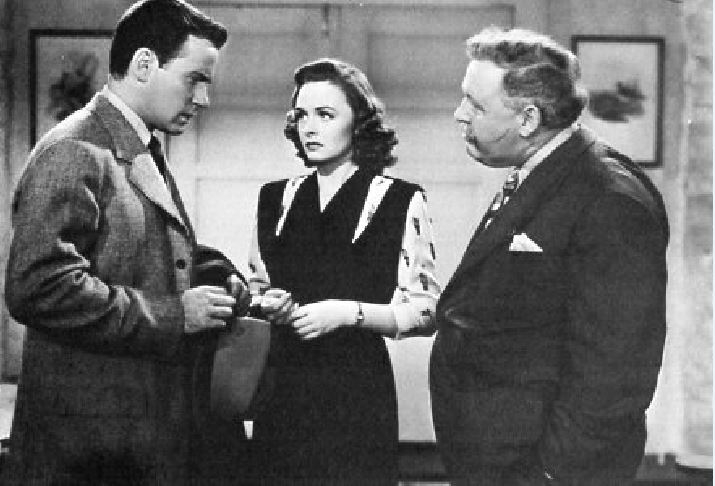
We don’t know why that happened – presumably, Beery was busy on another project and the studio figured Laughton would do, as he was a brilliant actor.
Well, Laughton was a brilliant actor, and his Aussie accent attempt wasn’t bad, and he makes a decent rogue. But he’s never convincing as an ex-boxer, or successful former soldier (yes, yes, we know Laughton was one in real life, but he doesn’t look like one here). Throughout the whole movie, he feels like a superb performer who is miscast.
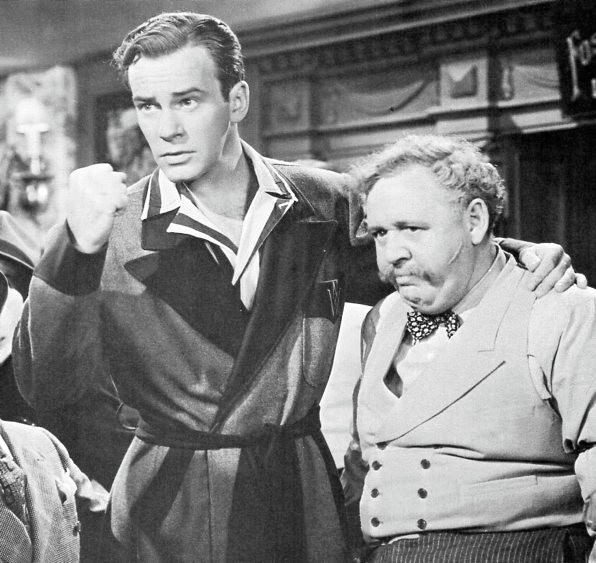
Binnie Barnes who plays Aggie isn’t that much chop either in a part which required a more obvious ham like Elsa Lanchester, Gracie Fields or Marjorie Main (who made a bunch of films with Beery around this time). Richard Carlson and Donna Reed are good as the grown-up version of Laughton’s kids – Carlson had an engaging presence, and Reed was always beautiful and likeable in her films. We are surprised that MGM didn’t cast Australian Shirley Ann Richards, then under contract at the studio, in the role of Mary – possibly it was because she was cast in An American Romance which started filming around the same time (it came out much later).
Some Australians worked on it – Clyde Cook played Laughton’s mate Ginger and journalist Lon Jones was a technical adviser. No one has a decent Aussie accent, though people do try – mostly, people sound cockney, though the priests are Irish.
For Aussies, Man from Down Under is fascinating because of its depiction of Australia and Australians. Most of the movie is set in Australia: Melbourne at first, where Jocko has a pub, then where Nipper fights his bout, then somewhere in north Australia. We get to see some pubs, a boxing venue, the country, lots of priests.
There are lots of good actors and decent production values – this was an “A” picture – so it’s easy to watch. Historically, it’s fascinating. And you know something, at least Hollywood made a film set in Australia during the war. In fact, they made two (Abroad with Two Yanks being the other one) – it’s more than Britain, or even Australia did.
Reviews in Australia were poor and led to discussions about why Australia didn’t have a film industry. The Man from Down Under lost money at the box office but plenty of movies with silly storylines did well; we think that the issue was miscasting. If Wallace Beery and Marjorie Main (a regular team at the time) had been in the movie, it might’ve been a different story.
The Man from Down Under. Not a good movie. But all Aussie movie buffs should watch it.
