



by Harry Varvaressos
Worth: $19.00
FilmInk rates movies out of $20 — the score indicates the amount we believe a ticket to the movie to be worth
Sydney Film Festival
Cast:
Anne-Laure Sellier
Intro:
… brims with jubilant possibilities
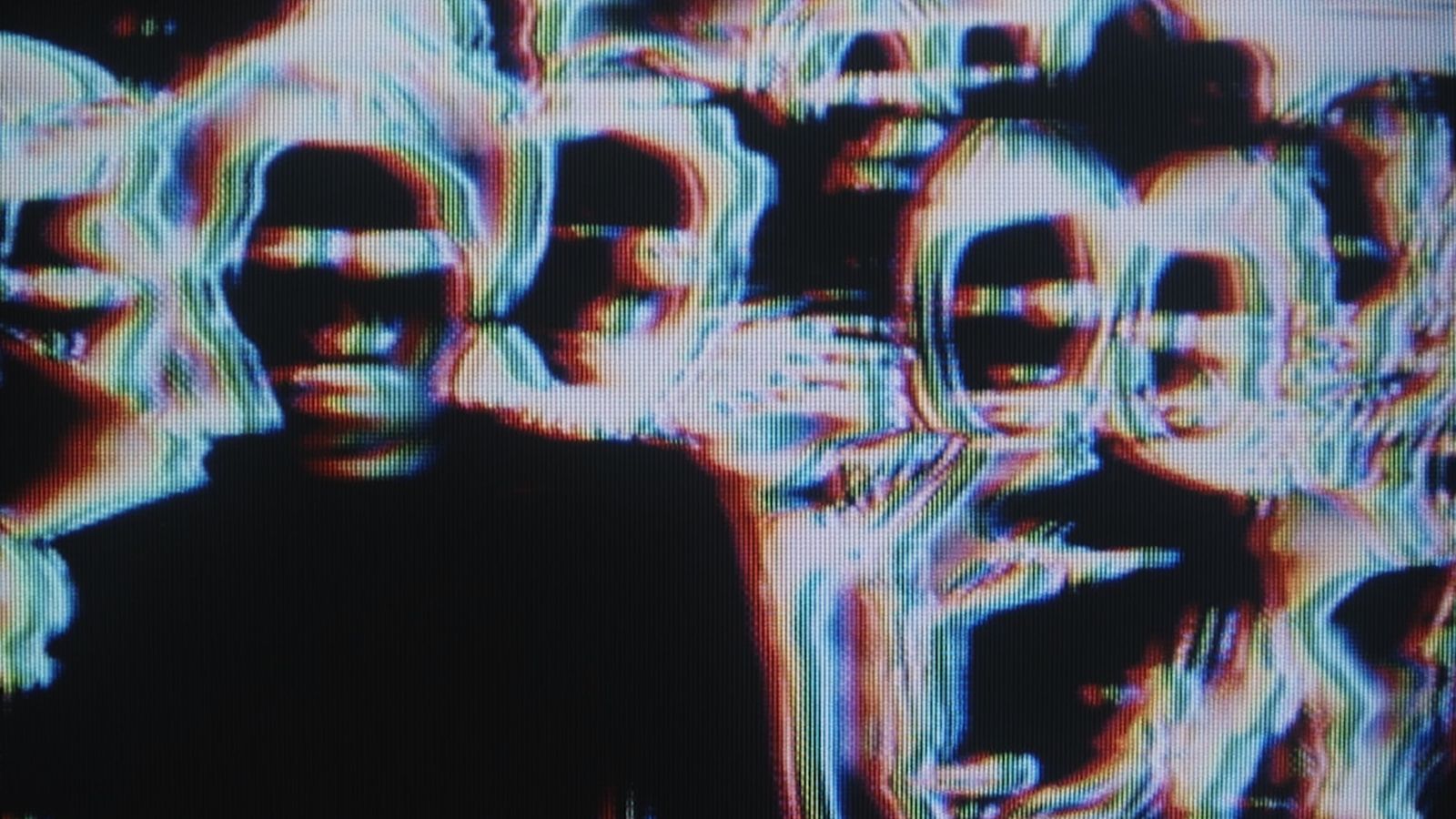
Chronovisor follows the plight of an esteemed parapsychologist named Béatrice as she obsessively researches a mystical time-travel device, which allegedly can receive images from the past via antennae and materialise them onto a television screen. So alarming and destructive is this technology that the Vatican has suppressed knowledge of its existence for decades.
This concept already feels intriguingly strange, but what the directorial duo, Jack Auen and Kevin Walker (dubbed Cosmic Salon) do with it is even stranger. On many levels, be they conceptual, narrative, aesthetic or even satirical, Chronovisor brims with jubilant possibilities.
Cycling between at least four languages while delivering dizzying monologues of acadamese, the film’s protagonist (Anne-Laurie Sellier) is very, very smart… and that’s about it. We know nothing about her beyond her work as it transpires in real time – and in turn, nothing about anyone that she interacts with, who are mostly indistinct, out of earshot, or off-camera altogether.
Her indefatigable pursuit of knowledge at the expense of any discernible vulnerability or human feeling functions not only as a droll critique of the narcissistic detachment of deep academic exploration, but – paradoxically – manages to realise its seductive appeal. For large stretches, the screen is entirely occupied by extracts from dusty tomes and frayed newspaper clippings as Beatrice stonily absorbs their details: a purely sensory level of identification. Our lack of emotional attachment works in the film’s favour, because – like her – we are obsessively consumed by the research process, willingly surrendering the sovereignty of our lives as we gaze deeper and deeper into this most alluring abyss.
And, when you look into the abyss, well… it doesn’t look the other way.
As inherently uncinematic as this might sound, Auen and Walker defy our expectations. Shot in grainy 16mm, lowly lit in atmospheric ochre hues, and soundtracked to appropriately grandiose effect by excerpts from Holst’s suite The Planets, their diegesis stylistically transmutates the paranoia of 1970s political thrillers, the Gothic grandeur of silent-era horror, and – intentionally or not – the academic camp of Dan Brown or National Treasure. It’s an intoxicating vision, a temporal conglomeration which succeeds in realising the past as aesthetic resonance rather than empirical reconstruction. The fact that Saullier actually is an academic, and the texts depicted are mostly real, only adds to the metatextual fun of it all.
As the tantalising conspiracy unfurls, a familiar spectatorial sensation materialises: how the hell are they going to make good on all this? Well. So gobsmackingly arresting is Chronovisor’s final sequence, expect bursts of fervent gasps resounding through the theatre.
In these moments, as Auen and Walker kindle that elusive spark of genuine cinematic wonderment, we beleaguered spectators find ourselves reassuming our rightful place: at the edge of our seats.
