


by Damien Spiccia
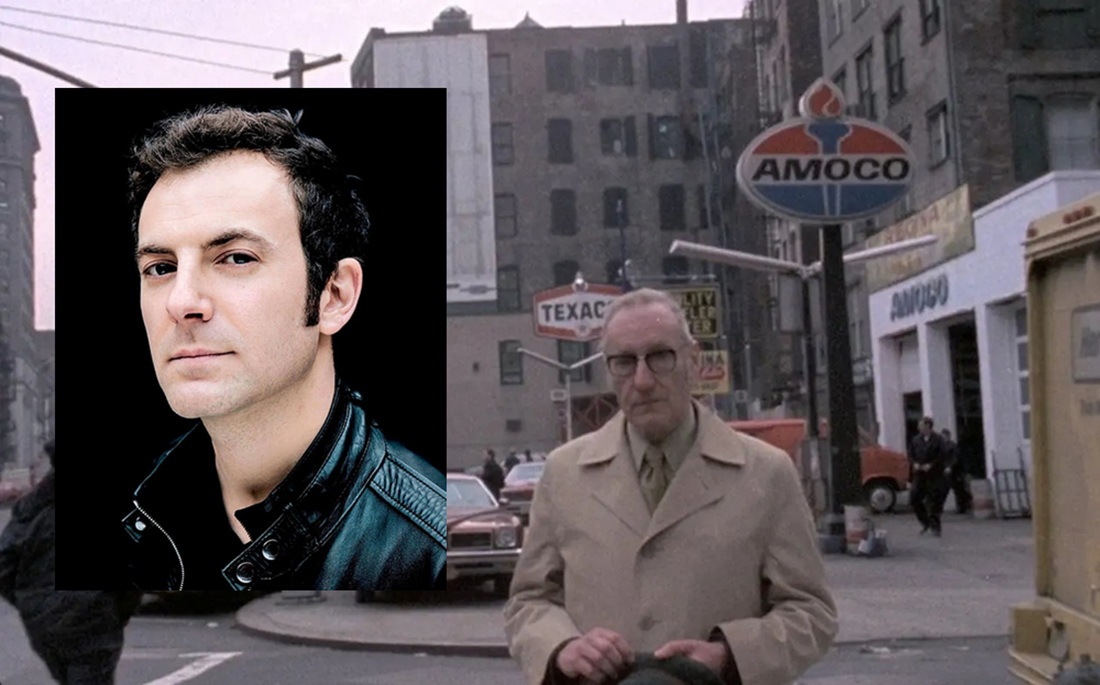
Utilising hours of never-before-seen footage captured by his late uncle and filmmaker Howard Brookner, Nova 78 co-director Aaron Brookner pulls together a fascinating picture of the legendary 1978 Nova Convention in New York, which featured performances from William Burroughs, Patti Smith, Frank Zappa, Allen Ginsberg and more.
The late Howard Brookner – who passed away from complications due to AIDS far too young in 1989 – was a fascinating filmmaker and artist all round. He wrote and directed the 1989 drama Bloodhounds Of Broadway (with Matt Dillon and Madonna), and also helmed docos on experimental playwright Robert Wilson (1985’s Robert Wilson And The Civil Wars) and famed Beat writer and countercultural icon William S. Burroughs (1983’s Burroughs). Howard Brookner’s tragic but fascinating life story was evocatively depicted in the 2016 doco Uncle Howard, by the filmmaker’s own nephew, Aaron Brookner.
While making the doco, Aaron Brookner discovered hours of unseen footage that his uncle had captured of the famed 1978 Nova Convention in New York, which featured performances from William Burroughs, Patti Smith, Frank Zappa, Allen Ginsberg and several others. Howard Brookner hadn’t used any of the footage in his Burroughs documentary, meaning that Aaron Brookner had a smorgasbord of film materials to choose from to craft his own documentary, which would eventually become the blazing Nova ’78. A heady time capsule of an era bright and burning with rebellious ideas, this fascinating doco captures a collection of vital American countercultural artists at the absolute height of their powers.
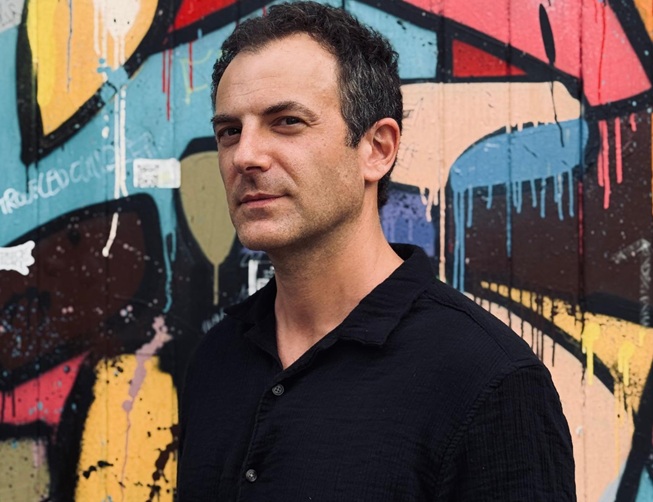
Before we get into the film itself, I want to start with your uncle Howard. Can you tell me a little about your relationship with him?
“He was my closest relative when I was a kid. I was the oldest of my generation, and I had specific memories of visiting him at Robert Wilson’s loft on the West Side Highway, visiting his movie set Bloodhounds Of Broadway when he was doing a big nightclub scene with Madonna and Randy Quaid. I had a lot of specific memories of him as just being someone very comfortable to be around and very close with, and these memories stayed with me always. He was just someone who I really connected with. Both of us were always comfortable behind the camera. Maybe we saw that in each other.”
How did the restoration of the Nova Convention footage come together?
“I recovered a lot of Howard’s material — he filmed William Burroughs and his world for four years making his movie [Burroughs], and I found a lot of the negatives in 2013 in Burroughs’ Bunker, where Howard had stored them for 30 years. But there were some negative rolls missing. Then, on Valentine’s Day 2022, I got a call from the archivist of The John Giorno Foundation, and they told me they had found more boxes of my uncle’s films. They turned out to be the missing negative rolls – key parts of Patti Smith’s performance, a camera unit filming the audience, and a lot of the very early stuff from 1978 in Boulder, Colorado, where they had been together a couple of months before the convention. Once I found that, I was able to really start to see the three-dimensionality of the event. It’s one thing to see performers on stage with a black background, it’s another to see a theatre full of people in their twenties, jaw dropped, really engaged. It changed tremendously.”
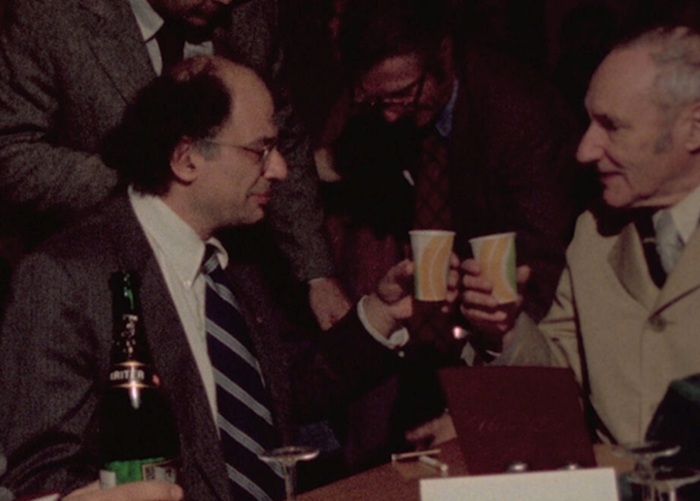
It’s clear from the footage that there’s a real rapport between Howard and Burroughs. What do you think he saw in your uncle, who was a young NYU film student at the time of the convention?
“Burroughs had an incredible bullshit detector. He was a very clear, focused character who was very used to having a lot of sycophants approach him. I think in Howard he saw someone who really saw things clearly, was not about bullshit at all, and was very motivated to make an honest film. Also, very few people fully grasped William’s sense of humour, and Howard was a very funny guy with a very wry sense of humour. Clearly, William trusted Howard a lot. Even in the outtakes, I can see and hear very clearly a real trust. For a writer and thinker like Burroughs, who is all about getting out an essential truth and cutting through the noise, he really needed a filmmaker who had that sensibility.”
Onto the Nova event itself – were there performances or moments you were particularly fond of that ultimately didn’t find a place in the finished film?
“There was quite a lot left out, of course, because there are like ten or eleven hours of material. But every performer who was filmed is in the film. The main challenge with footage like this, and with the decision to only use the original material, is that you can go down any number of paths, any number of themes. I was making this movie for an audience today. That determined a lot of what I chose – which of these ideas are really useful and relevant, and that people can connect with right now, and then to work my way back from there. With the performances, I wanted to make sure there was a representation of the different styles, the different forms. The whole nature of this event was not having any particular box to put any particular artist in. I wanted to keep the audience on their toes, so you could experience it as the audience at the event might have. I also got great feedback from Anne Waldman, who saw the film in New York in February, and she was so happy to see how well represented the women were. There were a lot of women around William’s life and they’re important to it, and they’re not often connected with that.”
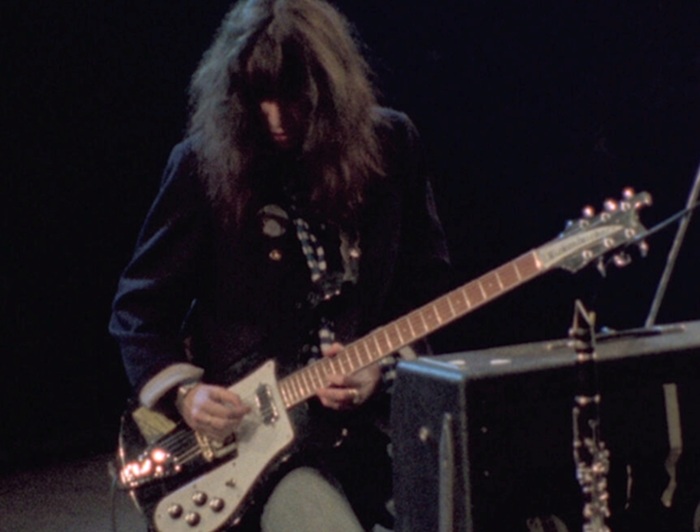
Away from the convention stage, there are some fascinating observational digressions too.
“I’m trying to thread the audience through that event so you’re on the ground as it’s going on. But you’re experiencing an event where these artists are there because they’ve been influenced by William Burroughs and connected to him in some way, and I don’t want to tell the audience why he’s important…I want to show it. I also found all these asides, these little moments, so endearing. You start to feel what it must have been like to be part of that community. You give the audience the gift of being backstage with Burroughs, being in the bunker, being in the theatre. That kind of intimacy…that’s what I was after.”
You mention keeping today’s audience in mind as you made the film. Did the footage start speaking more to the present as you put it together?
“I’ve worked with the Burroughs material for almost fifteen years, so I’m very familiar with his different ideas. I was already conscious of which ones were very particular to that time, but it was also very clear to me which ones were useful for today. Like that moment where Allen Ginsberg tells us about his first lesson when he first met William Burroughs – this conversation about what does art mean, and Burroughs is saying it’s just a word, it’s just a label, it can mean whatever you want it to mean. I thought, ‘Well, that’s really fantastic now, because we are in a time where everything is so reduced to a label’ – you are this or you are that – and the whole nature of Burroughs’ idea, why it expands your mind, is that you can’t reduce things in such a way. Certainly not with something as expansive spiritually as art. I also responded to the idea that there’s a through line of the dangers of fundamentalism; there’s this amazing moment where Allen Ginsberg asks Burroughs why he’s in favour of The Shah Of Iran, and Burroughs says, ‘Because I see what the opposition to it is’…meaning the Islamic Revolutionaries. He’s really freaked out by it. He’s saying, ‘You don’t understand…this is a whole other level.’”
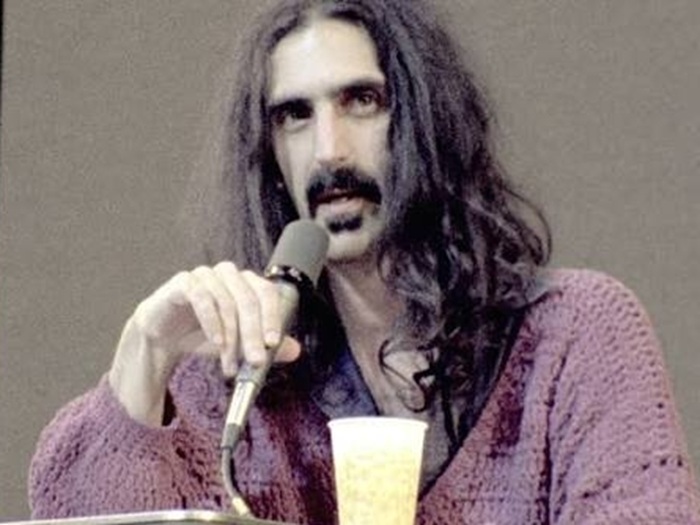
In retrospect, Nova 78 captures such a pivotal moment in time. Do you see that time as an ending or a beginning?
“There are two sides to that. One is that the time and place was really remarkable – the fall of 1978 was a high watermark for gay rights, feminism, avant-garde and punk in New York, before things would change. New York had been bankrupt, which meant you could live there very cheaply. Howard’s rent slip from his loft on Prince and Bowery was $100 a month. That was a big part of why that community could exist. Then there was a significant mayoral election. Mayor Koch introduced a tax abatement program of which Donald Trump was the first to benefit, and it started to transform the city. It was a high watermark before the Reagan conservative backlash, before AIDS, before hyper-commercialisation. Having said that, all of this is ongoing always. So, it’s hard for me to see it as an end or a beginning, but as a continuation. That’s also been part of my motivation – a sense of responsibility.”
Going through all that material, what did you learn about your uncle and how he saw and interacted with people?
“I could already see in earlier footage how he would interact with people, how he could put people together. But what I could see in this material was his wider perspective. To have the POV that ‘this is a very important moment happening while it’s happening’ is extraordinary, because usually we realise that after the fact. And today, we might take for granted that there’s a concert, there’s an event, everyone’s filming it — that was not the case in 1978. He put together three or four different crews and organised who would be where and what they were going to cover to give this 360-degree breadth of it. He was very good at movement, very good at human interaction, the behind-the-scenes, the audiences, the way it’s all playing out in real time. And he was doing this at twenty-four-years-old.”
Nova ’78 screens on July 10 and 18 at the Revelation Perth International Film Festival. For all venue and session information, click here.
