


By Erin Free
Actor, writer, director and producer Steve Young is locked and loaded with his bracing new seventies-set mob drama Hells Kitchen, with a proof-of-concept short film up and running, a novella now available, and a screenplay ready to shop for the international market.
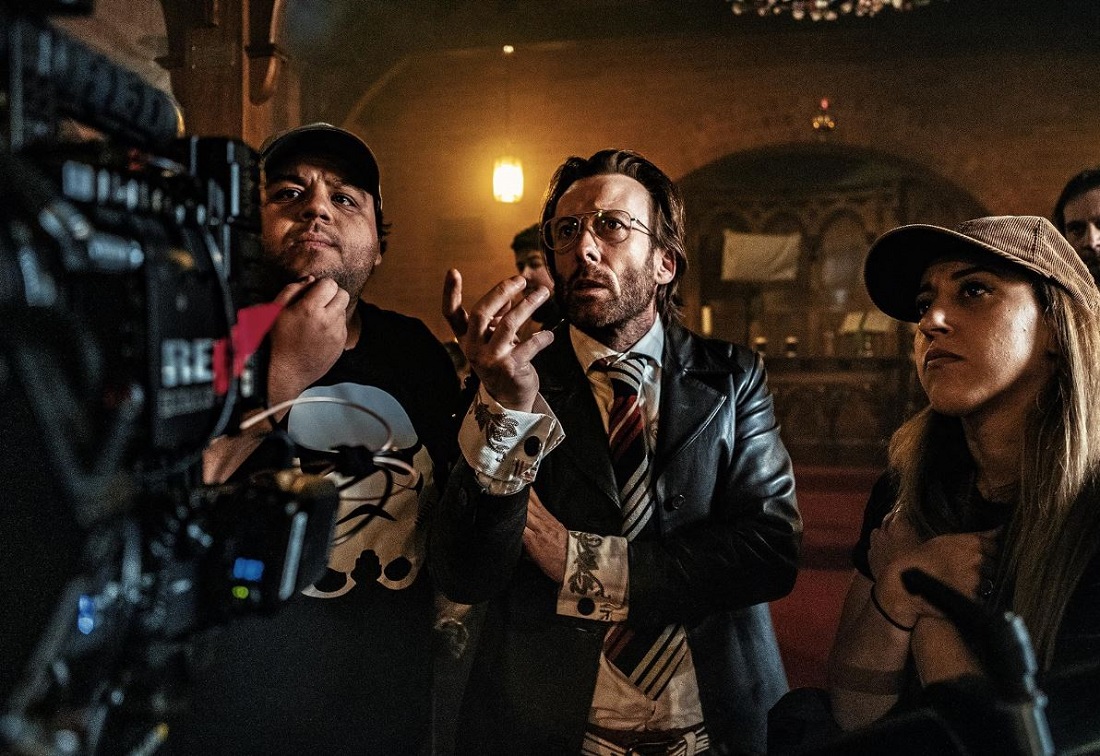
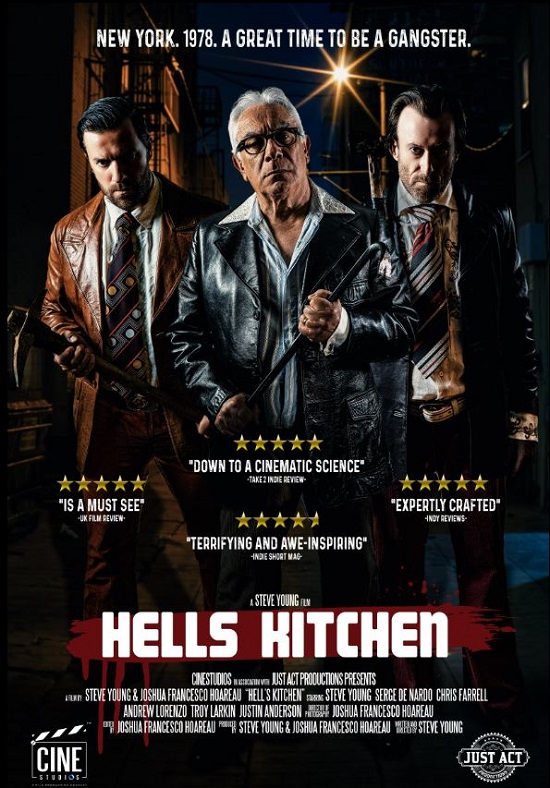
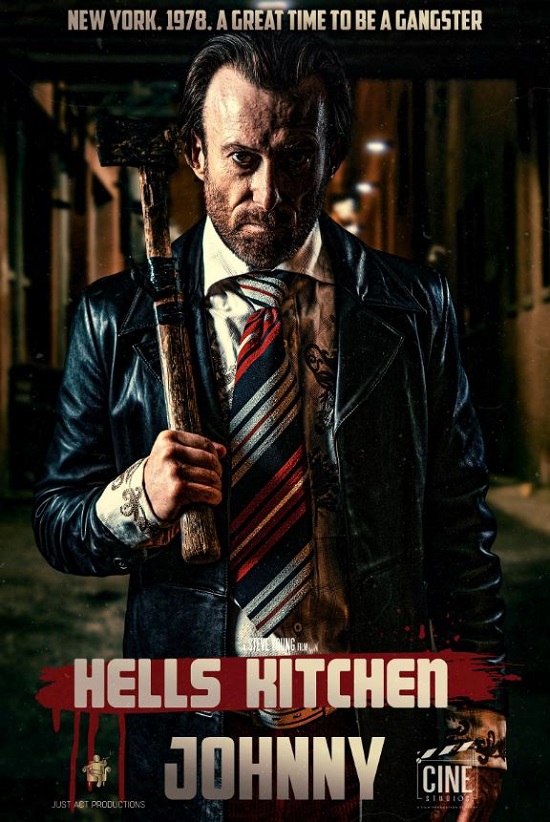
“I wanted to take on the mafia genre and build a world of my own,” says writer, actor, producer and director Steve Young, who is well on his way to doing exactly that with Hells Kitchen, a multimedia mob drama on its journey to becoming a feature film. At the moment, there is a punchy, eye-catching proof-of-concept sixteen-minute short film available on Apple TV, Prime and other digital services; and a novella live on Amazon based on a completed feature film script which Young is ready to hit the American market with. The short film has already played at a number of festivals around the world, and Young is confident about the prospects for Hells Kitchen. “It honours the genre, but it also gives me room to create my own mythology inside it,” Young tells FilmInk.
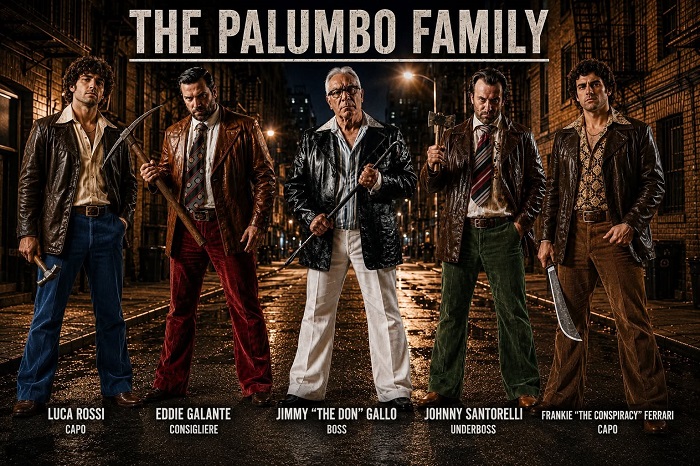
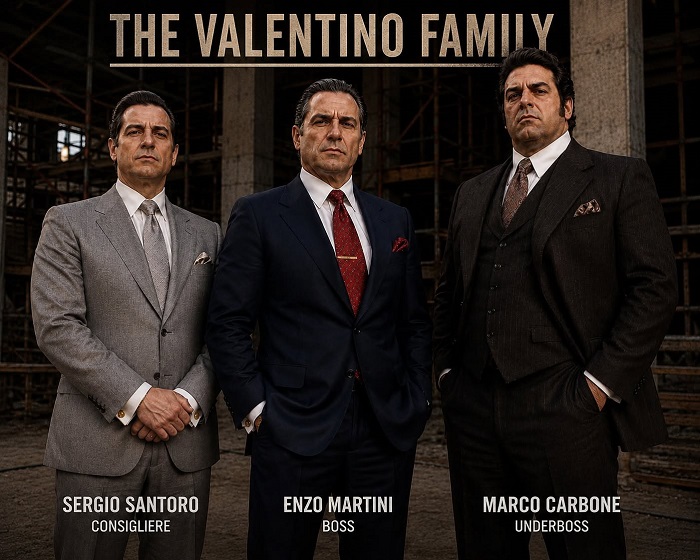
The world of Hells Kitchen is New York, 1978, with a fragile peace between five fictional crime families collapsing. Mob soldiers are disappearing, there are bodies in the street, what were thought to be wire-tight loyalties fray and fracture, and New York City sits on the precipice of full-scale violence and a once-in-a-generation mob war.
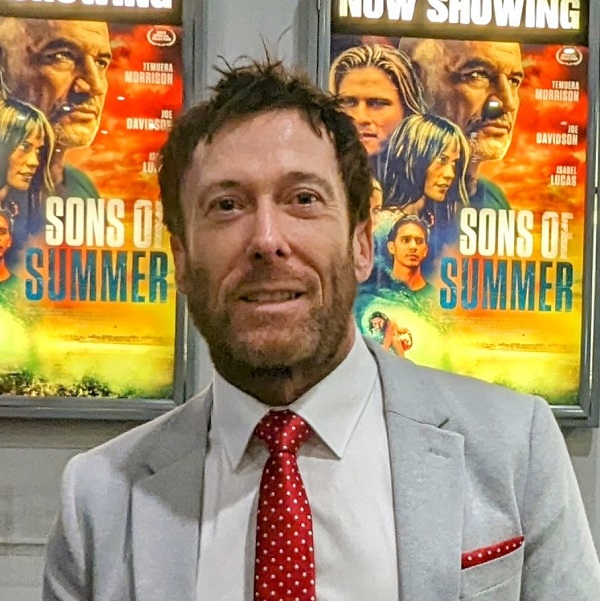
It’s a bold project from Brisbane-born Steve Young, a one-time Wall Streeter who studied acting in New York and kick-started a career as a stand-up comic, where he trod the same stages as comedy giants like Louis C.K and Jim Gaffigan. As an actor, Young has appeared in the 2020 feature film Blood Vessel, opposite Alyssa Southerland (Vikings, The Mist), Robert Taylor (Longmire) and Nathan Phillips (Wolf Creek, These Final Hours); the 2023 surfing drama Sons Of Summer from legendary Aussie producer Phillip Avalon (Summer City); and the 2022 international actioner The Siege Of Robin Hood.
But right now, Steve Young is making his creative home in Hells Kitchen…
Hells Kitchen is a multimedia project – a short film on Apple TV, and a novella on Amazon. Can you take us through the evolution of the project?
“The project started from a very simple place: I love gangster films, and I felt there just weren’t enough good ones being made anymore. The first step was the proof-of-concept short. I wrote it, directed it, produced it, starred in it, cast it, handled wardrobe…pretty much everything. Maybe there was some naivety in that, but I was very clear on what I wanted the world to feel like, and I always believed the film had real potential. Once the short film received strong reviews, screened at major international festivals, and was picked up on streaming platforms, it gave me confidence that Hells Kitchen had life beyond the short. From there, I expanded it into a feature screenplay, building out the five families, their identities, locations, looks, power structures, and the wider mythology of the story. I then adapted the screenplay almost directly into a novella, which is now available globally on Amazon and through the IngramSpark network, including Booktopia, Barnes & Noble and others. That was deliberate. The novella is essentially the screenplay in book form – something investors, producers, studio executives and audiences can access immediately. Because there are a lot of titles and references connected to Hells Kitchen, the easiest way to find it online is to search for Hells Kitchen: A New York Mafia Story or Hells Kitchen Steve Young – with no apostrophe in Hells, which was a deliberate creative choice. Alongside that, I created a 48-page visual pitch deck to present the world, tone, characters and commercial potential of the project. The evolution has been very strategic: proof-of-concept film, feature screenplay, novella, visual pitch deck, and global distribution footprint. Each stage has been about proving the concept, expanding the world, and building the IP.”
It’s certainly an unconventional approach. Do the traditional funding routes hold less appeal for filmmakers these days?
“I don’t think the traditional route holds less appeal across the board, but for this project, I don’t think it was the right first step. Hells Kitchen is a New York mafia story. It has a large ensemble of New York characters, and the whole world depends on authenticity: the accents, faces, locations, wardrobe, energy and cultural detail. I don’t think that is something you can easily build from Australia through a conventional funding pathway and expect it to feel real. So rather than just write a script and ask people to imagine the film, I wanted to build as much of the world as possible first. The proof-of-concept film exists. It has had strong reviews, festival screenings and distribution on serious streaming platforms. The novella exists globally, and it is essentially the screenplay in book form. The 48-page visual pitch deck exists. The social channels are full of production imagery, character visuals, family references and the wider world of the story. That was the strategy. I didn’t want to walk into a room with just an idea. I wanted investors, producers and studios to be able to watch it, read it, see it, and understand the world immediately. For a project like this, that felt far more powerful than waiting for permission through a traditional route.”
You’re based in Brisbane – a long way from Hell’s Kitchen in New York! What is your connection to the material?
“Brisbane is a long way from Hell’s Kitchen geographically, but my connection to the material goes back a long way. My extended family is from New Jersey and other parts of the United States, and I’ve been going in and out of America since I was a kid. I’ve also lived and worked there, including time in Manhattan, New Jersey, Chicago and Wall Street, so I have a strong personal connection to that part of the world, particularly the tri-state area. Beyond that, I’ve always had a real love for the gangster genre as an actor, writer and filmmaker. Hells Kitchen is my fictional world…it’s almost a parallel universe of New York in 1978. It is not trying to be a documentary or a straight retelling of traditional Italian mafia history. The five families in the story each have very distinct identities, loyalties, styles and power structures, and that is one of the things I think audiences will really respond to. It honours the genre, but it also gives me room to create my own mythology inside it.”
Tell us a little about the story of Hells Kitchen and your specific influences.
“The story is set in a fictional version of New York in 1978, where the five families are in a rare period of peace. On the surface, there is order, money is moving, relationships are stable, and everyone understands the rules. Then one family starts being targeted. Their people are killed, their operations are disrupted, associates disappear, and nobody seems to know who is behind it. The other families deny involvement, the FBI can’t get a clear read on it, and the fear is that the whole city is about to slide into a mob war. What makes it interesting to me is that the attacks don’t follow the usual rules. It is not simply one boss taking out another boss. It is more strategic than that. Someone is pulling the structure apart from underneath – targeting logistics, operations, loyalties and pressure points. As the story escalates, paranoia starts to take over, and everyone begins questioning who they can trust. In terms of influences, The Warriors and The Wanderers were major reference points for tone, period and street-level energy. Then there are more subtle influences from The Sopranos, Carlito’s Way and Donnie Brasco in terms of character, loyalty, betrayal and consequence. There are also several twists in the feature screenplay and novella that will genuinely surprise people. That is why I actually recommend reading the novella before watching the proof-of-concept short. The short gives you a strong sense of the world, but the novella lets the larger story unfold the way it was intended.”
Where did you shoot? How did you raise finance for the proof-of-concept short? Has it been a tough ride?
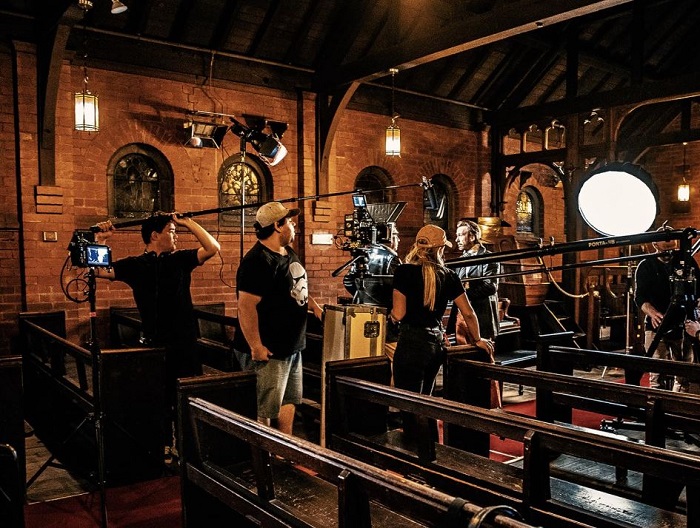
“We shot the proof-of-concept short in Melbourne, but we had to be very selective with locations because the film needed to feel like New York in 1978. One of the key scenes was shot in a church, which was not easy to secure because of the nature of the scene. We also shot out on the bay off Sandringham for a boat sequence, and in a large scrapyard on the outskirts of Melbourne, which had these old vehicles and textures that worked perfectly for the period and tone of the film. I fully funded the proof of concept myself. That included the production, cast, crew, locations, wardrobe, the festival circuit and distribution. It was not just a case of shooting the film and moving on. There was a long process around it. The wardrobe alone took around six months to source. I wanted the period detail to feel authentic, so everything mattered – the shirts, ties, jackets, shoes, cufflinks, and even custom-made corduroy flared pants. Then after production, there was around a year and a half on the festival circuit, followed by distribution, so the investment continued well beyond the shoot itself. Has it been a tough ride? Absolutely. When you are carrying a project independently, every decision, every detail and every cost lands on you. But that pressure also forced me to be very clear about the vision. We had to be resourceful, precise and uncompromising, and I think that gave the film a lot of its grit.”
Where did you find your “New York types”? They certainly look the part!
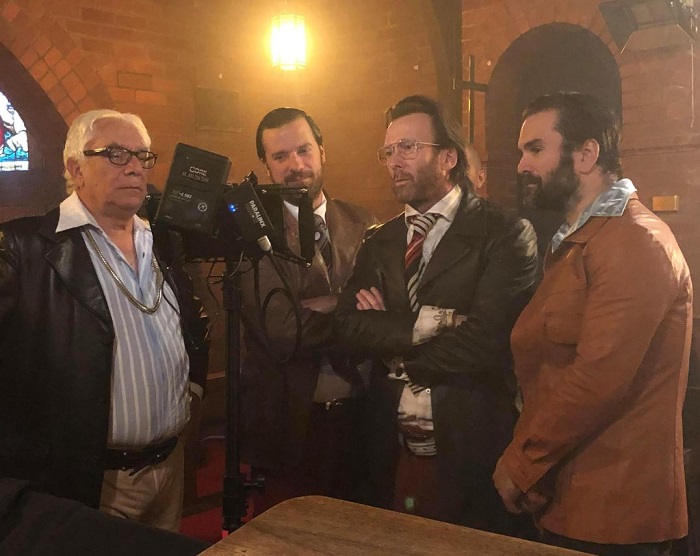
“That was one of the hardest parts of the whole process. The first step was asking actors to send in a simple recording of themselves speaking in a New York accent. They did not even need to act the scene at that stage, just read the text in the accent. That alone probably ruled out 90% of the submissions, because it is a very hard accent to do properly, and if that is wrong, the whole world falls apart. From there, I brought people in to audition as an ensemble. Rather than casting everyone in isolation, I had groups of actors in the room together, rotating through different characters and scenes while we filmed the auditions. I wanted to see who worked together, who had the right presence, and who genuinely looked like they could belong in that version of New York. There were only a couple of roles I offered directly. Troy Larkin, who plays Irish, was one. We had worked together on Blood Vessel, and I already knew what he could do emotionally. I also offered the role of Sleepy Joe to Justin Anderson, who I had worked with on stage. He had the exact presence I needed for that character – someone quiet, dangerous and completely believable as a made man and torturer. I originally was not planning to act in it myself. I was going to write, direct and produce it. But a friend of mine, Gabriel, said I would regret not being in it, and once I stepped into the audition process, the dynamic started to shift. A lot of the characters had come from parts of my own personality anyway, so being in the room helped me find the tone and rhythm of the group. Eventually, the right combination clicked. The fact that the film later received ensemble nominations on the festival circuit was very satisfying, because it confirmed what I felt during casting: that the group worked. It was not just about finding individual actors. It was about finding a believable crew.”
You’re headed straight to Hollywood with this one. Does the local industry hold much interest for you?
“Australia is home, and I have a lot of respect for the local industry, but Hells Kitchen is not really an Australian story. It is a New York mafia story, and the natural home for it is the United States. I was born in Scotland, I am an Australian citizen, and I spent a lot of my life travelling, living in different countries, and spending time in America. So creatively, I have always felt a little international rather than purely local. The plan is not necessarily to go straight to Hollywood in the traditional sense. Atlanta is probably the first major focus. There is a huge amount of film and television activity there now, and I also have family connections in Atlanta and Florida, so it makes sense as a starting point. From there, I would look at Los Angeles and line up meetings with the right production companies and industry people. In terms of the local industry, I am always open to the right project, but most of the work I have done in Australia has been American or international in nature. I work naturally in American accents, and oddly enough, the Australian accent is one of the few I have never been able to do convincingly. So for me, the opportunities that make the most sense tend to be international stories, American characters, or projects with a broader global market. So yes, Australia is home, but for Hells Kitchen, the path forward is definitely the US.”
Hells Kitchen is available digitally on Apple TV. The Hells Kitchen novella is available now on Amazon. Stay tuned for more on Hells Kitchen.
