


by Hope Challis, OT
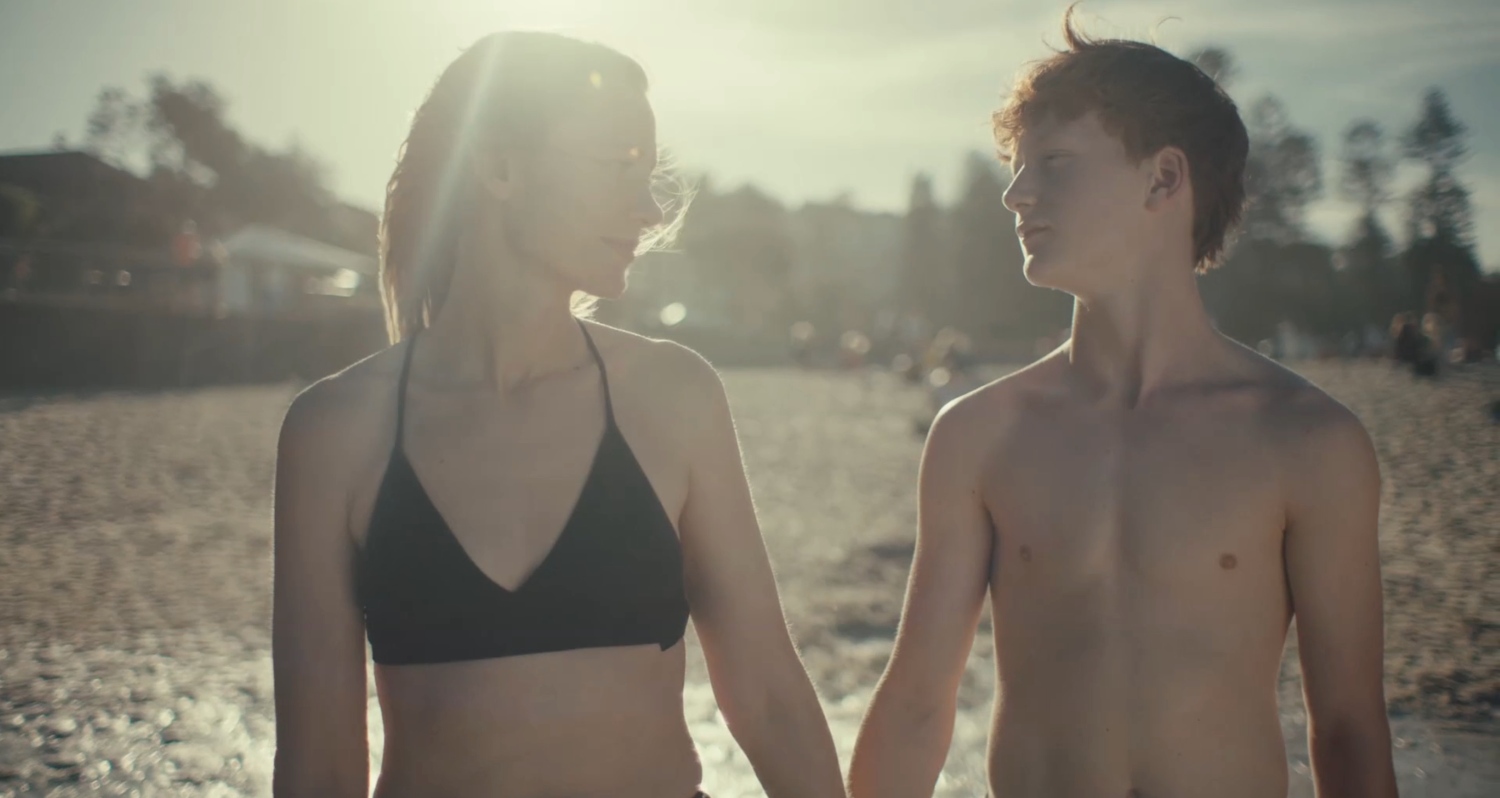
Breath releases by inhalation and exhalation but remains confined by the ribcage – a contrast to Sarah’s internal experience. A mother and son stand united on the expansive beach, looking towards the horizon of the future. But director Jasmin Tarasin’s debut feature Life Could be a Dream does not begin with liberation. As Tarasin notes “from the beginning, I knew the sound world had to live inside Sarah’s body”.
The film begins with a dysregulated nervous system and the overwhelm of Sarah, a mother, drowning in financial abuse and coercive control. It unfolds as a fractured fairytale, punctured by the contrast between the beauty of a stifling Australian summer and a descent into psychological turmoil, where Sarah choses between playing it safe or choosing freedom at any cost. As Tarasin notes “this is not a film where the danger is always visible”. The film explores coercive control, motherhood, masculinity and survival.
It is a sensory and psychologically intimate portrait of a mother, Sarah (Maeve Dermody) and teenage son Otis (Sonny McGee) as they navigate fleeing from Sarah’s husband Jake (Alexander England). The film does this through sound design. Tarasin notes “so much of what Sarah is experiencing is internalised, I wanted the audience to feel that before they could name it, it draws us closer to Sarah’s world”.
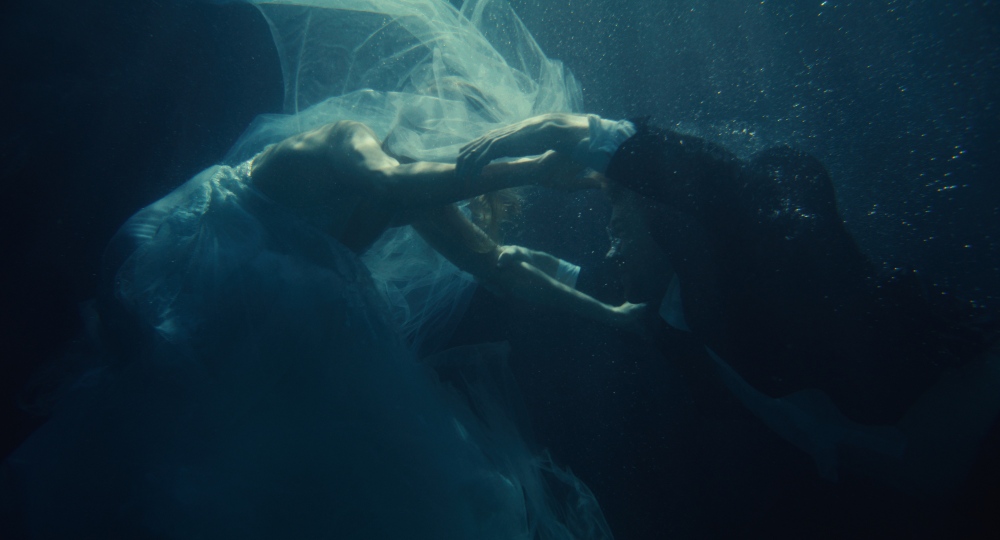
So much of the film utilises the beautiful Australian landscape including specific use of water. Tarasin explains that “it’s water, but it’s controlled water. Contained water”. This is clearly seen in the scenes where Sarah is swimming in the ocean or confined to the fortress-like estate pool or through use of breath and heartbeat revealing an oppressive beauty behind its polished surface.
Tarasin notes that working with “Dan Luscombe on the score, and our sound designer Stuart Morton from The Post Lounge, was a precise process. They crafted the breath, the heartbeats, the inhalations and exhalations that move through the film almost like another character”.
The filmmaker notes that “those sounds became Sarah’s internal language. They hold the feeling of someone trying to stay calm, trying to survive, trying not to take up too much space. Dan’s score then wrapped around that in this haunting, restrained way”. This mirrors the setting of the beach versus the estate and the nature of control versus natural water, the sensory design reflecting the emotional confinement of the characters.
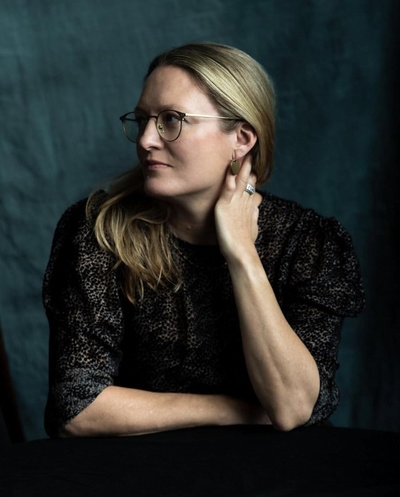 This film marks a move away from documentaries for Tarasin [left]. She muses, “I have always thought of the film as a fractured fairytale”. The film constantly plays with this idea of illusion and danger, that life can be a dream but functions like a trap. Tarasin asks audiences, “how can something look so beautiful and still be unsafe?” Jake becomes a vessel for exploring abuse. Tarasin explains that “financial abuse is often invisible, but it can be absolutely devastating” and that “one moment might seem small, but over time, those moments become a system”, fracturing Sarah’s sense of agency resulting in cumulative harm and forcing her to leave while supporting her son. Tarasin notes that “Meg White (cinematographer) and I spoke a lot about the film as a sensory journey. The Australian summer is so beautiful, but it can also be oppressive. The light is bright, almost too bright. The beach represents openness, breath, movement, possibility. Then the estate pool is something else entirely”, mirroring Otis’s journey as he grows.
On the core mother and son duo of the film, Tarasin and writer Courtney Collins collaborated, Tarasin noting that “Sarah’s silence was not passivity, it was survival, she was tracking everything, reading the room. Managing Jake”. For Otis, Tarasin “wanted to show a boy in transition, who has inherited behaviours he does not fully understand yet”, masculinity in formation.
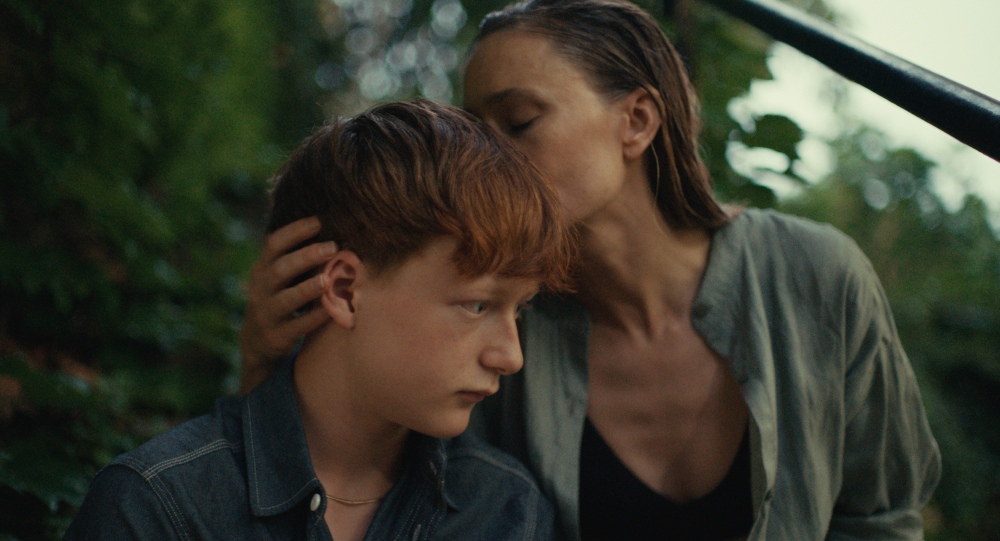
Tarasin notes that “the film is not condemning boys. It is asking what happens when boys are given better mirrors”. Otis is played by Tarasin’s own son. McGee has a youthful softness that contrasts sharply with the inherited behaviour that his character is constantly downloading into his brain and executing impulsively and then correcting as he learns. The film is ultimately not about what boys leave behind in toxic situations but about what boys can learn, especially timely given conversations around the manosphere and what positive role models for boys and young men look like on and offscreen.
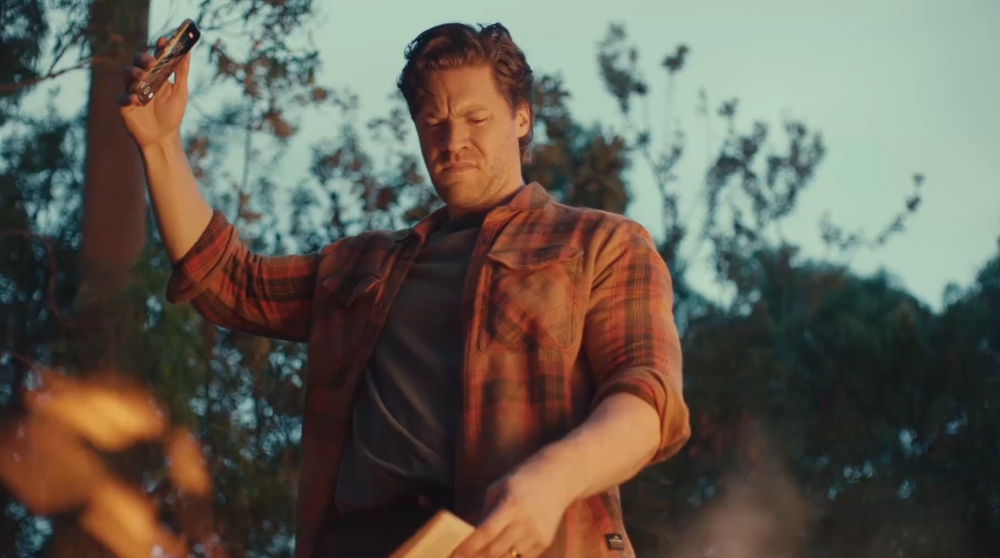
Given the heavy emotionally draining and psychologically heavy nature of the film, Tarasin worked hard to ensure that “the set cannot replicate the harm. It has to be the opposite”.
Showing a laser focus on behind the scenes care of cast and crew, Tarsin notes that “there was room to laugh, to rest, to breathe”. Her commitment to psychological safety and especially her care around child actor protection is to be commended, as she highlights that “strength is tenderness…softness is not weakness”, rings true both on screen and off where the cast and crew were able to bring these themes to life.
Tarasin explores the dismantling of romance and cultural ideas. She states that “the house is not a happy ending. The wealthy man is not the rescue, the fantasy is the trap”. Tarasin’s reframe of love as autonomy, not possession, declaring that “we need to keep questioning the stories we inherit about love”. This is best seen in the themes of hope and liberation fortified by Sarah and Otis bond and that according to Tarasin “love should make you more free, not less. The conversation where Sarah tells Otis that Jake’s behaviour is not okay is so important because she is not shaming Otis. She is gently widening his understanding. She is saying, ‘This may be what you know, but it is not what love has to be’. That is a powerful act of parenting. Change does not always happen in grand speeches. Sometimes it happens in a car, at the beach, in a joke, in a moment of honesty, in a mother and son learning how to breathe again together”.
Encouraging audiences to look past people’s surface masks and see the true impact of their actions on the relationships around them.
Life Could be a Dream is in cinemas now
Hope Challis is an Adelaide-based arts writer, Adelaide Correspondent for Theatre Thoughts Australia and a Paediatric Occupational Therapist.
