


by Isobel Knowles and Van Sowerwine
We work at opposing ends of a technological spectrum, within the intersection of stop-motion, technologies and film. We make miniature sets, objects and characters by hand from cardboard, textiles, paint and clay, then use emerging (often complex and buggy) technologies to create immersive animated cinematic experiences which have premiered at Cannes, Venice and Sundance, and been exhibited at Ars Electronica, ICA London, and the Art Gallery of NSW.
How and why do we do this, and how did we end up here?
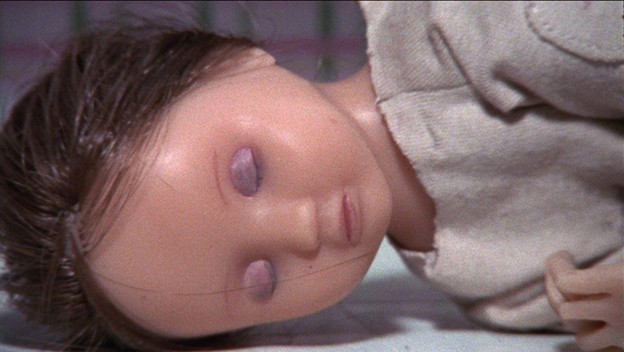
Stop-motion animation and the handmade initially drew us into wanting to make films – the shape shifting that occurs when physical objects are made into living characters to tell stories. Our first short film, Clara (2004), told the story of a twelve-year-old girl dealing with the death of her sister and was shot on 16mm film, which in the early 2000s was already considered retro and purposefully analogue.
Our interest in stop-motion and the handmade had already expanded outside of the cinema screen. We experimented early on with installations where animations were projected inside objects or furniture, blurring the lines between the projected world and the world that viewers found themselves in. We wanted to experiment not just with form and the rules of cinema, but with the technologies surrounding film, including creating interactive films. Our early 2000s film installations used projected interactive QuickTimes (made using LiveStage Pro which had very limited undo capabilities) and a modified mouse to tell stories that would pause narrative on loops until viewers chose an option or pressed a button to continue.
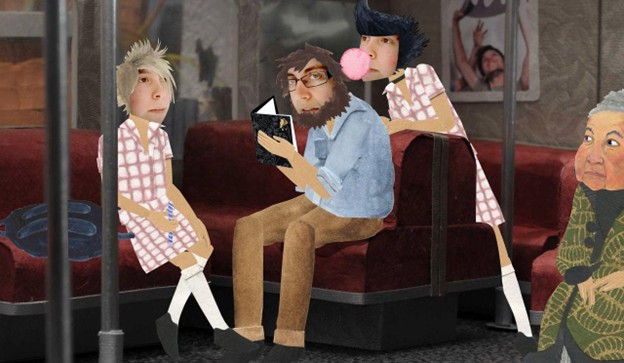
As technologies evolved, we continued to experiment – by the 2010s, we were working with webcams to take a live feed of your face and place it onto animated stop-motion characters created using coloured card and Japanese paper, with three dimensional cardboard backdrops. With these works, we moved away from DIY code and mouse-hacking to collaborate with creative technologists who used ActionScript, Code::Blocks and Arduino to create custom interactions with buttons and a microphone – if you yelled loud enough, you could escape harassers on a train in It’s a jungle in here (2011).
Finding ways to immerse viewers physically and emotionally in a story to create a transformative experience was our goal – but we couldn’t and didn’t want to do this inside a totally digital world.
When we first experienced virtual reality (VR) in 2016, we were immediately inspired to find a way to create a handmade, stop-motion virtual world. We worked for two years to create Passenger (2019), which involved a unique and complicated digital workflow. We realised quickly that we would need to use monoscopic (not stereo) 360 video to be able to find a small enough 360 camera to fit inside our sets, and that all lighting would have to be diagetic because the camera sees everything and post-production options were limited. The film also had to be shot in total darkness with long exposure, so that the camera would only see what was deliberately lit using LEDs. Our Ricoh camera wasn’t supported by our stop-motion capture software, Dragonframe, so we found a small desktop app called Camera Controller that could interface between them.
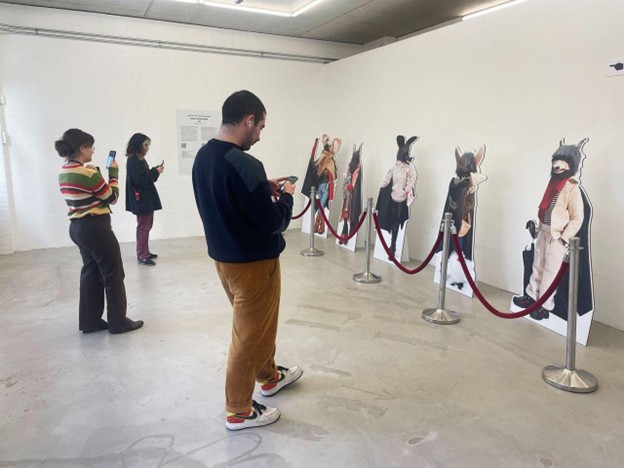
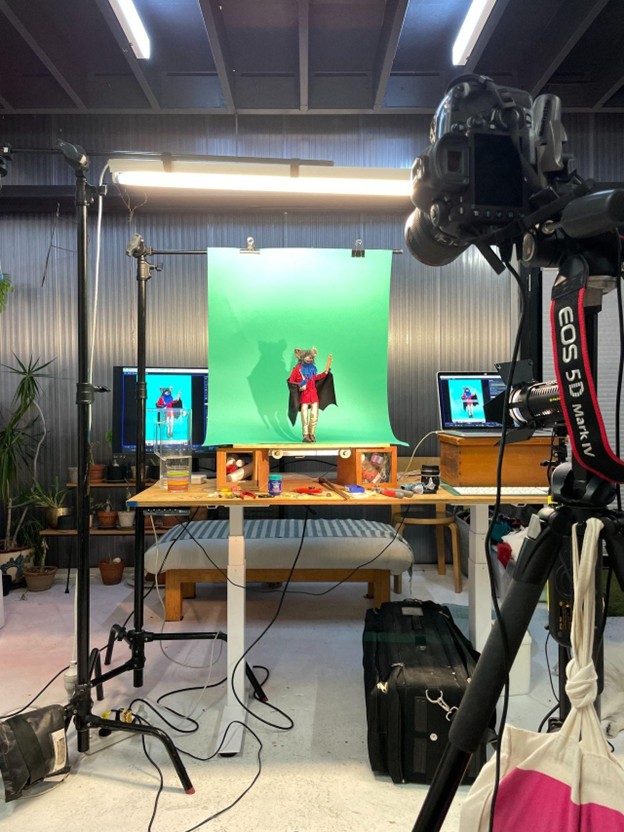
Our subsequent work Night Creatures (2021) was an augmented reality (AR) work viewed on smartphones. Stop-motion bat characters appeared in space next to you, describing their most loved cinema moments using surreal elements and props. The work played with scale by appearing life-sized despite being filmed with Barbie-doll sized puppets We used traditional articulated armatures of many different varieties, fake fur, and Barbie and Ken doll clothes ordered from sellers all over the world to create animations that were shot with Dragonframe, then cut out in After Effects, and coded in 8th Wall to create the AR.
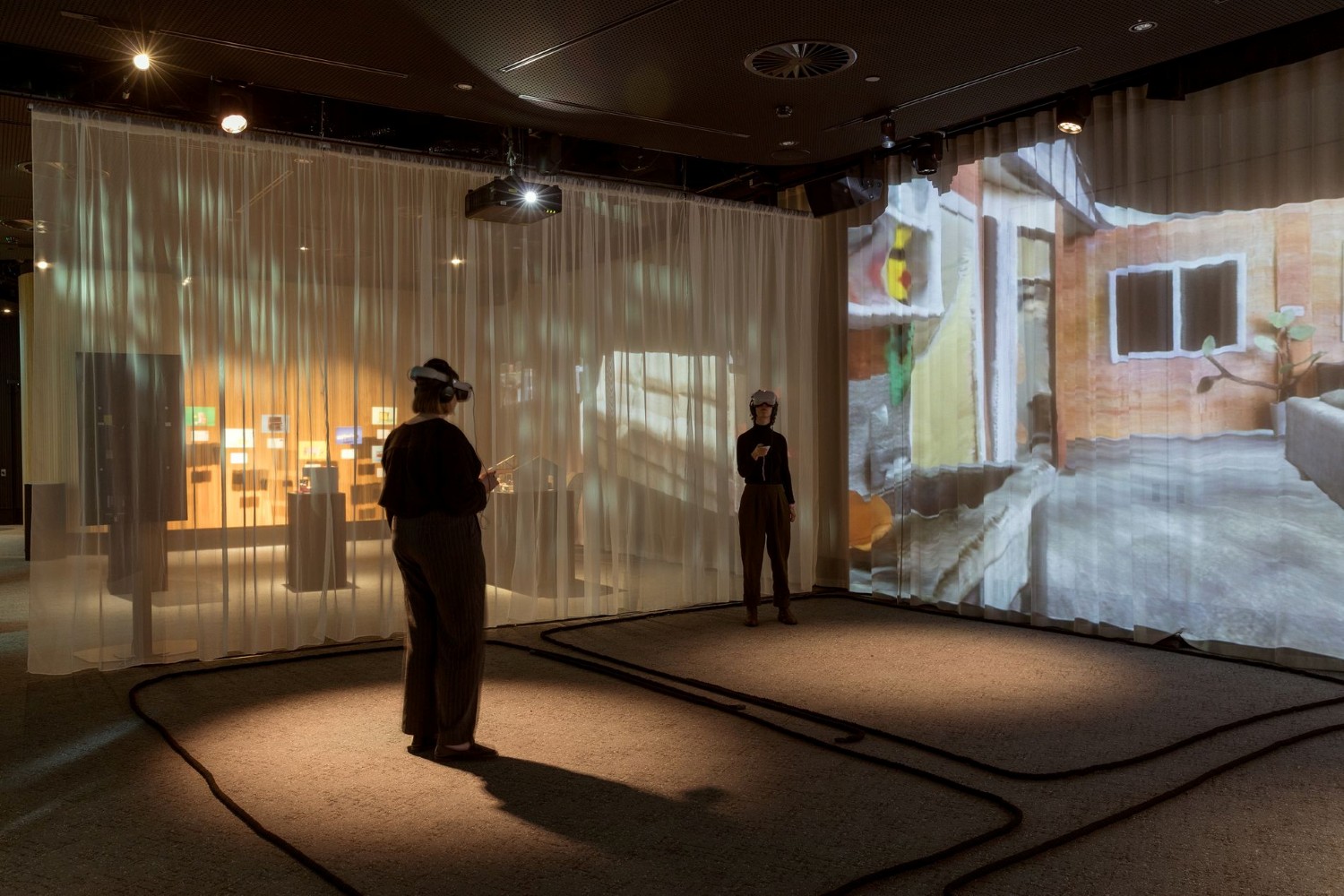
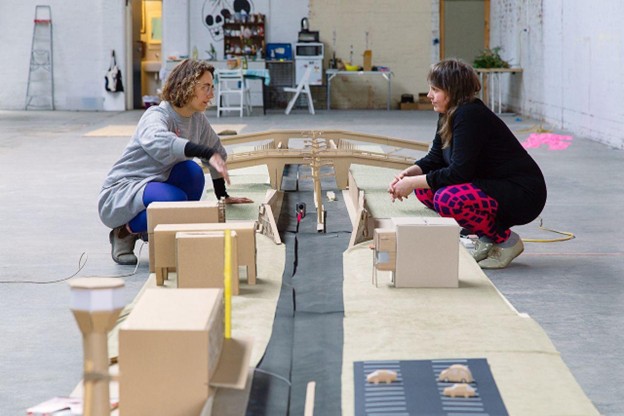
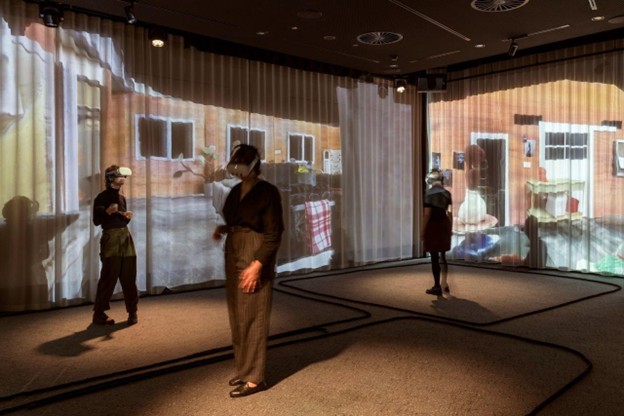
Our most recent work, The World Came Flooding In (2025) has been our most technologically challenging. We returned to VR, and the development of photogrammetry on smartphones has given us the new ability to create 3D game-like worlds using scanned assets from handmade objects. This creative documentary premiered at Melbourne International Film Festival in 2025 and tells the story of 3 flood-affected people in Melbourne, Lismore and Brisbane. We worked with Marina, Antoinette and Tom to create cardboard miniatures of their flooded homes which viewers can move through at life-scale as they hear each person’s story.
For this project, we taught ourselves how to use Unity to create a fully interactive virtual handmade world. Our skills only got as far as prototyping stage before we sought help from a wonderful developer, who instead of taking over, created tools for us to continue to learn. Keeping our hands in the midst of the interactivity is important to us to be able to create something that stays true to our vision. The work is currently screening at international film festivals (most recently IFFR and NewImages) and is touring around Australia as a VR installation through to 2029 in collaboration with the Museum of Australian Photography.
Why do we continually evolve and experiment with changing technologies, often creating the most complex and seemingly impossible workflows and situations? Partly, it’s curiosity and the lure of the new, but at the core is our desire to create a unique and meaningful experience for viewers to tell stories that resonate deeply and connect on a real, visceral level. The handmade miniature elements that are one of the key constants in our work, shift something in viewers – you always know on some level that you are inside an invented world, suspended in a reality that you know does not exist.
We are constantly learning and adapting to a swiftly changing technological landscape. By the time a project is finished, a new set of tools awaits to build the next one. But there are some constants that keep the workflows and collaborations smooth and steady. For instance, using Dropbox for content management, collaboration and archiving instead of relying on ever-failing hard drives, or finding good communication software to keep notes and conversations organised.
Ultimately, at the core of our creative practice together is collaboration. First and most importantly, our collaboration with each other. This year, marks our 25 year anniversary of working together, and it is this deep push and pull between us that allows us to fly in the fringes and explore a complex combination of subject matter, techniques and technologies. For every project, we also collaborate with a small crew including creative technologists, sound designers and composers. As our practice has shifted to include documentary work, we also collaborate with people who trust us to tell their stories. And finally, the immersive experiences we create allow audiences to embark on a collaborative journey with us where they have agency and choice about the path that they take to explore the work; a dedication to being open and curious while finding unique ways to tell stories is what we are about.
