



by Benjamin Faber
Martin Scorsese’s Casino has always felt like the loud, glittering cousin of Goodfellas, trading New York alleys for Vegas neon without losing any of its bite. Nearly three decades on, it remains one of the most meticulous portraits of organised crime ever put on screen, and a film that Australians still catch on late‑night TV and at repertory screenings with the volume turned way up.
Entering the World of Casino
Released in 1995, Casino traces the rise and inevitable fall of Sam “Ace” Rothstein, a meticulous betting whiz given the keys to a mob‑backed Las Vegas palace. Scorsese and co‑writer Nicholas Pileggi base their story on real events, but what lingers is not just the true‑crime scaffolding; it is the sensory overload of a city built to separate punters from their cash with a smile.
Casino drops viewers into the guts of a seventies Vegas floor with almost forensic attention to detail. From the surveillance room to the count room, the film walks through every stage of how the house keeps its edge. It is part education, part seduction, and the camera glides as confidently as Ace himself, explaining the mathematics of odds while tracking chips, pit bosses and whales in crisp, unbroken moves.
That fascination with games and chance still echoes across contemporary screen culture, from prestige dramas to the way online entertainment frames luck, reward, and spectacle in everything from narrative design to slots. For those curious about how the language of the casino floor has evolved into modern interactive experiences, click here for a closer look at how those same mechanics are reimagined today.
Despite its crime‑saga scope, Casino is also very much a workplace drama. Ace runs the Tangiers like an obsessive small‑business owner, battling corrupt bosses, eccentric high‑rollers and a volatile friend in Nicky Santoro. The film never forgets that, beneath the neon, this empire survives on rosters, pay packets and a carefully curated image of glamour.
Scorsese at His Most Operatic
Casino shows Scorsese in full command of his toolbox. Voice‑over narration weaves between Ace and Nicky, occasionally handing the mic to other players to give a chorus of perspectives on the same events. That overlapping commentary is both informative and darkly funny, turning exposition into part of the film’s rhythm.
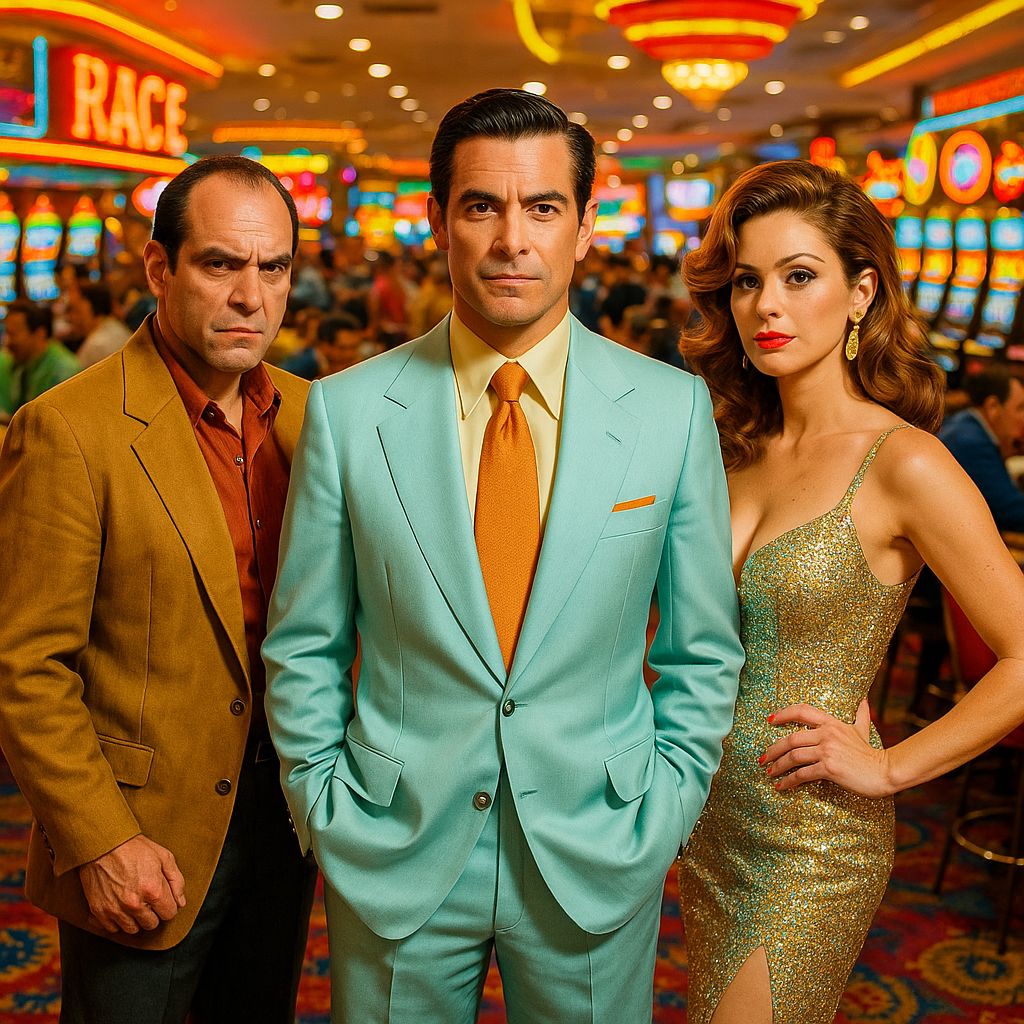
Visually, Casino is a contrast machine. The lurid colours of the Tangiers floor clash with the beige banality of back offices and suburban homes. Costume designer Rita Ryack drapes Ace in a dizzying rotation of suits and shirts that border on parody yet always feel character‑driven; this is a man who treats presentation as armour. The aggressive soundtrack, loaded with rock, soul and pop standards, functions like an additional narrator, underlining shifts in mood and power.
The performances match the scale of the filmmaking. Robert De Niro’s Ace is tightly coiled, a man who trusts his read of the odds more than he trusts people. Joe Pesci’s Nicky is chaos incarnate, an impulsive enforcer who drags old‑school street brutality into an environment that relies on subtlety. Yet it is Sharon Stone’s Ginger who gives the film its tragic heart. Her arc, from confident hustler to spiralling casualty of excess, is staged with both spectacle and painful intimacy, a turn that earned her a richly deserved Oscar nomination.
Scorsese’s hyper‑stylised approach helped cement a cinematic image of Las Vegas that still shapes how audiences imagine the city, even as the real Strip keeps reinventing itself. For a wider sense of how Casino fits into the cinematic mythology of Vegas, readers can consult the BFI Las Vegas film list, which highlights ten landmark movies that helped define the city on screen.
Casino and the Lure of Vegas
On first release, Casino sat in an odd spot. Arriving just five years after Goodfellas, it was inevitably compared to its predecessor and sometimes written off as a louder remix. Over time, the film has emerged from that shadow. Its focus on systems rather than just personalities gives it a different flavour, closer to an epic study of capitalism dressed in sequins.
For Australian viewers in particular, Casino has had a long tail through home video, late‑night television and festival retrospectives. It is the sort of title that turns up in “crime classics” seasons at local cinémathèques, where a new generation can see just how precise Scorsese’s staging is on a cinema screen. The film also offers a lesson for filmmakers on how to balance narration, montage and character beats without losing momentum over a three‑hour running time.
One of the reasons the film holds up is its sense of inevitability. From the opening explosion to the quiet epilogue in suburban retirement, Casino plays like a chronicle of an era that was always going to eat itself. As corporate interests replace mob money in Vegas, Ace’s final monologue lands with a bittersweet sting; the illusion of glamour survives, but the people who built it are swept aside.
For those interested in the nuts‑and‑bolts history behind Casino, including its journey from page to screen and its reception on release, the AFI Casino program notes provide a concise historical overview and key technical details. Reading them alongside a modern rewatch gives a clear sense of how criticism has evolved around the film.
In an era when crime sagas are more often stretched into long‑form series, Casino stands as a reminder of what a single, carefully constructed feature can achieve. It is a complete world, from the car parks to the counting rooms, anchored by performers at the height of their powers and a filmmaker dissecting the machinery of greed with scalpel‑sharp focus. Revisiting it now is less about nostalgia and more about appreciating how its craftsmanship continues to influence everything from prestige drama to the way contemporary stories treat luck, money and the glare of neon.
