




by FIlmInk Staff
For many emerging filmmakers, being selected as a finalist in Tropfest is a career-defining moment. For Melbourne-based filmmaker Taysha McFarland, the journey to the Tropfest stage came with an additional challenge: raising three young children, including a baby who was just four months old during production.
McFarland’s short film Blue Orchids was selected in the Top 25 of the 2026 Tropfest competition from more than 700 submissions. From there, it entered the festival’s Wildcard round, a ten-day audience engagement sprint where public viewership, likes and comments help determine the final finalist spot.
For McFarland, the campaign to secure that place unfolded during some of the most sleep-deprived months of her life.
Filming had taken place while she was caring for a newborn, a demanding period for any parent, let alone someone directing a period drama. With two other children at home, balancing family responsibilities with filmmaking required constant adjustment and preparation.
“You have to really want it as a parent. Not only do I have to organise a film set, but I also need to organise family life – who will be picking up whom, feeding times, extra curricular activities etc. I write out schedules for the kids and thankfully I have my parents to help. As a mother, you’ve got an example to set, you can’t give up on your dreams, no matter how difficult it may be. And for me, I’m in too deep to have any other career!”
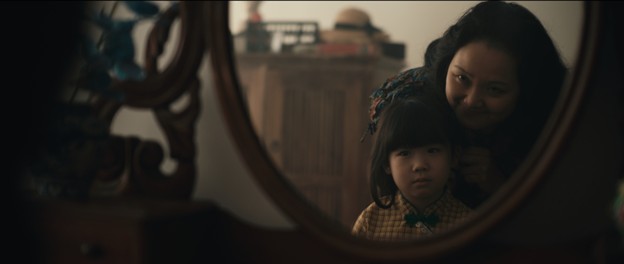
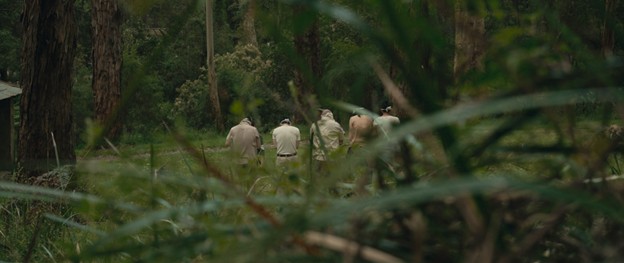
The story at the centre of Blue Orchids is deeply personal to McFarland. Inspired by stories shared by her Popo (grandmother), the film explores the experience of a mother and daughter during the Japanese invasion of Malaya in 1941. As occupation spreads across the country, a dignified mother must find the courage to protect her young daughter from the brutal realities unfolding around them.
The project reflects McFarland’s ongoing interest in telling stories that highlight voices and histories that have often gone undocumented on screen.
“Blue Orchids was inspired by my Popo’s stories and although the past ten days have been a wild, intense journey, it is so heartwarming seeing people around the world connecting to our film and thanking us for making it,” McFarland said.
“I owe my thanks to the Tropfest Wildcard competition, because without this crash course of film marketing our film would not have reached the people who need to see these stories represented on screen. So to become a finalist through this process has been so fulfilling and rewarding. It goes to show that our stories (as Malaysian descendants) really do matter and taking this to the main stage gives voice to the unheard and undocumented stories of my grandparents’ generation.”
Even before the Wildcard result was announced, making the Top 25 was already a milestone.
“First of all, I was ecstatic to even be considered in the top 25 out of 700+ films, but knowing we had a fighting chance to get in as a finalist, I wasn’t going to give up,” she said.
“There is such a high calibre of films within the wildcard draw so winning this definitely makes me feel validated as a director. Fortunately, my 7 month old was keeping me up all through the night, so I was using that opportunity to post in international film forums and message all my friends and family overseas to watch our film.”
Those sleepless nights ultimately paid off. When the results were announced, Blue Orchids secured the final Wildcard finalist position.
“Winning the wildcard is definitely the biggest highlight of my career,” McFarland said. “It feels like a while since I’ve been in the director’s seat so to have the validation of being in the top 25, and then the support of everyone who watched our film online has been phenomenal. It really brings me to tears. (Tears of joy of course!)”
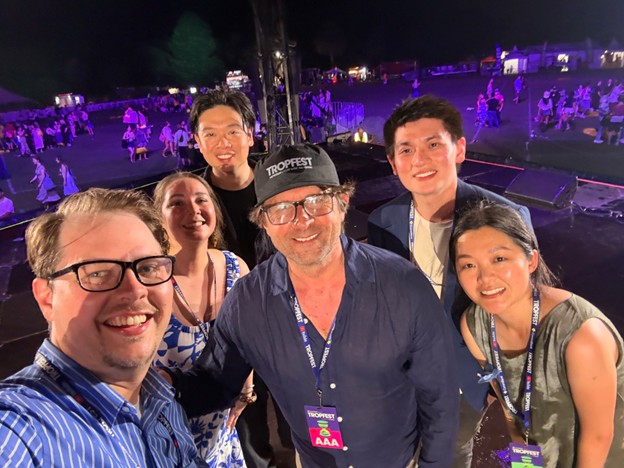
For decades, Tropfest has played a pivotal role in Australia’s screen culture, acting as a launching pad for emerging filmmakers and a proving ground for new voices. Many now-established directors first gained national attention through the festival, which has long celebrated accessible, audience-driven storytelling.
Being selected as a finalist carries weight not only for the filmmakers themselves but for the wider community of emerging creatives who see Tropfest as a rare opportunity to reach a broad audience.
For McFarland, the moment represents both professional validation and personal achievement.
Between directing, campaigning for the Wildcard, and caring for a young family, the past year has been a whirlwind. Yet the experience has reinforced the power of persistence and community support — both on screen and off.
And in a way, the circumstances surrounding Blue Orchids echo the themes at the heart of the film itself: resilience, motherhood, and the determination to protect and honour the stories that shape us.
Following the film’s success, McFarland has already begun looking ahead. She is currently developing a feature-length screenplay inspired by Blue Orchids, expanding the story and the historical world of the short into a larger narrative that continues exploring the experiences of families living through the Japanese occupation of Malaya.
