


by FilmInk Staff
Editorial tools helped shape film in real time, crafting mood and tone while shooting.
Blackmagic Design today announced that the feature documentary The Bulldogs, premiering at this year’s Slamdance Film Festival, was shot using Blackmagic URSA Mini Pro 4.6K G2 digital film cameras. The film was also finished using DaVinci Resolve Studio editing, grading, visual effects (VFX) and audio post production software.
Directed by Noah Dixon and Ori Segev, The Bulldogs follows the residents of East Palestine, Ohio, as they navigate a difficult path to recovery after a catastrophic train derailment and chemical release upended their community. Spanning a single year, the film captures residents of the town as life continues in the wake of the disaster, from local traditions to the growing tension that follows as cleanup drags on. The film was produced by Alexander Hyde and Drew Johnson, with additional cinematography by Logan Floyd, Anthony Codispoti, and Josh Nowak.
Segev, who also served as director of photography, said he chose the URSA Mini Pro 4.6K G2 to stay nimble in a small crew documentary environment while still delivering a cinematic image. “It’s a powerful camera, and I love using it for documentary work because it is the right balance of size and weight to rig into any situation,” said Segev. “It’s easy to move around without a dedicated AC and is really reliable in all conditions. I love the image you get out of the camera. The colour palette of the sensor is fantastic, and it renders skin tones in a really beautiful way.”
Segev said the team built a lightweight package around the needs of observational storytelling. “We primarily used the 16-40mm Angenieux Optimo zoom,” added Segev. “We lived with a rota pola in most of our exterior shots as a way to bring vibrance back into the sky and to dial in a consistent look in each frame.”
Segev also highlighted the efficiency of recording in Blackmagic RAW. “We used Blackmagic RAW 5:1 in open gate, which ended up being the perfect balance between image quality and record time for our needs,” he said. “We shot over 40 terabytes total on this film and edited directly with the original media. We never made a single proxy. Everything ran incredibly smoothly, like butter.”
Editor and Co Director Dixon said DaVinci Resolve Studio’s integration helped shape the film in real time, rather than treating look as an afterthought. “From the beginning, we knew we wanted The Bulldogs to be a documentary that was visually striking,” said Dixon. “Because of that, colour wasn’t something we wanted to treat as a final step. DaVinci Resolve allowed us to colour and edit simultaneously, which was huge. We weren’t just assembling the story, we were shaping mood and tone at the same time.”
Dixon noted that DaVinci Resolve Studio also helped the team handle real world documentary constraints with a polished finish. “The Voice Isolation tool was incredibly helpful in salvaging dialogue that otherwise might have been unusable. The masking tools and built in VFX tools were extremely helpful,” said Dixon, adding that the ability to clean up distractions helped support the cinematic approach they were aiming for.
Segev said the filmmakers also relied on DaVinci Resolve cloud collaboration tools to keep edit, colour and finishing moving in parallel. “Noah and I were the two people inside the project, and we each had mirrored drives at our homes and office,” he said. “It was great being able to be inside the same project at the same time.” The ability to accomplish multiple tasks, including simple paint outs with Fusion, allowed the team to stay inside one toolset as the film evolved.
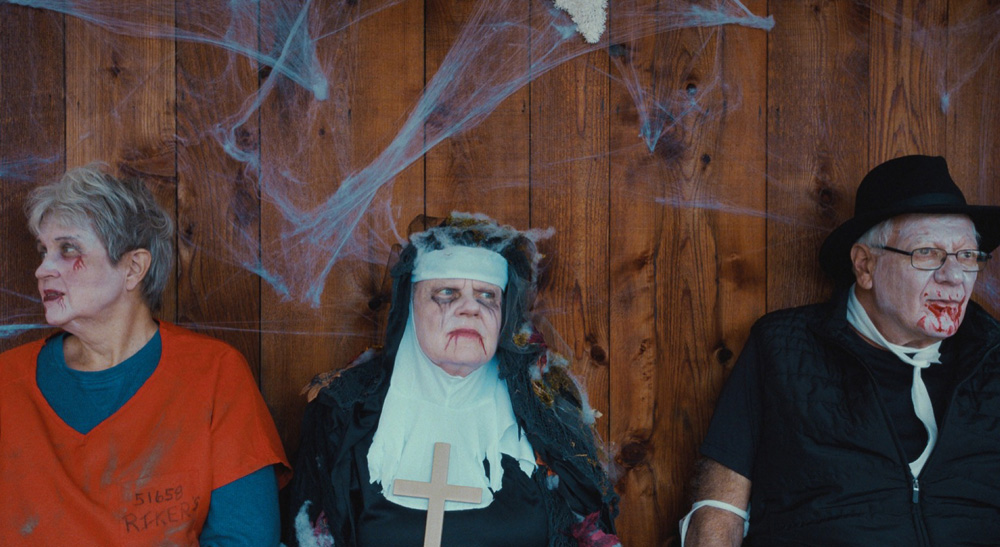
As colorist, Segev said the grade was designed to challenge expectations of the environmental disaster genre. “We wanted to move away from the muted palettes that often define the genre and instead lean into a more stylised and vibrant grade,” he said.
“For us, the look of the film is tied directly to themes of resilience, community, and place.”
Segev said he kept his grading approach intentionally focused. “Technically, I rely on a minimal toolkit,” he said. “I use the HSL Qualifier to shape and control highlights, introduce some subtractive saturation, and often dial in a subtle bleach bypass effect using a layer mixer. I love a little grain and halation.”
He also pointed to newer grading tools he leaned into during the process. “I have become a huge fan of Color Slice,” he said. “One of my overall favourite tools is the Analog Damage effect.”
Looking back on the end to end workflow, Segev said the benefit was both creative and practical. “Having everything in one robust program saved us a huge amount of time,” he said. “That flexibility made DaVinci Resolve an incredibly powerful tool for us.”
The Bulldogs had its world premiere at Slamdance 2026
About Blackmagic Design
Blackmagic Design creates the world’s highest quality video editing products, digital film cameras, colour correctors, video converters, video monitoring, routers, live production switchers, disk recorders, waveform monitors and real time film scanners for the feature film, post production and television broadcast industries. Blackmagic Design’s DeckLink capture cards launched a revolution in quality and affordability in post production, while the company’s Emmy™ award winning DaVinci color correction products have dominated the television and film industry since 1984. Blackmagic Design continues ground breaking innovations including 6G-SDI and 12G-SDI products and stereoscopic 3D and Ultra HD workflows. Founded by world leading post production editors and engineers, Blackmagic Design has offices in the USA, UK, Japan, Singapore and Australia. For more information, please go to www.blackmagicdesign.com/au.
