


by Anthony O'Connor
Worth: Discs: 3, The Film: 3/5, The Extras: 4.5/5, Overall: 7.5/10
FilmInk rates movies out of $20 — the score indicates the amount we believe a ticket to the movie to be worth
Cast:
David Pledger, Martin Sharpe, Rosie Traynor, Talia Zucker
Intro:
… a kick to the guts.
The Film:
Horror movies about grief, or that use the scary stuff as an allegory for trauma, are pretty much a dime a dozen these days. Hell, A24 probably has half a dozen flicks on that very topic ready to drop in the first quarter of this year. Back in 2008, however, they were a lot less common. This is part of the reason why microbudget Aussie horror (or perhaps that should be “supernatural drama”) Lake Mungo was more or less ignored at the box office and dismissed by audiences back then. Happily, the critical darling has gathered momentum, with genre luminaries like Mike Flanagan (Doctor Sleep, Midnight Mass) and David Dastmalchian (Late Night With the Devil, Murderbot) extolling the virtues of the (thus far) single film from reclusive writer/director Joel Anderson.
Shot in mockumentary style, Lake Mungo is essentially the story of the Palmer family and their attempts to deal with the death of their 16-year-old daughter, Alice (Talia Zucker). Beginning with a series of beautifully acted talking head sequences, the first half an hour or so of the film feels like a genuine doco, something you’d stumble across on the ABC or SBS on a Saturday arvo. Alice’s parents Russell (David Pledger) and June (Rosie Traynor) talk with sorrow filled eloquence about their lost daughter, and brother Matthew (Martin Sharpe) struggles to come to terms with an unimaginable loss. Then, about a third of the way in, it becomes clear that there’s something more going on. Lowkey but seemingly unexplainable incidents begin to occur. Alice seems to be in photos that were taken after her death, and all three living Palmers begin to believe something supernatural is taking place.
In the excellent, exhaustive extra features, one of the crew ponders that perhaps marketing Lake Mungo as a horror film set the wrong expectation. And certainly, when you see the original poster, it’s hard not to agree. Lake Mungo is barely a horror film, it’s certainly not scary (except for maybe one mildly creepy moment) and is far more about how we deal with death and face our inevitable end than it is an engine for making people leap out of their seats. It goes without saying, then, that this is a film that will not appeal to everyone. Hell, your humble word janitor spent the first 45 or so minutes alternately impressed with the stellar performances of the cast… but also a little bored with the sluggish pace and lack of tension.
The thing is, though, it grows on you. And from about the halfway mark onwards, Lake Mungo reveals itself to be a subtle, old fashioned ghost story with an ending reveal that’s more of a curtain twitch than a full on production. If you’ve ever lost a loved one, friend or family, you’re certain to find aspects of the story familiar, perhaps uncomfortably so, and Anderson’s slow burn approach pays off in a brutally existential, sorrowful, thoughtful but satisfying way.
The Extras:
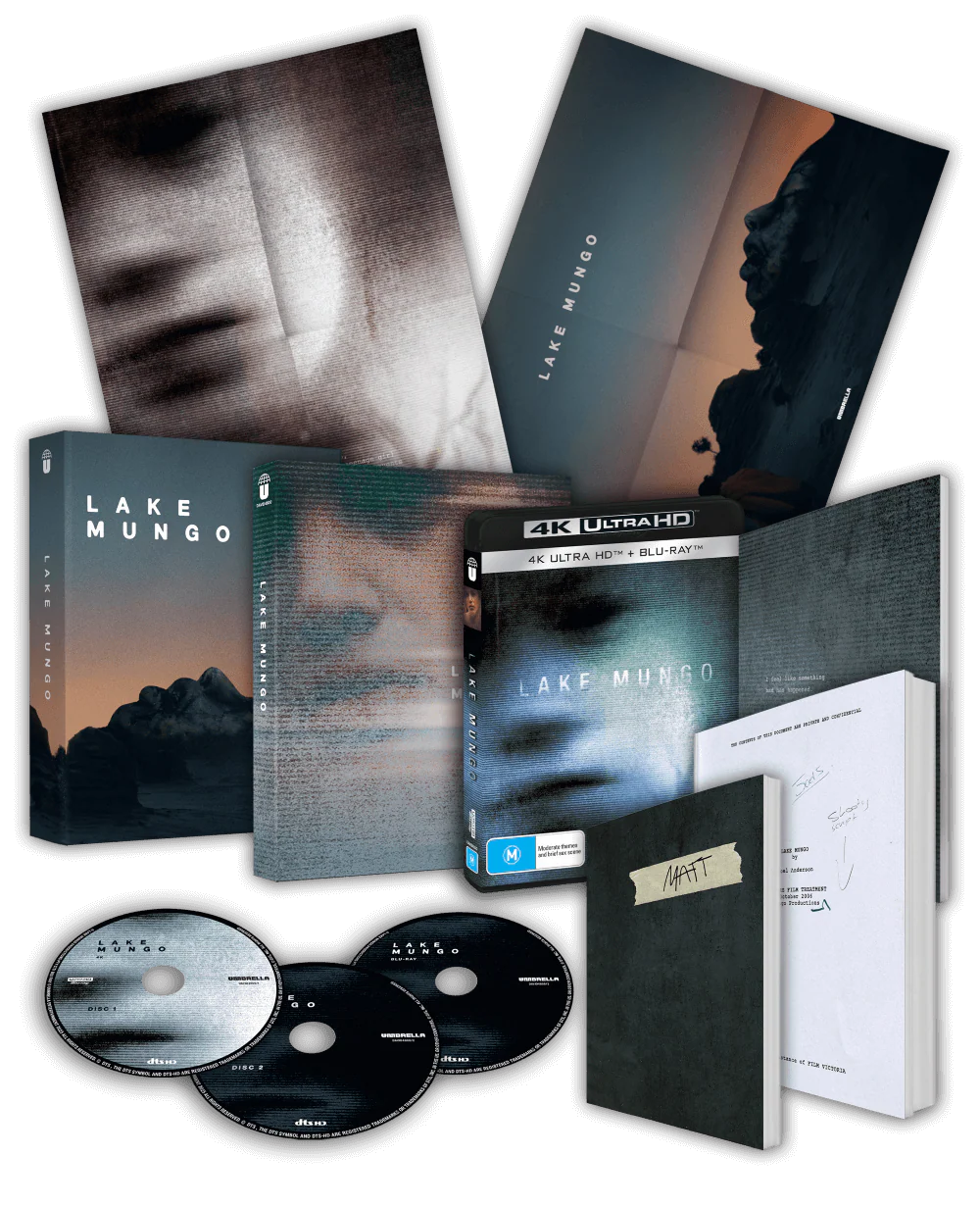
An absolute lake’s worth of submerged goodies here, for casual fans and super obsessives alike. There are two audio commentaries, one from Shelby Oaks writer/director Chris Stuckman (a vocal supporter of the flick for yonks now) and another with producer David Rapsey and cinematographer John Brawley.
There are hours of unseen footage including behind-the-scenes gear, rushes, original auditions and rehearsals. There’s Found Footage: a selection of scenes from early cuts of Lake Mungo, deleted scenes, Dead Girl Rise: Alexandra Heller-Nicholas on the Ancestors and Legacy of Alice Palmer, the original Lake Mungo Mood Reel, with an Introduction from producer Georgie Nevile and cinematographer John Brawley and The Legacy of Lake Mungo: Interviews with Filmmakers including Justin Kurzel, Mike Flanagan, Eduardo Sánchez, David Dastmalchian, plus plenty of other quality short featurettes and bits and bobs.
However, the jewel in the crown is undoubtedly Lake Mungo Revisited, an exhaustive three and three quarter hour megadoc that digs into every aspect of this layered, complicated film. Broken into four distinct parts, the cast, crew, critics, lovers of the film and everyone else who wants a yarn chimes in on the concept, execution and legacy of this misunderstood and too often ignored Aussie genre classic.
Honestly, it’s the kind of documentary that makes you appreciate the main film in new ways, which is a rare treat and very laudable.
The Verdict:
Lake Mungo isn’t a film that will appeal to everyone. Horror traditionalists, or those hoping for a solid spooking will probably want to avoid these dark waters. However, fans of groundbreaking Aussie cinema that’s more interested in creating a vibe rather than making you brown your daks might well find something to love in this cult gem.
The icing on the cake, however, is the absurdly detailed array of extras that feel lovingly curated and specifically targeted to everyone who believed this microbudget heartbreaker of a ghost story deserved a bit more time in the sun.
You might want to pencil in some time to stare into the distance with a far off look in your eye afterwards, mind you, because Lake Mungo can be a kick to the guts.
