


by Finnlay Dall
Worth: $12.00
FilmInk rates movies out of $20 — the score indicates the amount we believe a ticket to the movie to be worth
Cast:
various artists
Intro:
The film’s contents may lack the polish or shape, but its tactility – its sounds, colours and characters – are what makes The Nicholas Building priceless.
Originally founded as an unused office space for a pharmaceutical company in the mid 1920s, Melbourne’s Nicholas building has a long and storied history. But Mark Newbold’s documentary is not concerned with the Nicholas story, its architects, or even the building itself. Rather, The Nicholas Building is far more interested in the creativity happening within its walls and the tenants reshaping its legacy into an artist hub for all.
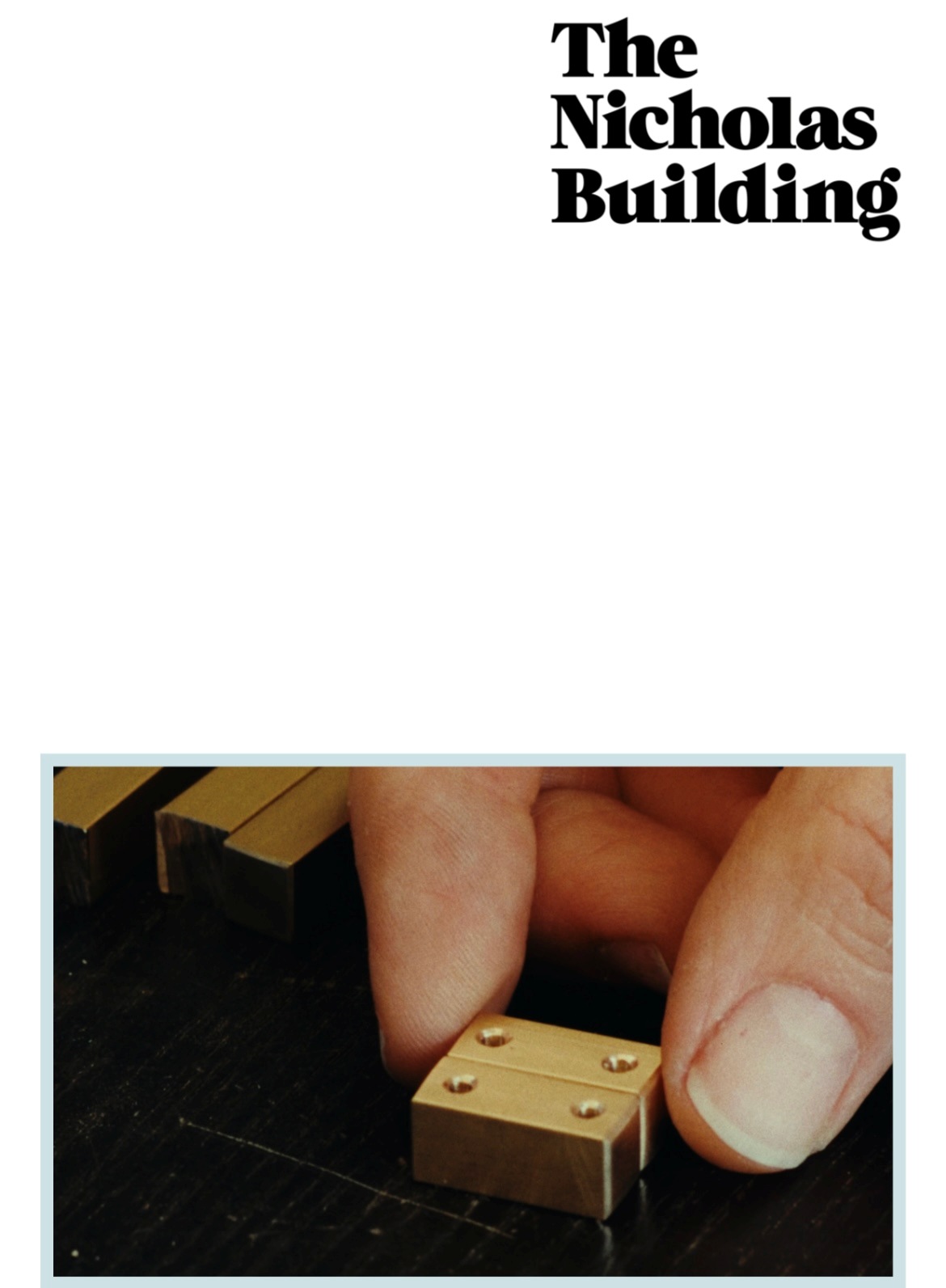
As someone who has walked through its yellowed hallways, we can say for certain that Newbold is uncanny in his distilling of the Nicholas’ charm: the strange melding of traditional artistry with Melbourne’s quirkiest characters. When a young woman begins work on a series of gold links, no details are cut. Edges are shaved and clamped down, joints are hammered into their ends, and her signature is pressed into the metal.
Unbroken, precise and altogether vibrant thanks to the 16mm film stock, this and similar sequences in the film seem to take on the meditative calm of a daydream. Many of the artists toil away in relative silence, as the rich soundscape of their tools provide a level of ambiance. Newbold slows everything to a crawl, asking us to contemplate what is being created in front of our eyes.
Using every new cut of paper or moulding of wax as a cryptic puzzle piece, and we’re given the rare opportunity to solve the final image ourselves, emulating the satisfaction of finishing an artwork. Gold balls are smushed in moulds, those flat coins are then sat next to small pins, and it’s only when the earrings are placed in a jewellery box that everything clicks.
Talking heads aren’t completely avoided, as what is art without the character behind it? And The Nicholas is filled with them. Take a wax sculpture artist who prattles excitedly about his miniatures, twirling a sharply detailed and bright pink wax cathedral in his fingers. As he gives us permission for a closer look, we see it loom large under his magnifying lens – the resulting aberration seemingly suspending it mid-air. And when he rests a size accurate beetle ring onto his pinky – revealing a lengthy coke-nail in the process – we end the scene with more questions than answers.
Combined with many of the artists’ choices to use traditional tools – anvils, scalpels, or a full loom – The Nicholas Building feels anachronistic. A sort of pocket dimension where the Nicholas is being broadcast from the BBC in the 1970s. But while its commitment to both its vintage style and preference for people over place are extremely commendable, it leaves the film with several challenges to overcome. Namely, complaints over a lack of variety in the artists covered, and that audiences expecting a Lost City of Melbourne (2023) deep dive might be heavily disappointed.
While there are many artisans and craftsmen residing in the Nicholas Building, there are also a significant number of musicians, digital artists and game developers who make the old site their home. And while the shoemakers, painters and jewellers who make up the documentary are certainly the most eclectic of the bunch, the doubling up on many of the crafts in the film feels slightly neglectful. Some of the younger people in the space are doing everything from selling hand-cut zines and hosting game launches to selling occult objects, tarot readings, and for one office in particular, providing a full-blown nightclub. But the more out there things that the Nicholas promotes are totally absent. It’s a wasted opportunity to have such a narrow focus on the same sorts of crafts and age demographic; the film could have explored so many more avenues of creativity.
Older folks are bound to have their own problems with the film, as while they have no shortage of representation, with many of the artists falling above their 40s, they will undoubtedly find themselves miffed that the building itself and its many quirks are never discussed. Remove the Nicholas’s winding staircase, its narrow rickety elevators and its postal style office doors, and it feels like we’re no longer talking about The Nicholas Building but The Random Artist Collective Building. Artists may make up half of the Nicholas’ character, but the other half is the building itself. It informs the way art is made, presented and distributed there. Removing it is like separating Roald Dahl from his writing shack: it turns the film into an incomplete picture.
Sprinkle on top the odd placement of the classical score; which trumpets at random intervals and eventually drowns out interviewees; or awkward b-roll shots that never quite land the right way; and The Nicholas Building starts to feel less like a copper etching of a famous Melbourne residency, and more like a sketch for the drafts folder.
But as an older painter suggests to us, maybe it’s better to think of Newbold’s film as a work of “sensory enjoyment”.
“In thinking about what you’re seeing […]What are those colours doing and what are those surfaces doing as a sensory pleasure?”
The film’s contents may lack the polish or shape, but its tactility – its sounds, colours and characters – are what makes The Nicholas Building priceless.
