


by Stephen Vagg
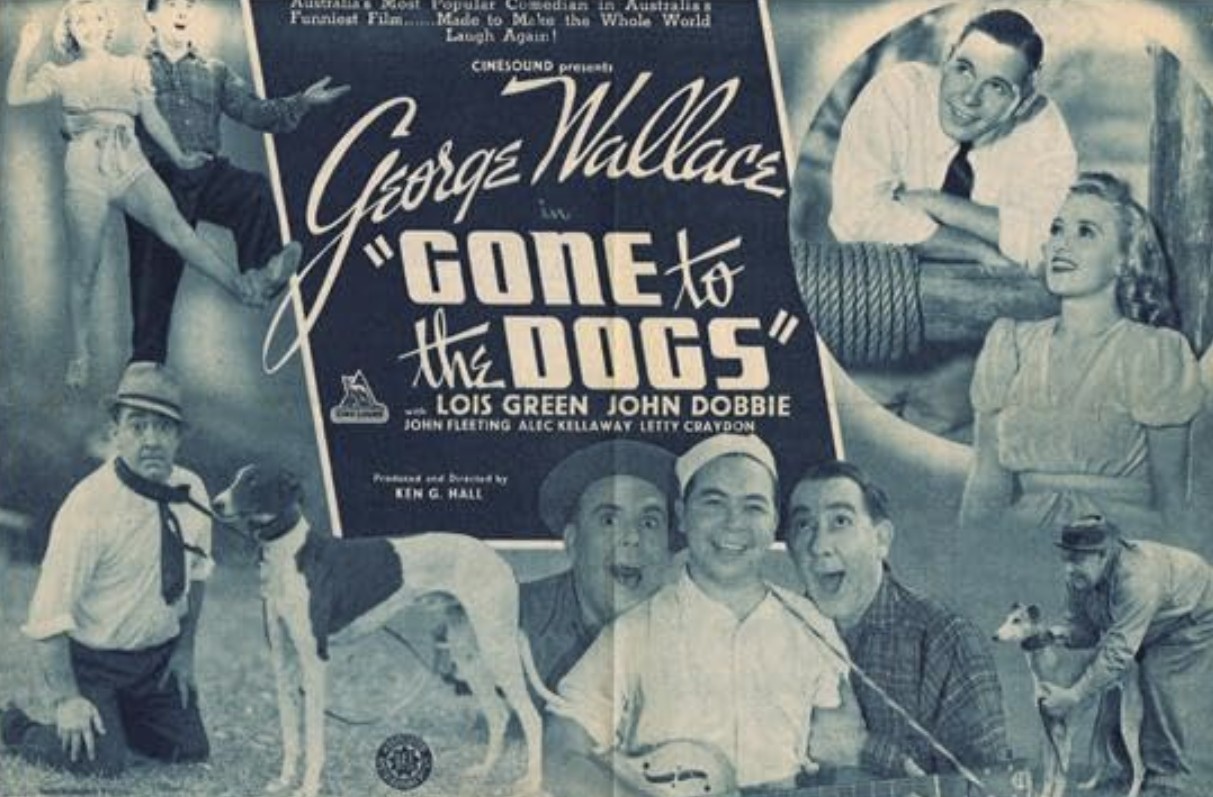
A 1939 musical comedy starring George Wallace
Historically speaking, the most consistently successful Australian films at the box office have been star vehicles for popular comedians (which is why it’s silly that we no longer make them). And in the 1930s, no comic in the country was more beloved than George Wallace, a third-generation showbiz performer who made his stage debut at aged three, worked as a busker, farmhand and cane cutter before becoming a full-time entertainer at sixteen and one of the biggest stars in vaudeville by his twenties.
Famed for his pratfalls, tap dancing, baggy trousers, checked shirt and battered hat, Wallace often wrote his own shows – typically a combination of comedy sketches and songs called “revue-sicals” – as well as appearing in pantomimes and straight musicals, and he regularly sold out venues around Australia.
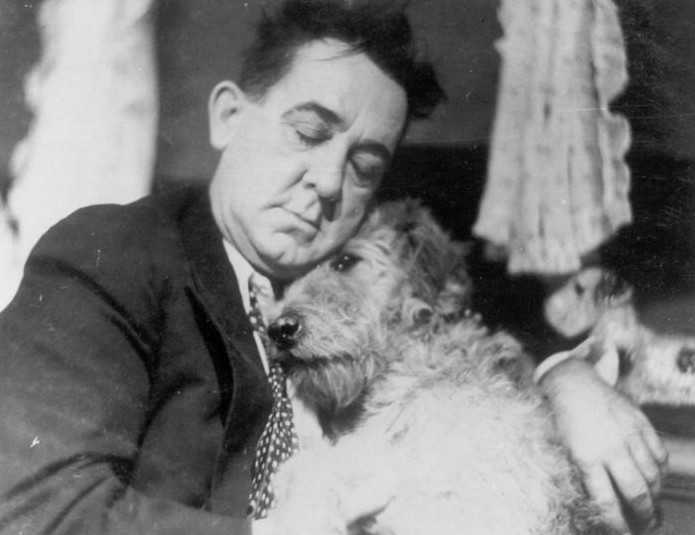 Wallace’s early films (features and shorts) were made for FW Thing, who had him under contract. When Thring died in 1936, Wallace then made two movies for Ken G Hall at Cinesound, the biggest film studio in the country. By the time Wallace joined forces with Hall, the producer-director had gone off comedy a little – he’d made so much of it over the years and was really keen to branch out into other directions, notably a long-planned version of Robbery Under Arms. But Cinesound needed hits to stay afloat, and Wallace in a comedy was a very sure bet at the box-office – indeed, both of the films that Hall made with Wallace were popular, including Gone to the Dogs, which we’re discussing today.
This was an original story for the screen, although like a lot of comedy star vehicles it was not so much a traditional screenplay as a “book” for comedy set pieces and songs (the movie is part musical). Having said that, effort had been put in to make sure the story makes sense and proceeds logically (more or less): far more so than Wallace’s movies for Thring, anyway. The script was co-written by Hall’s regular scribe, Frank Harvey, who understood structure – and there’s some epigrammatic dialogue in the non-Wallace scenes (“he gets in my hair” “well get a barber”) that feels particularly Frank Harvey-ish, though we have no proof of that.
The plot involves George working at a zoo, located next to a haunted house which is being used by some criminals as a base for their operations. George accidentally discovers a formula that makes dogs run fast and uses it in a greyhound race but the gangsters are interested too.
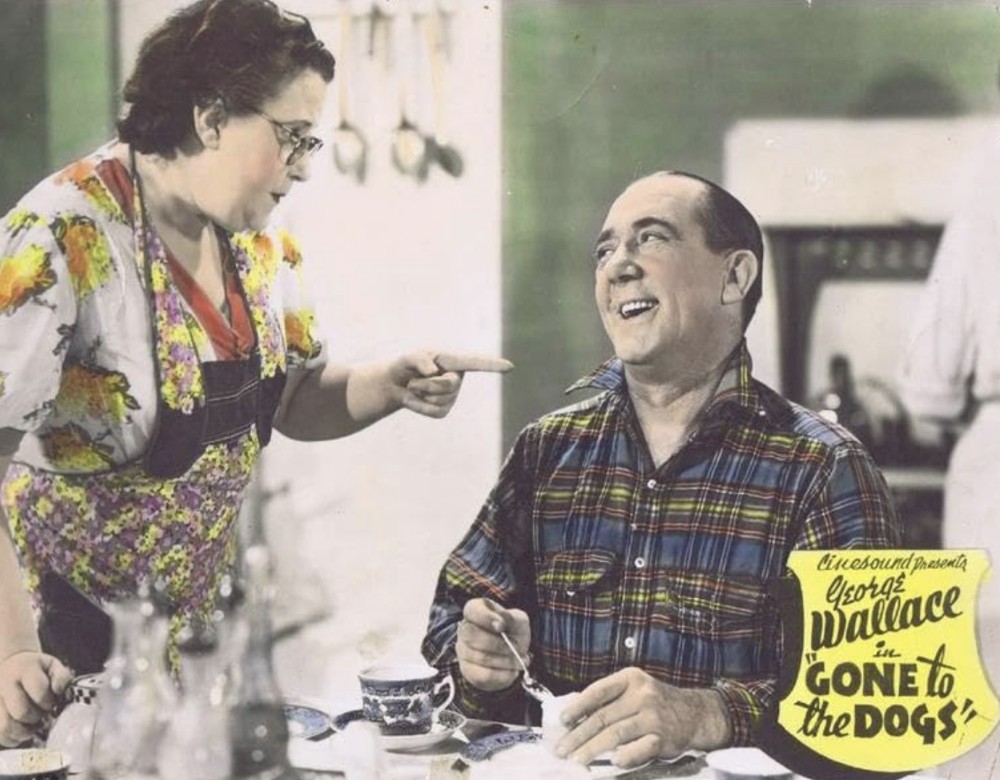
Gone to the Dogs is absolutely and endearingly shameless in its pursuit of entertaining its target audience. It’s as if Hall, frustrated at not being able to make something more serious like Robbery Under Arms (or Overland Telegraph another much-announced project) went “You want aimless crowd-pleasing fun? Well, take this! Here’s George with his stage stooge, John Dobbie! Here’s George and an elephant! Here’s George battling a man in a gorilla suit! Here’s George being yelled at by an authority figure! Another authority figure! Here’s George destroying a lab! Here’s a cute dog! Here’s endless cut-aways to the cute dog! [Seriously, that mutt gets more close ups than Sydney Pollack gave Robert Redford.] Here’s a massive musical number shoved in halfway through the running time with dancing girls and acrobats! Here’s a love story with a pretty girl! Here’s some villains with foreign accents! Here’s some comic fat people! Here’s George stumbling around a haunted house! Here’s George on a plane! Here’s a climax at the greyhounds!”
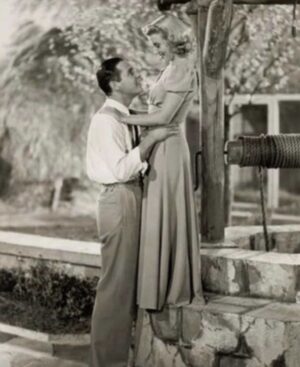 And the thing is… all of this works. Hall directs with enthusiasm and skill, and it is funny to see George Wallace fight gangsters, gorillas, scary skeletons and the laws of physics. The cast is full of pros, including seasoned stage comics like Wallace, Dobbie and Letty Craydon, as well as Cinesound regulars such as Ron Whelan (playing yet another villain), and Alec Kellaway (as a dumb villain). The male romantic lead, John Fleeting – plucked off the stages of Sydney amateur theatre – is a little on the wet side, though in his defence we’ve only seen the 60-minute version of this film – the original was apparently 75 minutes but was cut down by English distributors to run as a second feature. Without having seen the longer version it feels like Fleeting would have featured more heavily in scenes that were cut; Hall certainly thought enough of the actor to use him again in Come Up Smiling (1939) and 100,000 Cobbers (1943).
Incidentally, the real surprise packet of this film is Lois Green, who plays the female lead – she’s pretty, can act, sing and dance, and is full of charm; she’s wonderful. Maybe this was not such a surprise since Green had been performing from the age of seven and was in demand as one of JC Williamsons’ leading musical comedy stage stars. Green moved to London after making this movie and kept busy on stage but never became the movie star she should have been.
Like so many of the best Ken Hall films, Gone to the Dogs has a wonderful warm family feel – it’s very much a star vehicle for George Wallace, but he’s always being helped out by his friends along the way. The production values are first rate – the aforementioned big musical number, the sets, the stunts, the camera work. And for all the film’s use of tropes from Hollywood and musical theatre, it’s also very Australian, with its slang, intonations, greyhounds, zoos and personalities – you can possibly capture more of a country’s culture through comedy than any other genre.
By this stage, Cinesound had really cracked the code of how to consistently make successful movies. World War Two would soon wreck this momentum – it didn’t have to, but it did, and by the time of Wallace’s next film appearance, in The Rats of Tobruk (1944), he was looking very old and unfunny. Still, Gone to the Dogs is a wonderful tribute to his talent.
You can actually see the film here:
The author would like to thank Graham Shirley and the National Film and Sound Archive for their assistance with this piece. Unless otherwise specified, all opinions are the author’s.
