


by Stephen Vagg
As mentioned in our previous piece in this series, October 1959 saw the Rank Organisation’s Film and Distribution Division record a large loss for the second year in a row. Rank was having some successes, but these were outweighed by its failures (Ferry to Hong Kong, Whirlpool) and its plan to achieve global world domination via “international” adventure films was clearly not working.
Getting out of film production altogether must have been tempting, but that would be an acknowledgement of failure, especially for the owners of the biggest film studio (Pinewood) and cinema chain in Britain.
Instead, Rank pivoted by reducing risk. This meant co-productions, partial investment in (lots of) low budget films, as well as maintaining its franchises. In the year ending October 1960, Rank reported that it made only nine fully financed films (these typically, though not always, had an “executive produced by Earl St John” credit). However, the Organisation also declared that it made a profit from its film and distribution division of 275,000 pounds.
This piece will discuss Rank’s output in 1960, covering fully financed movies as well as partly financed ones. By our count, these comprised of the following:
– six comedies (Make Mine Mink, Doctor in Love, The Bulldog Breed, Your Money or Your Wife, The League of Gentlemen, The Man in the Moon),
– two melodramas (Conspiracy of Hearts, Too Young to Love),
– a children’s film (Snowball),
– an international adventure film (The Savage Innocents),
– a ballet movie (The Royal Ballet), and
– eight thrillers (Never Let Go, The Challenge, The Shakedown, Faces in the Dark, Beyond the Curtain, Piccadilly Third Stop, Witness in the Dark, And Women Shall Weep).
Let’s start off with the comedies.
Doctor in Love was the first “doctor” film to not feature Dirk Bogarde – Michael Craig stepped in to the lead role, and everyone was surprised how well it did, becoming the biggest hit of the year at the British box office, a remarkable tribute to the pulling power of the franchise. (Although, perhaps it wasn’t a total shock considering the popularity of the doctor-ish, Bogarde-less The Captain’s Paradise the previous year).
Doctor in Love vindicated Rank’s loyalty to Michael Craig over the years – the studio had given him numerous leading roles for little box office return, but still held on to him even after they jettisoned other back-up Bogardes like Patrick McGoohan and Ronald Lewis, and Craig turned down roles in films like The Gentleman and the Gypsy.
Rank also had its annual Norman Wisdom movie, The Bulldog Breed. This was ostensibly a service comedy – Norman joins the navy – although there are two extended sequences (Norman going mountaineering, Norman going into outer space) that feel as though they might have been written for other possible vehicles and shoved in here. The film is tiresome but was popular.
Wisdom was no longer under exclusive contract to Rank and made his first “outside” movie, There Was a Crooked Man, which also performed well. He would do a few non-Rank movies over the next few years, but they were never as successful as the ones he did for Rank, which is a tribute to the Organisation. If nothing else, it (or, rather, producer Hugh Stewart) could construct a solid Norman Wisdom vehicle.
While Wisdom was off at another studio, Hugh Stewart and Bob Asher (Wisdom’s regular director) turned out another comedy – Make Mine Mink, a heist caper with Terry-Thomas. This was a hit in Britain and (more surprisingly) America, where Terry-Thomas had a genuine following at the time – not huge, but he was definitely a draw. (Researching these pieces, we’ve become surprised at how popular some British stars were in America – Peter Sellers, Alec Guiness and Terry-Thomas were all solid box-office attractions… although there was not much enthusiasm for the comedies of, say, Norman Wisdom and Leslie Phillips.)
Another heist comedy made by Rank was even more popular and significant. Truth be told, it’s probably more a thriller than a comedy but we’ll include it in this section: The League of Gentlemen. This was the first movie from Allied Film Makers, a filmmaking co-op comprised of top-level talent (Basil Dearden and Michael Relph, Jack Hawkins, Bryan Forbes and Richard Attenborough, later Guy Green) which Rank agreed to part-finance, no doubt inspired by the success a similar co-op arrangement, Bryanston, was having over at British Lion.
League was a real team effort – the partners all took low fees, Dearden directed, Relph produced, Hawkins, Attenborough and Forbes starred, Forbes wrote the script. It was a big hit and is solid fun, a sort of Ealing movie with a little more cynicism and sexiness (eg Forbes’ wife, Nanette Newman, lounging in a bath), though it hadn’t entirely shed Ealing’s smugness or respect for law and order.
Allied Film Makers indicated an exciting new, more talent-friendly direction for the Rank Organisation, although its second effort was a flop. This was The Man in the Moon, which seemed to have everything going for it – a comedy directed by Dearden, produced by Relph, written by Forbes and starring Kenneth More, the biggest star in the country. We think the reason is that the film has a weak central idea – More is impervious to all illness due to his cheerful nature, so is selected to be the first man on the moon. It also suffers from a particularly smart-arse, smug script. When one wonders why Rank didn’t give more freedom to filmmakers if it resulted in The League of Gentlemen, the answer is the risk that it would be followed by The Man in the Moon (to which the answer is “such things are unavoidable and you have to risk it nonetheless, you just have to keep the budget down”).
There were some cheap comedies made by Sydney Box’s companies – Your Money or Your Wife (starring old Rank regular Donald Sinden), and Operation Cupid. No one seems to have much good to say for either.
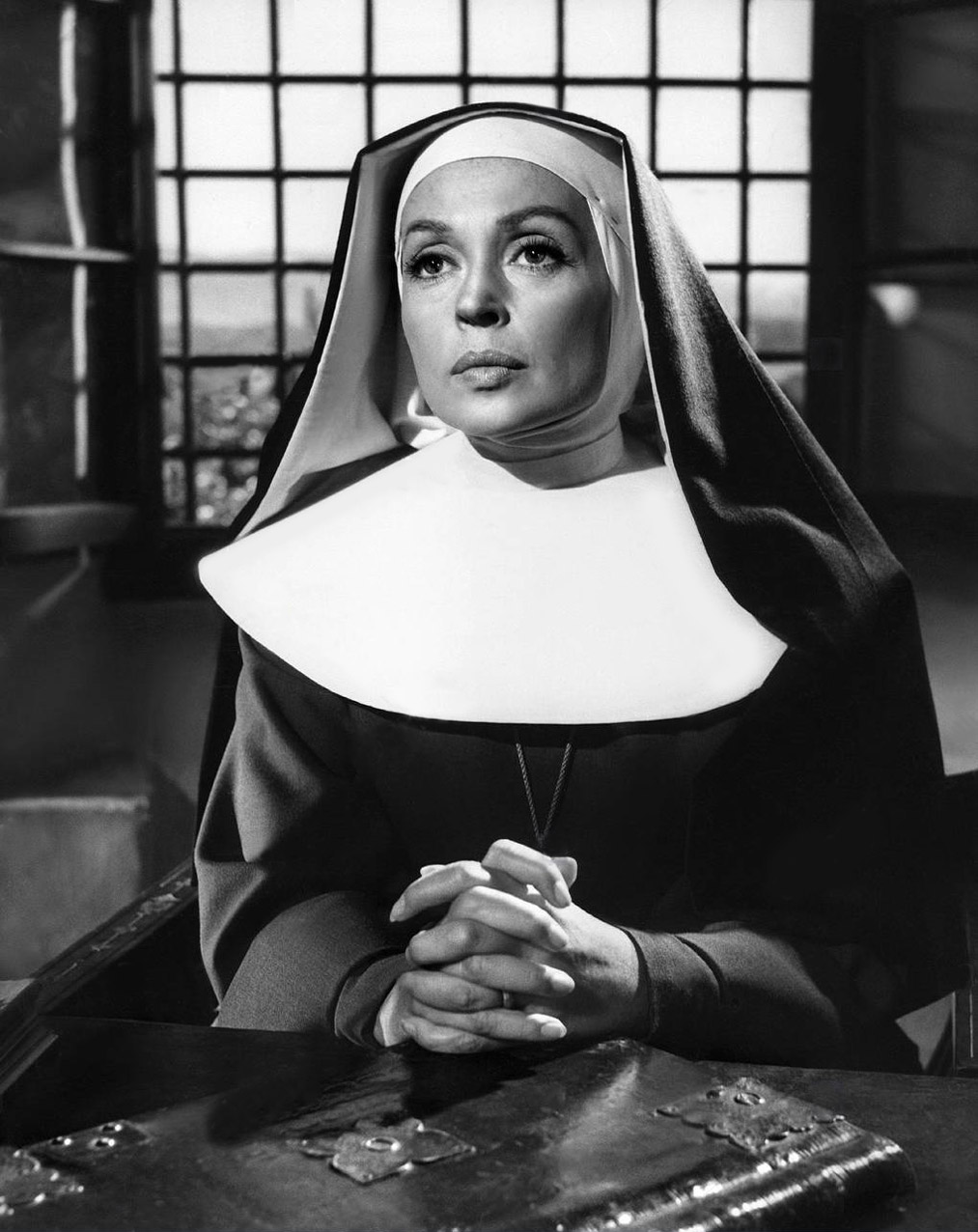
Far more successful was a female-led wartime melodrama, Conspiracy of Hearts. This was about nuns in World War Two; it came from the team of Box and Thomas, and is one of their best movies, full of superb scenes and gut-wrenching moments. It was a big hit too: Rank had a strong track record with female-led war films (Carve Her Name with Pride, Town Like Alice, The Wind Cannot Read) – they should have made more. All those female stars Rank had misused over the years (Kay Kendall, Diana Dors, Maureen Swanson, etc) must have looked on in bewilderment as Conspiracy of Hearts starred two actresses not even under contract to the studio, Sylvia Syms and Lili Palmer (both, it must be said, are excellent). It’s truly odd that Rank didn’t make a male-orientated war movie that year, as the genre was still going strong in Britain (the biggest hits of the year included Sink the Bismark, A Foxhole in Cairo and Light Up the Sky – but they were all filmed at other studios).
Among the (far too many) low-budget films made for Rank by Sydney Box that year was Too Young to Love, perhaps the Organisation’s oddest release of 1960. It’s a “tsk tsk” cautionary tale about a wayward teen based on a once-scandalous 1944 stage play (Janet Munro had appeared in a TV version); the movie was set in America, although shot entirely in London, resulting in some odd accents. Too Young to Love is interesting for its female director (Muriel Box) and hilariously over the top and patronising depiction of teenage sexuality – it’s about the seduction and disgrace of a 15-year-old girl by various predatory men – rather than actually being a good movie. Too much of it is downright campy… John Waters would enjoy the sobbing mother scenes, the girl’s whimpy violin-playing boyfriend, the mentions of “abortion” and “syphilis” and Thomas Mitchell’s know-it-all judge.
As a piece of cinema, Too Young to Love suffers in comparison with say, Hammer’s Never Take Candy from a Stranger, which came out the same month in cinemas – that shows how a cautionary tale should be done.
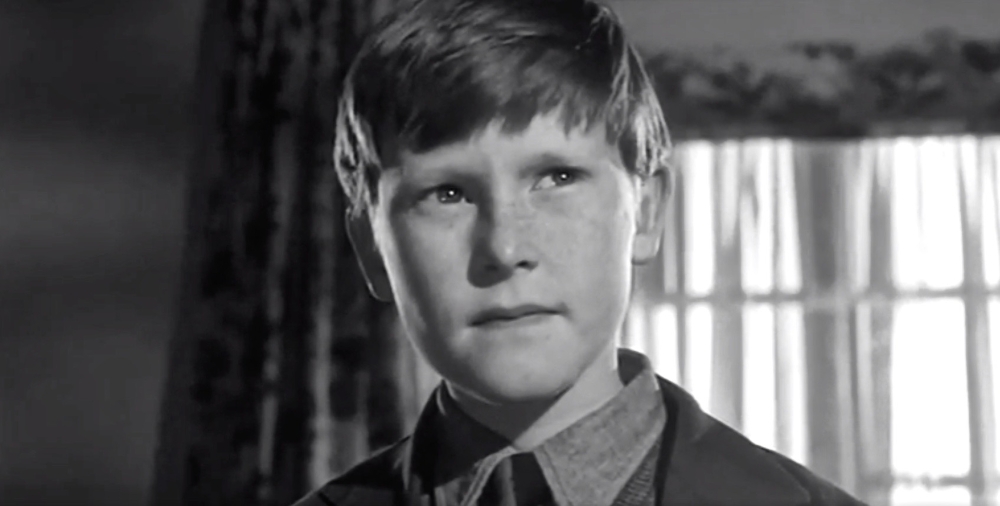
Snowball was a children-orientated drama about a lie that spirals out of control, destroying the life of a conductor. It was from Independent Artists, who’d just made another child-orientated drama Tiger Bay. Like that, this uncovered a future child star (Dennis Waterman), and it’s a decent movie which builds its tension slowly, but it didn’t meet with Tiger Bay’s success, perhaps because it lacked a juicy murder to give the story stakes from the get-go.
Rank’s big “International adventure” film for 1960 was The Savage Innocents. This was atypical in that it was a genuine co-production – the organisation only put up a third of the cost with the rest coming from Italy and the US. However, it did share many similarities with Rank adventure films from previous years – it was based on a best-selling book, had an exotic setting (northern Canada) and location filming (in Canada, although the plane carrying the footage crashed and a lot of it was lost), an international star (Anthony Quinn as an eskimo) and foreign leading lady (Yoko Tani, who was in The Wind Cannot Read and plays his wife). It’s directed by Nicholas Ray and like a lot of Ray movies is full of interesting stuff and numerous flaws, most notably a patronising view of eskimos and some atrocious dubbing of Peter O’Toole, who plays a mountie. The film actually made a bit of money, due in part, one guesses, to some sexy content – there’s a few scenes of eskimos offering people to shag their wives, which would have titillated white audiences in 1960.
The Rank thrillers for 1960 were an interesting lot, all made, we believe, by independent companies. The best was Never Let Go, from director John Guillermin, a first-rate crime drama with Richard Todd as a suburban coward and Peter Sellers as a gangster. The Challenge was a nifty kidnap tale from John Gilling with American import Jayne Mansfield as a crime boss (!) (a role probably better suited to Diana Dors) and an excellent performance from Peter Reynolds. Faces in the Dark was from the team of David Eady and Jon Penington adapted from a novel by Boileau-Narcejac, the French writers whose works were the basis of Vertigo and Les Dialobolique; it’s a creepy, quite atmospheric movie about a blind man (a miscast John Gregson) gaslit by his wife (Mai Zetterling) and business partner (Michael Denison); old Rank favourite Tony Wright pops up in the support cast.
Faces is not a bad little movie, although again suffers in comparison with the similar works at Hammer like Taste of Fear, a project which originated with Sydney Box for Rank, but which went to Hammer Films after Box’s heart attack – and Hammer turned it into a bigger hit than any of the Rank thrillers. Studios like Hammer (and Anglo-Amalgamated) simply made better movies more consistently than the Rank Organisation.
Some Sydney Box projects remained at Rank: Beyond the Curtain, Witness in the Dark, And Women Shall Weep, The Shakedown, and Piccadilly Third Stop. The last four of these were all written by Leigh Vance and produced by Norman Williams. The most interesting is Piccadilly Third Stop, a not-bad heist tale with a strong cast including Terence Morgan, Yoko Tani (whose presence gives the movie novelty), Mai Zetterling and Dennis Price.
Independent Artists produced the thrillers October Moth and Devil’s Bait; October Moth is a stylishly shot noir-ish melodrama clocking in at 52 minutes and is worth a look.
Still, British cinema probably made too many crime films around this time. Were they that popular? Wouldn’t these B producers have been better off making cheap war movies, sexy dramas, or adaptations of public domain novels and plays?
Rank’s final notable movie for 1960 was The Royal Ballet, a record of several dance performances starring Margaret Fonteyn, directed by Paul Czinner. Rank had enjoyed a hit in 1956 with the similar The Bolshoi Ballet, although this does not seem to have been as popular.
The year of 1960 was a mixed bag for Rank. The Organisation’s film division was restored to financial health by a series of hits: Doctor in Love, Conspiracy of Hearts, The Bulldog Breed, Make Mine Mink, The League of Gentlemen. These were in genres that were traditionally strong for the studio – to wit, comedies (especially Doctor/Wisdom) and female-led war melodramas. It’s really surprising that there was no male-dominated war movie. There were some interesting thrillers. International co-productions like The Savage Innocents marked an exciting new direction (one Rank probably should have done from the beginning with its adventure stories) as did the formation of Allied Film Makers. There were a lot of cheap movies from Independent Artists and especially Sydney Box – that dude was allowed to make far too many films. Still, if Rank had given up on its desire to take over the movie making world, at least it was still in there swinging.
