


By Gill Pringle
Can you give us a little bit of biography for when you first signed up?
“We negotiated the deal to get the rights and the negotiation took two years, because it was owned a little bit by a lot of different companies. And I think we finally acquired them in maybe the year 2000? But it’s been going on for a long time. I feel like I’ve grown up very old with Peter Parker.”
Did you make a conscientious decision when you took over as producer to outreach to Marvel?
“Here’s the thing. We had made five Spider-Man movies [at Sony]. And we had told the story of Peter Parker being unpopular in school, wishing he could be popular, and realising that you can’t let anybody know who you are if you’re Spider-Man. And we’ve told that story five times. And very well, I think. But it was really time to tell a different story, and with what we had, that was the story that we were telling, and we tried to do every variation on that theme we could, and then, in the end, it really felt like putting him in the Marvel Universe, and having him exist in a world where there were other superheroes, it just brought out so many more stories for us to tell with Spidey. Because he lives in a world with Tony Stark, and Ant-Man, and Black Widow, and that brings out a whole lot of other stuff for him, and a whole lot of other problems for him, because he’s got to deal with the conflict. And so it felt like the right thing to do. Also, Kevin [Feige, pictured far right, top pic] and I had been working on Spider-Man movies from the beginning because, don’t forget, Kevin was like fetching coffee for Avi [Arad] on the first movie. I think he’s done well.
“I think it’s really important for everyone to understand, this movie is being made by Sony, and Marvel, and obviously Disney owns Marvel so let’s say it’s three studios. I don’t think that there’s ever been a time in the movie business, where three studios have come together to make a movie because they want it to be right. Because everybody would have made a Spider-Man movie on their own, but they all recognise that the way to make the best Spider-Man movie was for everybody to do it together. And that kind of cooperation between any three companies, but particularly, let’s say, these three companies, is pretty extraordinary. And the fact that you have three studios rooting for you, and just wanting the character to be great, I think that’s really something.”
The fact that there were many big hats, because we’re talking about three big studios, was it ever a problem?
“Here was the solution to any problem: we wanted to make the best Spider-Man movie, and everybody had their eye on that prize, and everybody knew that the more authentic and real, and awesome that movie was, the better it was for everybody.”
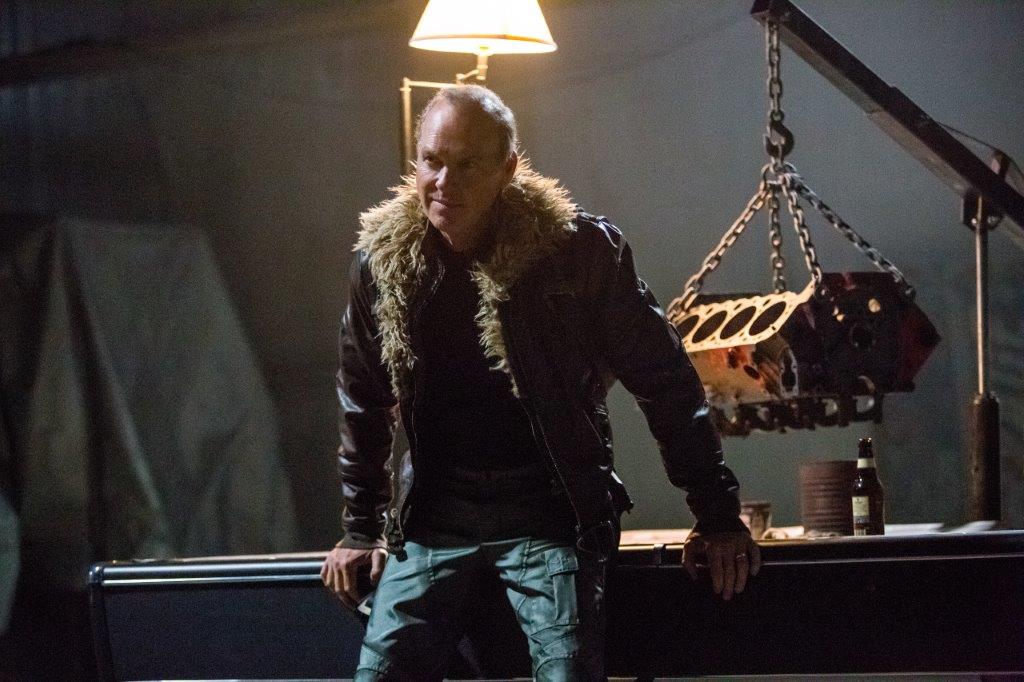
Why was Michael Keaton the perfect villain for this one?
“Because it’s so important that these movies feel emotionally grounded. I think that what we’re trying to do is make an intimate movie on a gigantic scale, and if you don’t have great actors, it doesn’t work, because what’s great about the villains in Spidey movies is that they’re very complicated too, and they are real people, and Michael, from the moment we decided to do the Vulture, both Kevin and myself saw him as the Vulture. And so we stalked him, even like, at his house, because Kevin lives two blocks from him, so I’m not kidding, we stalked him. He just seemed like the perfect person because he is terrifying, and vulnerable, and doing some of the best work of his career.”
Once you had that synergy with Marvel, was there a story that just naturally, organically came out of it?
“Marvel is really interesting because they’re very smart in how they do development. They do these gigantically long documents of all the dos and don’ts, which was actually really helpful. And this was new for me – because they’re a company that focuses on one kind of movie – they are really experts in that – in a way that you can’t possibly be unless you’re doing that 24 hours a day. And so we would have long, long meetings talking about what the story was that we wanted to tell. And yes, of course there were incarnations, but it was always going to be a movie about Peter in high school, and it was always going to be the Vulture, and it was always going to be about the fact that he’d been recruited to fight with the Avengers in Civil War. Those were the three things that we always knew.”
When you did all the other Spider-Man movies, you were the studio executive, so how is it now to be on set every day as a producer, being part of that creative team?
“When you’re the studio, and you think something is bad, you can just yell at everybody [laughs]. You can just go, ‘you guys are doing a terrible job, this is awful!’ Now, it’s your fault, so you have to yell at yourself, much harder.”
Somebody yells at you?
“Only me. I mean, working in collaboration with these guys, I’d say, has been truly one of the highlights of my career, because it is such a loving, generous, creative environment and family, that Kevin and Lou [Louis D’Esposito] have created for everyone else, and it’s the most interesting thing. Here’s what a meeting is like. You say, ‘well this seems pretty good’, and then someone doesn’t say, ‘how can we cut it?’, or ‘how can we make it cheaper?’ What they say is, ‘how can we make it better? How can we beat ourselves? What are we trying to say, and how can we have more fun, and how can the audience have more fun, and how can we make it truer?’ And that’s a great company because that brings out the best in everybody, it brings out the best in the directors they work with, and it brings out the best in the other people we collaborate with. It’s a really stunning and sadly unusual, way to work.”
Why do you think Marvel is so much more beloved than DC? Why does it work so much better?
“Because of the… I can’t say that! I’m never – I don’t know the DC world as much as I know the Marvel world. I think it goes back to what the comics are. I think it goes back to Stan Lee’s heart, I think it goes back to the fact that these are human beings with human problems, and the characters that they play are metaphors for things that we all go through. They just feel super recognisable. To all of us, and I think, sometimes they feel less godly.”
Tell us about Tom Holland?
“Well, let’s be honest, he’s a magnificent actor. And he can do anything. And, because he was Billy Elliot, he also moves pretty good, and he does a lot of his own stunts. I mean, for real, more than is comfortable sometimes. But the thing is he moves in a way that a person moves, so what he brings to the table when you’re watching Spider-Man, you are not just watching a CG character all the time. Because something happens when you’re watching a CG character, your mind clicks, and even though you’re loving it, as good as CG is, and it’s great, it just doesn’t – it’s not a human being. And human beings, they land differently, they turn their head differently, just ever so imperceptibly, but you know it, it’s a cognitive thing when you’re watching it. And the fact that he does so much of it, you’ll see, it’s really, it’s really something.”
Can you describe your first meeting with Tom [Holland]?
“The first time I met him, he was a nervous nelly, because we were testing all of these kids, which we actually tested them two or three times. And I think he’d been in a movie where he’s playing a monk [Pilgrimage], so he had a super weird haircut. But when we saw his screen test, everybody was all over our monitor, and he was testing with Robert [Downey Jr.], now it’s really hard to take the screen from Robert. It’s almost impossible, we’ve all seen actors try and do it. You were watching Tom. And they were in the frame together, and you were watching Tom. And Robert walked out, and he goes, ‘that’s the one.’ It was pretty easy.”
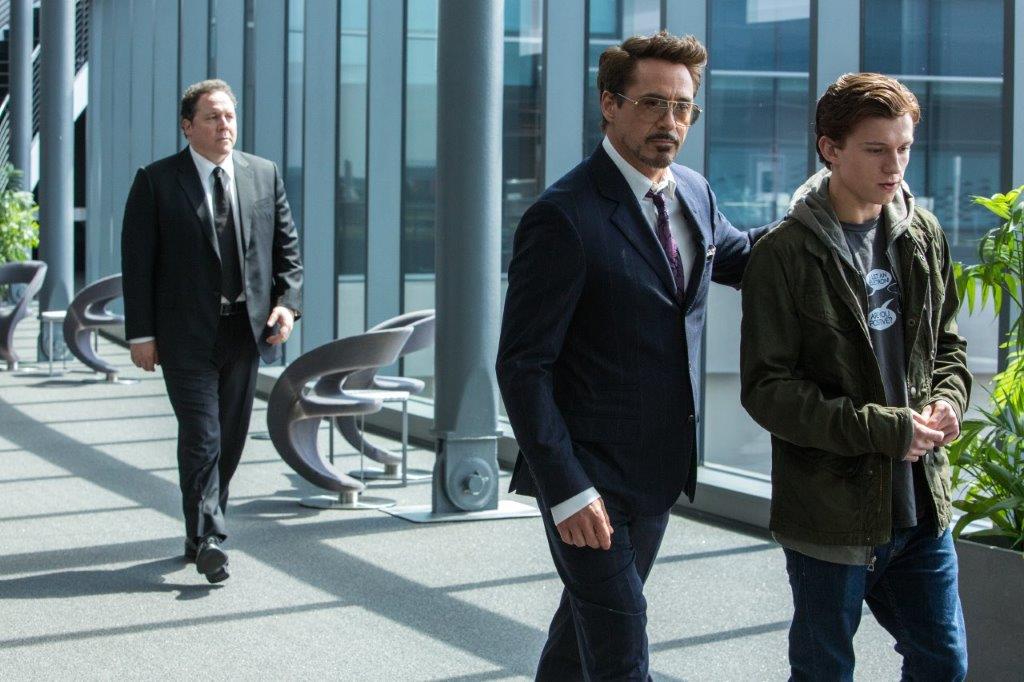
What about director Jon Watts [pictured far left, top pic]?
“I loved Cop Car [his debut feature] and Kevin and all the guys at Marvel loved Cop Car. And the reason that we all loved it is that nothing happens in that movie, literally nothing happens in it. Two little boys find a car, they drive it, and they take it back. That’s the plot. And you are on the edge of your seat, you’re so nervous, you are so scared, that they’re going to shoot someone, or someone’s going to shoot them, or they’re going to shoot each other – and nothing happens. And he was able to make you feel as though an entire story had taken place that never took place. And what I thought was great about that was when you have about three cents that he made that movie for, and actors who had never acted before, because they were just children, and you can make someone feel that way – that’s pretty good. So I figured, if we can give him as much as we have given him, he’d do a good job. And the other thing is, he knows how to tell a good story through action; that you have to have a beginning, a middle and an end to an action sequence, otherwise they can be super boring. And he knew how to make a story continue, it didn’t feel like you were stopping for a bunch of punching, and I feel like we were trying to capture that too.”
What did you learn about making a Spider-Man movie that maybe you didn’t get the other times?
“How hard it is. Oh my God, it’s so hard. God is in the details. I guess I sort of knew that, but I didn’t know it in the way that I know it now. That every tiny little choice that gets made becomes part of the movie, so you better pay attention.”
Spider-Man: Homecoming is in cinemas July 6, 2017.
Read our interview with Tom Holland.
