



by Alireza Hatamvand
Worth: $14.00
FilmInk rates movies out of $20 — the score indicates the amount we believe a ticket to the movie to be worth
Cast:
Kate Wilson, Andy Golledge, Ontréi, Saxon Cook, Charlotte Chimes, Paul Hughes
Intro:
A bold endeavour, the film’s use of Australia’s natural landscapes is extremely effective in creating a post-apocalyptic atmosphere …
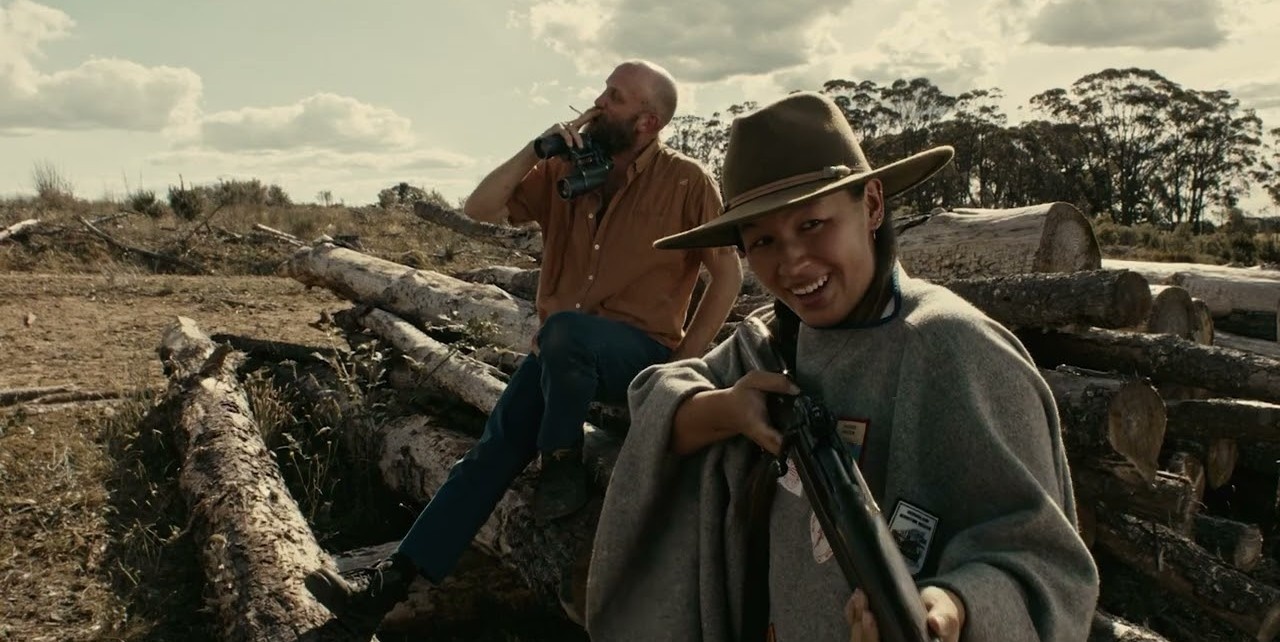
The post-apocalyptic indie Bunny is set in Australia — or rather, in a world after a massive wildfire has wiped out civilization — where human beings struggle to survive in their own way. We follow a young woman (Kate Wilson) who must adapt to this new world in order to stay alive.
The film’s opening narration functions as a kind of statement for the work, containing the spirit of its theme, which is, in fact, a single word: ‘terroir’ [‘earth’ or ‘land’ in French]– everything that gives a wine its flavour, not limited to grapes alone, but also geography, the land, and even the microscopic organisms on the plant itself.
Although the film is restrained, and somewhat ambiguous in the way that it delivers information, it is ultimately a tragedy that portrays terroir not in relation to grapes and wine, but to human beings. What pushes this young woman toward a level of cruelty that, for instance, her father never even came close to, is made up of experiences that her father never had.
The screenplay takes its time to develop and deepen the characters, preferring this approach to the genre’s usual rapid succession of events. An effort is made to add a degree of complexity by manipulating the timeline — something that feels more like a decorative flourish than a true narrative necessity.
Bunny deliberately avoids the tense, fast-paced, and highly charged approach common to many post-apocalyptic scenarios. Alas, the screenplay struggles to fully engage on an emotional level. An element that elevates the film is the solid and believable performances, especially the outstanding Kate Wilson. In a central role that the camera not only refuses to leave but places in a wide range of situations — from flirting with a boy her own age to dealing with a cannibal.
All this being said, Bunny’s greatest achievement lies simply in the fact that it was made at all. A bold endeavour, the film’s use of Australia’s natural landscapes is extremely effective in creating a post-apocalyptic atmosphere, as does the archival footage used to depict the devastating wildfire which kicks off the story. These elements, alongside the film’s striking cinematography, immerse the viewer completely in a dark and ruthless world, to the point that the usual limitations of low-budget filmmaking are hardly felt.
