



by Stephen Vagg
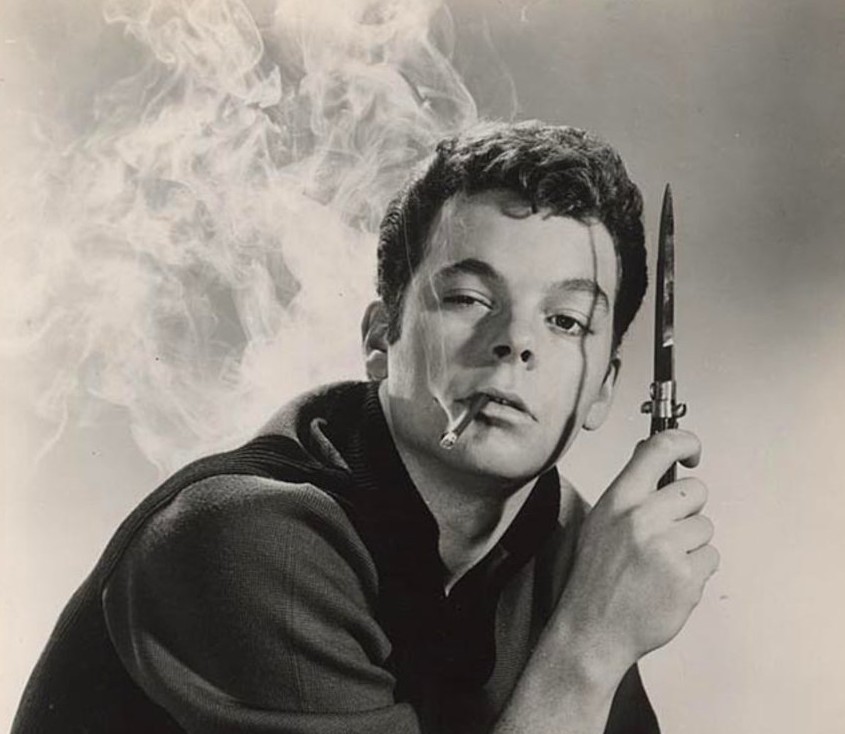
Our recent piece on George Chakiris got us thinking about another not-quite-movie-star from the 1961 film of West Side Story – Russ Tamblyn, who played the role that Chakiris did on the London stage: Riff, the alpha head of the Jets, a.k.a. the second male lead. The film was a career highlight for Tamblyn, but didn’t dominate his CV the way that it did for Chakiris; Tamblyn’s career was far longer, more varied and successful. Though he never became a star, he had a fascinating career.
Tamblyn was born in 1934 in Los Angeles. His parents were, at one stage, actors and dancers, so it isn’t surprising that Tamblyn started performing as a child, doing impromptu performances at the local movie theatre, and attending tap dancing and drama lessons. He was cast by Lloyd Bridges in a play, The Stone Jungle, where Tamblyn was spotted by talent scouts; this led to his casting in a movie, The Boy with Green Hair (1948), starring Dean Stockwell, who later became a close friend. Then Tamblyn was picked by Cecil B de Mille to play young Saul in Samson and Delilah (1949), which saw him in steady demand as a child star, often billed as “Rusty Tamblyn”.
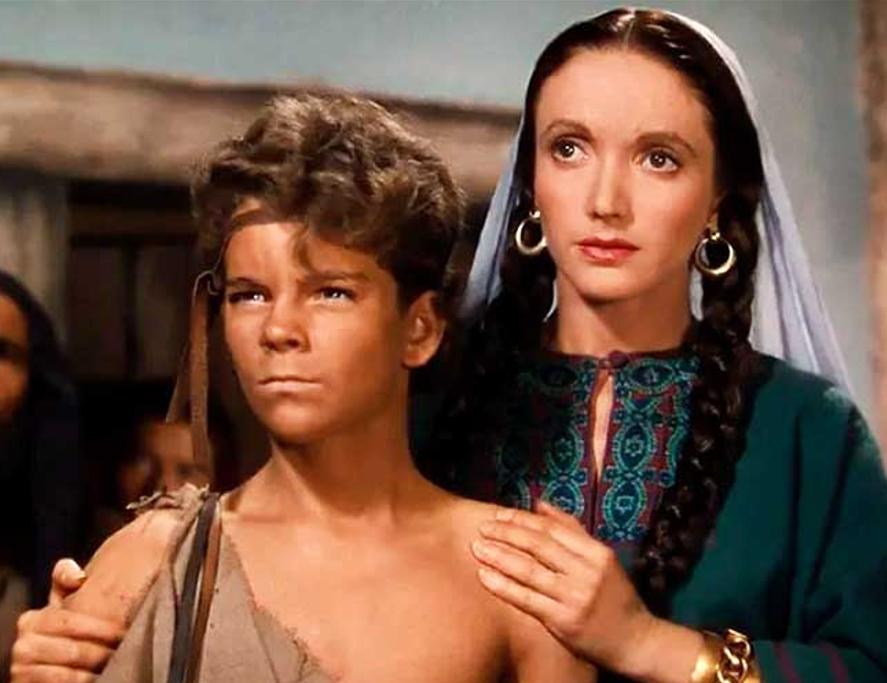
His early credits were impressive. They included the French Revolution noir Reign of Terror (1949), the baseball movie The Kid from Cleveland (1950) (billed third), playing the young John Dall in the classic Gun Crazy (1950), being Elizabeth Taylor’s younger brother in Father of the Bride (1950) and its sequel, as an Italian in Captain Carey USA (1951), being a young MacDonald Carey in Cave of Outlaws (1951) and as a soldier in Retreat Hell (1952).
MGM, impressed by Retreat Hell, signed the actor to a long-term contract. Louis B Mayer had just left the studio in a huff, and his successor Dore Schary was keen to make his own stamp in the star building field. It didn’t work out that well – Schary didn’t have Mayer’s gift for identifying and/or nurturing talent – but Tamblyn would be one of the executive’s more successful projects, as he was useful for playing young soldiers/cowboys/brothers, a la Mickey Rooney a decade earlier.
(To give you some idea of where Tamblyn stood in early 1950s MGM star building, Dore Schary also tried to launch Richard Anderson, Don Burnett, Vic Damone, Nancy Davis, Robert Dix, Jim Drury, Tania Elg, Ronald Green, Dolores Grey, Dean Jones, John Kerr, Luana Lee, Jarma Lewis, Roger Moore, Leslie Nielsen, Edmund Purdom, Jeff Richards, Elaine Stewart, Rod Taylor, and Ralph Vitti. Some good names in there, but it’s not a super impressive record. Rod Taylor and Tamblyn shared a house at Malibu for a bit, incidentally.)
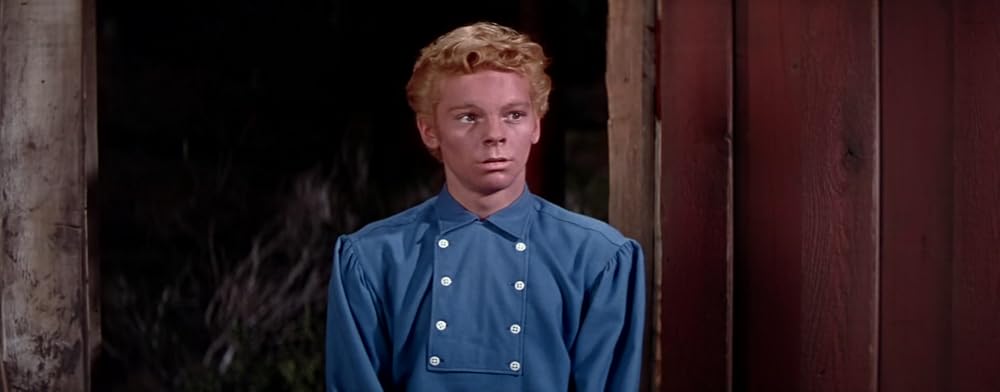
Tamblyn started off his MGM contract playing a young soldier in Take the High Ground (1953), a classy war picture. He followed it as an athletic brother in the rapey musical Seven Brides for Seven Brothers (1954) [above]. That was Tamblyn’s first dancing part – the studio insisted that choreographer Michael Kidd use some contract talent for the dancing seven brothers (in addition to star Howard Keel) resulting in the casting of former baseball player/future violent alcoholic Jeff Richards alongside Tamblyn.
Tamblyn wasn’t a trained dancer, but he had a long history as a gymnast – he competed in gymnastics at high school – and Kidd employed this to spectacular effect with some amazing acrobatic dance sequences. Tamblyn’s dances were a high point in a successful movie, and the actor now had another string to his bow.
MGM used Tamblyn very well in the 1950s, giving him support parts in Many Rivers to Cross (1955) (as a younger brother of Eleanor Parker in a colonial Western), Hit the Deck (1955) (a musical sailor in this weak rip off of On the Town), The Last Hunt (1956) (as a part-Indian in one of those supposedly liberal ‘50s Westerns that are actually really racist), The Fastest Gun Alive (1956) (cowboy in a Glenn Ford Western), Don’t Go Near the Water (1957) (comic sailor in a Glenn Ford service comedy). These were support parts – his first lead was a cheap Western at Allied, The Young Guns (1957). MGM insisted putting a dance number in The Fastest Gun Alive just to showcase Tamblyn; star Glenn Ford, one of the biggest divas of the 1950s, tried to get the number removed, unsuccessfully. Some of these movies were very popular. He also helped Elvis with his dancing on Jailhouse Rock (1957). We wonder if MGM ever considered rebooting the Andy Hardy series with Tamblyn – he would’ve been ideal.
20th Century Fox borrowed Tamblyn to play a “young soldier” part in its glossy melodrama Peyton Place (1957); he did very well, the best performance in the movie in fact, giving off this sort of twisted, sick vibe, full of tormented pain and suffering – you know that character has been through a lot, even if he is considerably less messed up in the film than the book. Tamblyn earned an Oscar nomination, and the movie was a huge hit
Impressed, MGM started casting him in leads, and both were successful: Tom Thumb (1958), a charming fantasy from George Pal, and High School Confidential (1958), a hugely fun crime drama with Tamblyn going undercover at high school 21 Jump Street style to bust a marijuana ring. The latter was produced by Albert Zugmsith, whose subsequent MGM films all lost money – maybe they wouldn’t have if they’d starred Tamblyn, who knows.
One of the reasons that they didn’t star Tamblyn was that shortly after finishing High School Confidential, he had to go into the army, Elvis Presley-style, though he was let out to play a support part in Cimarron (1960), an expensive epic Glenn Ford Western that flopped, due in part to the fact that the material is overly geared towards Ford’s character rather than Maria Schell’s; Tamblyn was quite good as an outlaw. Then he auditioned for the part of Tony in West Side Story and lost it to Richard Beymer – but was given the role of Riff instead. The movie was a huge hit, Tamblyn’s dancing was amazing, and if his acting wasn’t up to Natalie Wood, George Chakiris or Rita Moreno, he was better than Beymer.
In a different time, MGM might have cashed in on this success by putting Tamblyn in one of their musicals, but the studio was going through an uncertain phase, sinking the bulk of its funds into epic remakes like Mutiny on the Bounty (1962). Light comedy parts that might have suited Tamblyn wound up going to Jim Hutton – incidentally, MGM had wanted Tamblyn to be in Where the Boys Are, which made Hutton a star, but he went off to West Side instead.
The studio did give Tamblyn juicy guest roles in two blockbusters, The Wonderful World of Brothers Grimm (1962) and How the West Was Won (1962). MGM then put him in two ensemble pieces: The Haunting (1963) and Follow the Boys (1963) (playing a love interest to Paula Prentiss in the latter). The studio had to force him to be in The Haunting – and when you consider that earlier on, it had to force him to be in High School Confidential, it’s probably fair to say that Tamblyn wasn’t the best chooser of material. This was something that was to become very apparent after his MGM contract came to an end.
By 1963, Tamblyn was very well established as an ingenue, someone with a baby face, ideal for playing younger than his years. He could do comedy, drama and musicals. He wasn’t a top star and didn’t have typical leading man looks, but he could carry a movie and was especially comfortable in ensembles and/or supporting a bigger male star. He had untapped potential playing tormented young men, as demonstrated by Peyton Place. There was no reason to think that this wouldn’t continue for a while.
Then Russ Tamblyn… walked away from it all.
Kind of.
He had been working since he was a child and wanted a break, which is understandable. Tamblyn also had a bohemian spirit and wanted to focus on his art, which became his passion more than acting ever was. He wrote poetry, grew his hair, hung out with Henry Miller, smoked dope, practised free love, moved to Topenga Canyon and hung out with Dennis Hopper, Dean Stockwell and co.
He also started being picky about his roles and developing a reputation for flakiness. He took easy money guest starring on television rather than seeking out decent film parts. After a stint in the Viking epic The Long Ships (1965) (playing the brother of Richard Widmark), he turned down the lead in Gilligan’s Island and his own sitcom, instead playing the lead in low budget Western Son of a Gunfighter (1965) and then going to Japan for War of the Gargantua (1966). The latter is a hugely fun kaiju, though Tamblyn was a handful during filming, improvising his dialogue, clashing with Ishiro Honda and looking stoned a lot of the time.
The tide went out very quickly – if Tamblyn was ahead of the curve during the sixties in terms of his private life, with all that art and free love, he didn’t have that same luck finding parts in the new Hollywood. This was in contrast to contemporaries such as Peter Fonda, and Dennis Hopper, who also came from the old studio system, embraced alternative lifestyles, and found a way to dovetail that into new developments in cinema. Instead of finding his Easy Rider, Tamblyn wound up in Al Adam’s Satan’s Sadists (1969) – in which he was actually brilliant, incidentally, unsettling and creepy. The film was a big hit and Tamblyn later worked for Adamson on The Female Bunch (1969), Dracula versus Frankenstein (1971), and Black Heart (1976). He popped up in Hopper’s The Last Movie (1971), but jobs became harder to come by.
Tamblyn did all sorts of things to pay the rent including stints in theatre and odd jobs. Old friends helped out – he worked with Niel Young on Human Highway (1982), did an episode of Quantum Leap with Dean Stockwell, and appeared in some Fred Olen Ray films, notably Wizards of the Demon Sword (1991). In 1990, it seemed that Tamblyn might make a comeback after being cast as Dr Jacoby in Twin Peaks. His eccentricity added much to the charm of the series, but it actually wasn’t that big a part and it didn’t really kickstart better offers (in contract to Dean Stockwell who enjoyed a fabulous “third act” from the mid-‘80s until undone by alcoholism). Maybe his stoner energy hurt him. Tamblyn wrote in his memoirs that he stopped chasing parts after a bad and unsuccessful audition for Reservoir Dogs. He became better known as father of his daughter Amber, who had a lot of success around this time. As of writing, Russ Tamblyn is 91 years old and is still kicking on. His memoir, Dancing on the Edge, is entertaining.
What to make of Tamblyn’s film career? Looking back, it’s actually terrifically impressive, at least up until the 1960s. He pops up in all sorts of genre classics: musicals (West Side Story, Seven Brides for Seven Brothers), noirs (Gun Crazy), Biblical epics (Samson and Deliah), kaiju (War of the Gargantuas), sleazy biker flicks (Satan’s Sadists), horror (The Haunting), New Hollywood ego trips (The Last Movie), TV shows (Twin Peaks), ‘50s melodrama (Peyton Place), teen exploitation (High School Confidential), fantasy (Tom Thumb), Western epics (How the West Was Won). He also enlivened many above average Westerns, war films and comedies. He could be miscast, like all actors. He had a tremendous energy – and also at times, an unsettling presence that really could have been utilised by top level directors.
Russ Tamblyn is an actor who had a great career that could have been an astonishing one – if he’d had the passion for it. But his heart was with something else. Nothing wrong with that. But revisit his filmography. It’s worth it.
