



By Will Paine
When it comes to her iconic subject on My Name Is Gulpilil, Australian director Molly Reynolds has been close to the source for many, many years. Her longtime partner is pioneering film director Rolf De Heer, who has directed David Gulpilil (the star of seminal Australian films like Walkabout, The Last Wave, Storm Boy, Mad Dog Morgan, Crocodile Dundee, Rabbit-Proof Fence and Australia) to extraordinary performances in films like The Tracker and Charlie’s Country, as well as collaborating with the actor on Ten Canoes. Reynolds has been there every step of the way, capturing the making of those films in her own documentaries, the companion pieces Twelve Canoes and Another Country. Reynolds has been close to David Gulpilil both personally and professionally, and this connection makes My Name Is Gulpilil truly sing.
Let’s start from the beginning. Tell us how the project came about…
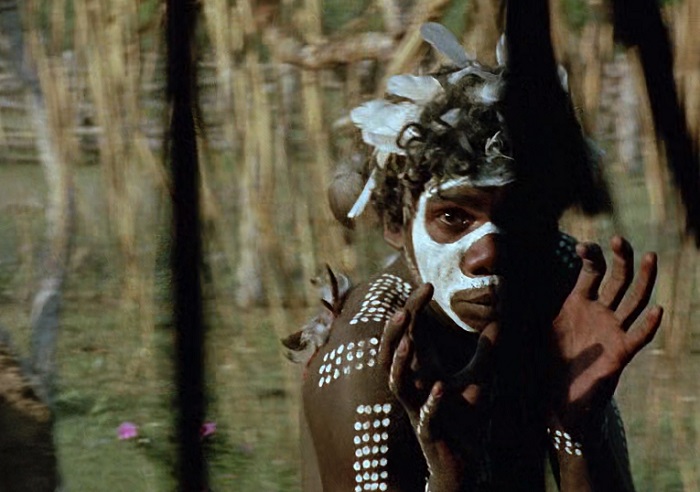
“It came about because David was diagnosed with a seemingly fatal disease that was going to see his demise in about six months’ time; it was widespread stage four lung cancer, with emphysema, just to tip it over. But yes, he defied the odds and was still with us four years later. And at the time, David just wanted to keep working, and this was the best project that could get him the most work — to kinda be, you know, the final story in his life story.”
And you told it beautifully. Obviously, you’d worked together before, but did he approach you and say ‘Hey, I want to work, and I’d like to do a doco about my life’…
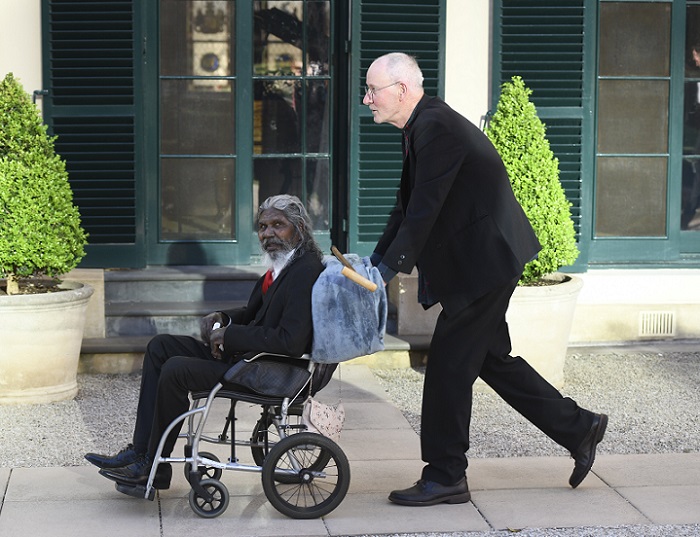
“It was more organic. When Rolf [De Heer, her partner and producer] and I heard about David’s prognosis, we hightailed it over to Murray Bridge in SA just to see how he was doing. And he said, ‘Brother, Sister, I want to work!’ I joke about it, but in a serious way, that only Rolf would be audacious enough to cast David – a dying man – in a film of his. But I didn’t think the investors would go on that journey with him. And so, David and I had collaborated on Another Country (2015), and wondered, what happens when we do the final story? And David had this great vision of the doco going straight through to his death ceremony, and him returning to country, and everything else like that. And when David was seemingly immortal, we said, ‘David, how about we regroup here, and you take the stage, and finish it sooner rather than later?’”
Wow. A natural performer, wanting to do it right to the end…
“Yep. Documentaries tend to form in their own way, but you can always step in the ring with some criteria. Here, one of them was that David was staring down the lens of the camera. And as the director, I knew that I could be really bold in that opening gambit, because David is such a consummate performer. His primary relationship is with the camera.”
The film is so well structured…how in-depth was your planning for the structure?
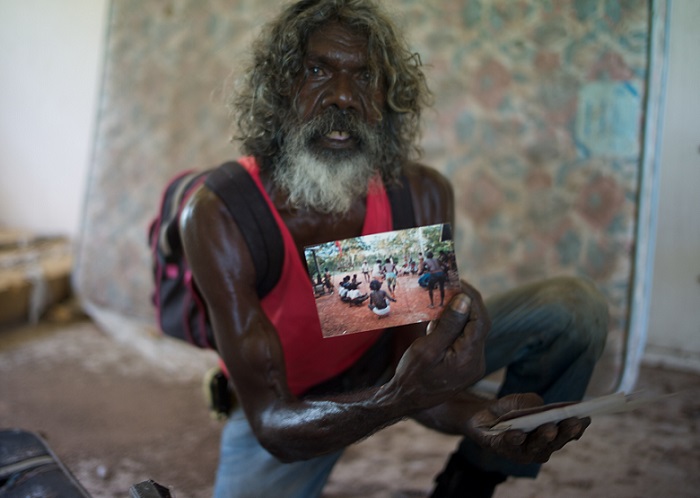
“I knew that David was going to hold the entire space. Also, when threatened with one’s mortality, you snatch back at life. Memories come to the fore, and there are seemingly random, but ultimately interconnected, thoughts that come with that. I was very keen on that idea of reflecting back on one’s life, but for one’s self. The other thing was that David has had an incredibly surreal life: the highs, the lows, the people he’s met, the things he’s done…I was jelly-bean keen to take that approach. And boy, we were lucky with a lot of the footage! If you spend time in David’s company, you know that he’s quite the storyteller, but one needs the patience…he’ll take a long time. We had 67 shoot days, and most days we did an interview that lasted an hour plus. I learnt to just wait, knowing that David would eventually deliver the goal. I crafted it in the way in which David tells stories, which is sort of, you’re in one place, and then before you know it, you’re in another, and yet, before the story ends, it all makes sense.”
You shot this all in 2017?
“Yes, because we thought he was going, going, gone. And we had allocated 30 shooting days with David, and then an extra week for his death ceremonies, and all that came with that. And so, we raced through it, and David is calling saying, ‘Molly! Molly! When are we working?!’ And this is his documentary, it is his gift to the rest of the world. And so, we just kept shooting which, from my perspective, allowed for such a luxury. With doco, you’re always capturing what’s necessary for what you need for the doco to make sense. And so, we were able to get more and more fantastical with the passing of time. And when we did the interviews, I’d work with [cinematographers] Maxx Corkindale or Miles Rowland, and they’d get ready outside while I went in with David and discussed what I needed to cover and then he would decide which of that he’d run with and how he’d handle it. And then we would get to work.”
David is credited as a producer on the film. What were those conversations like about the darker elements of his life? How much did he embrace going into that?
“David was a producer so that he could ensure that his legacy was as he would like it. And he was very much engaged in all processes. On some of the tough stuff, when he speaks about being a drug addict and alcoholic, I really had to draw him in on that, and explain to him that for the doco to have authenticity, for it to have gravitas, that we had to cover it all. From his cultural perspective, you just don’t talk about the stupid things that you do. But in our world, we do, as it makes us feel much better. And so, once I explained the context of it all, he understood and spoke to it really beautifully, quite poetically even.”
As a director, and communicating with David, were there chasms between you and him culturally?
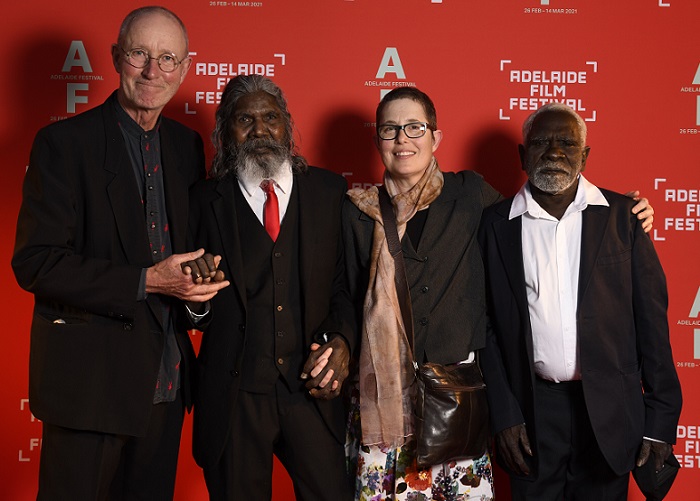
“That’s a really interesting question. David really belongs to no culture anymore, because he has been away from his own culture for so long, and the dominant white-fella culture hasn’t entirely embraced him, as it isn’t evolved enough just yet. But working with David, I never felt that. As when we worked together, he respected me as the director, and he would work hard and professionally. Outside the context of work, I am a female, and I take a different sort of hierarchy; I do admire David in that he transcends that with work.”
You clearly have a passion and keen interest in the Indigenous Australian experience; could you talk a bit about where that came from?
“Well, in many ways, it was a happy accident. It started when Rolf embarked on Ten Canoes (2006), in about 2004. It was a time when multi-platform was very much in vogue – the whole notion of having a feature film, a doco, a website, and how they can be independently connected. And so it began with Twelve Canoes (2009), and those circumstances continued along that line, as when Rolf and David partnered for Charlie’s Country (2013), I thought, ‘Right, there’s so much more that I can do there.’ Out of that came a documentary called Another Country. And so, it grows from there, and it’s almost like it’s a calling.”

You’ve touched on how you saw this split between David’s two worlds. How do you think that division between those two realms affected him?
“It came at a great cost. In many ways, it sent him adrift, and he seriously sought solace and ganja, as he calls marijuana. It came at high cost. And now, here he is with a white-fella’s disease, and in order to survive it, he needs white-fella medicine. That’s just not possible if he was to go back to country. And that’s a damning choice to have to make. In fact, it’s not even really a choice. So, yeah, it’s come at great cost.”
My Name is Gulpilil is released in cinemas on May 27. Click here for our review.

My wife and I recently watched your beautifully directed insight into David Gulpilil’s life.
It inspired this.
David G
You were
Then you were ‘found’
You were you, always
Then you became
Something else?
No, you were always you
You entered another world
The ‘other’ wished to co-opt
Make you something
You were not
The push, the pull
Strength from within
Called you as ever
Home, to the land
Kissing the earth
Soul, spirit revelling
Knowing deeply sensing
There is no other way
Gulpilil, called David
Belongs to the land
There he will reside into eternity
With the deepest of respect.