



by James Mottram
Emmanuel Courcol is feeling vexed. The French writer-director has spent years working on My Brother’s Band, his new film set in the world of conducting. “Now there are so many films about conductors,” he sighs, alluding to Bradley Cooper’s Maestro, the Cate Blanchett-starring TÁR, and even Anne Fontaine’s Ravel biopic Boléro. “My idea dates to many years ago, because I always wanted to shed light onto a conductor. I wish I didn’t belong to a fashion. I don’t want to be part of a trend.”
Courcol’s charming film tells the story of Thibaut (Benjamin Lavernhe), an acclaimed conductor who has leukemia and needs a bone marrow transplant. It’s a life-or-death journey that leads him to discover not only that he was adopted, but that he has a long-lost brother, Jimmy (Pierre Lottin), a trombone player and factory worker. While the siblings become acquainted after Jimmy becomes his donor, it’s clear that life has dealt them very different hands.
Courcol wanted to explore “the injustice of destiny,” as he puts it. “Sometimes, the family or the social class you’re born in makes your fate, so that’s the injustice of it. If you’re not born in a favourable condition, it’s very hard to catch up what you’ve been missing. It’s still possible, but it’s much harder for someone coming from a difficult, unfavourable environment to have access to higher ambitions. It’s more difficult if you are born in that unfavourable situation. I mean, this film is no fairy tale.”
The director isn’t musical per se. “I don’t play any instrument,” he reveals. “I love opera and I’ve been listening to classical music since I was a kid. My brother plays a trumpet, but I’ve never played any instrument.” And those that can play? “I envy them, most of all.” But it was his “love or taste or passion for music” that first inspired him to write the script, along with the fact that a dozen years ago, he was called to consult on a script about majorettes. “This made me think about the possibility of bringing together high level music and low level music.”
Despite not wanting to be caught up in a trend, his research included watching TÁR, which made him realise just how much he’d need from his actor. Benjamin Lavernhe went into training, working with real-life conductor Antoine Dutaillis to perfect his baton-pointing skills. “I wanted him to play… to conduct in such a way that would be really credible, not only for the public, but also for real conductors. So he was coached. But it took him weeks to reach that level, because I wanted him to be there.”
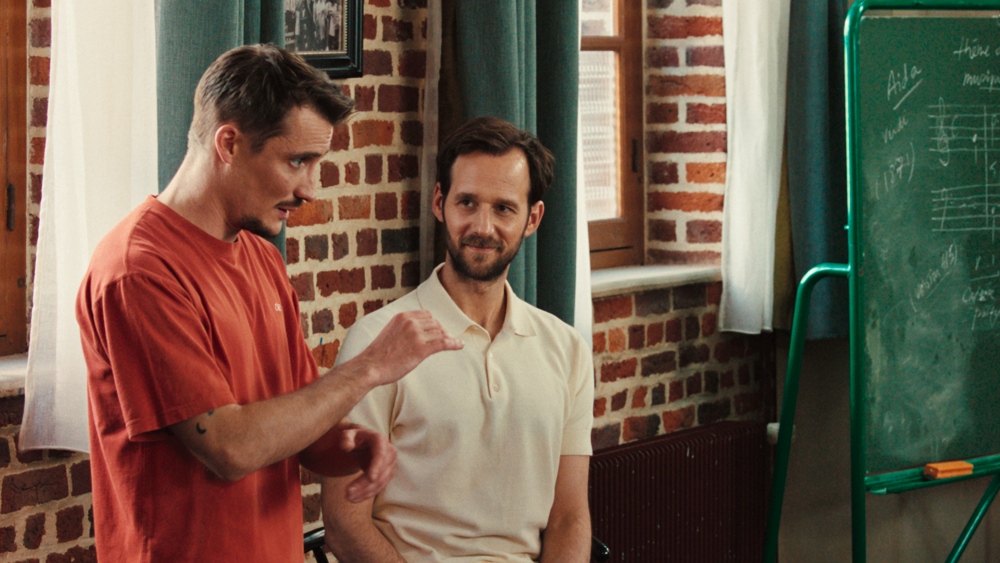
His star was more than up to the challenge. “Benjamin… he said that he wanted to be at least as good as Cate Blanchett. So, when they met in Cannes [where the film premiered in 2024], he told her. He was quite happy with the results.”
Lavernhe was a first-time collaborator for Courcol had previously worked with Lavernhe’s co-star Pierre Lottin on his 2020 film The Big Hit, another performance-based story, as a group of prison inmates take on a theatre production.
“I really liked Pierre as an actor, and he inspired me also in the writing, because, in a way, he had something of the character I called him to play. And as to Benjamin, he belongs to a completely different school, a completely different acting style, more classic if you want. So, it really fitted with the character I wanted him to play. And so, there was this kind of parallel between the two actors and also between the two characters, because the two actors belong to different acting styles and worlds.”
Despite the antagonism that sometimes flares in the film between the two siblings, the two actors were at ease in each other’s company. “When they met, they developed a pleasure and a joy to work together. There is a scene in the film where they both play piano, which really shows this parallel that I wanted to attain.”
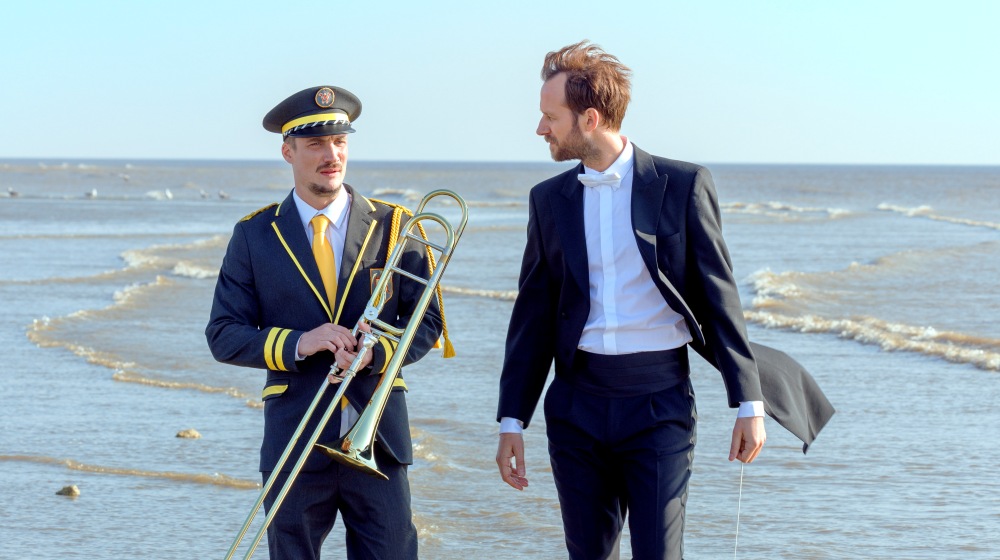
While My Brother’s Band has a feel-good edge, it’s also steeped in social realism, making it the French equivalent of the 1996 British movie Brassed Off, which starred Ewan McGregor in a tale of a brass band in a struggling mining community in the north of England. “I watched that movie when it was released, and I quite liked it, and then I saw it again before starting the writing of this one. I thought it was a bit dated, actually, but it’s still a reference.” At any rate, “I tried not to be too similar to that.”
Nevertheless, Courcol was on a mission when it came to representing the “economically deprived” region of northern France where the film is set. “It’s been suffering economically, very much, and at the same time, it’s been very much laughed at and teased by other regions. But in this case, the people from the north are very grateful to this film, because in the film there is no disdain. The film doesn’t look down the people from the north, and there is no patronising attitude to them. No teasing.”
While that may account for why the film has already performed well at the French box office, for the director, it was a vital part of the story, to show how far apart these two siblings were in experience. “It’s the life of one of the two brothers and the other brother, who lives in another planet… he comes to discover the reality of his brother’s life, and of that part of the country which he seems to ignore, or not to know about.”
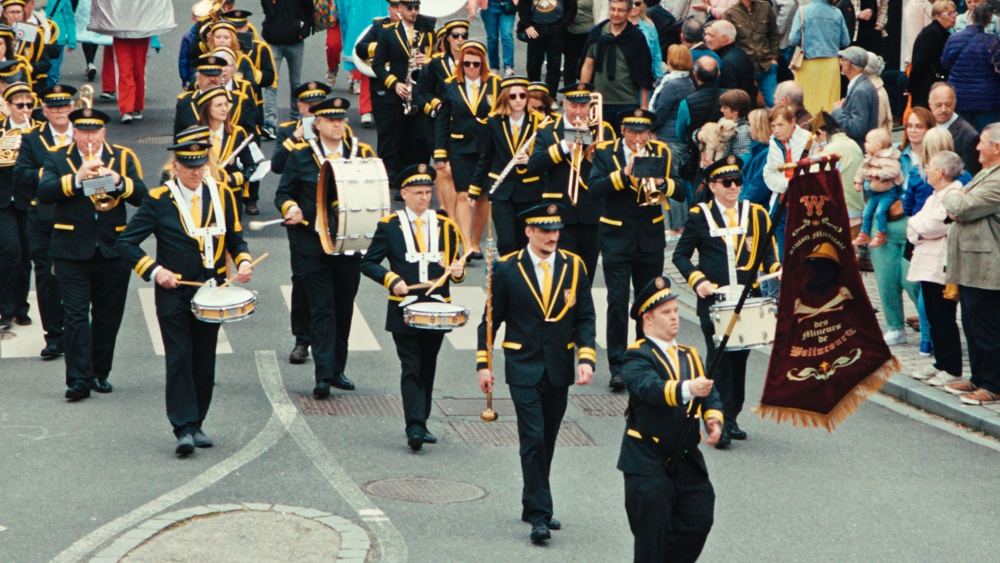
For Courcol, who used real musicians from the area for the marching band, it’s been one of the most gratifying aspects of the film. Connecting with the locals where he filmed, in the town of Lallaing, close to Lille where the film is set, was a joy. “It’s really out of being sensitive to those people that I decided to treat those aspects because I do see a lot of warmth, a lot of hospitality and solidarity in the people living in that part of France.” It’s a warmth that’s more than reflected back in his film.
My Brother’s Band is in cinemas on 26 December 2025
