


By Matthew Pejkovic
Sometimes, movies based on true stories aren’t exactly cut and dried. From films that don’t outwardly admit to their real world inspiration to movies that seem too strange to be rooted in fact, here are a handful of Hollywood’s most unusual dalliances with the truth.
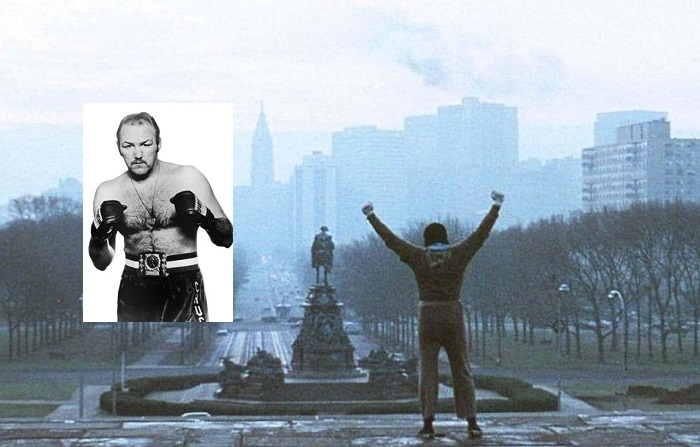
ROCKY: A FIGHTER CALLED CHUCK WEPNER
The story of how Sylvester Stallone wrote the script for Rocky is now movie legend. Down and out in his tiny apartment, Stallone put pencil to paper over three days, and came out with a script that would win him a Best Picture Oscar and launch his career. What many didn’t know is that Stallone took inspiration from a real life boxer named Chuck Wepner, a slugger from New Jersey whose claim to fame was knocking down Muhammad Ali in the ninth round of a vicious fight. “What I saw was pretty extraordinary,” said Stallone. “I saw a man they call The Bayonne Bleeder who didn’t have a chance at all against the greatest fighting machine supposedly that ever lived.” While Wepner reveled in the attention that his fight with Ali – and his on screen alter ego (chants of “Rocky! Rocky!” were common at his local bar) – gave him, it was Stallone who became the ultimate victor, creating a lengthy and lucrative franchise on the back of the Rocky character. Wepner’s next claim to fame was being a part of a $100 million fake autograph scam, where he and business partner, John Olson, sold fraudulent boxing merchandise. The ESPN movie series, 30 For 30, gave Wepner his turn to shine with the documentary, The Real Rocky. “In my opinion, Sylvester Stallone hijacked Chuck Wepner’s soul,” said director Jeff Feuerzeig. “This film is my attempt to help Chuck get his soul back.” In the end, Wepner wanted more than his soul. He was after some of that Rocky money that Stallone made on his accomplishment, which was projected to be in the billions. Wepner took Stallone to court, where the two settled for an undisclosed amount. “I just wanted him to admit that I was the real Rocky,” Wepner said, “and we proved it in court.” Chuck Wepner finally got his true cinematic due in 2016 when Liev Schreiber played him in the excellent biopic, Chuck.
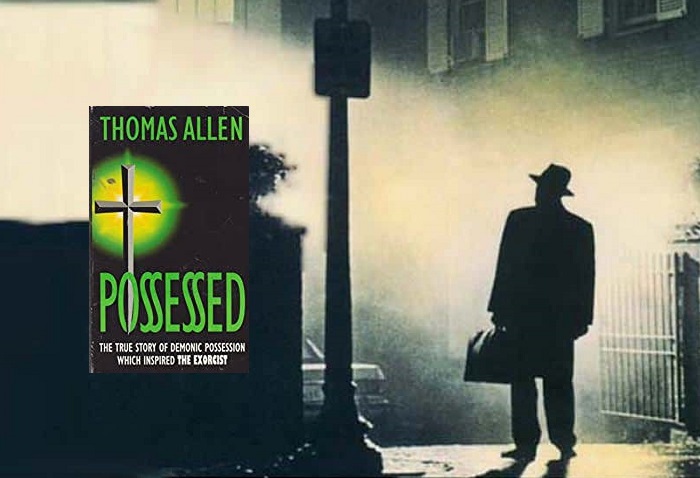
THE EXORCIST: DEMONIC POSSESSION IN THE BURBS
These days, horror films about demonic possession are nothing new, but in 1973, the concept was alien to most moviegoers…until The Exorcist. Increasing the terrifying film’s notoriety was its insistence that it was based on true events, a claim that also propelled William Peter Blatty’s original source book to the top of bestseller lists. “Like many Catholics, I’ve had so many little battles of wavering faith, and I was going through one at that time,” said Blatty. “When I heard about this case and read the details, it was just so compelling. I thought, ‘My God, if someone were to investigate this and authenticate it, what a tremendous boost to faith it would be.’ I thought, ‘You know, I would like to do it.’” It all harkens back to an intriguing event in 1949, where a young boy known only as “Roland Doe” was given an exorcism by Jesuit priest, Father William Bowden. The details of the bizarre case were kept in a diary by attending priest, Father Raymond Bishop. Years later, another priest who witnessed the exorcism, Reverend Walter Halloran, gave more details to author Thomas Allen, who penned the book, Possessed, which detailed the exorcism from its initial stages right through to its eventual climax. As the story goes, young Roland began witnessing paranormal activity after the death of his Ouija Board-loving aunt. Roland’s behaviour became more volatile, and the supernatural reared its ugly head, leading Roland’s parents to seek the assistance of the Catholic Jesuits. After Roland was found to be the real deal, a mammoth exorcism cleansed the boy of the possessing spirit. He has since gone on to live a normal life, away from the glaring media spotlight, though William Friedkin’s 1973 film partly based on his case remains one of the most haunting and horrifying in cinema history. Thomas Allen’s Possessed was officially adapted for the screen in 2000, with Timothy Dalton starring as Father William Bowden.
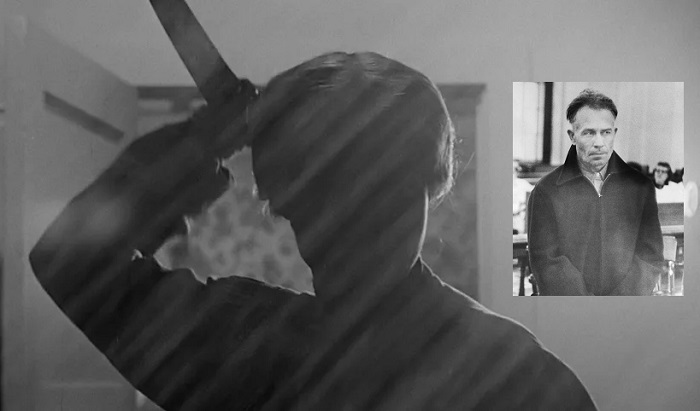
PSYCHO: MEET ED GEIN, THE PLAINFIELD GHOUL
Psycho. The Texas Chainsaw Massacre. The Silence Of The Lambs. What all of these horror classics have in common is that they are influenced by the grotesque actions of one man: fifties-era serial killer, Ed Gein. Known as “The Plainfield Ghoul”, Gein’s actions – which included but is not limited to body snatching, cannibalism and murder – gave America a new bogey man. It also provided a rash of influential creativity in the horror/thriller genres, with the book, Psycho, the first to tap into Gein’s twisted psychosis, and the crimes that sprung from it. “By the mid-forties, I had mined the vein of ordinary supernatural themes until it had become varicose,” said Psycho author, Robert Bloch. “I realised, as a result of what went on during WW2, and of reading the more widely disseminated work in psychology, that the real horror is not in the shadows, but in that twisted little world inside our own skulls.” Norman Bates was not the only iconic horror character moulded on Gein’s behaviour. Soon, an even more frightening creation would arrive in the horrific form of Leatherface, the arch antagonist from The Texas Chainsaw Massacre, who wore the dead skin of his victims while chasing down others with his chainsaw. “My relatives that lived in a town close to Ed Gein told me these terrible stories of human skin lampshades and furniture,” said director Tope Hooper. “It was like a horror story that you tell around a campfire. I didn’t even know about Ed Gein. I just knew about something horrendous, and the image really stuck.” The image also stuck with The Silence Of The Lambs author, Thomas Harris, who based the cannibalistic murderer, Hannibal Lector (played famously in the film by Anthony Hopkins), and the skin-suit obsession of serial killer, Jame Gumb (Ted Levine), on Gein’s exploits.
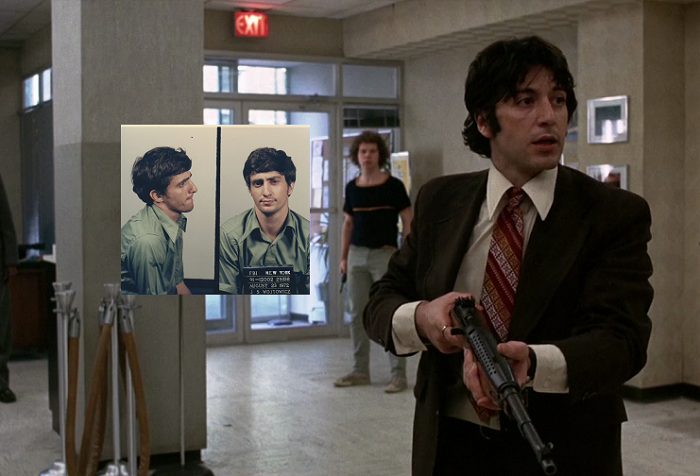
DOG DAY AFTERNOON: JOHN WOJTOWICZ’ BOTCHED BANK JOB
The term “so strange it must be true” wholly applies to Dog Day Afternoon, the seminal bank robbery flick that starred Al Pacino and was directed by Sidney Lumet. The film was in fact inspired by a real life event, where in the summer of 1972, John Wojtowicz and Salvatore Naturile walked into Chase Manhattan bank in Brooklyn with the intention of robbing the place, only to wind up in a faceoff with the NYPD as the media and thousands of people looked on. And boy, did they get a twist in the proceedings, as the information got out that Wojtowicz was robbing the bank to fund his gay lover’s sex change operation. After a fourteen-hour standoff, Wojtowicz was in custody, and Naturile was shot dead by the FBI. The two had also become media celebrities, inspiring writer P.F. Kluge to pen the article, “The Boys In The Bank”, in which he described Wojtowicz as a “dark, thin fellow with the broken-face good looks of an Al Pacino or Dustin Hoffman.” As fate would have it, Pacino would go on to play Wojtowicz (renamed Sonny Wortzick), and win universal praise for his bravura performance (Ironically, Wojtowicz and Naturile watched The Godfather for inspiration before the robbery). One person who wasn’t happy with Dog Day Afternoon was Wojtowicz himself, who from his prison cell wrote an unpublished letter to The New York Times, which read: “Dog Day Afternoon contains everything from laughter, tears, love, hate, devotion, religion, to hope, drama, and thrills. The reason I call it a ‘?’ is because it leaves so much out and so many unanswered questions.” Wojtowicz would go on to be the subject of two documentaries, The Third Memory and Based On A True Story. He spent his last years living on welfare in Brooklyn, where he died of cancer in 2006.
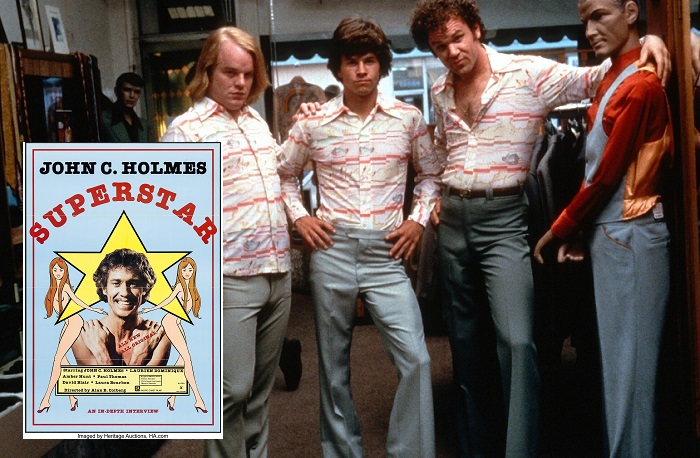
BOOGIE NIGHTS: THE MEASURE OF JOHN HOLMES
Paul Thomas Anderson’s groundbreaking 1997 drama, Boogie Nights, was an insightful and entertaining look inside The Golden Age of porn, and worked in many autobiographical elements from real life porn stars of the seventies. Chief among them was John Holmes, star of the “Johnny Wadd” series of porn films, whose rather large appendage made him a star, and influenced the creation of chief Boogie Nights character, Dirk Diggler (Mark Wahlberg). Even more evident was Anderson’s sourcing of the infamous Wonderland murders, where in a downward spiral, Diggler inadvertently takes part in a robbery of drug dealer, Rahad Jackson (Alfred Molina), as the Rick Springfield classic, “Jessie’s Girl”, plays in the background. Jackson was in fact based on the infamous Eddie Nash, a nightclub owner and gangster who was the alleged mastermind of the Wonderland murders. The story has it that after Holmes visited Nash’s home, he unlocked a backdoor so the Wonderland gang – to which Holmes owed $100,000 in drug money – could enter and rob Nash of his stash. A fuming Nash tracked Holmes down and beat a confession out of him. The next day, the majority of the Wonderland gang were found bludgeoned to death with a steel pipe. While the police suspected that Nash and Holmes were involved, both evaded charges. Holmes would die of AIDS in 1988, and Nash would eventually be charged for conspiring to carry out the Wonderland murders. “With the eighties and the drugs, everything had taken a toll on him,” says Anderson. “We did the same thing with Dirk, and in the movie, I blame the drugs and ego-building. Not to mention that there’s a whole slew of mother issues there, which is a whole other novel.” The Wonderland murders were also the basis of the less celebrated 2003 film, Wonderland, in which Val Kilmer played John Holmes.
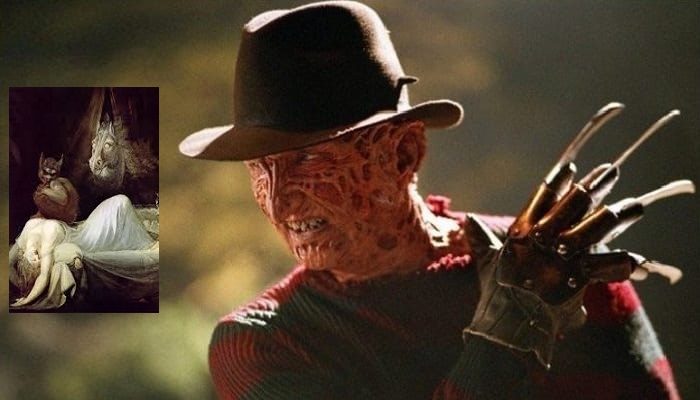
A NIGHTMARE ON ELM STREET: DYING TO WAKE UP
You think that healthy people can’t die in their sleep, like in the 1983 horror classic, A Nightmare On Elm Street? Well, it isn’t a scarred bogey man with knives for fingers who is responsible, but rather a condition known as Sudden Unexpected Nocturnal Death Syndrome. The condition was first noted in 1977 among Hmong refugees who fled to the US to escape genocide in Cambodia. Among those who first became curious about these events was A Nightmare On Elm Street director, Wes Craven. “There were articles in The LA Times about these men from South East Asia who had died in the middle of nightmares. The third one was the son of a physician. He was given sleeping pills, but he stayed up. Finally, he was watching television with his family, and he fell asleep on the couch. Everybody said, ‘Thank God.’ In the middle of the night, they heard screams and crashing. They ran into the room, and by the time that they got to him, he was dead.” SUNDS is also found in Singapore and in the Philippines, where it has chiefly affected males between the ages of 19-57, with 43 of 100,000 Filipinos affected every year. Only recently have scientists begun to understand SUNDS, pointing out that while the victims were not found to have any heart diseases or problems, cardiac activity during sleep indicated irregular heart activity. For some among the Hmong and Filipino communities, science can only explain so much, with supernatural forces often blamed. The Hmong people point to a jealous spirit known as “dab tsuam” for the deaths, while Philippines mythology references a creature called “bati bat”, who sits on a victim’s face or chest to suffocate them. It provided enough of an angle for Craven to create his own monster with the iconic dream killer, Freddy Krueger.
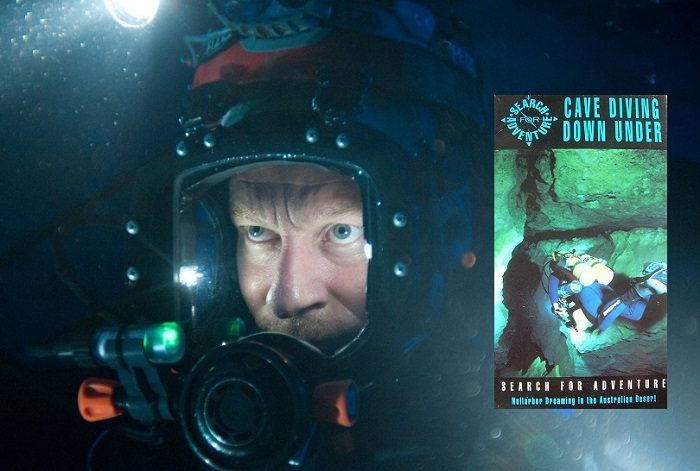
SANCTUM: CAVE DIVING GONE WRONG
In 2012, Andrew Wight, Australian cave diving legend and producer of the James Cameron blockbusters, Titanic and Avatar, died in a helicopter accident while scouting locations for a film. Perhaps his most memorable and personal filmmaking achievement was co-writing and producing the claustrophobic 2011 thriller, Sanctum. The film was based on Wight’s near death experience during a cave diving expedition into The Pannikin Plain Cave found under The Nullarbor Plain in Western Australia. “I was leading an expedition, and we were exploring an underwater cave system similar to what we’ve got in Sanctum,” said Wight. “On the last day of the expedition, we were hauling all of our equipment out. Most of the people in the cave were engaged in that activity, and I was on a small ledge, pulling tanks up. A freak storm hit the area, and what started as a trickle of water into the cave turned into a torrent, which then started to collapse the entrance of the cave. It initially trapped fifteen of us below ground. I managed to escape through the torrent, after about five hours of just waiting through a near-death experience.” It took another two days to extract the crew by exploring a new way out of the cave. Although the experience was captured in the award winning documentary, Nullarbor Dreaming, the idea of “what could have been” prompted Wight to channel his darkest thoughts into Sanctum. “During that day in the Nullarbor when the cave collapsed – and my surviving it and my brush with death – it was amazing how it all played out in terms of who turned out to be heroes, and who flunked into the background and became meek and accepted whatever their fate was,” said Wight. “That’s great material for a film.”
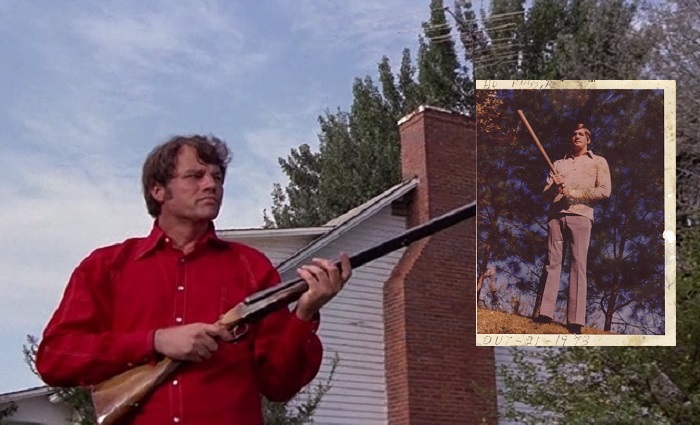
WALKING TALL: THE LAW IN THESE HERE PARTS
For those who wish to seek out a real life action hero, look no further than American badass, Buford Hayse Pusser, the notorious sheriff of McNairy County, Tennessee, who embarked on a one-man war against organised crime on the Mississippi-Tennessee state line. A war hero, Pusser took on moonshine, prostitution and gambling rackets, becoming a local hero in the process. Pusser’s war against crime received national attention when his wife, Pauline, was killed on August 12, 1967 in an assassination ambush intended for him. Pusser himself was seriously injured, and just like the anti-hero vigilantes of the movies, he swore revenge on his enemies. “The wrong kind of people have had their say for too long, and I want to remind them that somewhere in this world, there is a little law and order left,” said Pusser. “They can’t bribe or threaten their way through, and they will damn well pay dearly for every crime that they commit.” Pusser’s exploits as a lawman influenced books, songs, a TV series and movies. The most popular of those was Walking Tall, director Phil Karlson’s bruising 1973 semi-biopic that starred character actor Joe Don Baker as Pusser, who enforces the law with club in hand and a bitter disdain for all criminals. An inferior remake was released in 2004, this time with Dwayne “The Rock” Johnson in the Pusser role. Even more liberties with the truth were taken, yet the spirit of Pusser was felt throughout. “I was always a big fan of the original,” said Johnson. “As a kid, what excited me was that the hero was beating up the bad guys with a stick. But when I got older, I really learned to appreciate the story of Buford Pusser – the legacy, what he stood up for, and what it really meant to ‘walk tall.’”
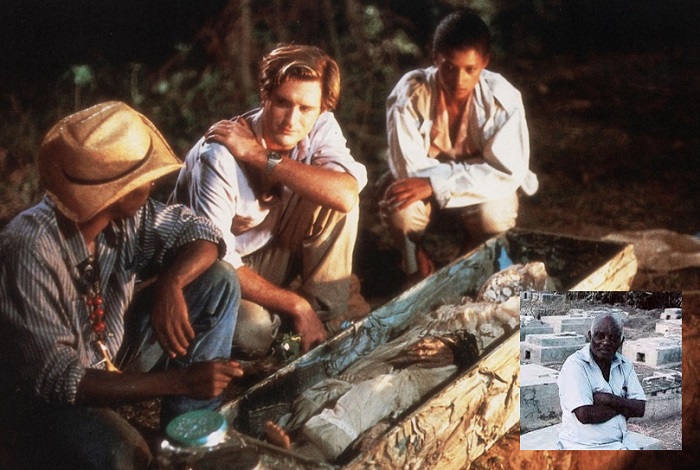
THE SERPENT AND THE RAINBOW: ZOMBIES IN HAITI
We all know that zombies are make-believe, right? Not according to Wade Davis, a Canadian ethnobotanist (that is, the study between people and plants) whose 1985 bestselling non-fiction book, The Serpent And The Rainbow, caused controversy within the science world with its talk of Haitian voodoo and zombies. Davis’ book looked into the curious case of Clairvius Narcisse, a Haitian man who died and was buried in 1962, only to return to his village in 1980. According to Davis, Narcisse was poisoned by a witch doctor with a special brew that mimics death. Narcisse was then dug up and made to work on a sugar plantation, where he was constantly fed the zombie brew and kept in a state of docility and incoherence. As Narcisse was slowly weaned off the zombie juice, he made his way back to his village, where he shocked his family and friends before collapsing dead. “It was strictly an academic project” said Davis. “When I was first brought into the investigation in 1982, I myself would never have thought for a minute that zombies could exist. I knew very little about Haiti, and nothing about its African roots or the people there.” Of course, with such a controversial and unusual topic, Hollywood came calling, and a movie, also called The Serpent And The Rainbow (loosely based on Davis’ findings), was released in 1988. Directed by horror master, Wes Craven, the film starred Bill Pullman as an ethnobotanist sent to Haiti on orders to investigate Haitian voodoo, only to get himself in too deep. Davis was openly disdainful about the grimly terrifying film, yet critics were much more kind. “The Serpent And The Rainbow is uncanny in the way that it takes the most lurid images and makes them plausible,” said esteemed critic, Roger Ebert.
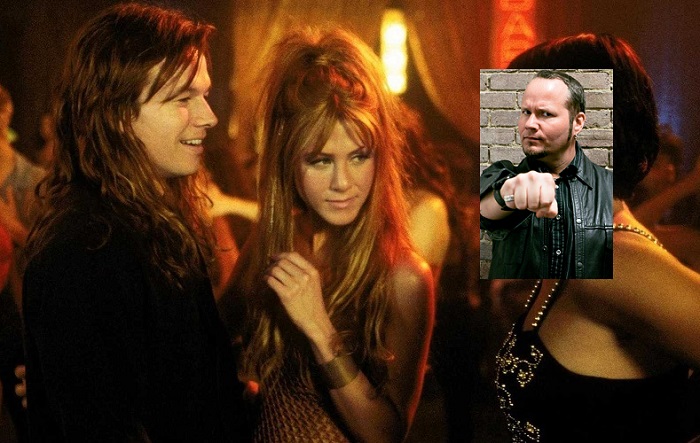
ROCK STAR: HEAVY METAL FAN JOINS HEROES
The 2001 music drama, Rock Star, depicted the ultimate rock ‘n’ roll fantasy, as heavy metal dreamer, Chris “Izzy” Cole (Mark Wahlberg), fronts a heavy metal cover band, only to eventually find himself singing for fictional metal legends, Steel Dragon, and then living the highs and lows of the rock‘n’roll dream. The film was in fact loosely based on the life of former Judas Priest vocalist, Tim “Ripper” Owens, who after fronting a tribute band, was chosen to replace heavy metal icon, Rob Halford, after fans sent the metal legends a grainy VHS tape of Owen strutting his stuff. “I was pretty excited when it first came out; they’d originally called me and wanted to make a movie based on me,” said Owen. “As it went on, Judas Priest pulled away from it. I’m not sure why; I still to this day don’t think that we should have.” Indeed, the metal legends walked away from the film after creative license was not granted. “They wanted to see screenplays and stuff,” said writer Andrew C. Revkin, who penned The New York Times article about Owen upon which Rock Star drew its inspiration. “If you were Warner Bros. and you were gonna throw $30 million into making a movie, would you want a bunch of middle-aged former heavy metal stars to have creative control? No.” Sure enough, liberties were taken with the story, including one humorous inclusion which saw our metal hero turn into a grunge superstar with surprising ease. Yet that hasn’t stopped Owens from looking at the bright side of his life being the basis of a Hollywood movie. “I’m still flattered. I mean, obviously anybody would be,” he said. “I would have been flattered more if I’d gotten some money from it though…. then I would talk a lot better about it!”

THE MEN WHO STARE AT GOATS: ARMY INTELLIGENCE
The Men Who Stare At Goats was a whacky 2009 movie based on true events surrounding the US military’s foray into psychological and paranormal warfare. The godfather of such things was Lieutenant Colonel Jim Channon, who envisioned a world where the US Army would be made up of New Age soldiers who would bring peace and unify the world through good vibes. Soldiers were also expected to develop telekinetic powers, which could see them bend metal, run through walls, and develop a keen sense of intuition so that they could read the enemy. “These ideas were not considered wacky,” said Special Forces Sergeant Glenn Wheaton. “They were seen as the next military frontier. We needed to know whether it was possible to use paranormal forces for military ends. We also needed to know how to protect ourselves should they be used against us.” Weeks after Channon released his 125-page report on the subject, The Pentagon came calling, with strong aspirations to use such paranormal powers in covert operations. But what about the title? This comes from a practice where these “Jedi warriors” would stare at goats until the creatures keeled over and died. The first such incident was later spoken about by Sgt. Wheaton, who witnessed 5th Special Forces instructor, Mike Echanis, do the impossible. “I was there when the first goat died,” recalls Glenn Wheaton. “Echanis dragged the goat to the middle of a pit, pushed a green stake to the bottom of the pit, and attached the goat to it. He focused on the goat intensely. It started to bray like a horse. It dropped down to its forelegs, and blood began to drip from its nose. Thirty seconds later, red suds frothed from the goat’s mouth. The goat lost its equilibrium and passed away in a fit.” Nice to see US military dollars in action…
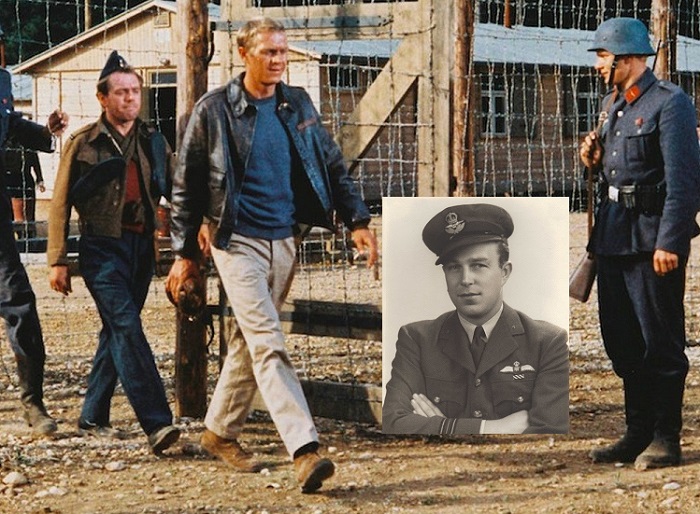
THE GREAT ESCAPE: REAL WARTIME HEROISM
In the annals of great movie moments, watching Steve McQueen outrun the Nazis in The Great Escape ranks high. Even more remarkable is the fact that the film is based on a true life mass escape that saw over 100 soldiers flee from the Stalag Luft III POW camp in 1944. The feat was first chronicled in the 1950 book, The Great Escape, written by POW, Paul Brickhill, who helped plan the escape, but couldn’t participate because of his claustrophobia. The majority of the book focused on Royal Air Force Squadron Leader Roger Bushell, who attempted to escape twice before. In the book, Bushell (a composite of whom was played in the film by Richard Attenborough) makes an impassionate plea to his fellow POWs that the time to escape has come. “Everyone here in this room is living on borrowed time”, said Bushell. “The only reason that God allowed us this extra ration of life is so we can make life hell for the Hun. Three bloody deep, bloody long tunnels will be dug: Tom, Dick and Harry. One will succeed!” Dig these tunnels they did, with 73 men escaping and 76 later recaptured. Fifty of those were executed by the Gestapo, Bushell among them. To understand how these men made their escape, Wildfire Television brought together British engineers, battlefield archaeologists, and historians to recreate Stalag Luft III for a documentary that aired in 2011. Assisting them was Dr. Hugh Hunt, an Australian and Cambridge University engineering professor who has a passion for the achievements made famous by The Great Escape. “What those men did at Stalag Luft III was an astonishing feat of improvisational engineering,” said Dr. Hunt. “Their resourcefulness was beyond belief. It wasn’t a case of one man’s genius, more the accomplishment of a team, with one man’s skills complementing another’s.”
If you enjoyed this story, check out our features on real life figures in fictional films and real life figures who played themselves on screen.
