



By Erin Free
While the tradition of famous folk doing walk-on cameos in movies is a long and storied one, the instances of real people playing themselves in a considerably more long-form fashion is far less frequent. We’re not talking momentary Entourage-style mugging here, or even Bill Murray’s unforgettable bit in Zombieland – we’re talking about the not-as-easy-as-it-looks art of occupying a large slab of a movie while valiantly pretending to be someone that you should know intimately: yourself.
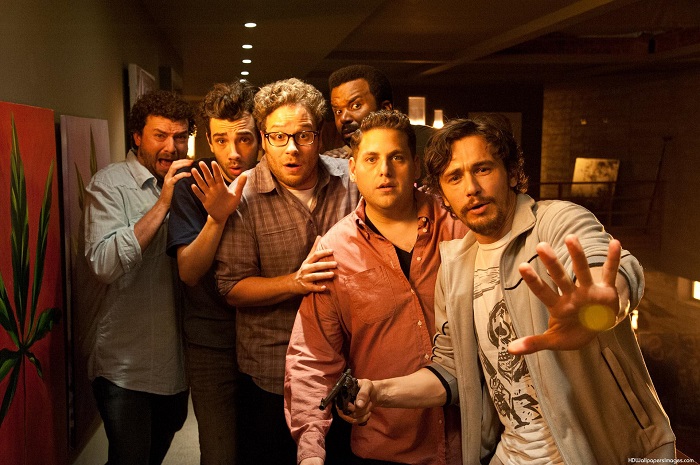
SETH ROGEN AND FRIENDS IN THIS IS THE END (2013) Co-writers/directors, Seth Rogen and Evan Goldberg, engineered an hilarious apocalypse with the gut-busting comedy, This Is The End, which was made even funnier by the fact that its fire-and-brimstone-end-of-the-world tableau was populated by Rogen’s Hollywood actor friends and regular collaborators playing off-kilter versions of themselves, all scrambling to survive as everything around them starts to crumble. Thusly, Rogen is a pot-smoking, unlikely movie star; Jay Baruchel is a nervy Canadian uncomfortable in LA; James Franco is a vain hipster; Jonah Hill is a duplicitous careerist; and Danny McBride is, well, a cannibalistic arsehole of horrific proportions. This starring-as-themselves hook gives the film a clever meta-fiction spin. “We wanted to work with people where the audience will say, ‘It’s that same group again,’” Evan Goldberg told FilmInk last year. “Even if you aren’t that familiar with any of us, you probably have some vague sense that we’re in movies together,” added Rogen. The film’s hilarious approach to meta-fiction, however, was a tough sell to movie studios. “Studios are very into relatability,” Rogen told FilmInk. “They thought that the meta-fiction aspect might make it unrelatable. It’s a valid concern. It’s essentially a film about rich, famous people, and we’re asking you to feel not just sympathy for them, but to relate to them.” Initially, the studio asked the duo to re-write the screenplay with fictional versions of themselves. “We kept saying to them, ‘What do you want Jonah Hill to be? A taxi driver?!’” Goldberg laughed. “And they were like, ‘Yeah!’ We stressed that we would paint the group as people with emotional relationships that are simple and relatable. We knew that it would work.”
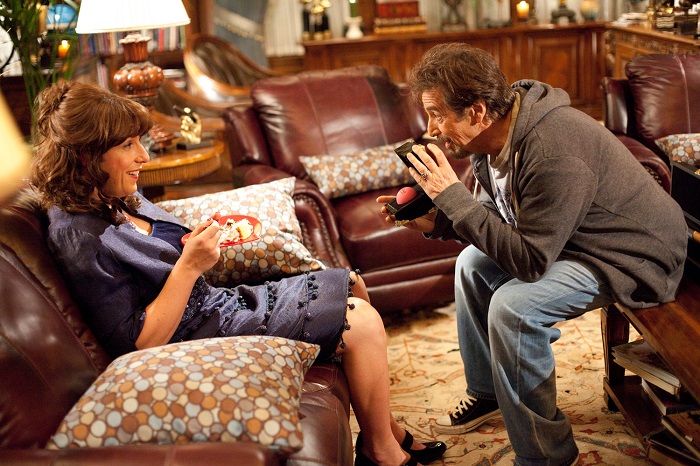
AL PACINO IN JACK AND JILL (2011) Absolutely maligned by critics (and just about everyone else…it even cops punchline status in Seth MacFarlane’s Ted), the 2011 comedy, Jack And Jill, stars comic powerhouse, Adam Sandler, as Jack Sadelstein, a successful LA advertising executive and happily married family man. His life only has one negative: the Thanksgiving visit of his identical twin sister, Jill, also played by Sandler. Jill’s neediness and passive-aggressiveness makes the practical, accomplished Jack’s skin crawl, and for one brief, torturous window each year, she unintentionally succeeds in turning his normally tranquil life upside down. In one of the funniest instances of a movie star playing themselves that you’ll ever see, the great Al Pacino develops a hot and heavy crush on Sandler’s Jill, pursuing her with relentless ardour. It’s no walk-on cameo either – Pacino is well and truly in the mix. “He doesn’t play this part ‘funny’; he plays it real,” Jack And Jill director, Dennis Dugan, told FilmInk in 2011. “Adam and I went over to his house and talked through the whole script. Let’s say an actor is playing Hamlet, the actor would say, ‘In this scene, Hamlet would do this, and Hamlet would do that.’ But he’s playing Al Pacino, and when he’d be talking about a scene, he’d be saying, ‘Pacino would do this’ and ‘Pacino would do that.’ He was already going through the machinations of a real actor, in an attempt to inhabit the skin of that character. That character to Al Pacino was ‘Pacino’, and he was trying to figure out what ‘Pacino’ would do. Al is a stage trained actor, so he’s completely open to anything,” Dugan laughed.
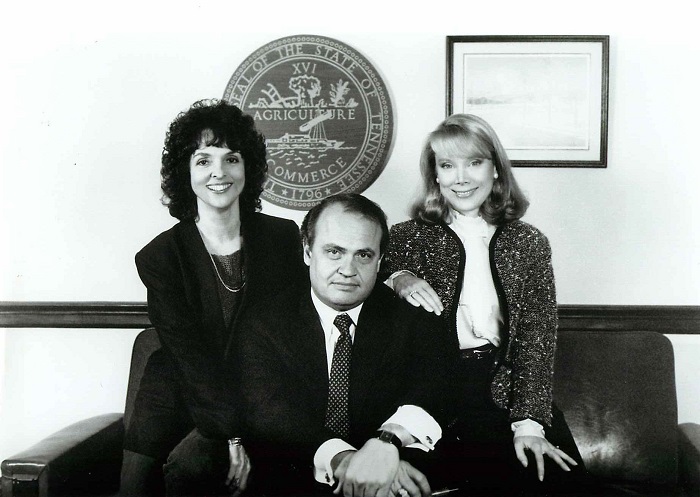
FRED DALTON THOMPSON IN MARIE: A TRUE STORY (1985) When he was casting his powerful 1985 drama, Marie: A True Story, Australian-born, New Zealand-raised director, Roger Donaldson (then making a name for himself internationally after helming the NZ critical darlings, Sleeping Dogs and Smash Palace, and the superior historical drama, The Bounty), made two brilliant decisions. His first was slotting the great Sissy Spacek into the title role of the plucky Marie Ragghianti, the former head of The Tennessee Board Of Pardons And Paroles, who was removed from office in 1977 after refusing to release prisoners who had bribed aides to then-Governor Ray Blanton. Donaldson’s second casting masterstroke came with his choice of the actor to play the imposing lawyer who comes to Marie’s legal defence when she starts getting pushed around by the powers that be. Donaldson cannily went right to the source, and daringly hired experienced lawyer (and non-actor), Fred Dalton Thompson, to play himself. The charismatic Alabama-born lawyer (who sadly passed away in 2015) was a revelation in his debut role, and it kick-started a long career in front of the camera, with Thompson later featuring in the likes of Days Of Thunder, Cape Fear, Die Hard II, and many more, as well as booking a regular role on TV’s Law & Order. A noted Republican, Thompson also served in The US Senate, and even made an unsuccessful run at The White House in 2007. “He brings his own intellectual weight to the part,” Donaldson told The Tennessean. “He knows these government people. When we were making Marie, we joked about his future in politics. I remember telling him, ‘You should run for the presidency, Fred.’ He’d laugh it off, but it obviously crossed his mind.”
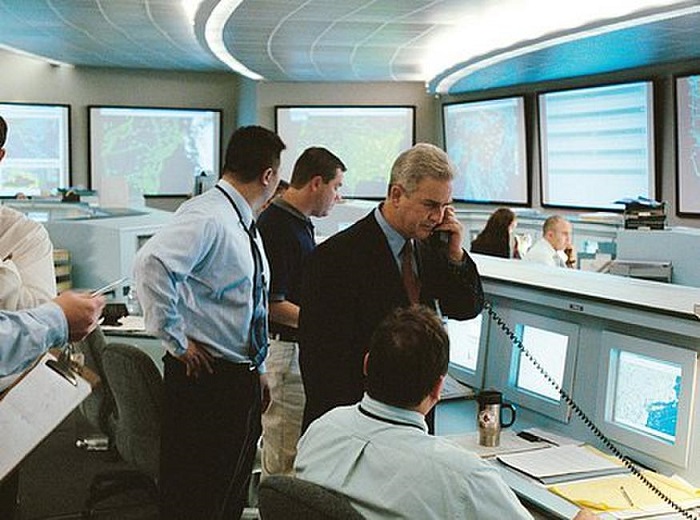
BEN SLINEY IN UNITED 93 (2006) “In the tricky business of turning reality into movies, there are many ways to go that are totally legitimate,” director, Paul Greengrass, told FilmInk last year. “You can take tremendous liberties, or you can take almost none. I veer towards being more austere about it, not wholly, but close. You have a responsibility to the real events and real people. You shouldn’t make stuff up for the sake of it, or manipulate people unnecessarily. You have to respect reality, but inevitably, it’s a film. You also have to respect dramatic reality. And somewhere between the two, in that conversation, the film is made.” A master at melding fact and fiction, Greengrass’ (The Bourne Ultimatum, Captain Phillips, Bloody Sunday) most grippingly real piece of drama came with 2006’s nail-grinding United 93, which told of the titular commercial plane which was hijacked on 9/11 and then crashed when its passengers bravely overpowered their terrorist captors. The air of authenticity in the film is palpable, which Greengrass amped up by casting a number of real life players, most notably Ben Sliney, who was serving as The US Federal Aviation Administration’s National Operations Manager on 9/11. “Essentially, I had charge of the airspace in America on that day,” he told At The Movies. Sliney’s performance in the film is authoritative, engaging, and wholly believable. “They treat you well, these movie people,” he told CHUD. “If they’d just pay you! I’d rather negotiate money with a hundred lawyers than one producer. They’ve been great to me though, and it was a novel experience. This is my 61st year – who expects to get involved in the movie industry?”
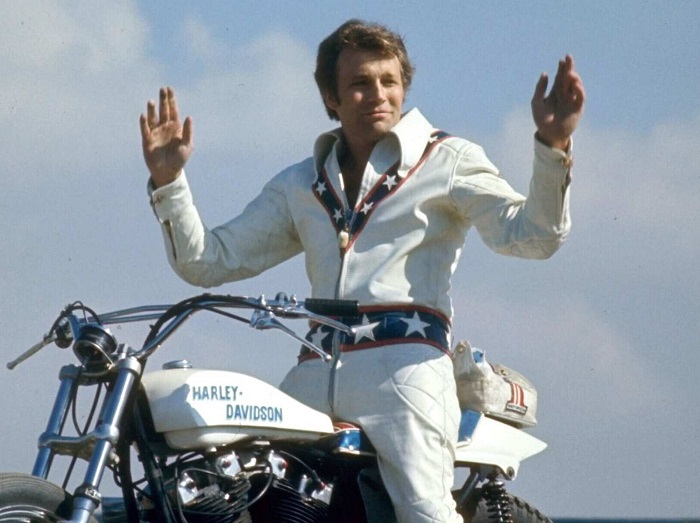
EVEL KNIEVEL IN VIVA KNIEVEL (1977) “I thought I was Elvis Presley,” Evel Knievel once said. “But all Elvis did was stand on stage and play a guitar. He never fell off on that pavement at no 80 mph.” The most famous motorcycle stunt daredevil who ever lived, Evel Knievel (nee Robert Craig Knievel) jumped the fountains at Caesar’s Palace in Las Vegas and tore over Snake River Canyon while the world watched with bated breath. He was a man’s man and apparently clean-living role model who cannily marketed himself as an all-American hero, draped memorably in red, white, and blue. Beneath the perfectly engineered image, however, Knievel scrapped with all manner of personal demons. Featured in The Guinness Book Of Records for having the most broken bones in a single year, Knievel died in 2007 at the age of 69, his body battered by his extreme stunt work. “I thought that I was Superman,” Knievel once said. “I thought I’d never run out of nerve.” Knievel was such a swaggering superstar in the seventies (adorning kids’ lunch boxes and starring in his own Marvel comic) that he even headlined his own movie, Viva Knievel, a fictional mix of action and corny sentimentality in which the ludicrously idealised stuntman visits lonely orphans; pushes his alcoholic mechanic (Gene Kelly) to reconcile with his son; romances a photographer (Lauren Hutton); and battles a corrupt promoter (Leslie Nielsen) who wants to kill him and use his coffin to ship drugs into America! Now a wonderfully kitsch curio, Viva Knievel (the last film of journeyman director, Gordon Douglas) crashed and burned at the box office, while the brutally reviewed Evel Knievel never “acted” again.

BRUCE CAMPBELL IN MY NAME IS BRUCE (2007) “Look, if you were some know-nothing jackass who didn’t know me from Adam and got the job of interviewing me, I can get pissed off,” cult hero, Bruce Campbell, told FilmInk in 2007. “I’m not trying to big-note myself, but I do have fans…some of whom would cut off a finger to get the interview. I’ve always got time for my fans…even the scary ones!” Though not a star on the level of, say, Tom Cruise, or even Tom Selleck, Bruce Campbell does indeed have a legion of fans, many of whom he picked up through Sam Raimi’s epochal splat-horror Evil Dead series, where he played anti-hero, Ash. Campbell has so many fans, in fact, that he knew that he could get away with the 2007 exploitationer, My Name Is Bruce, in which he cheekily plays a far more unpleasant version of himself: a sexist, drunken, egomaniacal, sarcastic poser, in fact. Is he such a person in real life? “No! I’m a nice guy,” Campbell replied to FilmInk. “Really! It was fun playing a bad version of me.” Also in the director’s chair, Campbell crafted a genre-bending tale that sits well on a resume that also includes films like Bubba Ho-Tep and Escape From LA. “In My Name Is Bruce, a young hardcore fan abducts me to help his small town fight off an ancient Chinese war deity,” Campbell explained to FilmInk. “We throw the fans a lot of bones in this one. It was funny because normally I try to not put any ‘Ash’ in my performance, so just letting go was very enjoyable. I directed this one too, so it was about finding the balance.”
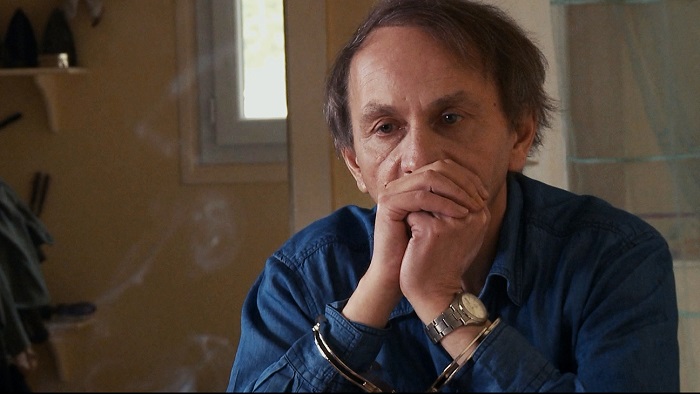
MICHEL HOUELLEBECQ IN THE KIDNAPPING OF MICHEL HOUELLEBECQ (2014) In 2011, French author, Michel Houellebecq – the teasing, provocative voice behind acclaimed novels such as Whatever, Atomised, and Platform – failed to turn up for a press tour, after which he went off the grid for three days. Houellebecq later claimed that he’d merely forgotten about his promotional duties, but the press went into a lather for those three days, noisily positing theories that the outspoken author (who has served up a number of controversial anti-Arab diatribes in interviews, as well as writing critically of Islam in his novels) had been snatched by Muslim extremists. The media flash fire inspired French director, Guillaume Nicloux (A Private Affair, The Nun), to cook up the meta-fiction boilover, The Kidnapping Of Michel Houellebecq, in which the author (who had appeared in Nicloux’s 2012 TV movie, The Gordji Affair) plays himself as the victim of a fictional snatch-and-grab that takes up those mysterious three days. “If I’m being honest,” Houellebecq told The Guardian, “I thought that making the film would be interesting because it was a new experience. That might be a very selfish reason, but it was the main one. And I have not been disappointed.” In the film, Houellebecq is kidnapped by three heavies, whose lack of prior planning means that they can’t find anyone to pay their ransom, leaving them stuck with the prickly author. With Houellebecq in the lead, Guillaume Nicloux also cast non-actors in the other central roles. “The essential thing is that all the people in the film are themselves: not just Michel, but the kidnappers and the others,” the director told The Guardian. “They find their own words. Everything is both true and fake.”
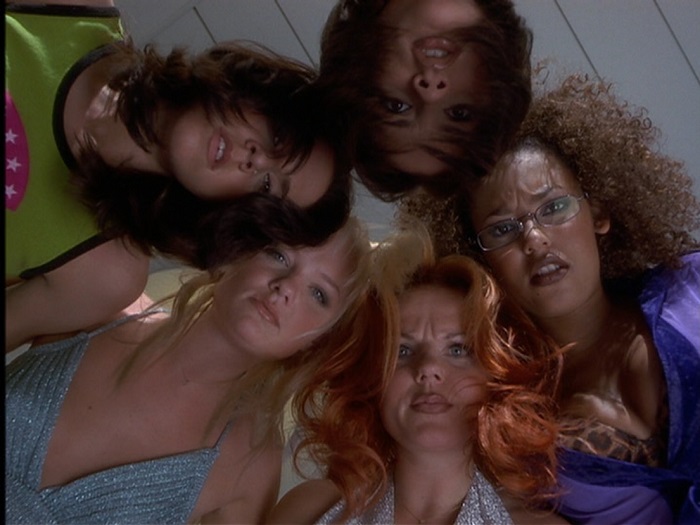
THE SPICE GIRLS IN SPICE WORLD: THE MOVIE (1997) From The Beatles in A Hard Day’s Night and Help! through to Kiss Meets The Phantom Of The Park and Status Quo in 2013’s ill advised Bula Quo!, high profile rock and pop stars have long been keen to expand their on stage personas onto the big and small screens, offering up way more than just stock-standard concert movies by reinventing themselves (kind of) as actors by playing sparkled-up versions of themselves. When The Spice Girls came tumbling onto the pop cultural scene in the mid-nineties – all Girl Power, stacked heels, high blown British patriotism, and full force sex appeal – they were practically ready made for cinematic reappropriation. Their cartoonish personas were amped up in a series of big budget music videos, and after smash hits like “Wannabe” and “Say You’ll Be There”, Geri Halliwell, Mel B, Mel C, Emma Bunton, and Victoria Adams were ready to become movie stars. To direct their heralded big screen bow, they (or, more likely, their management), chose Bob Spiers, a comedy veteran with credits such as Fawlty Towers and The Goodies. More importantly, he’d delivered comedy gold with female-driven shows like Absolutely Fabulous and French And Saunders. “Bob likes women,” his Absolutely Fabulous star, Joanna Lumley, told The Daily Telegraph. “He likes women for what they are. Some directors don’t.” Spiers’ entertainingly femme-powered Spice World: The Movie – despite receiving scathing reviews – was a poppy, zippy, colourful delight, as The Spice Girls get into all sorts of mischief in their Union Jack-emblazoned double decker tour bus (with supporting stars like Richard E. Grant, Elvis Costello, Roger Moore, Elton John and many more) while preparing for a big concert in London.
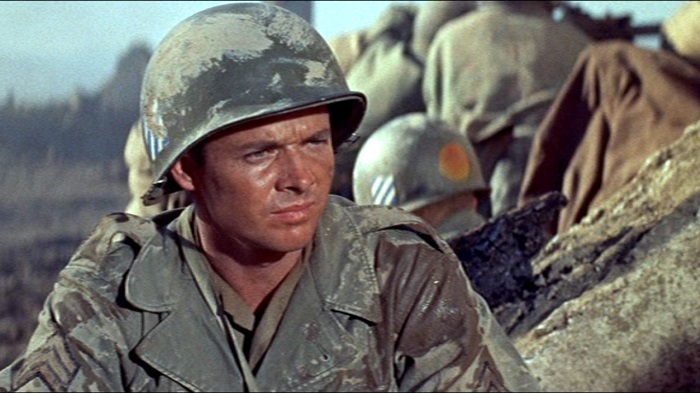
AUDIE MURPHY IN TO HELL AND BACK (1955) “In him, we all recognised the straight, raw stuff, uncut and fiery as the day it left the still,” writer, artist, and occasional actor, Bill Mauldin, once said of western movie hero, Audie Murphy, who rode the range from the late forties right through to the end of the sixties. “Nobody wanted to be in his shoes, but nobody wanted to be unlike him either.” Audie Murphy, however, was more than just an on-screen cowboy. The son of poor Texas sharecroppers, the slight, quietly spoken, youthful-looking Audie Murphy became a national hero during WW2 as the most decorated combat soldier of the war. Among his 33 awards was The Congressional Medal Of Honor, the highest award for bravery that a soldier can receive. He was credited with killing over 240 German soldiers and wounding and capturing many more. In one famous incident, Murphy leaped on top of a burning tank – which was loaded with fuel and ammunition and could have exploded at any second – and used its machine gun to hold off waves of German troops, saving his unit from certain destruction. Murphy’s story caught the eye of superstar, James Cagney, who invited the war hero to Hollywood, and helped him become an actor. Though he struggled at first, Murphy eventually found fame in films like The Red Badge Of Courage and The Cimarron Kid. When it came time to film Murphy’s WW2 autobiography, To Hell And Back, he was unsurprisingly tapped to take the lead, though the ever humble actor initially didn’t think that he was up to the task. “I don’t think I’m the type,” Murphy famously said. “Maybe Tony Curtis would do.”
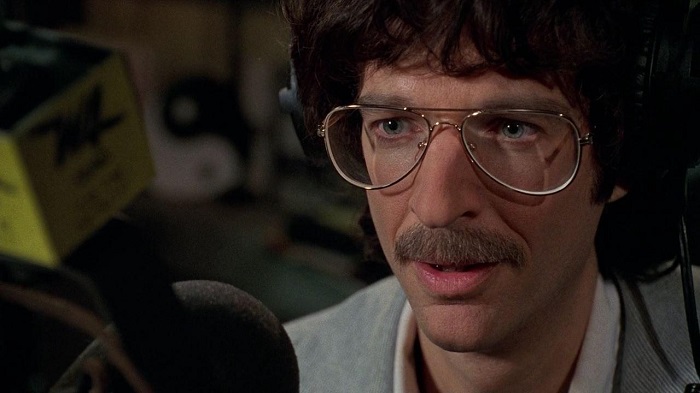
HOWARD STERN IN PRIVATE PARTS (1997) “I always resented the label of shock jock,” Howard Stern once said. “I never intentionally set out to shock anybody.” Whatever his intentions, Stern has indeed shocked – again and again and again – during his various tenures as a radio and TV host, copping multiple fines from The Federal Communications Commission for his saucy, confrontational brand of talk, and finding himself pilloried in the media for his political opinions and often insensitive style of social commentary. Throughout the eighties, Howard Stern established himself as nothing short of a multimedia superstar, and his 1993 autobiography, Private Parts, was a massive bestseller. In a bold move, producer, Ivan Reitman, opted to undertake an adaptation of the hit book, and in an even bolder move, he chose Howard Stern – a huge personality but a non-actor – to play himself on screen. As directed by Betty Thomas (The Brady Bunch Movie), the film was a surprisingly straight and wonderfully entertaining biopic, with Stern delivering an engaging performance, even effectively playing himself as a callow, college-age youth. “I know I seem a little too old to be in college,” he says to camera per the film’s self-reflexive bent. “But for this movie, you’ve gotta suspend disbelief.” As well as tracking Stern’s rise to stardom, it also details his troubled relationship with his father (Richard Portnow), and the grounding influence of his wife, Alison (Mary McCormack). “People said to me, “Hey, you’re playing yourself, that’s got to be pretty easy,’” Stern told Steppin’ Out. “And I said, ‘Well, in theory, yeah. But it’s not so easy. I can’t present myself today as the Howard of yesterday.’ I actually studied a lot of videotape of myself!”
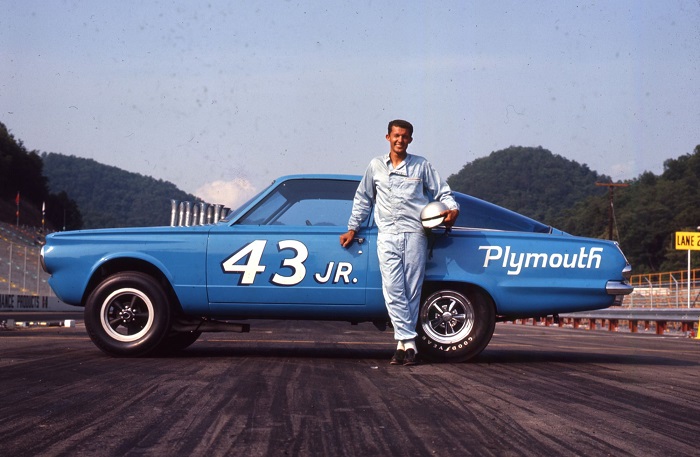
RICHARD PETTY IN 43: THE RICHARD PETTY STORY (1972) “No one wants to quit when he’s losing, and no one wants to quit when he’s winning,” said former NASCAR champion, Richard Petty, fondly known to fans as The King. While many films have been made about car racing – Le Mans, Days Of Thunder, Grand Prix, and many more – few can boast a bona fide behind-the-wheel legend in the leading role. But that’s exactly what the barely remembered 1972 curio, 43: The Richard Petty Story, has, with the legendary driver taking on a rare acting role (he also does voice work on Pixar’s Cars, and features in 2008’s Kevin Costner vehicle, Swing Vote) to bravely play himself, with decidedly mixed results. Directed by TV journeyman writer, Edward J. Lasko (who penned episodes of Charlie’s Angels, Starsky And Hutch, and The Rockford Files), the film spends equal time on Richard Petty’s father, Lee Petty (well played by the ever reliable Darren McGavin), who was also a noted wheelman. “The film pulls no punches in charting the turbulent relationship between father and son,” said The New York Times of 43: The Richard Petty Story (the title refers to Petty’s racing number), which was shelved for over two years before finally being successfully released into the regional areas of the US where Petty’s fan base was at its largest. Gritty, terse, and engagingly downhome, it’s a fascinating look at a family obsessed with stock car racing. “I was so consumed with racing that I didn’t even know what was going on in the world,” Richard Petty told USA Today recently. “If I had to go back, I’d still do my racing deal, but I’d try to join the world too.”
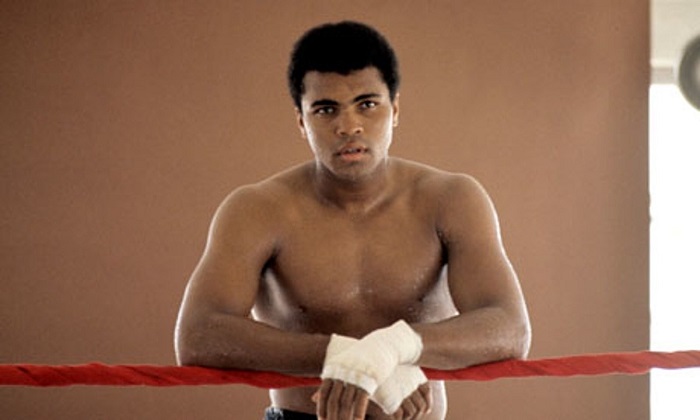
MUHAMMAD ALI IN THE GREATEST (1977) “When you’re as great as I am, it’s hard to be humble,” Muhammad Ali once famously said in a typical piece of high flying media showboating. A boxer of extraordinary grace and skill who shifted American social politics and became much more than just an athlete, Ali was a fast-talking testament to the powers of self-belief. In the seventies, he became one of the biggest stars in the world, and nothing short of a pop cultural phenomenon. He famously fought Superman in a DC comic book; had his own cartoon TV series; made an album extolling the virtues of dental hygiene; and even had his own action figure. Though he would later star in the TV movie, Freedom Road, with Kris Kristofferson, Muhammad Ali’s first venture into screen acting saw the boxer, appropriately enough, playing himself. Adapted from Ali’s autobiography, The Greatest: My Own Story, the 1977 biopic, The Greatest, was penned by Ring Lardner Jr. (M*A*S*H, The Cincinnati Kid) and directed by Tom Gries (Will Penny, 100 Rifles), who died during production. Monte Hellman (Two-Lane Blacktop) was brought in to finish the film, in which Ali does a creditable job of essaying himself, alongside Ernest Borgnine (as his trainer, Angelo Dundee), Robert Duvall, and James Earl Jones (as Malcolm X). “That was a case where calling what Ali did in the movie ‘acting’ would be inaccurate,” Hellman told Crimson Kimono. “I can’t comment on how well he did in portraying himself, but I can definitely say that he was a very nice person. I just worked on the post-production, and he spent some time with us in the cutting room. He was a really nice guy.”
